

You can see the living wraiths limping around the 19-story Regional Justice Center, mumbling about crystal meth fixes and spare change as the attorneys skirt around them in cream sport coats and copper-red ties. They wander peg-legged in the pulverizing 106-degree late summer heat, past pawn shops and all-night wedding chapels, $10 tattoo parlors and bail bondsmen. The jewelry exchanges prey on the newly dispossessed, promising top dollar for coins, gems, bullion, and scrap.
Inside the pink sandstone and glass fortress, the walls are etched with quotes from Margaret Thatcher and St. Augustine about the importance of personal responsibility and hearing the other side. The tiny courtroom on its 12th floor is packed daily, nominally in search of the truth about 2Pac’s murder, but the still unsolved homicide of The Notorious B.I.G. continues to haunt the court transcripts. Then there are the minor players, long deceased, mentioned in an offhand fragment of testimony. Men whose names once carried weight, lost in practically forgotten street wars only to briefly materialize and quickly vanish: Buntry, Bubble Up, Hen Dog, Big Jake, Heron, Wolf, Monk.
What the streets couldn’t accomplish, the ravages of age, disease, and stress finished off. In 2012, cancer took Zip Martin—Puffy’s drug kingpin “uncle,” godfather to Biggie’s son, and, by Keffe D’s proffer account, the man who supplied the murder weapon. The following year, Big Frank, the bodyguard, tasked to protect 2Pac in Las Vegas, blew his brains out. Russell Poole, the LAPD detective, the first cop to openly link the two murders, is gone. So is Tim “Blondie” Brennan, the Compton gang unit detective, whose old investigative partner, Robert Ladd, openly mourned his friend on the witness stand. Even the original coroner is dead.
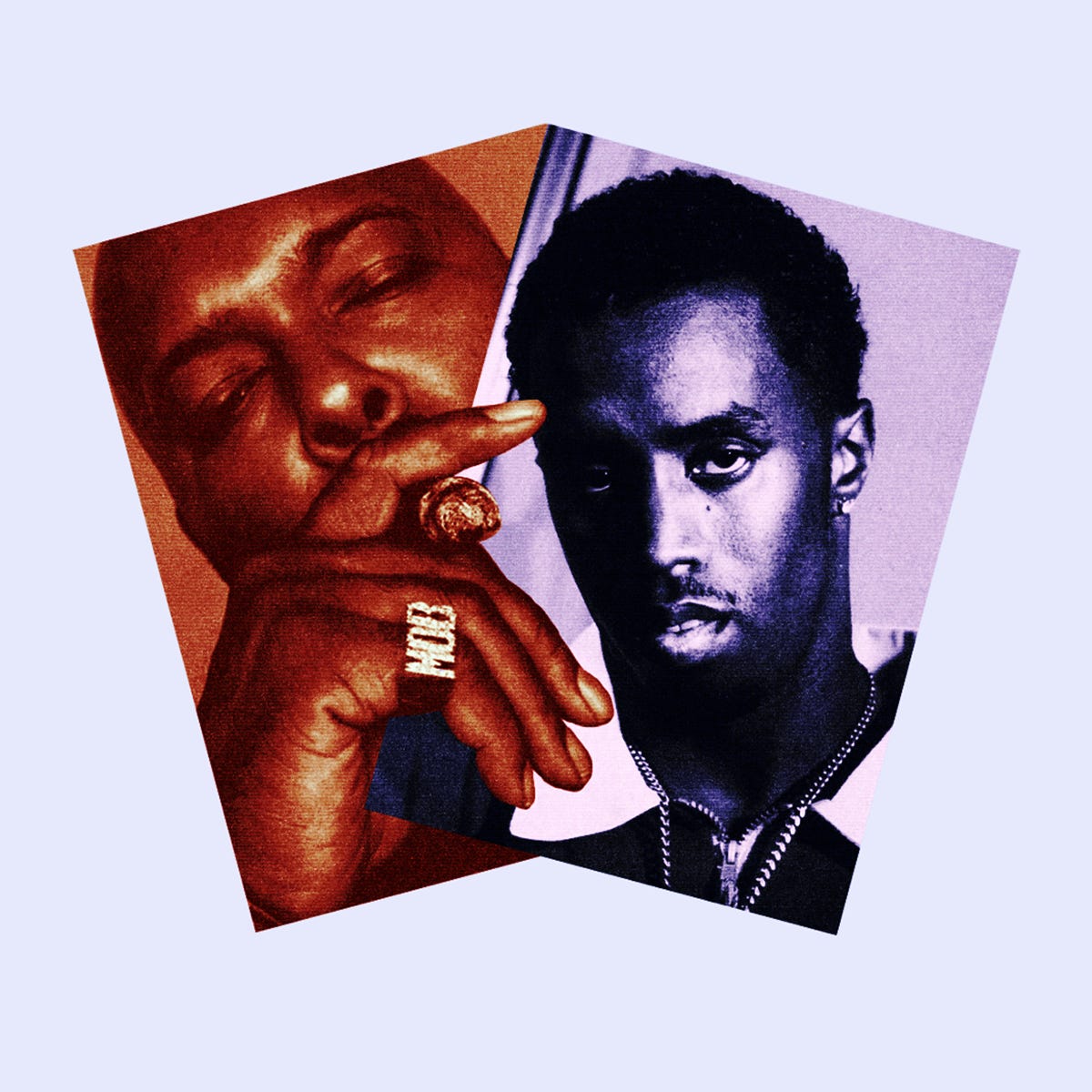
But no two ghosts hang over 2Pac’s murder trial more than the very much alive, very much incarcerated music moguls who allegedly set the violence in motion. It’s not just on-the-record testimony. Puffy and Suge keep reverberating into the room from two prison systems away.
I’ve had people tell me that Puffy is paying for Keffe D’s defense from his cell at FCI Fort Dix in New Jersey. When I ran it by a more reliable source, they corrected me. “Puffy tried to pay for the defense, but Keffe D refused.” Then a third person even more familiar with the case shook their head at both versions. “No, that’s all wrong. Keffe tried to get Puffy to pay for his defense, but Puffy refused. There are the recorded jailhouse tapes to prove it.” And after court on Wednesday afternoon, Keffe D’s lawyer, Michael Sanft, told reporters that he had actually taken the case pro bono.
Sanft said this to refute the latest TMZ air horn dropped by Suge Knight, who called in from RJ Donovan Correctional Facility in San Diego, where he’s less than halfway through a 28-year sentence for voluntary manslaughter. His memoir, Your Pain Is My Joy, drops in January. Might as well start the press run early.
According to the former CEO of Death Row, Keffe D’s lawyers offered him a million dollars to take the stand and say that Keffe D wasn’t in the white Cadillac that night. Sanft denied it. Even if you’re skeptical about the claims that defense lawyers make, especially mid-trial, it’s implausible that Keffe D has an extra million dollars to spend on suborning Suge. If he did have it, he’d probably spend it on a second lawyer—which is a practical necessity in fighting against the state and the decades of damning admissions.
“[2Pac’s] life wasn’t a circus. People are just talking to be talking,” Suge told the producer of TMZ Presents: O.J. - How He Really Did It. “They talked to this person who works with Puffy…all the lawyers were getting together. I told them. My loyalty and love for 2Pac can’t be compromised for nobody.”
In the same press conference, Sanft said that Suge previously spoke to the lead Las Vegas detective, Cliff Mogg, about the case. Without delving into specifics, he said that the prosecution didn’t find anything substantive enough to be brought into open court. When the defense attorney attempted to get a hold of Knight himself, Sanft said that he was told to “pound sand.”
Suge and Keffe D are among the last people in a position to know who killed 2Pac. But Suge has descended into a limbo of cryptic riddles and esoteric conspiracies.
“There was definitely more than one person involved. The people who got their hands in it is trying to muddy the waters,” Knight said, claiming that “crooked cops” and off-duty officers are “1,000 percent” behind 2Pac’s murder.
As for his old Pop Warner football pal, Keffe D, Knight said, “I feel sort of sad for him. I’m not saying he’s guilty or innocent. That man is on trial fighting for his life. And it’s sad that the police who was involved, did what they was supposed to do, for the other people.”
If there’s a point to arresting a grandfather old enough to collect Social Security and trying him three decades later for plotting to kill a beloved icon, it’s to provide closure. It is to put an end to the speculation and media exploitation – a long-delayed dose of antibiotics administered to a festering and ancient wound. But it’s unlikely that it’ll do much good. We prefer exciting “revelations” to dull truths. The most recent comment on my Instagram comes from someone named TheRealDonKilluminati, who swears Puffy had 2Pac killed to cover up the theft of his “catchphrases, slogans, mottos and motifs.” Even when the system works correctly, we have lost our collective ability to believe in it.
If you can untangle what Suge is saying, it sounds like he’s trying to make the case that Keffe D is just a patsy à la Lee Harvey Oswald, an easy decoy to absorb the blame, and deflect from a nefarious plot that would ensnare people at the highest levels of power, should it ever be exposed. But if you have been at court every day, the most consistent explanation for the murder of 2Pac and Biggie is the megalomania and hubris of Puffy and Suge themselves. The trial itself is one final confrontation. The loaded gun from the first act at The Source Awards winding up in a Las Vegas courtroom, where the murder weapon was never found.
