


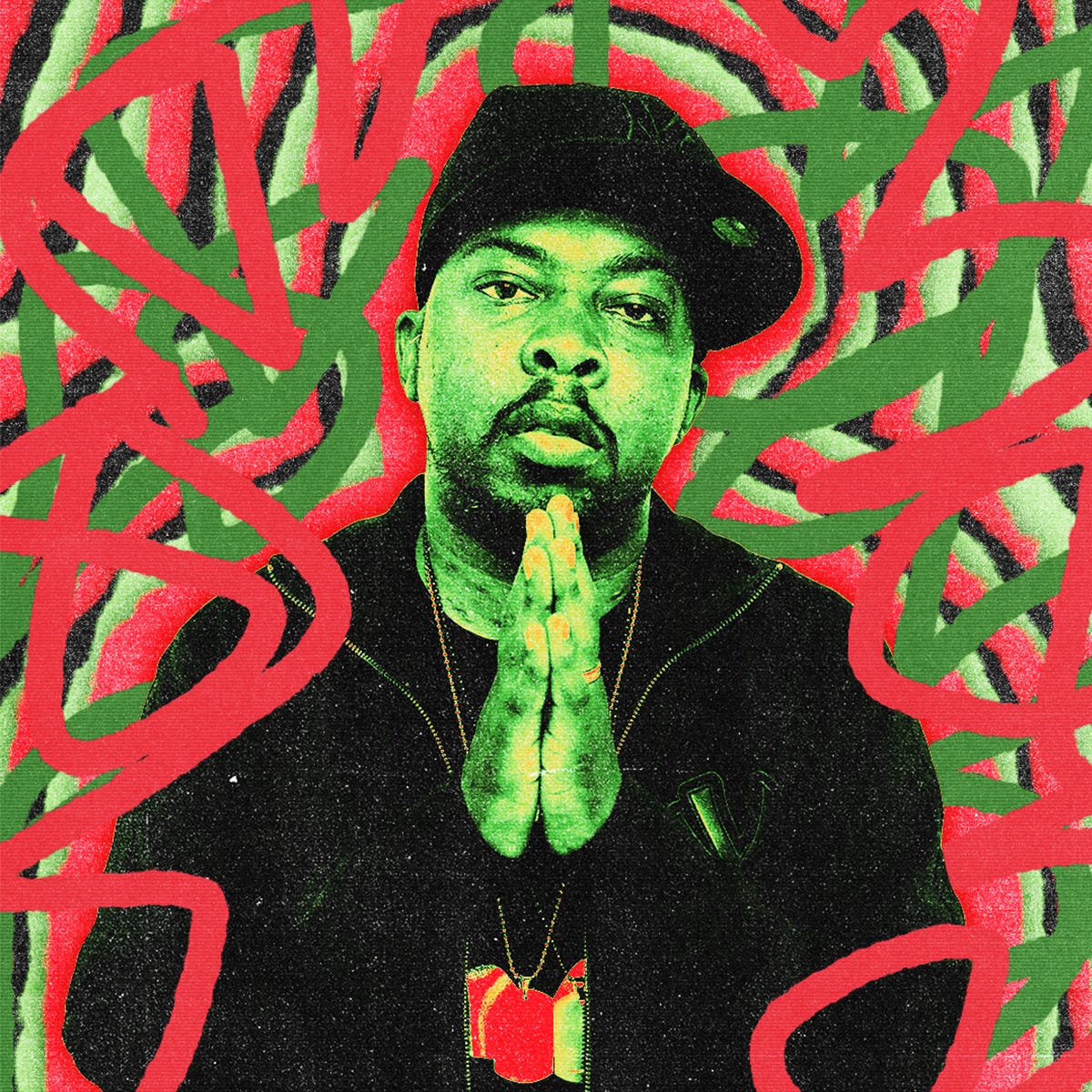
There’s a strange neurological process that happens to the brain after someone you’ve loved has passed away, as time goes on and distance between you and the death event increases. A sense of normalcy settles in to almost make one forget that the person is gone, until a familiar stimulus snaps you out of confused malaise. A lovely thanatologist told me a story recently, someone who studies death and dying as a science: After a long, exhausting day, she pulled up to the family driveway and saw her uncle’s truck, a man who had been dead for a decade. Her first thought was to wonder why the heck her uncle was staying over so late, momentarily forgetting that he was no longer alive, immediately feeling tinges of guilt and shame at the lapse. A bit of mental trickery that gets played to bring our favorite people back to us, even we believe that the grief has subsided to a quiet lull.
I’ve found that the nature of releasing posthumous music can have a similar phenomenon, well after the shock of an artist’s death has gone away and the waters have settled. Part of me believes that it’s unavoidable, especially considering how the world and music industry’s endless churn tries to fill the void when someone departs. I remember my own reaction as a senior in high school when A Tribe Called Quest was announced to perform on Saturday Night Live back in 2016, on that strange Dave Chappelle episode where he told white America “I told you so,” a chance to see the rap group that I’d only picture through the sounds my ears made whole on screen. Their breakup in 1998 pre-dated my birth, so their legacy was rather preserved in amber, only unfrozen when I pressed play on my dad’s CD or the iPod that’s been long lost. And for some reason, my 17-year-old brain had memory-holed Phife Dawg’s passing from earlier in the year, maybe out of sadness or disbelief, or just plain forgetfulness.
Sometimes I’ll watch that first song that Q-Tip, Jarobi White, and Ali Shaheed Muhammad performed on SNL that night in 2016—“We the People….,” the second song off of We got it from Here … Thank You 4 Your service, the final album from A Tribe Called Quest. It’s been ten years since the record was released, and I’m still hooked on how Q-Tip’s voice sounded exactly as it did on wax from decades before, piercing and striding like an arrow whistling through the wind as the beat’s sirens blared underneath him. He and White bounce around with the energy of rappers 25 years their junior, with White acting as the hype man with ad-libs and echoes. Then as Phife’s voice booms from above on the bridge, the pair shuffle apart, leaving space for their departed brother. And when the banner depicting the Five-Foot Assassin dropped from the ceiling, as Muhammad lets Phife’s verse carry on toward the end of the song, I realized that the entire world was seeing grief and remembrance calcify in a way that usually only happens at funerals. And much like those celebrations of life, it was at this point that I fully remembered that Phife was not coming back, no matter how much my brain tried to conjure the image of him being alive. White and Q-Tip didn’t shed a tear or scream out as Phife’s voice boomed out across the stage. Their faces beamed as he blistered through one of the best verses on We got it from Here; at one point they turned completely away from the crowd and locked their attention on the banner, holding the microphone up for their friend so everyone could hear him a little better, so his voice could never be forgotten.
As the tenth anniversary of We got it from Here comes and goes, the way in which grief frames the album has become clearer with every listen. Not to say it wasn’t obvious from the fact that it was called the “final Tribe album” by Q-Tip in the months leading up to the record’s release, or the way that he recounted the difficulty he faced with hearing Phife’s voice as they tinkered with it from April to October in that year. But there’s a kindness and care that courses through the album’s construction, a feeling that could only be fueled by mourning the loss of someone that you love. That devotion comes through in the fact that We got it from Here remains as one of the best mainstream rap albums of the 2010s, simultaneously an experimental Tribe record that calls upon their best artistic instincts of sampling and verse structure from the ‘90s. But also in the way it succeeds in presenting a utopic vision for growing old as a rapper, even when the natural course of one’s life decides otherwise. There’s a grace in handling the memory of Phife, and Tribe’s legacy as a whole, that acts as a guiding light for the album’s brilliance; one that’s often been missing across music when dealing with matters of artistic remembrance.

