


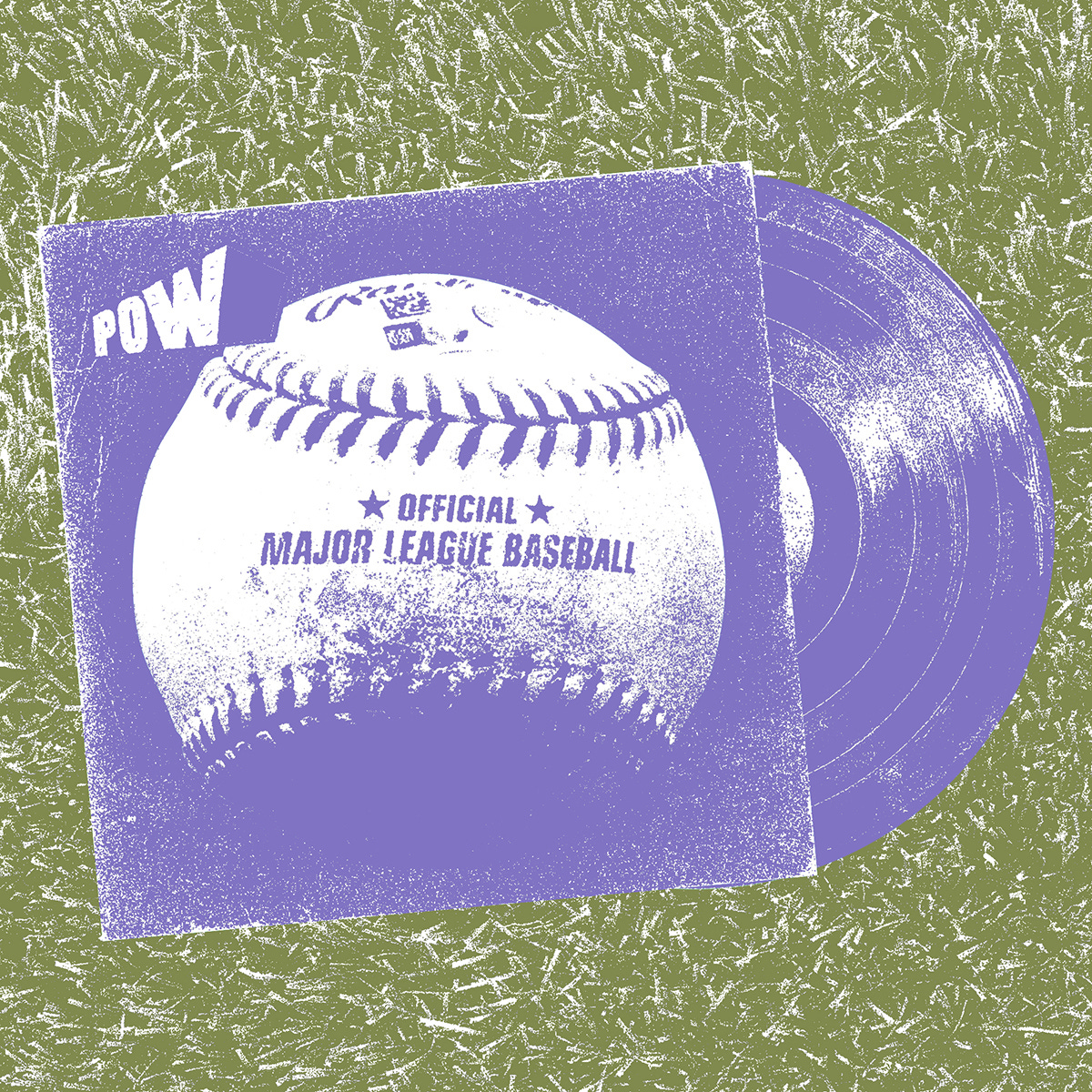
Experience has its advantages, and in four years of covering baseball, I’ve learned to tune out the music that blares from the speakers of Citi Field and Yankee Stadium. It’s better this way. Considering the glut of “fan engagement activities,” shoehorned patriotism, and radio edits of already-censored pop songs that fill the inning intermissions, the sonic atmosphere at ballparks across the country is depressing, almost dead. It could be due to the ever-rising cost of admission pricing out a more culturally adept crowd, or the fact that good music may have been banned league-wide by an ordinance from the commissioner to get people to focus on the game. But I am going to lay the corpse at the doorstep of the players.
The walk-up song is partly an exercise in patience, partly a signifier of taste, and almost completely depends on the player’s understanding on what sounds good out in public (a valuable skill for music lovers to learn sooner rather than later). Let me be clear before we get too far into this: Almost any genre can produce a quality walk-up song. But the allure of trying to hype yourself up at all costs, or getting caught up with trying to display an air of toughness or intimidation, switches off a lot of players’ ability to discern between trash and treasure. The walk-up songs that hit exist in the same section of the Venn diagram as tracks that grab your attention when they’re blaring out of car windows on street corners (with far more intensity, volume-wise). An excuse to ask Who the hell is playing that? and then a push to discover—to say, How can I listen to this for the rest of my life?
A non-exhaustive list of triggers that make or break a walk-up song: a groove or bassline that burrows into your chest and rests right next to your heart, earnest vocals or rapping that either soothe or excite in the fewest amount of syllables possible, a well-mixed balance between the production and vocals that allows you to hear every aspect of the 15-second slice, a lyric uttered that turns into a Manchurian Candidate phrase down the road, a loving connection between player and fan that gives you an insight into what makes them tick for just a brief moment.
Today, not so much. For three hours, sometimes longer (though thankfully, the marathon games have been legislated out of the regular season), the best ballplayers in the world hold their loving fans captive with their increasingly insipid versions of this ritual. Call it snobbery, say that I hate fun and personal expression. But the sport’s titans have conspired to turn their colosseums into dingy fraternity basements that reek of beer and leave your shoes too sticky to ignore, letting Travis Scott and Morgan Wallen pulse from a crappy Spotify playlist through a frayed aux cord of the mind.
Fractures in the malaise seem like happy accidents. Early 2000s Orioles games are mostly awash with hazy recollections of bad baseball and bright Baltimore sunsets, but they’re interrupted with a vivid picture of hearing that chorus of horns from Celia Cruz’s “La Vida Es Un Carnaval,” then turning my head to see Melvin Mora’s mile-wide smile on the jumbotron, before making an internal promise to remember that song forever. As the years went on, and the number of Black players on the Orioles continued to plummet, I held onto the dear moments when I’d get to hear “California Love” burst through the stadium speakers and see Adam Jones striding to the plate, blowing bubbles without an apparent care in the world. A bit of inspiration against a bastion of boring post-9/11 country tunes, a brief reminder that players didn’t have to act one way on the field, in the face of a brutal opposition in the form of respectability and unwritten rules.
My rose-colored glasses for the past don’t preclude me from seeing the infrequent good today. Francisco Lindor’s leadoff conductorship, which rouses 41,800 Mets fans through the first 30 seconds of the Temptations’ “My Girl,” is a spectacular blip of endearingly bad alto performances and romantic swaying in the stands that welcomes the future Hall of Famer to the batter’s box. Bad Bunny’s last three records and gnx are far too prevalent among players on last year’s Opening Day roster for it to be a total wasteland. A long, arduous scroll through a friendly website called “WalkupDB” can produce other, brief moments of wonder and joy: imagining how Minnesota’s Byron Buxton landed on a Lisa Stanfield hit, or where exactly Houston’s Carlos Correa decides to start the Game and 50 Cent’s “Hate It or Love It” to echo through a sold out stadium. But these are exceptions to the rule, that only leave you curious to why the hell the rest of the nine guys seemingly can’t figure it out.
It’s almost inexplicable how bad the average MLB player is at choosing walk-up songs that excite, or even sound good. Diagnosing the issue of taste almost feels foolish. By some metrics, Major League clubhouses are becoming more diverse than ever—of course, depending on the definition of healthy biodiversity that you employ. The see-sawing effect of increasing percentages of Latino players and decreasing number of African-Americans in the league since 1985 creates a unique anthropological puzzle. It’s certainly not as simple as saying that because there are fewer Black players in baseball, that the music as a whole is worse (I think a lot about Michael Jordan’s quote “Republicans buy shoes, too” when dwelling on the fact that for the majority of MLB teams, the most prevalent walk-up song genre is hip-hop). With a league that’s still ~60 percent white, the treasure chest of classic rock and garbage, aggressive country has its place on a team playlist, rubbing shoulders with the Latin trap and reggaeton that swells up with gusto from the Caribbean, and the rap that dominated the airwaves of their childhood and algorithms of today.
It all exists to construct the stereotypical melting plot that neoliberals claim to cling to. You can’t lead a horse to drink, though. Often, when we’re forced to subscribe to democratic listening sessions, we’ve already started to count the seconds until we can return to the safe heaven of our headphones, where our taste and worse musical pleasures are our own to enjoy. Athletes are just like us. Except, their tastes are put on display for full stadiums to consume, as they return to their base musical desires for the moment of comfort during a very lonely walk to the mound or the plate. Hell, for many players, the thought of curating walk-up song(s) is too much to bear for their busy plate. They resort to picking any old song from their memory banks without remembering if it’s good or not, or outsource to loved ones with taste just as bad as theirs.
In college, it took me far too long to settle on a good walk-up song. I stumbled out the gate with Drake’s “Over,” forgetting that our Division 3 stadium speakers weren’t up to snuff and that not a single section of the trilling intro that leads into the beat drop was audible. I tried to rectify that mistake midseason, picking “La Vida Es Un Carnaval,” and hoping to siphon off a bit of Afro-Latino stolen valor and recreate the memories of Melvin Mora. I felt like a fraud. It wasn’t until I gave myself up to “Russian Cream” by Key Glock, with its hypnotic whirring and the way he cooly slides along the beat, saying, “I got big rocks jumpin’ out my brand new Patek watch/Ice ice baby, uh-huh, I got a whole lot,” that I began to really love my walk to the batter’s box. Nodding my head along with every beat and measure, quietly mouthing each syllable that the Memphis rapper spit, trying to bottle the entire essence of the moment for the task that lay ahead. I never had to wonder if it was hitting for anyone else. Sometimes you just know.
There’s no real remedy. I’m starting to wonder if it’s an issue that’s even worth fixing. Walk-up songs, though a wonderful niche interest, are an unimportant aspect of the national pastime, at least to anyone looking at profit-and-loss ledgers. A bad song is not enough of a boogeyman to try and legislate better music into MLB clubhouses. A mild stretch of annoyance, and a resignation to put on headphones from the perch in the press box or cheap seats is the evolutionary adjustment for somebody who wants better, more soulful ambience at their favorite live sporting event. Release sighs as more Hillsong United and Cody Jinks pollute the atmosphere, groan as “Fein” breaks the sound barrier, and let the full-baked nostalgia songs move right on by. Hell, they only last for a minute, at most. Pray for respites, and remove my earbuds as the familiar lowrider twinges from Jeezy’s “Bottom of the Map” greet the Mets’ Reed Garrett and his ginger, Georgia-grown beard to the mound, and file away that moment of bliss with a nod and small smile as it trails away.

Awesome piece , especially loved Feign breaking the sound barrier lol
need Atlanta's closer to walk out/warm up to HOTEL LOBBY. perfect length, intro grabs your attention, would get the people going.