


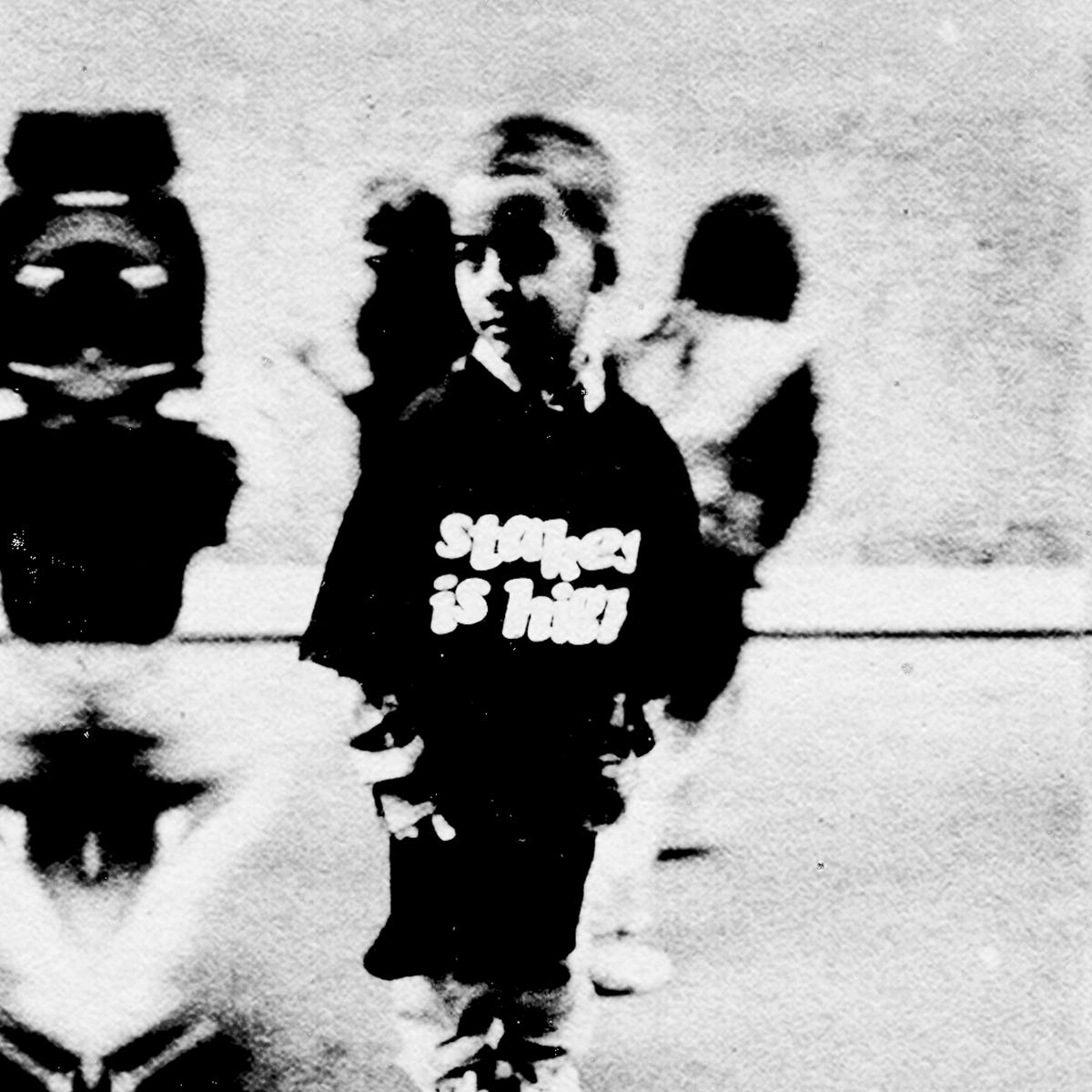
“After Further Review” was an idea I came up with years ago to discuss key recordings long after their original release, exploring whether the passage of time led to a change of perspective or new insights. For this installment, I invited Adam Mansbach, the former founder/editor of Elementary Hip-Hop Journal in the mid-1990s and a best-selling author and novelist based in the Bay Area. Together, we revisit De La Soul’s Stakes Is High on the occasion of the album’s 30th anniversary. –O.W.
In the summer of 1996, De La Soul opened their fourth album, Stakes Is High, with something unusual: an homage to someone else’s album. On “Intro,” listeners first hear a montage of voices sharing stories behind “when I first heard Criminal Minded,” referring to Boogie Down Productions’ seminal 1987 debut. De La’s core members—Posdnuos, Trugoy the Dove/Dave, and P.A. Mase/Maseo—had honored their heroes and colleagues via lyrical and musical references before, but this wasn’t just a love letter to BDP. By nodding to a moment of hip-hop achievement from the past, De La was also setting up—pun intended—the stakes for wrestling with the music and culture’s future moral center. Whereas in the past, the group clowned colleagues they thought too eager for crossover success, on Stakes, they now took aim at the glorification of Italian mob bosses and Latin American drug lords. While De La was hardly the only act scoffing at these trife life fantasies, the group’s well-earned stature gave their words extra weight within an internecine battle that had been brewing for years.
For over an hour of music split across 17 tracks, Stakes Is High balanced a tightrope between De La’s artistic progression, commercial aspirations, and social conscience. The first album recorded without their long-time mentor Prince Paul, Stakes also marked a new phase in the group’s maturation: more serious, less silly, but still creatively inspired. Yet it wasn’t just De La in transition; 1996 found hip-hop at a larger crossroads.
Jay-Z (Reasonable Doubt) and Ghostface Killah (Ironman) launched long solo careers. Nas (It Was Written) and The Fugees (The Score) dropped highly-anticipated sophomore albums. OutKast (ATLiens) and UGK (Ridin’ Dirty) secured the South as hip-hop’s vital third coast. Lil Kim (Hard Core), Foxy Brown (Ill Na Na), Bahamadia (Kollage), and The Fugees’ Lauryn Hill further cemented the importance of women MCs. Within that context, Stakes Is High both spoke to hip-hop’s seismic changes in the moment and was prescient about how those rifts would deepen over time. What does this all look like 30 years later? Let’s talk it out.
Oliver Wang: Adam, in honor of how De La kicks off the album by asking people when they first heard Criminal Minded, what do you remember about first hearing Stakes Is High?
Adam Mansbach: In ‘96, I was living in New York City, going to Columbia as an undergrad, and running a hip-hop journal called Elementary. I distinctly remember buying two records from Rock ‘N’ Soul on my birthday, July 1st, even though the official release date for both was July 2nd: Stakes is High and It Was Written. I listened to the Nas first, because I was more excited about it. How about you?
OW: I’m embarrassed to admit that I don’t remember my impressions of when I first sat down with Stakes, but looking back, I was clearly hyped over it. I put out a mixtape later that year—entitled High Stakes, Fly Breaks no less—which had three different songs off the LP and I just realized that was the only time I ever used that many songs from a single album on a single mixtape. I was probably just excited for there to be a new De La album since, by that point, it had been three years since Buhloone Mindstate dropped.
AM: Three years was a pretty long layoff in hip-hop terms. You risked coming back and feeling irrelevant or dated because the landscape changed so fast, but De La was unique because they were three albums in, and pretty much everybody agreed that those albums were all classics.
OW: You raise a good point about how quickly, especially back then, hip-hop styles could change in just two or three years. I think of how the UMCs went from being Native Tongues-esque on their debut, Fruits of Nature, in ‘91, but three years later, with Unleashed, they sounded more like a Beatnuts knock-off, talking about their “Ill Demonic Clique” and whatnot. With De La, though, they were obviously incredible at reinventing themselves across those first three albums without making things feel forced. What were your initial impressions of listening to Stakes Is High?
AM: First, a maybe not-so-minor point: I bought the album on vinyl, and it starts with “Supa Emcees,” so no “Intro,” no Criminal Minded montage. I’m sure that was a question of space on the wax—Tommy Boy was still pressing albums on single vinyl—but it’s a very different listening experience, right?
OW: Whoa, I didn’t even realize the U.S. vinyl version left off the intro. I first listened to Stakes off CD and yeah, the whole “Intro,” especially that homage to Criminal Minded, sets a tone for how you experience the rest of the album. Given how much Stakes critiques hip-hop in that era, for it to open by giving Boogie Down Productions their flowers was a declaration of the kind of hip-hop they held in the highest regard. So now I’m curious: since you first heard “Supa Emcees” as the start of the album, how did that shape your initial impressions of the album?
AM: I always considered “Supa Emcees” a great opener. It feels exuberant and hype, and it offers points of continuity with and rupture from the previous albums right away. The drums are big and crunchy in a very De La way, and there’s a Slick Rick vocal sample, which feels like the next iteration of an inside joke, because Slick Rick samples are all over their previous records. But also, there are punchlines on “Supa Emcees,” which was not what De La was known for—but by 1996 having strong punchlines was more important than ever. The song also showcases a specific kind of wordplay that we hear throughout the album, based on deconstructing words and putting them back together differently: Pos says “while others represent, I present my rep.” He also drops that line about talking “all over your tones/as if my name was Pete Rock or Sean ‘Puffy’ Combs.” I remember being a little confused by that, like, “Hold on, is he dissing them? Is he lumping them together?” But regardless, these things signal a more direct De La, putting aside some of the abstraction and whimsy that had been their hallmark.
OW: Wait, explain that. How do you think the album’s themes fit with your perception of the group being less abstract in their lyricism here?
AM: They’re positioning themselves, if not as elder statesmen, then as grown-ass men with the moral clarity and the standing to critique the materialism and immaturity of their peers and how it’s dragging down the music and the culture. And they’re linking that to larger social and political forces that seek to circumscribe and devalue Black life. And there’s also some world-weariness to them. They’re talking about being divorced dads, about failed relationships, about disappointment that their lives haven’t played out exactly as they wanted. And that disappointment is commingled with disappointment in where hip-hop is at. If you’re going to level those kinds of critiques, you have to be legible, you can’t be talking about potholes in your lawn or having conversations with fish. And it’s worth pointing out for those who weren’t there that although 1996 is looked at now as this golden era, at the time a lot of us were dismayed by what was happening. There was widespread disillusionment with the direction the culture was moving; hip-hop seemed to be fragmenting, culturally and spiritually. A critique of the culture, by the culture, was increasingly coming into focus and this album is important to that.
OW: When you look back across the ‘90s, those kinds of concerns and tensions were layered all across the decade, right? I think of Masta Ace Inc.’s Slaughtahouse from ‘93, whose title song was a deliberate caricature of gangsta rap and horror-core, and heck, in ‘96 alone, besides Stakes, you had Jeru’s Wrath of the Math taking shots at Puffy, Junior Mafia, and similar folks, and The Fugees also lampooned wanna-be mafioso rappers on The Score. I think the difference with De La is that they had more seniority and gravitas by then.
On this note: De La weren’t literally naming-names even if it didn’t feel super subliminal either but as a result, I feel like we, as listeners, just filled in the blanks as to who they were criticizing based on our personal biases. But thinking back now…who do you think De La was speaking to on this album? If they were clowning other artists for fronting like they were mobsters or gangsters, there was no shortage of possible targets in ‘96.
AM: Given the conversation you and I have been having about Black Sheep for the last 20 years, I’d be remiss if I didn’t mention “U Mean I’m Not,” their album opener from 1991 and the most hilarious send-up of gangster rap ever, in my opinion. And also, I think there’s an important distinction between playfully lampooning— like Ace, the Fugees or Black Sheep—and a more serious critique, like De La and Jeru were making. Just as it’s important to distinguish being a moral scold like Jeru—whose critiques were cut with retrograde respectability politics and sexism—from the kind of stance De La carved out.
I didn’t waste much time wondering who De La was talking about, because it seemed like a state of the union address meant for all of hip-hop… except for one line, which is the biggest misfire on this whole album in my opinion, and that’s on “Long Island Degrees” when Dave says, “I got questions about your life if you’re so ready to die.” That’s obviously addressed to Biggie, and it’s just so off. Sure, Biggie made a record full of things that you guys object to. He’s toting guns, he’s selling drugs, he’s glorifying materialism—but he also made a deeply vulnerable statement. He called his album Ready to Die, with a song called “Suicidal Thoughts.” And to respond to somebody telling you they’re ready to die with “I got questions about your life” is like the opposite of empathy. It means you’re looking right past the kind of vulnerability you’re calling for. It’s a cheap shot, a real failure to listen.
OW: In hindsight, especially because this album dropped while Biggie and 2Pac were still at the height of their beef and where Ice Cube and Common had only just squashed their skirmish, I’m actually amazed that De La didn’t seem to draw any smoke from rappers who thought that lines like “the only Italians you know are icees” and “Colombians never ran with your crew” were aimed at them. As far as I know, no one publicly barked back on De La. It never dawned on me until now how unusual that seems given how many rappers over the years have taken umbrage over mere hints of being disrespected.
AM: I think there was a kind of continental drift between the underground and the emerging pop scene, where it’s a case of “what’s a mouse to a lion?” Also, we don’t know what private conversations might have happened—it’s not that hard for me to imagine, for example, Pos calling Nas and telling him “we don’t mean you, we love your shit” or whatever. It’s also worth mentioning that De La is critiquing much more than just hip-hop with punchlines that deliver devastating facts that point to a nuanced and well-informed worldview: “De La Soul is here to stay like racism”; “My rhymes escalate like black death rates.”
Like, Jesus Christ, these are dark fucking ways to brag. But they’re also a way of sneaking information into the discourse in a clever and memorable way. And in an era where the dominant paradigm was punchlines that were shocking and graphic—which Nas set off a couple years earlier with lines like “I’m waving automatic guns at nuns,”and “when I was twelve I went to hell for snuffing Jesus” and then Big L elevated to a whole other level—De La sort of inverts the formula. These lines are shocking because they’re so depressingly, mundanely true.
OW: Not to go off on too long a tangent but this has me thinking of how De La’s maturing introspection on the album, which you mentioned earlier, makes for a compelling comparison with Jay-Z’s Reasonable Doubt from that same year. On the one hand, Jay’s obviously positioning himself as a “Don” on the album, both lyrically and visually, but he also does so in this self-reflective, even critical, way on songs like “D’Evils” and especially “Regets.” I wouldn’t go as far to suggest that the two albums are “in conversation with one another” but it’s a reminder that hip-hop contains multitudes.
AM: If what De La is criticizing is a bunch of disposable albums-as-gangster movies, then Reasonable Doubt is The Wire: showing the root causes and the relationships and the mentality and the emotional state of the gangster. Virtuosity has a way of silencing objections to content.
OW: In sitting with Stakes again, I’m really struck at how well-crafted it is but what’s also missing for me, compared to their earlier albums, was more eclectic and eccentric energy. I don’t think it’s wild to suggest that this is partly due to the absence of Prince Paul on here since the group had amicably parted ways with him after Buhloone Mindstate. It’s not that there aren’t funny or weird moments on Stakes but it definitely feels more sober than bugged out in the way that Paul’s sensibilities always seemed to bring.
AM: I think that’s very fair. It makes sense to assume that Prince Paul brought that out of these guys, and without him there, they’re taking themselves more seriously. That’s not a bad thing, but it does leech away something that was very unique and important about them. On the other hand, what this album really brought home was how much De La adored old school hip-hop. Park jam choruses are all over this record—chanted refrains, trade-offs. That’s where you hear the joy come through, because they’ve figured out all these ways to update that sound. They’re showing by example how you can push the art into the future but also stay grounded in what was great about the styles and the values of the past.
OW: That makes sense, especially if you saw their live shows back then. A lot of their crowd work seemed directly taken from the ‘70s park jam days. I also remember when they had Biz Markie as their opening DJ on tour; those guys revered Biz! It just occurred to me that Biz probably had more features on De La records than any Native Tongue member, over the years.
AM: Absolutely. Their adoration of the old school really extends all the way into the mid-eighties, which is why Slick Rick, Run-DMC and Biz samples are everywhere. I mean, why is “The Bizness” called “The Bizness”? Presumably because of that one-note sample of Biz beatboxing, which is so subtle that most people probably never noticed it.
OW: Seriously, I never even thought about the title until now but yeah, “The BIZness.” Ok, I get it now, albeit 30 years late.
AM: One other thought about the absence of Prince Paul: he’s a guy who loves stories. I mean, when this album came out he was off working on A Prince Among Thieves, the closest hip-hop has come to a single, Hustler’s Convention-style album-length story. So with Paul gone, perhaps not coincidentally, we get a few verse-length stories, but not whole songs like “Millie Pulled a Pistol on Santa”—one of the greatest narratives in all of hip-hop—or suite-length character-driven joints like “Bitties in the BK Lounge.” And that I miss more than the skits, because De La are fantastic storytellers.
OW: I hear you. I assume the lack of skits was very much a desire to move forward from what folks were used to, and let’s be honest: by 1996, I feel like we had many examples of mediocre skits on albums that just seemed to take up unnecessary space. When De La started doing this in the late ‘80s, it felt novel. By now, too many artists were turning it into a bad gimmick. But to your point, sure, I would have loved a full story song or two on here.
OW: One more broad question before we dig deeper into specific songs: what did you think of the production here? Relistening the other day reminded me of how much I dug the music; it’s very competently done, across the board. What I did notice though, this time around, is that its use of sample-based production leaned away from “check out these cool loops” and more about creating a sound bed. To put it more simply: for those of you who remember the Sample FAQ—the precursor to WhoSampled—there’s not much on this album that had me running to check the database to figure out what-got-used-where unlike with, say, 3 Feet High and Rising or De La Soul Is Dead.
There’s obviously exceptions here but I think what I perceived was either a shift in De La’s sonic sensibilities or maybe it was more indicative of where hip-hop was moving by the latter half of the ‘90s with artists tinkering with new styles of beat-making.
AM: I think it’s a little more subdued, but I don’t think their musical philosophy or their tastes changed dramatically on this record. They’re still using tons of big, crunchy drums, especially the Idris Muhammad-type jazz breaks they always gravitated toward. They’re still re-singing disco classics—it’s Zhane flipping a Sharon Redd song on “4 More,” for example, just like it was Vinia Mojica doing the same thing on “Saturdays”—and drawing liberally from old school hip-hop. Funky blues records are still a chamber they’re ahead of the pack in utilizing—before it was Outlaw Blues Band and Jimmy Reed, and on this album it’s Junior Parker. Their use of vocal samples is still really clever and playful and used as grace notes to fill songs out and make them feel richer—listening again that jumped out at me, especially that Dirtsman “hot this year” on “Itszoeezee.” They still have that deep crate digger’s sense of democracy, where every bin gets scoured and the dollar bin break is no less revered than the $200 45.
OW: Fair enough. I’m also wondering what you think of the fact that this is the first De La album where they begin inviting outside producers? Besides Dilla with “Stakes Is High,” you have Spearhead X producing “Dinninnit,” O. Gee co-producing “4 More” and Skeff “he gets props too” Anslem handling “Big Brother Beat.” Personally, the whole album has so much consistency that it never has that “produced by committee” unevenness that many albums by the late ‘90s and early 2000s suffered from because you had 10 different producers across 14 songs.
AM: Until this very moment, I had no idea there was outside production from anybody except Dilla on “Stakes.” Wow. Uh… their contributions mesh very well. And on a quasi-related note, people talk about Illmatic as the birth of the lineup-of-super-producers album, but Queen Latifah’s debut All Hail the Queen is actually the album that set it off.
OW: Sure: Illmatic wasn’t the first album to be produced by a team of folks but the main difference, from my recollection, is that, before Illmatic, we weren’t really being sold albums based on allstar production team. It wasn’t just “yo, Nas is the second coming” but it was also “look at everyone lining up to make beats for him!” I could be wrong but I don’t think The Source was talking about the production squad on All Hail the Queen the same way in ‘89.
AM: I can’t believe you’re not going to acknowledge my Set It Off pun.
OW: Ha ha ha, and now I have to face the wrath of your madness. *rim shot*
OW: We’ve started to get into the title track so let’s go all the way in, especially since “Stakes Is High” was the first commercial single off the album. I think it’s still absolutely brilliant. On the one hand, you have Pos gliding in from jump with an audaciously clever line like “the instamatic focal point bringin’ damage to your borough,” but then Dave’s first set of verses are all about what he’s sick of: “bitches shakin’ asses,” “Versace glasses,” “cocaine and crack, bringing sickness to Blacks,” etc. All that over an undeniably majestic track courtesy of J-Dilla who was still relatively unknown at the time. I suppose it makes sense since it is the title song but “Stakes Is High” really is a kind of distillation of the entire album’s themes and thrust.
AM: De La really thought about the statement they wanted to make, and how to structure their argument. They start with “I’m sick of this, I’m sick of that,” but then they move into Let’s talk about structural inequality and why the projects are insidious government experiments. They hook you with something you can viscerally agree with, but they’re not going to leave you there; by the end of the song they’re not just indicting misguided artists, they’re indicting a government and a society that redlines neighborhoods, reifies housing inequality, creates ghettos, and profits from Black incarceration and death—then has the audacity to blame the victims as if they created those conditions. It’s rhetorically quite brilliant.
And it’s worth pointing out that the Long Island of Pos, Dave and Maseo’s childhood was not just a place where Black families moved when they could afford to leave Brooklyn or the Bronx—it was also a place where pernicious redlining and housing discrimination were only just starting to get dismantled, on a town by town basis. So this isn’t just global and national, it’s also locally felt and understood.
By the way, did you find it weird that “Stakes Is High” was the second-to-last song, before “Sunshine” closes it out?
OW: I had forgotten that it was the penultimate song until my re-listen. And I agree: it does feel odd—based on conventional sequencing—to “bury” your title track all the way near the end, especially since it is such a statement song. What do you think the effect of it is, to hear it after a full hour of music before it?
AM: I’m going to answer this one as a novelist, if I may, because there’s something to be said sometimes for hiding the ball—building your scaffolding and slowly unfolding your ideas through character and plot and dialogue before you reveal your thesis. I wonder if that’s the intention here, like: “if we start with a mission statement, we risk telling instead of showing—but if we give people an album that is full of the kind of richness and vulnerability and reflection that we want to see in hip-hop, and then make our most pointed critique of what’s missing, it lands a little differently.”
We also have to mention the ultimate solution De La offers after all the analysis, which is “that’s why the Native Tongues have officially been REINSTATED,” which both MCs say together, something I don’t think you find anywhere else on the album. That’s really important, because the fracturing of that crew—De La, A Tribe Called Quest, Jungle Brothers, Queen Latifah, Monie Love, Black Sheep, Chi Ali—was painful for them and painful for us to watch, and you could really argue that as that joyful, quirky, deeply creative crew stops collaborating, all of hip-hop suffers; the overall tenor of hip-hop suffers. We as listeners never really knew what happened, but we caught crumbs, like when Pos says “Jungle Brothers on the run” on “Breakadawn” from Buhloone Mindstate, turning one of the JBeez song titles into a diss. As a fan of both groups, it was just fucking sad to hear that. I remember interviewing the Jungle Brothers back then, and I couldn’t bring myself to ask about the beef, because it felt like prying into family business. So all that to say: the reinstatement felt like a huge announcement. But it rang a little hollow, because… where were they, then? Why aren’t any of them here, on this album?
OW: You raise a good point though I know I never stopped to ask that back then because, to be frank, as a clique, they actually didn’t do that many “all family” collaborations or features with each other outside a handful of prominent examples like De La’s “Buddy” or the Jungle Brothers’ “Doin’ Our Own Dang.” The closest we got around this time wasn’t until 1997’s remix of “How Ya Want It?” by the JBeez. My point being: I wasn’t actually anticipating a Native Tongues reunion despite that line. Would have been cool on here though!
AM: This is the moment when Mike G and Afrika are supposed to come out from behind the curtain and Latifah, like, swings down on a rope from the balcony, and Dres pulls up on a motorcycle, and Q-Tip rappels down from a helicopter, and they all save hip-hop. But in retrospect, I wonder if the line was more of an offering than a statement. Maybe they were throwing the Bat Signal in the air and the rest of the crew was supposed to heed the call.
OW: Ok, “Stakes Is High” was the first song I wanted us to talk about. Your turn; what track really struck you on here?
AM: I want to talk about “Betta Listen,” because I think there are some interesting and subtle things happening lyrically, all revolving around the chopped up “listen all you fellas… you betta listen” Junior Parker vocal sample. This is a riff on a classic hip-hop trope: the ribald or semi-ribald story about meeting and trying to bag a girl, told by a dude in an all-male, barbershop-type setting. That kind of story can go in all kinds of directions: success, failure, surprise twist, self-deprecation. But what I think is cool here is that over the course of the song, De La sort of shifts and evolves the meaning, so instead of gather round, fellas, you betta listen to this story… it becomes fellas, you betta listen… to women, if you want them to give you the time of day. The song is still sexy and playful, but it’s based on our narrators being vulnerable, talking about their children, seeing women as people instead of objects. On one hand, all that is basic, but in a hip-hop moment when a supposedly “conscious” rapper like Jeru is next door calling women harlots and scandalous temptresses and policing what they wear, this is both a ray of sunshine and a quietly revolutionary little joint.
OW: I mean…Dave also called out “bitches shakin’ asses” on “Stakes Is High” but perhaps less obnoxiously than Jeru’s super-patriarchal take on “respectable femininity” on either “Da Bitchez” or “Me or the Papes.”
AM: We’re all works in progress, O-Dub.
OW: Ha, fair enough. Meanwhile, as for “Betta Listen,” I think this track was on the “cool but not a fave” tier for me, partly because I found the beat to be a bit anemic. This is what I was alluding to earlier about the shift in production style: I guess I’m a fan of the “chop up the soul” school of beat-making where loops and samples are more prominent. “Betta Listen” is a great example of how you can make a well-crafted track using samples in a more subtle way but for me, it’s also forgettable for that same reason. I will say though, in listening to this again, I realized how much Pos’s story verse in the middle reminds me of what Mos Def would do a few years later with “Ms. Fat Booty” but I guess Rakim was already laying down this style back with “Mahogany.” My point being, you were saying earlier how you were missing full story-songs on here, which you attributed to Paul’s influence, but you get a little bit of it here.
AM: You do, for sure. It’s just not as high-concept. Or maybe it’s more mature. I guess both those things can be true.
OW: What’s strange about Stakes Is High to me is that, on most other albums, I can instantly pinpoint a list of favorites but for whatever reason, I don’t have the same relationship with Stakes besides the title track. But one song that always brings a smile to my face, at least, is “4 More” which is one of the better examples of an R&B-laced hip-hop song that doesn’t feel like what Dave was clowning, i.e. “R&B bitches over bullshit tracks.” De La and Zhane are like chocolate and peanut butter here.
AM: I think that’s because it isn’t R&B-laced hip-hop—it’s disco-laced hip-hop. The way that hard, super-clean blues drum break meshes so seamlessly with the re-sung Sharon Redd chorus is sublime and speaks to the way a hip-hop ear, a vinyl mixologist’s ear, knows how to cross-stitch sounds across genres in ways that make total sense. I didn’t know the song this is based on back then, any more than I knew the Instant Funk song when “Saturdays” dropped, but of course I had to hunt them both down. It’s always worth reminding folks that hip-hop back then was incessantly expanding our palates as listeners, because we’d hear some hot shit and obsessively figure out the sample and dig for it. Our musical literacy as a generation is so deeply indebted to that process, and so is our intellectual curiosity. The “don’t front” sample—from the Jungle Brothers’ “Jimbrowski”—was maybe a little bit of Native Tongues repair? And “got a way with women so I got away with yours” is another example of the new style of wordplay I mentioned earlier in regards to “Supa Emcees.”
OW: We were talking offline about one of your other favorites, “Pony Ride.” While this is also in the back half of the album, it’s another track that I always liked too. Partly, it’s that very distinctive beat and its echo effects plus I also liked hearing Truth Enola on here. His deep baritone(?) sounds especially resonant. I suspect your love for the song is more than just on the aural level though.
AM: All due respect to Truth Enola, what’s interesting to me is mostly Posdnuos’s verse. I remember being struck by Pos rhyming, “I recall kissin on my lady, talkin’ bout makin’ babies/ Now we made the baby, but cannot connect as legal spouses/Now me and my daughter reside in different houses.” Pos’s whole verse is so raw. He’s reflecting on his own shortcomings, the relationship’s failures, the sadness he feels at being apart from his kid. It’s not an attack on his ex, although he doesn’t shy away from casting some blame camouflaged in a bit of abstraction. I remember being really struck by this verse, because what rappers in 1996 were talking about divorce? Honest question. I can’t think of any.
OW: I can’t either even though I’m sure there’s probably some example folks nerdier than us will recall. From my recollection, what we began calling “confessional rap” really felt more commonplace in the 2000s than in the ‘90s though, as I’m saying, I’m sure there were exceptions. I’d just point out that De La already set the precedent of sorts on Buhloone Mindstate with “I Am I Be” which isn’t quite confessional in the same way you’re talking here but that song felt unexpectedly vulnerable in terms of how Pos talks about the loss of his mom, the unplanned pregnancy that produced his daughter, and so forth.
I think we often think of Pos as the more cerebral rapper compared to Dave but maybe we need to give him more love for finding ways to be deeply personal without making it feel navel-gazing or solipsistic. It’s an underrated skill.
AM: Then Pos closes with “no tricks in ‘96, it’s time to build” which I read as both a personal goal and a challenge to hip-hop, because on this album De La is operating on three levels, conflating the personal with the hip-hop nation with the world and concluding that it’s time to reclaim and remake all of them. That line is also a referendum on how much building we’ve been doing since his fellow Long Islander Rakim spit that iconic line a decade earlier—for Ra, of course, “build” also has another meaning drawn from the Supreme Alphabet of the Nation of Gods and Earths. But regardless, for Pos the answer is not enough.
OW: Ok, last question: listening back to this now, how do you think Stakes has aged for you? For me, I think this album still completely holds up but not just as “here’s an album I still enjoy listening to.” I don’t want to abuse the term “timeless” but let’s just say that some albums still sound fairly fresh no matter how long time has passed vs. those that, as good as they are, still feel very much of a moment. In that regard, especially compared to some of the other efforts from back then that were all critiquing the “state of hip-hop,” Stakes Is High doesn’t feel nearly as dated. And to me, that just goes back to how well-crafted and executed the album is, overall. We don’t need to get into whether this is the “best” De La album in their catalog—that feels like a whole other convo entirely!—but my point here is that Stakes absolutely holds up, even 30 years later…not despite its desire to speak to the cultural moment then but partly because it does in such nuanced ways.
If anything, our exchange is making me wonder if I’ve underappreciated the album all these years despite always thinking “yeah, this was really good.” Again, I don’t want to open up a can of worms here, so close to finishing things up, but comparing this with A Tribe Called Quest’s fourth album, released the same year, Beats, Rhymes, and LIfe, would be a rather lively discussion as well because much as I think that LP sounds much better to me now than when it first came out, I don’t think it’s anywhere near as consistent.
Actually, this feels very apropos but I just caught this snippet from Questlove interviewing Pos and Mase and Pos is talking about how much he and the group were paying attention to what Tribe was doing—presumably this was after Midnight Marauders—and feeling competitive, in a friendly way. And for real, I’ve always loved this about De La: they admit this stuff all the time! I remember reading, I think in URB years ago, about Pos hearing “Electric Relaxation” for the first time and feeling like “oh shit, there’s new levels to this.” It’s like how members of both The Beatles and Beach Boys admit that they were totally listening to each other’s albums and trying to find ways of one-upping each other.
That’s not beef. That’s not saying “I establish my greatness by impugning yours.” That’s some “game recognize game” candor about judging yourself by the work of your peers. I think most of us can relate to that but because of how egos work in hip-hop, it feels extraordinary when a rapper actually admits, “yeah, I listen to other people’s music and that pushes me to up my game.” My point being, if Stakes Is High was one such product of that competitive spirit, we all benefitted from it. How has the LP aged for you?
AM: I still love this album, and I think the reason it’s aged so well is that it’s not just a critique. There’s a positive vision, undergirded by clear values that the album itself puts on display. Like, just to work in one final lyric I’ve been wanting to talk about, from “Dog Eat Dog:” Pos says “why the blunder, Wonder? Could’ve G’d today/So you can put up some swings for your seed to play/But a swing ain’t that important when the park’s around the corner.” That’s the ethos: integrity over money, community over isolation. Digable Planets can name-check Marx and Mao all they want, but this right here is not just the closest you’re gonna come to a wholesale rejection of capitalism in hip-hop, it’s also the most compelling.
1996 was a hugely competitive year, and this album is easily a top three personal favorite for me, along with Reasonable Doubt and Heltah Skeltah’s album Nocturnal. But of the three, it’s the only one I’d play around my kids.
OW: Ha, “Gen X parent-approved”! My top three would keep Stakes and Reasonable Doubt and I’d swap out Heltah Skeltah for ATLiens, though that’s with the benefit of hindsight because I wasn’t bumping OutKast like that in ‘96. So many albums to revisit, so little time. Let’s end it here: if you had to pick another album—at least 25 years or older—to revisit, what would it be?
AM: Oh, man. I’m going with KMD. Mr. Hood. You?
OW: Interesting choice! I like Mr. Hood but am more of a Black Bastards fan. Besides the aforementioned Beats, Rhymes, and LIfe by ATCQ, I think it’d be worthwhile to revisit double albums like the Wu-Tang’s Forever or Biggie’s Life After Death. The basic thesis: sometimes, more is less, but that’s a conversation for another time…
