

Art by Evan Solano
When things like a novelist telling him that the FKA twigs chapter of his book ended up being a huge inspiration for their second novel happen, Liam Inscoe-Jones's day is made.
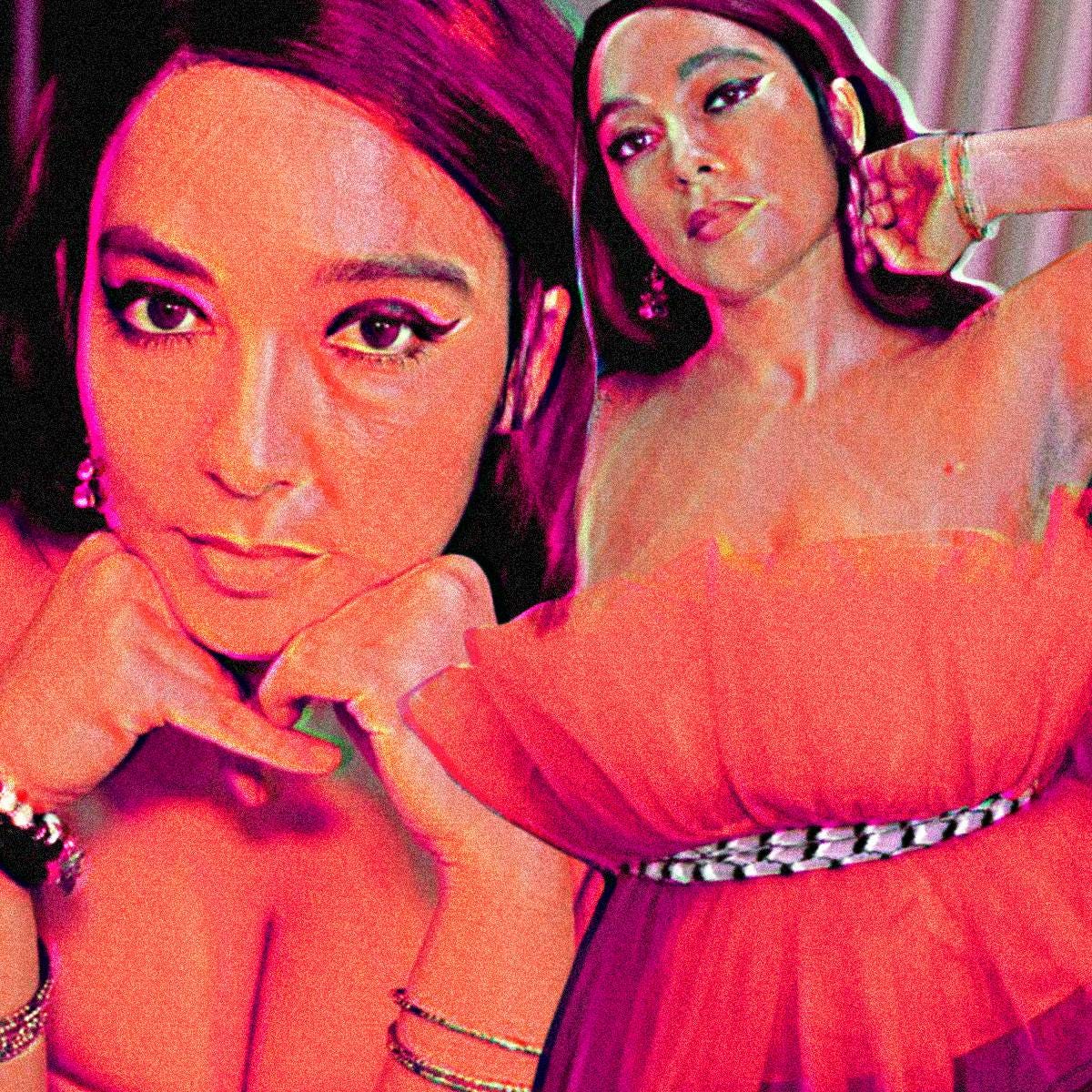
One of the most fascinating moments in rap has been watching an entire micro-universe blossom around Backwoodz Studioz. The all-time New York City all-time underground label started in 2002, but only began to gain a foothold in the mid-2010s with the success of its namesake, billy woods. From there, the grassroots nexus of rappers and beat-makers has expanded to lend its imprimatur to an enthralling new crop of artists. One of the most creatively gifted inductees has been DJ Haram, a noise artist, producer, DJ, and improviser from New Jersey, by way of Philadelphia.
After linking up with Armand Hammer through ELUCID–a frequent presence at experimental shows in the city–Haram’s name began popping up on production credits for woods and Armand Hammer’s albums. Haram’s credentials as a razor-sharp producer shine best on “Stenography,” which beats the Armand-Hammer-“dusty” allegations by setting woods and ELUCID against knocking drill drums, their vocals chopped Three Six-style into the bed of the beat with an original vocal from singer Dania woven like a sample around them. It’s an intense, masterful piece of production, pairing dense lyricism with a brilliant pop sensibility, but rap-productions are only the latest addition to the DJ Haram portfolio.
DJ Haram actually started out as a punk kid and activist, skipping college in favour of street-level organizing for movements like Occupy Wall Street and Students for a Democratic Society. Those kids, she found, listened to dance, not rap. She began to DJ at house parties and anarchist community spaces, throwing herself on the bill until she was picked up by the Discwoman roster and began touring internationally. On Beside Myself, Haram's new album for the legendary UK electronic label, Hyperdub, she slips into modes of eeriness, paranoia, and fury. The album’s track-list unspools as an integration of all her numerous music lives: the New York rap scene, the dance clubs, the noise-rock shows, and the Middle Eastern music which scored her childhood from family functions to her dad’s cassette collection.
Unashamedly political–a self-proclaimed propogandist–she is unapologetically unfiltered but, speaking from Berlin in the middle of her first solo European tour, she was also friendly and soft-spoken, flitting between a deep passion for music and indignation about the continued state of everything.
(This interview has been condensed and lightly edited for clarity.)
So, I’ve been watching your vlogs.
DJ Haram: Oh! I’ve been called out.
Well, I was actually reading some press with you before we spoke and you said that you’d started vlogging, which was news to me… It turns out some of them are like, an hour long-
DJ Haram: Okay, clearly I’m tapping into an audience who doesn’t watch vlogs because, vlogs are like… They’re long! Everyone’s got that short-form brain rot. Vlogs are long!
What was the intention behind starting them?
DJ Haram: Well, I’m a very work-in-progress kind of artist. I’m very open about where I’m at and I don’t pretend I’ve spent years and years just refining my album. Like, you can see there’s other stuff I made before the record. Before Beside Myself the only other full-length project I’ve made was Nothing To Declare with Moor Mother, and we did two music videos for that. You know… Hyperdub is a humble label, it hasn’t yet sold itself to Interscope [laughs]. So, they were like “here’s a couple pounds, make a couple videos”. Moor Mother had just moved to California, I’d recently moved to New York, and I didn’t feel like I knew what I was doing on the visual side, so I just handed them off to other people.
But it’s funny. I’m in my thirties. I’ve been doing this shit for a while and, over time, I’ve come to realise that the answers to these questions of artist development and having a sustainable practice… Those are the questions which go down in art school. A lot of people have formal training, which I never got. So, with my debut album coming out, I wanted to make sure it looked like me. I do view a lot of my work as journalism: a firsthand account. Like, I am the source, and I definitely have my own visual aesthetic, but it’s like with photoshoots: some people want to take their little photos in six minutes and leave and it’s like damn, you guys don’t even want to let me look how I wanna look! So if I put out my own videos I at least know it’s going to look like me. Besides, I’ve always been into noisy, experimental, lo-fi, weird shit, and I feel like that’s kind of popular now. You have mainstream people shooting with 4K cameras and running it through VHS filters, so if this lo-fi shit is acceptable then I’m into it. I got out my $100 flip cam. You just got to start somewhere.
The other part is that my experience is relatively rare. I’m not super successful but I think it is pretty unique to be independent and political and still have the amount of experience and opportunities that I have. I’m a millennial. I love YouTube and hate on TikTok, and when YouTube first started it was very DIY. How to make this or do this. I feel like people who identify with me in one way or another want to know: How do you be an artist? So I feel like vlogs are a cool accessible way of sharing that.
I really appreciated the hand-held energy of it. My brain is so broken by influencer vlogs I was waiting for the bubble-text to spring up on screen-
DJ Haram: Oh my god, stop. No, never that.
Some of it is actually pretty surreal: all of this dissonant music airing over clips of construction sites and American eagle decals.
DJ Haram: Well that’s the thing, like every musician I’m like, “my shit is like a movie, I could score movies,” but when you don’t come from formal training background or you don’t have a crazy agent it seems really mystical, like someone whose father is a billionaire wakes up and they’re scoring a movie. Again though… That shit is still a skill. You still got to work to do it, you’ve got to stay ready, so I am ready. When somebody asks, I’ll be ready.
I love how you’re so open about the fact that it’s often just you handling your own shit. In one of the vlogs there’s a great scene of you working on your tour poster, adding in the stars over the sold-out dates. There’s a weird dissonance in the social media era where everything is meant to look very sleek and professional, like there’s a whole team working on it, but that inclination kind of hides the fact that–for many artists–it’s pretend.
DJ Haram: Well, that’s the thing I think it’s super relevant for people who are in the same class as me. For people who don’t have good mentors they’re like, “well I’ll have a cool tour poster when I can afford a graphic designer,” and they don’t know what the next step is towards making that happen. Well, I think the next step is, doing it yourself. We got a lack of hustlers out here!
In one of the vlogs I saw that you visited the memorial for Ka too, did you ever cross paths with him?
DJ Haram: No, I think the chances that we were ever in the same room are pretty slim. I feel like he was the kind of person who wasn’t really in the mix at all even if he was rolling through projects. Although, I was incidentally with a bunch of his friends and peers when he passed because it was the night of an Alchemist & Friends show. That was the night I met Roc Marciano for the first time. But these are places I’m kind of new to, to be honest.
How does it feel, entering those well-established spaces?
DJ Haram: It’s funny because I was with my friend the other day and I was giving him a real New York hip-hop education because he’d never heard The Ecstatic in full, and I was like this was my shit in 2010. I’m very proud that I can call Preservation a friend now because he was a beat-maker who inspired me a lot when I listened to that album, and that was before I even had interest in making music, so it’s so cool to know him now.
When I was in high-school I was digging for underground stuff and I found some hip-hop I liked but most of the underground stuff I found in the New York/New Jersey area was much more amateur hip-hop, or noise and experimental stuff. Then, when becoming an activist, I found that people were much more into dance music. There were always people in those leftist, queer, underground spaces like Quay Dash, Junglepussy, Dai Burger, Cakes Da Killer, Le1, even Princess Nokia. Their stuff leant towards living in the club as opposed to these rap shows, like, a bunch of dudes that are like, Real Rap. When I met billy woods, I was like, “oh shit, you’ve been at it for a while.”
Have you seen Pres at work now, or is it more of a friend situation?
DJ Haram: Not yet. He doesn’t live in New York, he lives in New Orleans, but I’ve met him a couple of times. The first time I met him was at that Alc & Friends show. It’s kind of funny being in those super masculine, rap environments. I was there because I was DJ-ing for Armand Hammer, and Armand Hammer were like the least famous people on the line up, so I was the DJ for the opener. I was literally the lowest of the low. Then there’s a bunch of guys there are trying to be rappers and they’re like, “oh a girl!” I had to be super cool like, “Oh I don’t care. Boldy James? Boy whatever.” But then when I saw Preservation I was like, “oh my god can I take a picture!”
I asked him for his contact so I can send him music and get some feedback, because I think he’s one of the greats, and I want to do the best I can do. That’s what I think underground artists are lacking. If you’re at Sony they’re scrutinising your music… Make it better! But in the underground people be so affirming, they don’t know how to use criticism as power.
I asked that question because sometimes I’m listening to a Pres beat and I’m like how…
DJ Haram: Oh, I don’t know either! I don’t know. But I’ll vlog it. If he ever lets me do a session, I’ll vlog it.
Obviously, because it came out six months ago, you have a little space from your own album now. What are your sentiments about releasing your debut a few months?
DJ Haram: It’s cool. I’ve taken the press break now, so I’m no longer tired of saying the word “album” or hating the title. It’s fun to perform it and give it new life. I do kind of have this feeling of oh, this is how it’s done. But there’s also this feeling that I’m pissed off that people didn’t support me in doing this 10 years ago, because I wanted to do this then.
To be honest, one of my biggest takeaways is that this industry really sucks. You could survive doing what you want if there weren’t so many leeches along the way. When I was starting out I was very much pushed towards touring as a DJ, which is such a time intensive job. You have to spend hours and hours listening to music, preparing it, flying to gigs, and there’s a tonne of social labour which comes with it too. You don’t get to be a cool-ass DJ without being one of those people who’s out and about in the right places at the right time, and as a woman that also requires having to have my hair done and have a cute look on because there’s such a big intersection with the fashion world, when actually I could have just done what I wanted from the start. I could have made a weird album with people who supported me and sold them to people directly and I wouldn’t have had to throw my body across the ocean ten times a year to collect a couple of bags. I could have just been at home working!
The DJ industrial complex got me. I’m not mad, but I’m glad it’s over. It feels like I’m starting my career again. I just really try to focus that energy on a material analysis of the environment and why that happened and what role I was forced into, or what class I was stuck in.
At the same time, to be a great artist you have to live life, and synthesize all this information. I did need to grow up and have something worth saying.
You’ve said that you’re interested in being a propagandist with your art. Does that rub against the idea of improv, where the music is inherently less permanent?
DJ Haram: Art is a place where what materially backs something really matters, but the unplaceable stuff has so much value. From the Mood Playlists of Spotify to the way that fashion and consumerism intersects with US festival culture, everyone wants to create a product which is an experience. That’s very hot with Gen Z. Experience. But that doesn’t mean I want you to come to my show and I give you a burger, fries, and a t-shirt. I also want you to have an experience, but I want to give you something which changes you or moves you.
I’m educated now but I remember being a teenager and learning about Valerie Solanas, the S.C.U.M. Manifesto and her shooting Andy Warhol. I was learning about the art of that time and thinking yeah, he does seem like a patriarchal asshole, what’s up with that? What happened to all the Black artists and female artists of that era? Obviously, she’s a TERF and fuck her, but it was still impactful to be exposed to that kind of militant feminism. Not to say I support her, but we need polarising experiences. I would rather people come to my show and actively not like it then be like: whatever, I was just looking for girls… In the first world we feel like nothing can touch us. It feels like war will never come here, famine will never come here, homelessness will never be our life. Something has got to give to provide people with the impetus to engage with reality.
I know you came up in the house party DJ-ing scene in Philadelphia and now people are recreating that in quite corporate ways. Stormzy has a house-party themed club in Soho. I feel like in the UK we’re minutes away from a private equity firm doing a Rave Experience in a field somewhere.
DJ Haram: That’s definitely happening. In New York there’s a lack of DIY places, and even places which used to be more DIY, in order to survive, have had to do more major programming on the weekend. I used to grow up going to places like The Market Hotel; all-ages, DIY venues where you could see weird noise-rock shit. Now, they have the same vibe but it’s different. What those places were in 2009 has been replaced with a more polished version, and they don’t do all-ages shows anymore. I think a lot of this stuff is just youth culture, and the youth can’t access it anymore.
People also used to do these raves under the bridge by the IKEA in Brooklyn but now Tyler the Creator’s up there doing officially sanctioned parties and it’s like: wow, it took like three years to just take that spot away. It’s corny. That Tyler project is very dance-music orientated, and I do believe he’s sincerely into it, but he literally opens the album by being like, “this is not about ideology, just dance, shut the fuck up and feel good.” Okay, cool, I feel so good at the Coca Cola Taco Bell Tyler the Creator rave under the fucking bridge.
I think you’re right about the speed at which these things happen. Subversive art or artists emerge and they get integrated so quickly now. In London we had Fakemink: someone who was very part of a youth-centric sub-culture online. Within six months of him catching fire on places like Pitchfork, he’s signed to the same agency as Charli and Frank Ocean and doing shows with Drake. That process took more time before.
DJ Haram: Well, I do try to work with younger artists. I work with Ghais Guevara and a photographer the same age as him and try to be older sis with them where I can, but something I notice is that Gen Z and younger kids are much more likely to compartmentalise things. They were raised on this ugly, millennial, “get the bag,” culture. They don’t think, “I’ll start my own label and work the long way,” because it’s about getting a record deal as fast as possible. They must be like post-woke because Bun B already did 6000 talks about how not to get screwed by your record label. For me it wasn’t like, “oh we’re stuck in the underground, it sucks,” it was like we wanted to stay in the underground because the mainstream is a compromised position, and we don’t believe in class mobility anyway. If we engage with Sony, Sony is going to make money, and we’re going to be tokenised or exploited.
With Tyler’s album you mentioned a hedonism which seems to be all the rage in dance music since BRAT summer, where it’s more about giving yourself to the music and escaping reality for a while, even as the bleakness of reality is becoming unavoidable. It’s weird because inherent in music like that is an acknowledgement that things are not going great but there’s a friction because you’re not providing an impetus through your art to work out an actual escape from that downward spiral, which can only come about through subverting the systems of power and re-allocating resources.
DJ Haram: I think a big part of it is drugs. I think people are coping more with reality through drugs. There are rich people burying their heads in the sand and then there are poor people, who are much more vulnerable to street commerce and getting involved in selling and buying, or want to self-medicate without access to proper mental and physical care. Drugs are something people turn to in times of recession or depression, and that goes with dance music and Experience culture. “Let go, you’re out of your mind, you’re so fucking free.” But then, people catch strays no matter what empire is fighting with what empire. There are parties in New York booking IDF soldiers and so-called leftists play on the same line-ups as them. This is why Nova Fest itself was so contentious within dance music: holding raves on a site where there are literal mass graves. It’s like, maybe you don’t know enough Muslims, but that is so disrespectful. I don’t remember what question I was answering but…
To pivot back to the music: there was a quote from a profile of you earlier in the year where billy woods said that you “massage [your] beats like dough.” I think because of the amount of time and work you put into each of them. What do you think you’re massaging in or massaging out of your beats when you get to work on them?
DJ Haram: Umm honestly… I just think that woods has been doing what he does for a couple of decades now and he’s very used to his own workflow. He mostly works with producers who are mainly producers who don’t tour, don’t do DJ, don’t do live shows, who probably don’t even know how to do a beat set without pressing play or pressing pause… I think he thinks I work slow because I don’t think he realizes I’m still kind of new to making beats for rappers. woods and ELUCID are really good friends and it’s all a good vibe, but I literally just take longer. They’re used to producers who send them beat packs with like ten spare beats. I literally don’t remember the last time I had ten spare beats laying around.
I’m getting better, like when I made “Stenography,” I knew the parts of the beat which had the drums where they could find their little pocket and where I’d need to do some post-production, but when I was making “Trauma Mic,” I didn’t really know that. So, yeah, I’m massaging the beat but that also means looking up online how to do something… I have an MPC so I’m in my MPC hip-hop era. Rappers like rapping along to the sample. I thought it was all about the drums but with just drums, the kind of shit current people are on, that’s not enough personality to sell it.
Okay so maybe with massaging the beat he was just being polite…
DJ Haram: I think so!
You’ve had both a career as an activist and a career in music. I wanted to ask what you consider your biggest successes in both your politics and in your art.
DJ Haram: I just feel like you’ve got to count every win. Getting to the point of making a debut album which feels accurate and feels like me, without compromise, feels like a win. When I was more involved in organizing I used to do the events programming at an anarchist community space and we were always at risk of the lights going off or the landlord selling the building so every month you could keep the doors open felt like a win too. Every show, every new program, which could be sustained, felt great.
In the US, in terms of social activism, right now the only silver lining I can think of is that the truth is coming to light. There are a lot of artists who act more like politicians than artists and I think that’s being exposed. For me, in the Muslim diaspora and the Muslim world, a lot of things we experience, it feels like nobody really knows about. But now people have seen how, like, Canary Mission can just ruin your whole life. ICE just did a raid in Chinatown, and people now totally get the link between ICE and the IDF. It’s right there. That’s a win. Somebody once asked me the question about how I vet the places I play and make sure I’m not playing with shitty people, but that’s easy. The goal is to never have shitty people fuck with me. The goal is to be so alienating that they would never book DJ Haram.
Catch DJ Haram on tour with ELUCID in February.
2/4 – The Foundry – Philadelphia, PA (tickets)
2/5 – Subterranean – Chicago, IL (tickets)
2/6 – Loving Touch – Detroit, MI (tickets)
2/7 – Night Club 101 – New York, NY (tickets)
2/10 – Daily Op – Easthampton, MA (tickets)
2/13 – Unicorn – ATL, GA (DJ Haram only – tickets)
2/14 – Zebulon – Los Angeles, CA (DJ Haram only – tickets)