


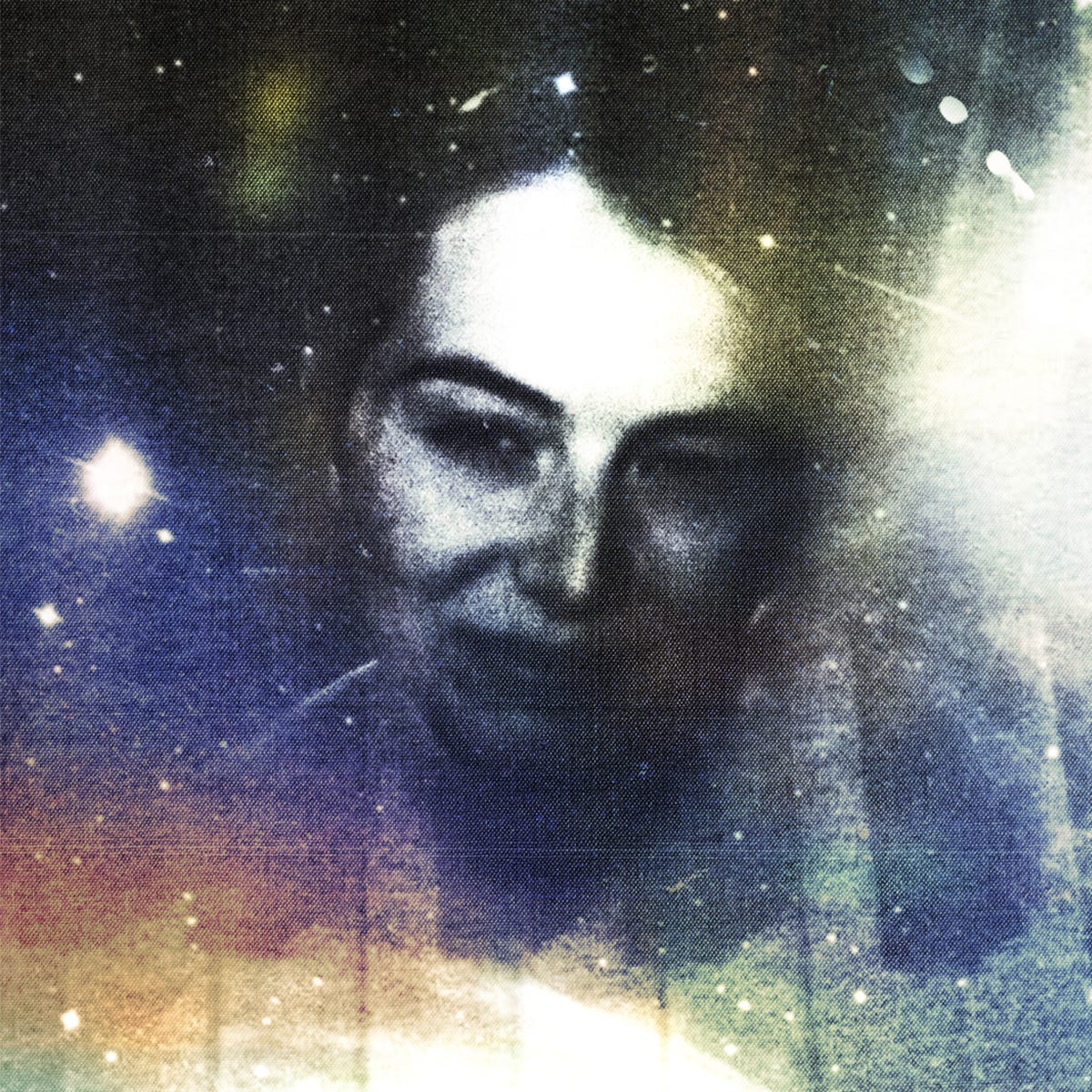
Eliana Glass is seated in her New York apartment, smiling in the sun, performing something of a séance. “There’s a phrase I love, Sydney-born, Seattle-raised singer and pianist says. “‘Meet the ghost.’ Maybe it makes more sense in another language, but it’s about not knowing who you’ll meet when you perform on stage: about being willing to be a vessel of the unknown.”
If this all sounds vaguely metaphysical, it should. E, Glass’s remarkable debut album, is anachronistic but playful, unpinnable and disorienting. The record, which was released on Shelter Press in April 2025, gestures toward vocal jazz traditions, but its sheer aesthetic range pushes against any molds suggested by the idiom. Tilt your head one way and you’ll see a warped Nina Simone; squint and you might spot a hint of Erik Satie; look at it in the right light and you’ll spy a hundred shuttered cabarets.
While E has all the trappings of a confessional singer-songwriter record—spare instrumentation, bare lyricism, and little sonic obfuscation—it’s an awfully opaque affair, stuffed with lyrics that feel like koans, ideas muttered so many times that they’ve taken on meaning only Glass can know. In conversation, she dodges any obvious attempts to nail down explicit meaning in her work, instead offering invitations for listeners to find their own lives between the verse and chorus.
This is, perhaps, unsurprising. When we speak, she’s preparing for a trip back across this continent to her parents’ home in Seattle, where she’s looking forward to watching after their two poodles. “They’re definitely the most mischievous dogs my parents ever had,” she says. Then, laughing, she pulls out a skeleton key: “They have a lot of personality. I love a trickster.”
Tomorrow—almost a year to the day after the release of E—Glass is, ever so slightly, tipping her hand. E at Home (originally subtitled Songs for Electromagnetic Voice) is, first and foremost, a demo album, but, in its aesthetic deviations from E, it feels quietly radical. Here, you can hear her tracing out still-nascent melodies, playing an out-of-tune piano and tossing the results into temperamental recording equipment. The result is remarkable: Familiar but distinct from the finalized product, each note coated in dust and smog.
Late last year, I speak with Glass over Zoom, exploring plenty of facets of her work along the way: the “gem-like” qualities afforded via vintage recording material, the importance of having an audience, her relationship to improvisation and “vocal jazz,” ghosts and disembodied voices, and much more.
This conversation has been condensed and lightly edited for clarity.
How are you?
I’m good. I’m going to go to Seattle [for the holidays]. I’m excited to go west and to hang out with my parents’ dogs, because they need a lot of help with them, because they’re crazy. [laughs]
What kind of dogs?
That’s a big dog. They’re two poodles, and they’re brother and sister. They’re big dogs, and they have a pack mentality. Which I guess happens with siblings: If they grow up together, they team up a little bit, and they’re definitely the most mischievous dogs my parents ever had. [laughs] They have a lot of personality. I love a trickster: I will say that.
Based on what I know of your work, that’s not surprising.
I want to play with that more: the trickster character. As a subject matter, a trickster, or the jester. I think that’s an interesting subject that I would like to play with more: Irony, and deceiving qualities, maybe. They’re interesting to me.
To get into it, then: Do you think you are more direct than you would like to be?
Maybe in some ways, yeah. It’s fun to be a bit more secretive, or kind of theatrical, I think. I like that. I like that when I’m an audience member, I guess: seeing those qualities in performers.
On those lines, talk to me about Pandora and the Flying Dutchman. I recently saw you performed at a screening of the film. Did you have a relationship with this film prior?
No. Joshua [Minsoo Kim, editor of Tone Glow] thought of that movie for me, and I really liked that it was about a singer. I like the idea of a movie following a singer in general. This one didn’t really—anyway, I won’t go into that. I didn’t know about it before; I liked the scenery and the images, and the details are really fun. I don’t know that I connect to Ava Gardner’s character very much, but I think she’s beautiful and kind of bizarre, too. [laughs] I’m flattered to be thought of in accompaniment to a movie that stars her and surrounds her in this very admiring way. I love the dresses that she wears.
When Joshua and I first talked, I told him it would be fun to do something with the voice in cinema. There’s this film critic that I remember liking a lot when I was in university named Michel Chion. He writes about the voice in cinema, and how you hear a voice, but you don’t see a body on screen. You have the impression that this is, like, a voice from God or something. Psycho is a good example of that. I was like, “It’d be fun to think about that.”
I remember seeing Joshua’s screening of The Texas Chain Saw Massacre. I loved how when you see live music, most of the time, you see the musicians. You see them onstage. In this context, it was a movie theater, so it was pitch-black and dark, and all you could see was a small light where the performer was. I couldn’t even see the performer. That experience was really awesome, because it allowed me to not focus on anything except the music. I couldn’t be distracted by visuals or anything like that. I was really excited by the chance to be alone: A voice in space.
Talk to me about finding your way towards the piano. Is that something you remember doing, or has it always been a part of your life?
Yeah. I remember playing the piano when I was a kid, and liking creating something, and then liking other people hearing it in the room. That’s my first memory of the piano: Just experimenting and enjoying other people listening.
So, from the jump, there was a performance aspect baked in.
Yeah, I think so. It’s never just me, myself, and I. I think, at other times in my life, I maybe felt that way: “I do what I do for myself alone.” But I don’t think that way any more. I think I like to make things that other people enjoy, and the audience is a key part of what I’m making. I went to this reggae concert last night, and I saw these guys who were playing percussion instruments outside afterwards, smoking. I was like, “Thank you for the music.” They said, “Thank you for being here. Without you, it would just be a sound check.” [laughs] And that’s true. I agree.
That contrasts with that idea of hearing a voice without the vocals: Subtracting some performance from it.
I think you’re right. Maybe it’s not the performance element that I like, exactly. It’s the chance to let other people enjoy it or experience it. Performing is the hard part, I think.
Talk to me about how you found your way towards jazz.
I found it after singing in musical-theater contexts. I wasn’t very good at dancing, and so I thought, “Maybe I can find a new way in.” I didn’t really like playing a character, either, and jazz was sort of like, “Okay, you can bring who you are to this old form.” I liked that freedom.
So it was a vocal thing from the jump.
Yeah. I’ve always been — I’m a true-and-true singer. Anything else, I’m trying to become more. [laughs] It’s always been the voice. Always.
You’ve mentioned a love for Brazilian music. What does that mean to you?
I love Brazilian music so much. I got interested in a lot of Brazilian folk songs in high school, when I was, like, 16. I worked with someone who helped me learn how to pronounce the words in Portuguese. That was super fun. She showed me how to sing those songs. I love Brazilian singers so much. I love Elis Regina and Nara Leão, and Gal Costa. I love Antonio Carlos Jobim and Vinicius De Moraes. I love Brazilian folk music endlessly, and there’s nothing quite like it in the world. So that’s all. I love singing those songs, and I love the chance I had to learn them from a young age.
Do you feel that tradition filtering into your contemporary understanding of how you make music?
Maybe in a very subdued way. I would hope so, but it’s hard. I don’t know that an outside person could like my music — I don’t know. I definitely think in terms of vocal delivery, maybe that’s something that’s a bit more obvious. Compositionally, I don’t know. But in terms of vocal delivery, I really like the approach of vibrato straight-tone voice that I feel is linked with Brazilian music for some strange reason.
I always felt like it didn’t need ornamentation. What was being said was plain and matter-of-fact, and there’s something strong about that emotionally, rather than making it ornate.
On E, were you explicitly trying to tangle with jazz or singer-songwriter histories with this record?
No, I don’t think so. In fact, I like to get away from jazz in a lot of ways, and trust and listen to the voice in my head. That’s how I was approaching it. Those are all influences I’ve had: I mean, Nina Simone, of course; I’ve listened to those records so many times. I don’t know how to describe it, but they’re deep in there. I wouldn’t say I’m trying to make something like them. I guess I was just trying to make something like myself.
At risk of an impossible question: What is that? What is something like you?
I don’t know. I guess something that connects to myself as a kid, maybe. Something that feels like I made it; something that feels familial, or something, or related to me.
Is that familiarity tied to anything in particular?
That’s a good question. I guess it feels familiar to me if I like it. It could mean it’s relevant to my life or my experiences. But it could also mean that it’s something more abstract, and sort of a filter, I guess, of myself or my experiences. I strive to make something that’s original, but I don’t really think about trying to do something a certain way. I just want to be, or make, and then whatever happens after is up to other people to describe.
It’s up to other people to put it in the box.
And choose their own meanings.
Do you find your records have different meanings to you day-to-day?
The songs I listen to?
The songs that you make.
I think everything can be like that. The longer you spend time with anything or anyone, the more that is there, I feel like.
One would hope.
I am of the opinion that that is true. The more time you spend with something the more fascinated you’ll be with it. Even boring things: Things that you might see as boring at first, I feel like, a lot of times, those end up being the most interesting.
The amazing part of it is: Other people experience things — songs and music — differently, too. We all experience songs differently. You might connect with one line that someone says and another person might not connect to it at all. And that, I think, is so kaleidoscopic and amazing. Meaning can be induced endlessly, basically.
Talk to me about that search for freedom. In an interview earlier this year, you talked about “thinking about improvisation in a more free way.” What do you mean by this?
I’m talking specifically about what is expected out of a singer when they improvise. The answer to that is kind of vague. Something I used to think about a lot is what a singer does to improvise within a jazz context, because for instrumentalists it’s a lot more clear. For a singer, it’s: Are you gonna improvise with the words? Are you gonna make words up? Are you gonna not use words, use vocalizations? I always felt limited by those three options. I was like, “What if you improvise the whole thing from the start,” or maybe you go about it without those constraints? What if you take a text and improvise the way you sing that?
I felt like improvisation could take different forms. It doesn’t have to be a solo or something. It could be a device you give yourself. For example, maybe singing lines of a song that you wrote, but only saying one part of the sentence in each sentence that you make a new song. I feel like those kinds of chances for improvisation didn’t really exist within a jazz context. There wasn’t anything for singers, at least in my experience. There’s a lot of people who don’t want singers to improvise. They don’t like the way that sounds. I found that kind of frustrating.
You started jazz through standards—correct?
I guess so, yeah. Through other singers, listening to them.
Who?
Nina Simone. She sang other people’s songs, and she made them completely her own. It’s so cool; you never knew she didn’t write them.
When I play, I find immense freedom in structure. A standard, for me, says, “Here’s your box, and you’ll fit within that, and you can do anything in that space.” To me, there’s a freedom there, but I could see chafing against that as an attitude. I wonder where you land on that. It sounds to me like it’s a kind of rebellion.
Maybe. As an example, I really like Jeanne Lee, how she addressed standards. I was like, “Wow, this is really radical and super cool.” It makes the song into something you like. It’s not a trite song. It’s so modernized, in a way. It’s something new and inventive. I love standards, though. I remember reading something about how Jeanne Lee felt limited by jazz voice, too. I always identified with that, as well. There’s certain expectations of what a singer should and shouldn’t do.
I want to pull on a thread from earlier. You mentioned this idea that this record, in a way, feels intimate, or personal, or familiar. Earlier this year, you said, in singing, “the performer has an opportunity to forget themselves.”
Do you feel you do that?
Yeah. I’ll say this: I think all people are full of contradictions.
I feel the performer has the chance to disappear, or something, in the darkness of the room and the sound and the music. That just happens naturally. You forget what’s happening: Sort of being put on the spot, and you start talking, and you’re like, “I don’t know what I just said.”
I think that’s a good experience, because it’s one where you’re not in your head, and you’re present, actually, in a kind of interesting way.
Is that state where you’re being pushed towards immediacy something you find yourself chasing in your work?
Not necessarily. I think it just finds you on its own. I enjoy some magnetic moments that happen when you’re performing on stage, and when you feel that something sounds like it resonates or something. It feels like other people can feel it too. I feel like a lot of these moments are out of your control, so I just enjoy finding them when I do.
When’s the last time your work surprised you?
I was in a play in the summer, and I helped score and act in it. It was directed by a friend of mine named Angelina Hoffman. Right before we went on for our first night, she said to everyone, “Guys, remember, love your audience.” I never thought of that before, because I think it’s something that’s said more in a theater context. I really liked that, because it’s something I don’t really remember to do. But it’s true. If you love your audience, they’ll love you back. When you make experiential music, or music that feels like it isn’t always the most listenable or easy-listening, sometimes you can feel contrarian to the audience. I never really thought about loving my audience in those moments. I’ve thought about it ever since I heard it.
Another thing that I love from someone else: “Meet the ghost.”
Tell me more.
It was said by Félicia Atkinson, who’s behind my label, Shelter Press. I don’t know if it was intended to sound that way; maybe it makes more sense in another language — in French. But it’s about being open to - not knowing who you’ll meet when you perform on state. Not in a physical way, in a non-physical way. An apparition that you might meet, as a vessel. Not sure what the word would be - some vessel of the unknown that you might want to invite in. Being willing to.
Would you believe me if I had a question that’s explicitly about ghosts?
Oh, my God. [laughs] I love talking about ghosts.
What do you mean by that?
I like the idea of non-physical things.
What can you tell me about Emahoy Tsege Mariam Gebru? [One song on E is named “For Emahoy.”]
She wasn’t a ghost when I wasn’t a song. But she is so amazing. She has such a beautiful spirit, and I love her piano playing so much. At the time I wrote that, it was on a summer evening on my parents’ piano. I decided to sit down and try to make something, I guess. There’s many failed attempts at that. [laughs] This one was like, “Whatever I’m doing right now, I like, and it reminds me of Emahoy.” That’s why I called it that.
The other proper noun here I’m curious about is Agnes Denes. That tune is the one where you’re talking about expanding your approach to improvisation. But why that text in the first place?
I had a book of Agnes Dens’ writings, and I was really inspired by her in general. I think she’s a brilliant artist, and so imaginative. I guess I had it open to that page. [laughs] I thought, “I wonder what would happen if I did this.” [laughs] It’s a bit of a trial. It’s a relief when something is written for you to sing — in terms of the words, at least — for me. I like the challenge of having to fit words that were already written into a song that I might have written. I guess it was like, “I wonder if I could make this into a song.”
I loved the text and how the text made me feel as a reader of it.
How does it make you feel?
Really anonymous, and sort of small, I guess. I liked that feeling, like part of the great human chain or something. Rather than individual and unique.
How’d you come to cutting a record in the first place? Why now?
I was making some songs in 2021, 2022, maybe 2020. I was always used to performing them, but then I was encouraged to record, and it came together. The songs worked together. I don’t know if I’ll do that quite the same way, but I felt like they all linked up in a good way. It was sort of a natural process.
Do you feel as though developing an independent and easily accessible body of work has changed your relationship with performance?
Yeah. I’ve realized that I like making things for other people more than I’ve given myself credit for or given that idea credit for. I thought, for a long time, that I just made what I made for myself. Now I don’t think that. I guess I enjoy the chance to make things for other people. That is the continuation of my output and my work and my performance of it.
I’ve gotten the sense you’re resistant to this line of questioning here, but I’m going to try again.
When you were putting together E, is there a broader tradition or form you think they are indebted to? Is there an artistic lineage you’re looking towards?
Do you think there is one?
I don’t know. It’s tempting to slot it into “vocal jazz” because of the form, but it often doesn’t feel like that is the main focal point. I am genuinely unsure. That’s part of what has drawn me back to it. It’s challenging for me to place it.
I think that’s up to the listener. I have no secrets I’m bearing or withholding. [laughs] That’s just the way it sounds. And it doesn’t necessarily sound like that to me, but that doesn’t mean it doesn’t sound like that to someone else.
I recognise I am asking you to articulate the interior of your own craft, which is often a bit nebulous. I couldn’t tell you how I write.
I think the music speaks for itself. I don’t write my music with a certain genre or something in mind, necessarily. It’s just something that’s out on its own.
What is something you recently came to learn about yourself?
I don’t like the same things that I used to.
I used to really value certain words and lines that I draw from when I’m writing my music, but I look at those lines and words, and I just don’t really relate to them or know how to use them any more. I always feel like I’m changing. I guess life always feels like it’s changing.
What do you consider to be “vocal jazz”?
Great question. Most of the explicitly vocal jazz I’ve spent time with has been pretty traditionalist. What about you?
Sarah Vaughan, or Billie Holiday, and obviously Ella Fitzgerald. But when I hear “vocal jazz” as a phrase, it makes me think of choirs that sing jazz. That’s what they would call the jazz choir at school when I was in high school. So when people tell me that, I think, “Whoa, that’s what you think my music sounds like?” [laughs]
What’s next on the horizon for you?
I’m going to be home with my brother and work on some new songs, and walk my parents’ dogs, and enjoy the Pacific Northwest.
I also have a little release that’s coming up. It’s a demo album: Some of these songs in their most original form. That’s just with piano and voice. They’re all recorded an old reel-to-reel, so the recordings have a very different quality.
Why a reel-to-reel?
I like the way old recordings sound, plainly. I wanted to use a device that resurrected that sound. It was a simple setup with one microphone and this little machine that constantly broke, and I had to get repaired all the time [laughs] by an amazing guy who helped me named John from Northwest Audio in Seattle. This little device had a lot of personality. I loved using it, because it really made the recording so gem-like. It was so physical and awesome-sounding, sort of like a little jewel. I feel like [with] modern recording, you can’t really feel the piece. It’s flatter.
With this old style of recording, you could feel the ups and downs of the recording. You could feel the voice. It was the terrain of it or something. That’s why I really wanted to use this machine. I’m not very technically advanced, [which] is another reason. [laughs] I like simplicity. I like the way my voice sounds with the piano alone; that’s a good place to do my music. It’s my favorite way to do my music. That’s the message behind the medium, I guess.
Can you help me understand what you’re talking about with that physicality?
You can almost hear the particles of someone’s voice in an old recording, or the dust in the recording. I know those things aren’t true. It’s not like you’re hearing the particles, and the dust you’re actually hearing is actually static. But it feels true, and it has so much character to it that it leads to more heightened imagination. It’s like silent movies: when you don’t hear the voice of the actors, you imagine the voice that’s there.
I feel like what’s true doesn’t have to be what’s honest, always. I don’t know if that’s the right way to say it, but it feels true. Maybe it’s not honest but it feels true. I think that’s what matters.

Damn , thank you for putting me onto such a special artist. This E record going v hard.