


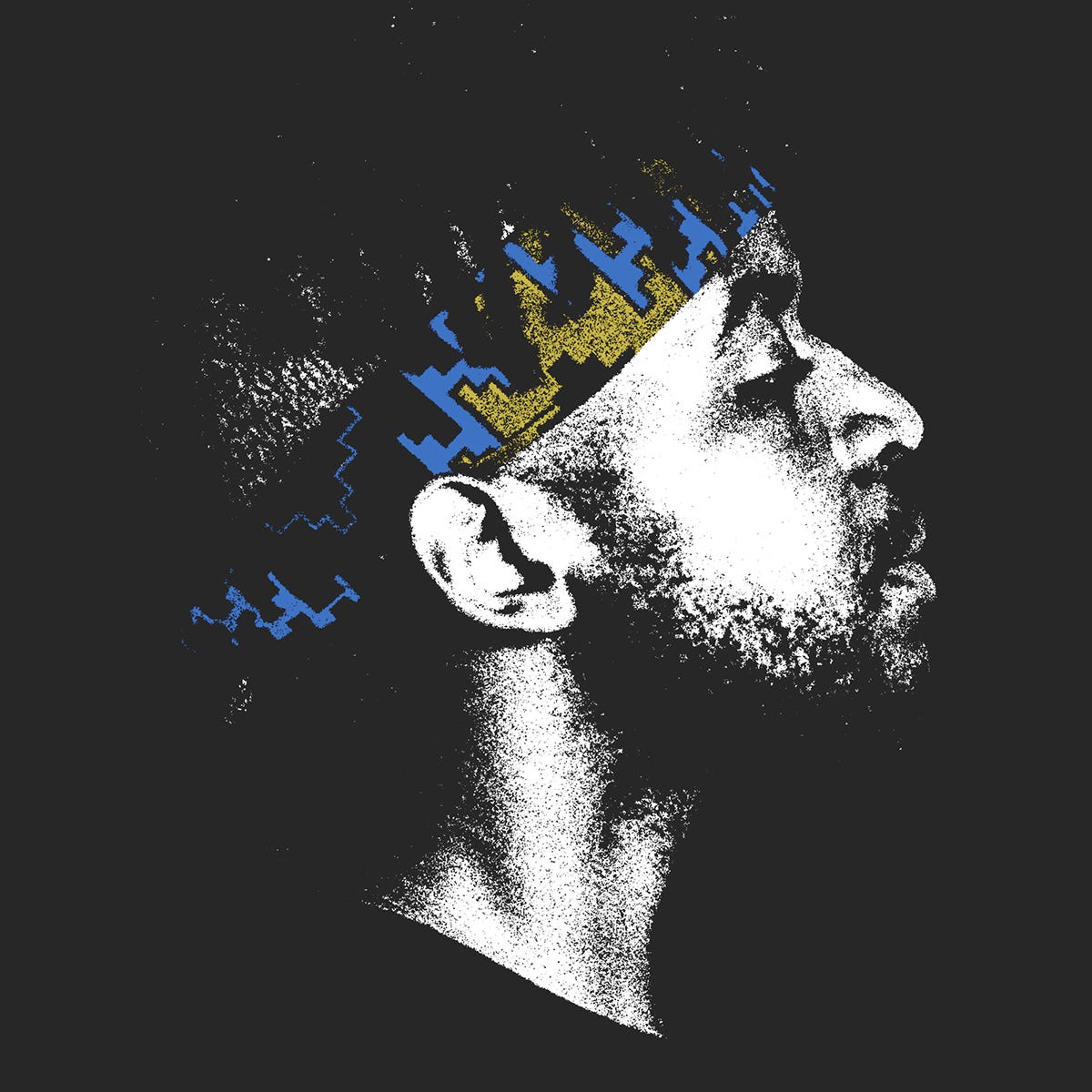
It was a pleasant surprise to learn that the gravitational pull was real. After Elucid and Sebb Bash had completed their new record, I Guess U Had to Be There, the avant-garde rapper from New York finally flew to Switzerland to meet the veteran and increasingly in-demand producer. “It was nice to see that the chemistry extended from the cyber sort of chats, the WhatsApps, into the world,” Elucid tells me over the phone. “It was real in person.”
The pair had carved out (well,) two days to write and record 48 Hours, a vinyl-only EP addendum to their album. While the producer is self-deprecating about his actual instrumental chops, Elucid remembers the living room of Bash’s Lausanne home littered with marimbas and xylophones. “He’s very much boom-bap in the sense that that’s the form, that’s the structure of it,” Elucid says. “But when he’s finished with a beat, it’s got this retro-future thing that I think is really cool. It reminds me so much of what I love about that sound, but there’s an uncertainty about what’s going to happen next: the choice to use and sample certain instruments or certain records, the tempos, the way things are chopped. That’s exciting to me.”
I Guess U Had to Be There was made in two distinct phases. First were the remote sessions that yielded “First Light,” “Contata,” and “Coonspeak.” But logistics and creative momentum dictated that they would be set aside while Elucid finished 2024’s growling REVELATOR. When he and Bash returned to their collaboration, they landed on what Elucid describes as a “not-quite-breakbeat, kinda jazzy, kind of outsidery, musique concrète” sound that makes plenty of space for his dense, dilating verses that conjure the image of a rubber band snapping back into its ideal shape.
In the past decade, Elucid has probably become best-known as one half of the duo Armand Hammer, with billy woods. That act has been incredibly prolific—Mercy, their second album with Alchemist, was released last fall, and its multiproducer follow-up is already finished—but so have its members. What follows is Elucid, in his own words, speaking about four of his most fascinating works: three full solo albums and a 41-minute, single-track Bandcamp collage of sound nearly as unpredictable as the man himself.
These answers have been condensed and lightly edited for clarity.
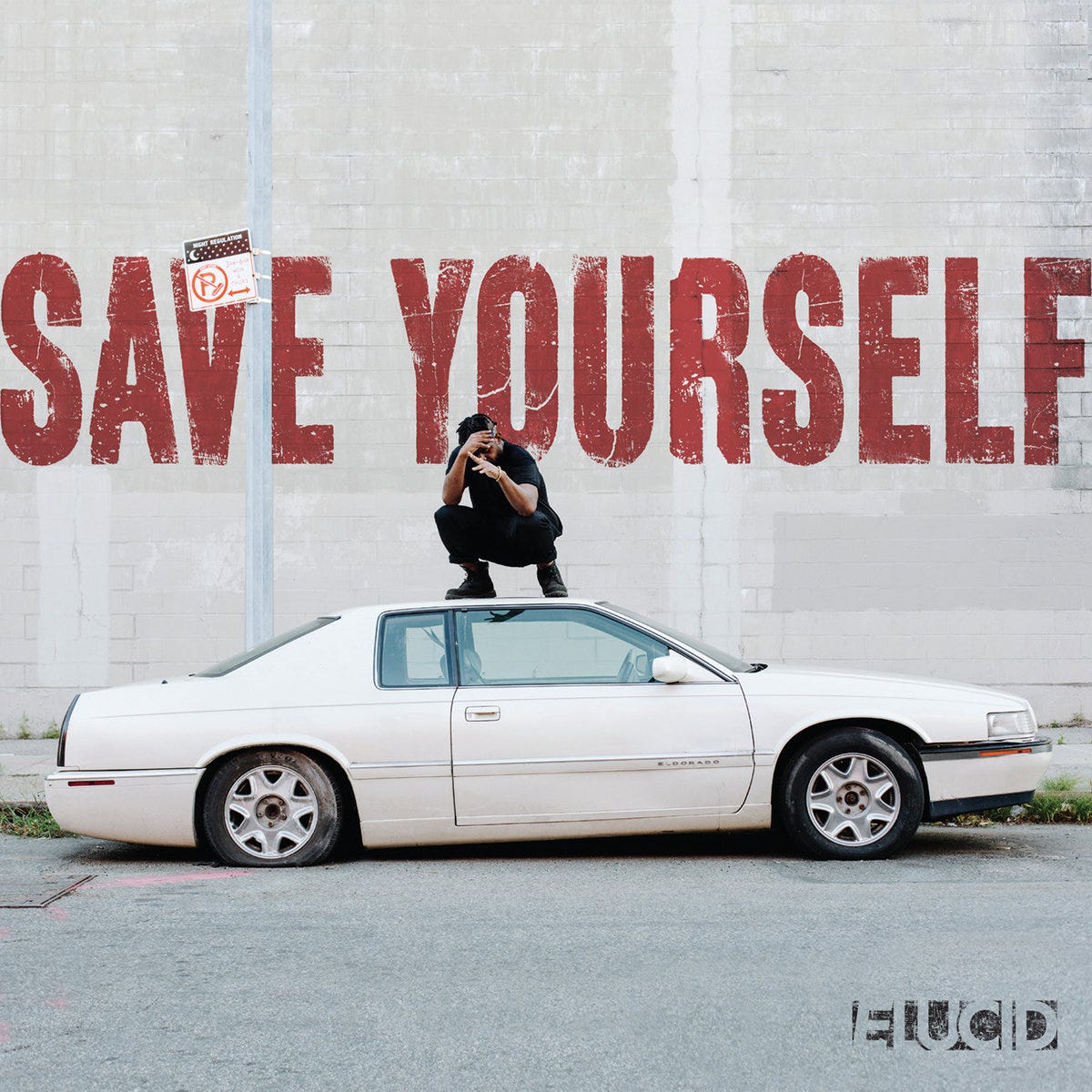
Save Yourself [2016]
Save Yourself was definitely a statement of extracting—or showing myself as extracted from—the ways of my youth and how I was raised within the church. Having already been a grown person and realizing where I’m at, being self-determined enough to know that I’m doing something different these days and it’s working for me. I think I was just trying to assert my independence. And it just afforded so much opportunity as my first time being able to put a record out on vinyl. That was the whole reason why I signed the deal [laughs].
Like I said: I’ve shed these things. But it is really difficult to escape how I was raised. It just pops up. It’s in the programming. So in these attempts to reprogram, you’re speaking a similar language, consciously knowing there’s another way to do so. And thinking about the idea of the church and being like, ‘We don’t need a church,’ and blah, blah, blah. But then also realizing the church shows up within our community in many different ways. It doesn’t have to be the church where people get dressed up and go on a Sunday. Know what I’m saying? It’s a place—literally in the Bible was like the church is where two and three are gathered and in a particular agreement, which can apply to many different situations in this world. We’re smoking weed in a circle. There’s three of us. This is church.
We hear the term community, how that’s used in all sorts of nefarious ways. But in the sense of community, I feel like this country has moved on from the church. The church has been co-opted by right-wing nationalists. I think the church has yet to reckon with that in this current moment. And when the people don’t want these ideas and institutions, we throw them shits away. They become irrelevant. The church might be in that place right now in the United States. But the idea of a group of people who believe certain things, and want to see change, or want to take action to make our world a better place—I love that idea. And I love the idea of church being the foundation for that. But it doesn’t have to be a church. It’s a group of people that have these ideas and we want to work to make what we want to make it. I like that.
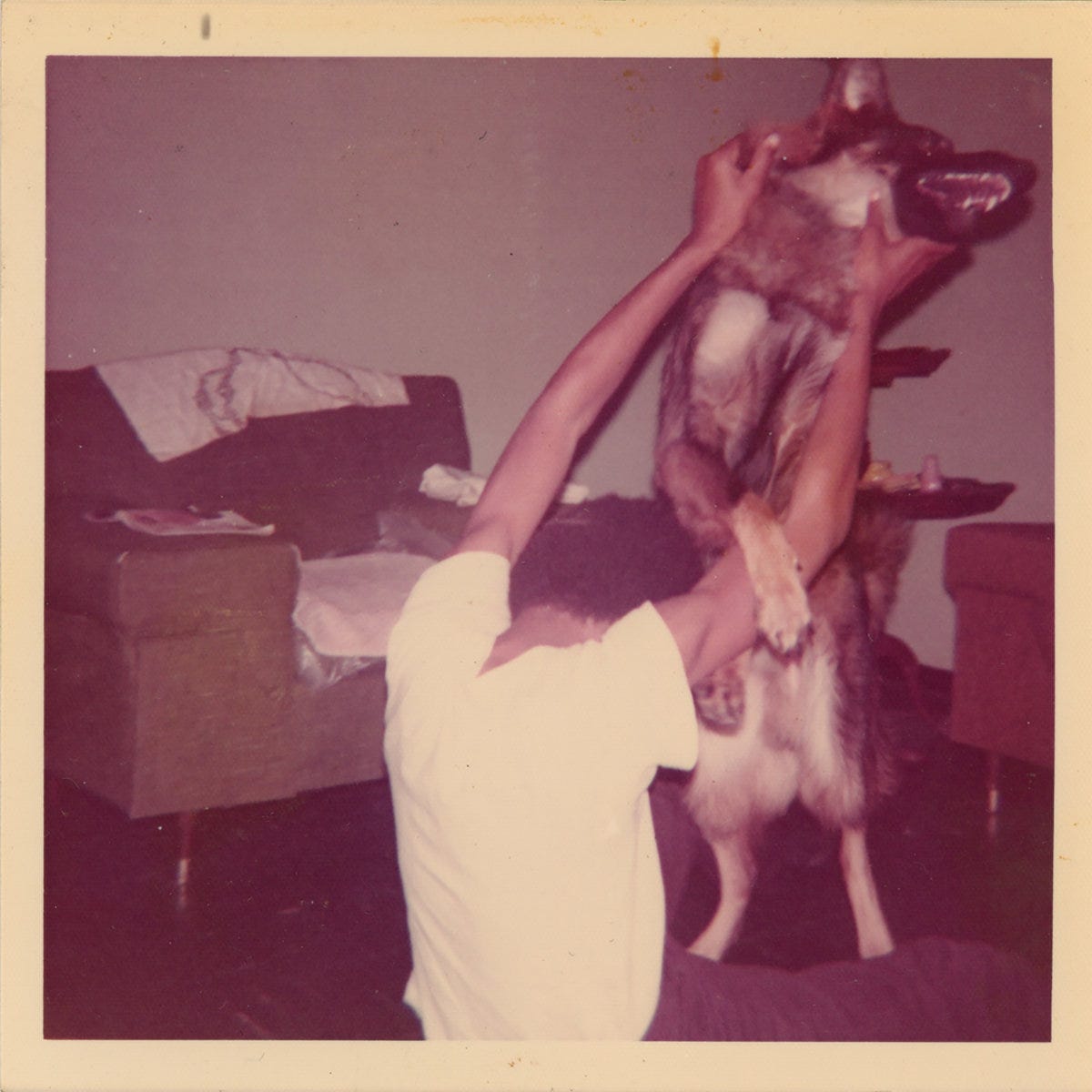
I Told Bessie [2022]
I didn’t have the title until I was actually going through family photos. I didn’t know that [my paternal grandmother] had passed maybe a year and a half prior. So in the cleanup, when people pass, you’ve got to go through all their shit. Things go in the trash, things get saved. And I found that photo; I was working on the album and I didn’t have a title at all for it. We had been like, ‘What are we going to do for the image?’ I found that and I was like, ‘Oh, here we go, here we go.’ The thing about letting songs live… songs were written, but I still hadn’t had this title, hadn’t been able to make the connection between them until I saw the photo. And then once I had that, when I listened to the songs again, I was literally hearing my grandmother.
I think that's a magic quality of art. And maybe—I hate these words, the pop-psychology, pseudo-woo-woo whatever. But: the intention. You know what I mean? You think this way, and then you kind of start moving that way, and then other things around you are attracted to that, and it sort of snowballs. Once I found that photo, I of snowballed into just seeing the songs and where they stood in the context of this relationship with me, with my grandmother, and my family.
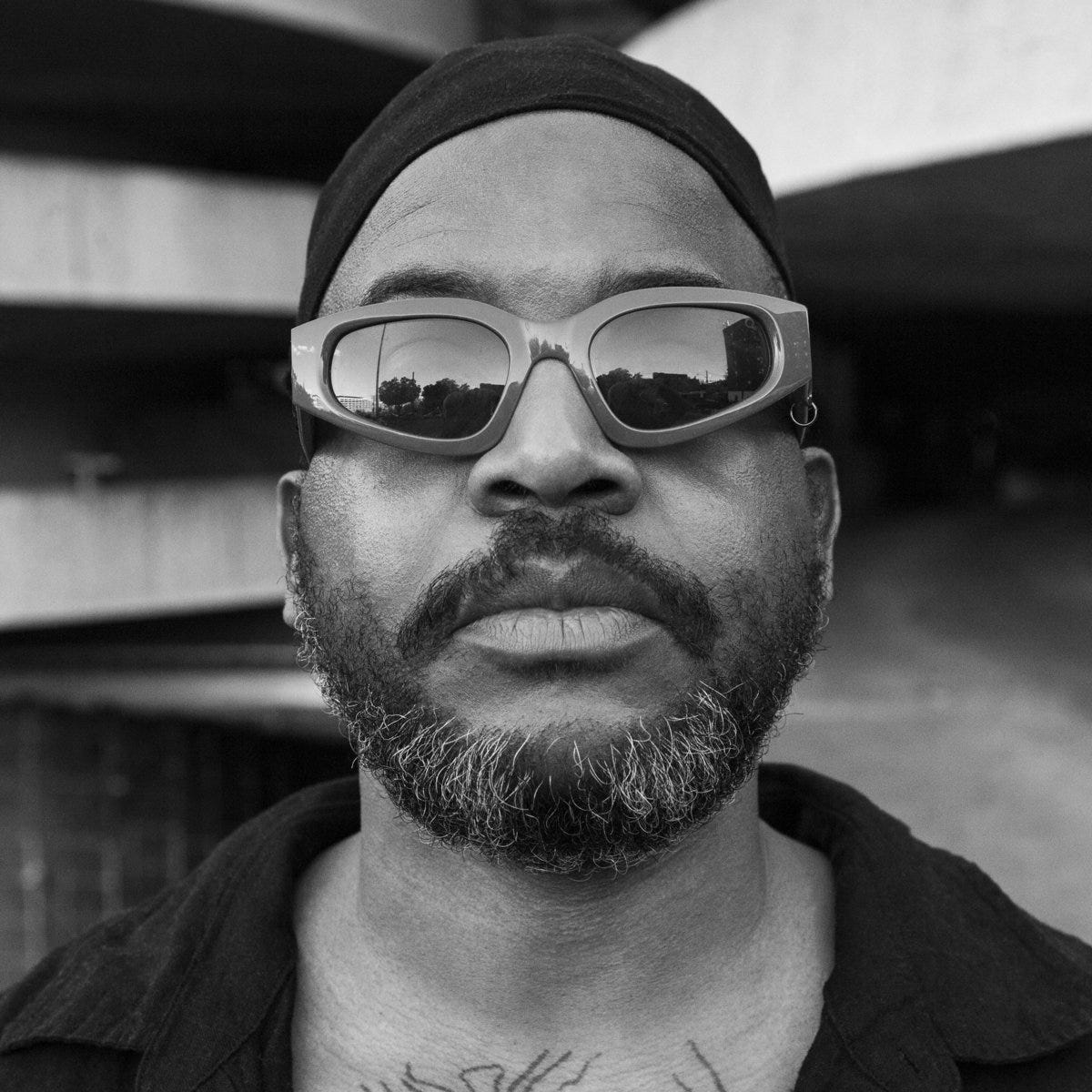
REVELATOR [2024]
Oh, man, there was an anger. It was a clear cut anger and frustration, I think with both where I was at life and also with the world. October 7th had just happened maybe a month before the album came out. There were strange things going on within my home. So yeah, it was just a frustration. I think that anger showed up in a lot of the sound choices, maybe in the roughness of the album. It’s full of textures that I listen back to now and I’m like, ouch. It’s pretty stormy.
I really love doing those songs live, and they go off really well. Songs like “RFID” are so cathartic to do live paired against something like “The World Is Dog”—which, I feel like a Black Trent Reznor when I do that song, man. that shit gets so ill. The crowd reactions that I’ve been getting since I’ve been doing that song, I don’t know why—maybe it’s just that drums, bass, and noise is a powerful, elemental thing—but that song definitely gets the loudest applause of the night every single night on tour.
INTERFERENCE PATTERN [2024]
I hear this sense of adventure. When I listen to that record, it’s an Around the World in 80 Days kind of thing. There's so many different sounds. On that record is when I began to work with live musicians on my own production. Like, A lot of those drums were played by [Human Error Club’s Mekala] Sessions. There's some strange woodwinds and things that I had musicians in the studio playing with me.
The cover is a photograph taken by Bruce Gilden. He’s a New York photographer, and I believe that was taken at the Met. He’s famous for the style that he does where he just kind of runs up on people and hits you with the flash. He was really active in the ‘70s and the ‘80s in New York City. He’d hit you with the flash, and then that’s the photo, flaws and all. You’re not ready. I guess he got too close and the security guard was like, nah, nah, nah.
No Osage, no SDRNM, okay fine, but no Valley of Grace? We gotta draw the line somewhere or it's just anarchy!
Great read, love this interview format!