

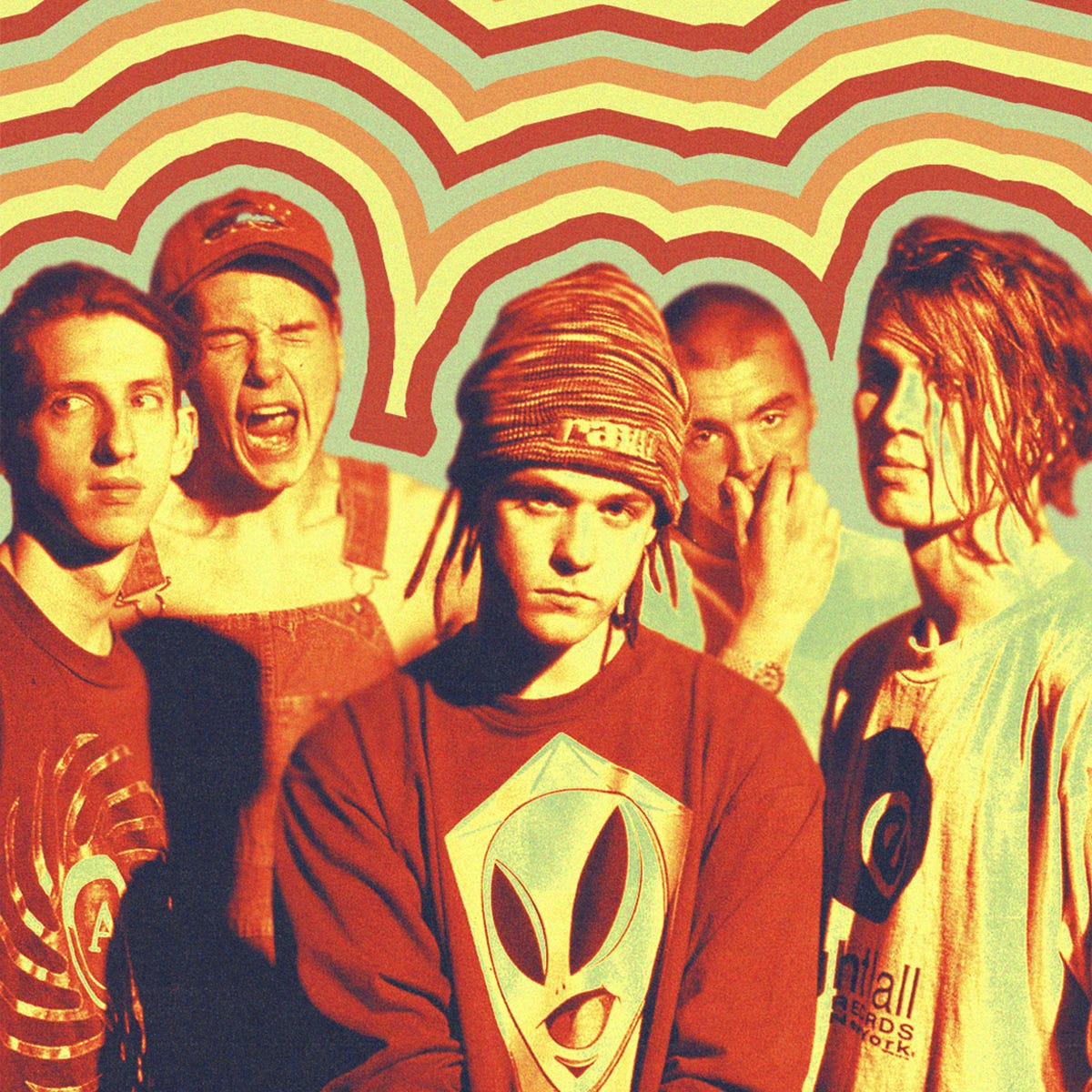
February 1990 — Ian Dench and his bandmates from EMF are flying from London to L.A. to clear a sample for “Unbelievable,” the lead single off their debut, Shubert Dip. From the moment they recorded it, they knew the song had appeal and felt it’d be well received. What the British band didn’t know was that a slight by comedian Andrew Dice Clay, and a fleeting Rick Rubin meetup, would lead to one of the ‘90s’ most massive hits.
“Unbelievable” arrived at the perfect cultural moment—a sweet spot in the early 90s’ when rap really broke into the mainstream—where “Ice Ice Baby” wasn’t yet a laughingstock, and we’re a few years away from Kris Kross’s backwards fashion statement, and Sir Mix-a-Lot’s ode to protruding features. It was this era of openness, this innocent interim where the band emerged. They were huge fans of rap, so having to clear a sample directly from Def Jam (on behalf of EMI) wasn’t a burden—it was exciting.
Dench, the group’s principal songwriter, explains the musical landscape in Britain at the time: “The indie disco clubs in the ‘90s’ played whatever cool records were coming through, a mixture of British bands like The Smiths and Echo and the Bunnymen and breakthrough hip-hop like Public Enemy, De La [Soul], and Cypress Hill.”
“Unbelievable” begins with drums not unlike what was on many late ‘80s and early ‘90s cuts, a loop plucked from a Beats Breaks and Scratches record. Dench explains the anchoring sample’s origin and usage: Originally it was from The Soul Searchers “Ashley’s Roachclip” that was first used on Eric B. and Rakim’s “Paid in Full” and went on to be used in many ‘90s tunes, including PM Dawn’s “Set Adrift On Memory Bliss.”
As for the vocals, Dench famously wrote the lyrics and hummed the tune while attempting to ride his bike one morning, hungover and heavy-hearted from a recent breakup.
Before the fateful L.A. trip, the group performed “Unbelievable” on Jukebox Jury, a British talent show where the decision was evenly split between the audience and celebrity judges. The audience loved it, but the judges (one of whom was notably The Cure’s Robert Smith) did not. The band stuck with their intuition and finished the album in hopes of getting a record deal. “Unbelievable” was the last song they recorded for Shubert Dip, and the first take is the one we’ve come to know.
In L.A., Dench and crew were met with surreal interactions that cemented the song’s fate. The song contains a sample of comedian Andrew Dice Clay’s trademark “Oh!” that punctuates the chorus. “[My bandmates] Zac and Derry saw Andrew Dice Clay driving away from the Comedy Store. They tried to talk to him,” Dench says, letting out a laugh, before adding: ”He just flipped them off and rolled the window up.”
The next day, they went into The Rainbow on Sunset to grab a bite, and there was Rick Rubin, having lunch. Dench remembers a casual chat. “So I politely explained the situation in between gushing about his brilliant records.”
Rubin told them to send a fax to his office in the morning. “He cleared the sample the following day,” says Dench. “A lovely man.”
Dench fondly recalls L.A. as a heyday when they felt like they were “driving into their dreams.” Clearly, they did so because anyone who is of a certain age will no doubt remember “Unbelievable’s” inescapable ubiquity.
Here, through earnest anecdotes, the original bandmates remember the late Zac Foley, their bassist responsible for the song’s standout bassline, and detail the song’s making. A lifetime later, Dench and the group’s frontman, James Atkin, recall the internal joy of a young band on the rise.
Let’s start by talking a bit about Zac and the song’s bassline. Do you recall Zac coming up with his part? Tell us a bit about him.
IAN DENCH: “Unbelievable” started with the phrase “The things you say, your purple prose just gives you away, the things you say, you’re unbelievable” and the riff which Zac and I played in unison. We were into the West Coast bands who absorbed hip-hop into their live sound, like The Red Hot Chili Peppers and Faith No More. And Zac loved to pank his bass. Zac was a prince amongst men; a naughty, wickedly funny, rebellious prince, like a cross between Prince Hans of the Southern Isles and Aron Stark. He was our best friend, and we miss him dearly.
The song was a bigger hit in the States than it was in the UK. Tell us about the moment when you got the news.
JAMES ATKIN: Yes. It hit the top spot in the U.S., which was magical, but it didn’t quite reach number one in the U.K. We were held off by that Brian Adams song from the Robin Hood film, which was massive and seemed to stay in the charts forever that year.
JA: The most wonderful memory was crossing the border in our tour bus from Canada back into the States. We had heard the news a couple of hours earlier and, as you can imagine, we started the celebrations big time. The border officers were a little unamused at our partying antics and, for a moment, were considering not letting us back in as we were very intoxicated.
ID: It felt… unbelievable! More indescribable, but I’ll try. When you pick up a guitar and start playing in a band and hear all the stories of bands taking off in the U.S., of musical euphoria, adoration, and excess, you dream of it happening to you but don’t really believe it will. So as we drove into the US that night that James described, with a six-week sold-out tour ahead of us, it was like driving into our dreams.
How did the song change your lives? As cliché as it is, it must’ve felt overnight.
JA: The shows became bigger very quickly. Only months earlier, we’d been in a transit van staying in very cheap hotels.
ID: James and I wrote Schubert Dip entirely, and the band had its own joy, which is why the music had something. Success was as if we were letting the whole world in on that. It’s difficult to let the world join your band. It has very big opinions, and it messed with our internal peace. It has taken years for James and me to find that again.
Is it true that Ian came up with the song’s melody and words while riding his bike? Please give us the full story on that happenstance of a moment..
ID: Yup. All the songs on Schubert Dip were about the girl who had just dumped me. We had been less-than-honest with each other, and I was looking for lyrical concepts when it struck me that the word ‘unbelievable’ meant both that she was wonderful and less-than-honest.
The guitar riff and the verses just popped out in a moment. James wrote the amazing rap, and there you have it. To this day, I have lyrical concepts and musical energies constantly swimming around my head. It is just a way of ‘being’ which sort of tortures me, but which I love when moments like that happen.
JA: Ian arrived at a rehearsal with the song and riff buzzing around his head. There is an early home demo that we recorded one night. You can hear our friends chatting and larking about in the background.
Were you guys aware of Def Jam and its history?
JA: We adored hip-hop, along with the dance music that was coming through at that point. We came from an indie guitar background originally, but embraced all genres. Hip-hop was so fresh and cool. There were a few big UK hip-hop records we listened to non-stop: Buffalo Stance by Nene Cherry and 20 Seconds to Comply by Silver Bullet. Our producer, Ralph Jezzard, had just done the Strychnine Remix of the Silver Bullet track. I think this is one of the reasons we chose to work with Ralph. You can hear hip-hop influences in “Unbelievable.”
We also loved the electro sound that morphed into hip-hop, acid house, and Soul 2 Soul, and how they absorbed hip-hop in a very British way. The EMF sound was a response to all these influences. It made our lives when Afrika Bambaataa remixed “Unbelievable.” It is still my favorite remix.
The song contains great samples. Tell us a bit about the Gylan Kain one and how you guys came across it. Tell us about the drums, too.
ID: Ralph Jezzard had a drum sample, which I programmed on top and gave the drums a rocky edge. Ralph bought most of the source material for the samples on vinyl and old cassettes with random recordings from the radio. We went through it all together, sampling and dropping them into the track. This was a new way of working. We were trying to emulate the hip-hop pioneers in New York. We loved how you could make random connections and how it made our quirky British songs sound cool and American. It just felt right the moment we heard it, and it is part of all the things that fell into place naturally.
Take us into the recording process and what you remember about that day.
ID: We recorded “Unbelievable” in Gooseberry Studios in Tulse Hill in South London because they let us sleep on the floor to save money. Derry tried to cook an egg in the microwave, and it exploded, so the whole place stank, but we didn’t care. We had just signed a record deal, and we were on top of the world. The drums were programmed as I mentioned, Zac and I played our guitar and bass parts. I had already programmed the synth on a Yamaha CS-10 and piano on the Casio FZ-1, as we used these as part of our live sound. We played around with the samples, and then it came to the vocal. We wanted to capture the easy energy the song had live, so we got a couple of beers, and James went into the vocal booth with Derry so he wouldn’t feel so on the spot. He only did two takes; we used the first one.
What comes to mind when you hear or play the song these days?
ID: People ask, ‘Aren’t you fed up with playing “Unbelievable?”’ but we never tire of it because the audience always goes crazy. Watching folks grooving away with smiles on their faces is what this is all about. And I think James and I found our joy again. We have loved writing new material. The band is better than it has ever been with new bassist Stevey Marsh and drummer Aid Todd. Even though we’re older, our live shows are more beautiful and chaotic than ever.
JA It’s a song that never seems to fade away. We are so lucky to have it in our arsenal.