


There’s a scene in Rosemary’s Baby where Minnie Castavet, one of the film’s villains, played by Ruth Gordon, sits on her bed while speaking on the phone. It’s a strange shot, taken from just beyond the doorframe, angled so that only Gordon’s back is visible. The moment radiates a muted but potent menace, suggesting all manner of unsettling notions lurking just out of view. When describing its effect, cinematographer William Fraker, initially skeptical of Roman Polanski’s insistence on framing the take this way, recalls how audiences would lean to the right in their seats, straining to see into the room and assuage their unease. But it doesn’t work; you can’t see beyond the door, leaving you with the nagging suspicion that some secrets may never be revealed.
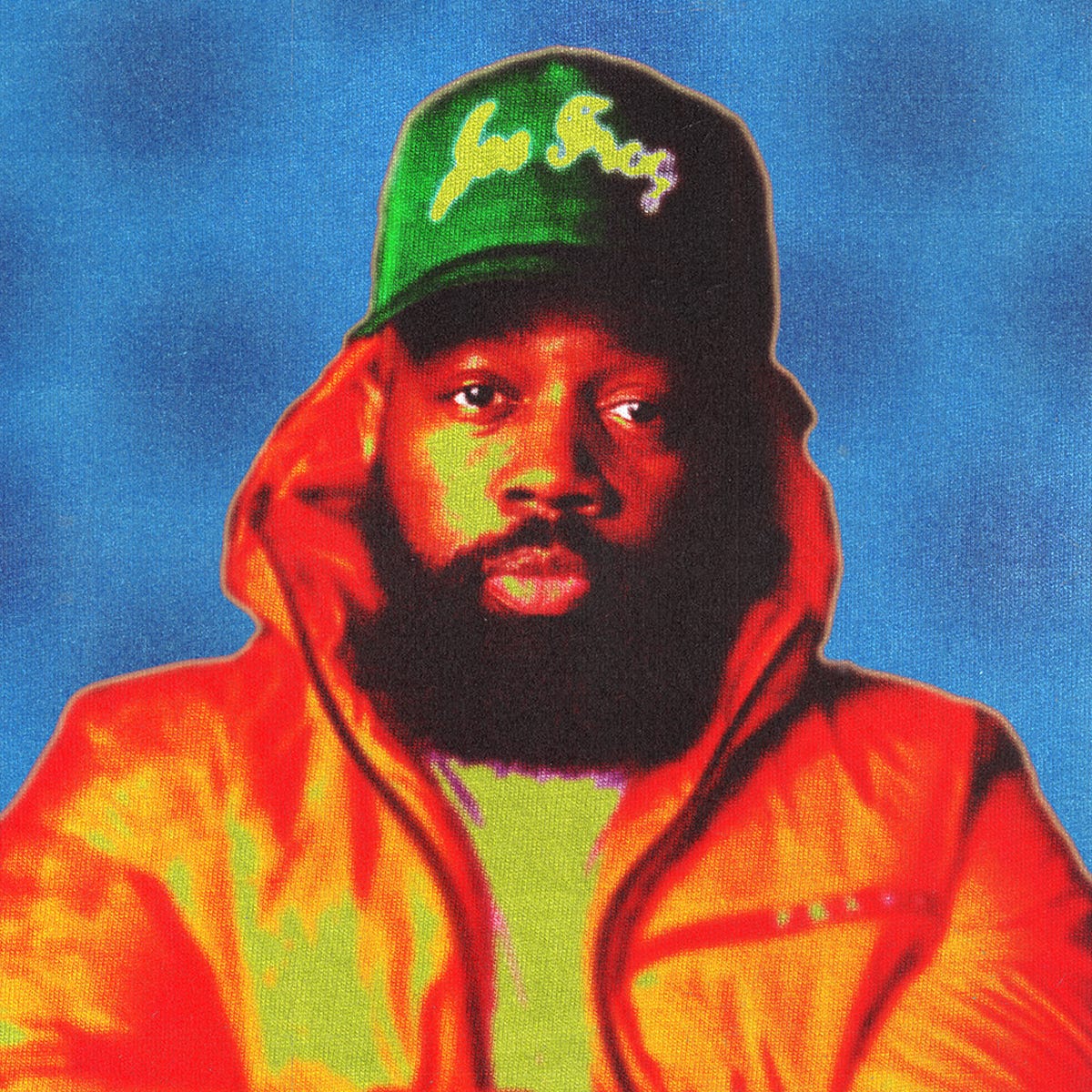
Though he tells me he’s never seen the movie when I bring it up, Harlem rapper Errol Holden relates to the way Polanski and Fraker kept the threat of danger both peripheral and palpable. On “Visvim Vandal,” the first song on his 2025 breakout record, Mulberry Silk Road, Holden’s verse fades out before he finishes his thought. The tapering begins as he says, “Not one for provocation,” and the last audible line is “My voice…” If you strain, you can hear that he’s still rhyming, and you may be tempted to boost the volume to catch a few more words. It’s a quietly harrowing way to begin an album, hinting that no matter how brutal Errol’s writing is—earlier in the track, he calmly declares how he’ll “make your whole world wheelchair accessible” and mentions the ubiquity of spent vials in a Harlem playground—there’s always something we’ll never be able to access. It’s a trick he repeats throughout his intense and unflinching catalog, leading us further into his world, his torchlight making shadows dance in the corners.
His story is one of those music industry miracles that seem impossible these days. After a lifetime of hustling (“Even with police presence/My crack spot went unmolested,” he raps on “Sister Pamela”), he up and quit one day, opting instead to dedicate his life to music in his late 30s. He’d been writing raps since childhood and recording throughout his adulthood, though mostly as a hobbyist, penning songs for passion instead of survival. “I would only go to the studio a few times a month,” he recalls. “I would write some sort of music every day, but it wasn’t at the forefront of my existence at the time.” Just after he left the streets for good, the COVID-19 pandemic hit, offering an opportunity amidst tragedy. Holden scraped together the funds for studio sessions here and there, tracking as many songs as he could with each visit. Eventually, he had enough to compile an album, which he sent to a select few through Instagram DMs. As word of mouth grew and his bank account steadied itself, Holden connected with talent manager Mike Heron, who introduced him to a world of industry connections. In only a few short years, he’d gone from social media inboxes to deals with Mass Appeal and Roc Nation.
Holden burst onto the greater rap landscape in 2022 with Joe Frog, his fifth proper album but first available on streaming services. It was an incredibly accomplished debut that felt like being sideswiped by a truck, with Holden reporting from corners and alleyways, holding direct, unblinking eye contact while always scanning the periphery for any perceived threat. Joe Frog marked the beginning of a highly visible period of prolificacy, with Holden releasing multiple albums, EPs, and singles each year, all marked with spacious and skin-crawling production. His song “180 Schoolyard,” a striking, diaristic origin story, caught the ear of the late Ka, who played it for Long Island mafioso rap maestro Roc Marciano, who then reached out to Holden. Marci executive-produced Mulberry Silk Road and featured Holden—the only guest—on his excellent 2026 album 656.
When I caught up with him in June, Holden, now in his mid-forties, spoke about his life with a mixture of square-shouldered confidence and wide-eyed gratitude. The vinyl pressing of Mulberry sold out within minutes, shortly after the May release of Supreme Magnetic 2, another captivating, effortlessly listenable addition to his pantheon of trippy, diamond-edged, bullet-sweating missives. He’s quick to explain that the depth of his archive means there will be no shortage of forthcoming work, as there is a lifetime of stories to tell.
This conversation has been edited for length and clarity.
What was the catalyst to quit the streets to pursue music full-time?

