


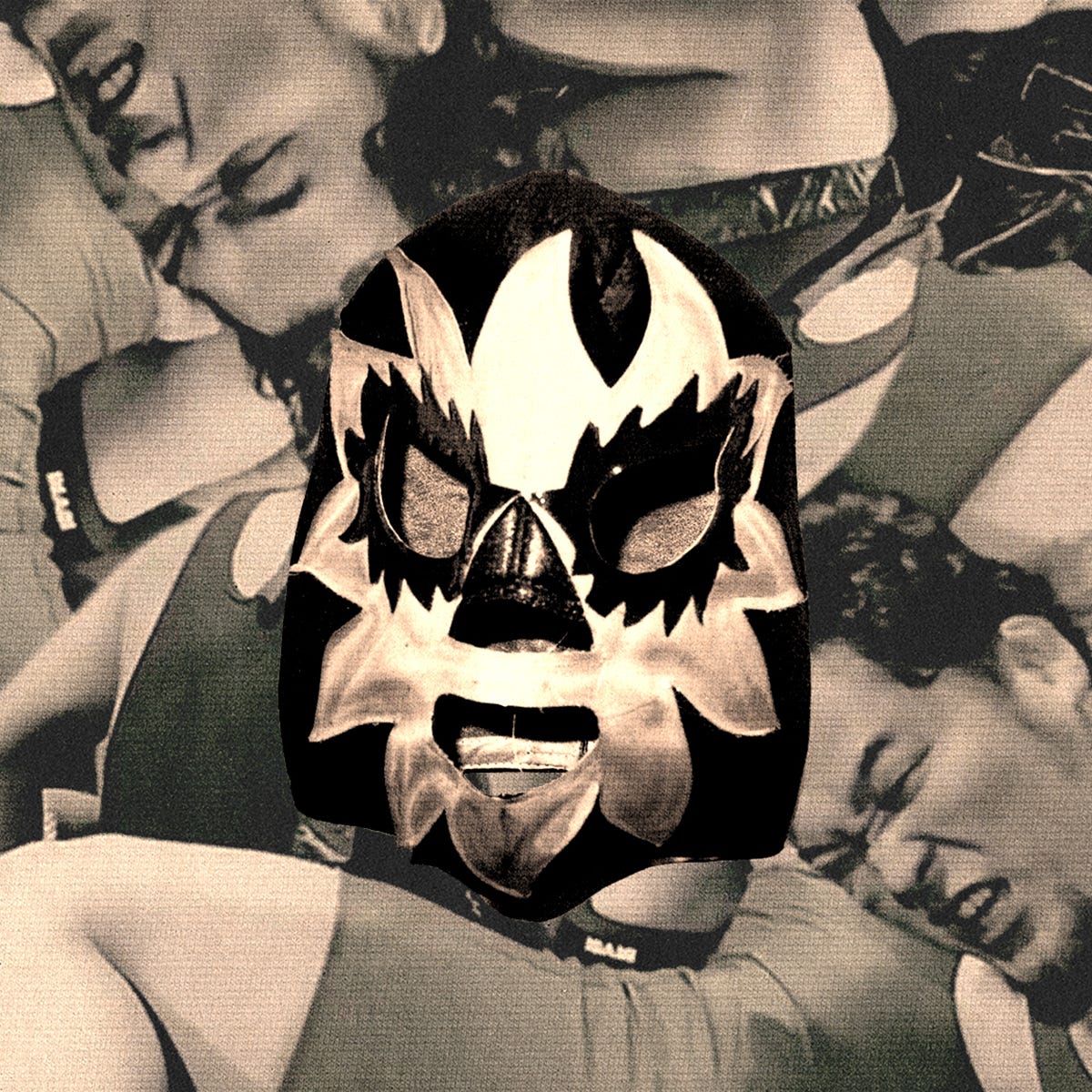
Kanye West has been out of ideas for a long time now. This didn’t use to be a problem. On 2016’s The Life of Pablo and Donda, from 2021, there were, if anything, too many of them; unfinished and too-finished iterations of different impulses clouded rather than deepened one another. (Even 2018’s ye, a creative nadir, came during his sprint of 7-song albums produced in Jackson Hole, Wyoming, which yielded some excellent music from other vocalists.) This was the maximalism that began with Late Registration in 2005 and reached its apex eight years later, on Yeezus, where radically disparate parts were synthesized into a domesticity fever dream that is completely singular.
But Kanye’s post-Donda music—well, his post-Donda albums—have been shockingly devoid of that sometimes-controlled chaos. (Singles like “Cousins,” which is about youthful sexual experimentation with his male cousin, and “Heil Hitler,” which is called “Heil Hitler,” are best understood not as music per se, but as provocations meant to sustain a news cycle during what Kanye now describes as manic episodes.) This is true on a musical level, where even his most accomplished recent production has oscillated between straightforward adaptations of currently popular styles and diminishing retreads of things he’s done before. After two decades where this was distinctly not the case, you could reasonably expect to hit play on a new Kanye West album and find something that feels perfectly in step with what you heard earlier that day on the radio or on Rap Caviar.
In a way, this makes sense: Albums like his VULTURES collaborations with Ty Dolla $ign are rushed and overconsidered but fundamentally lazy. What’s perplexing is that this sameness is true of his writing as well. (I am again excepting “Heil Hitler,” which is about being divorced and Maybachs and Twitter—and Adolph, too.) This is a man whose every public appearance during those bouts of mania sends TMZ, and presumably more than a few lawyers, into a spin cycle. How does he avoid saying anything even accidentally interesting on his records?
A little over a year ago I wrote, for GQ, about an early version of Bully. The headline (“It Brings Us No Pleasure to Report that Kanye West Made a Good Kanye West Album”), which I did not write but do stand by, rankled a lot of people. But the essay is actually about how it was impossible to receive the record independent of Kanye’s public persona, which by that point was in lockstep with a segment of the American population that is downright evil. One of the first comments I saw when I hit play on the album-length video was “j3ws control everything.” You can cordon your work on Vimeo but your army of little neo-Nazis with anime avatars will show up and do their best to make you proud.
That first incarnation of Bully was gentle and fluid and even optimistic. It also featured a few instances in which I suspected artificial intelligence had been used to flesh out Kanye’s vocals, or create them from whole cloth. It was later reported that I had vastly underestimated the extent of this AI usage. When he was prepping for the release of this new, streamable, apparently definitive version, he offered a single clarification: “No AI.” That that would ever have to be clarified is, of course, deeply depressing; what’s worse is that the human form somehow sounds much hollower.
If you look hard enough, you can always see the money. What was always clear to many people, and eventually to gamma, the Larry Jackson-founded ultra-capitalized distribution company, is that Kanye could effectively keep printing cash if he put out palatable, nominally new records at a moderate pace as an excuse to play a series of one- or two-night engagements in stadiums around the world. Hence Bully; hence the shows in Mexico City and Los Angeles, and the upcoming dates in New Delhi, Istanbul, Arnhem, Marseille, Reggio Emilia, Madrid, and Algarve. Hence the full-page apology for his antisemitism in the Wall Street Journal. Hence, hence, hence. The machine whirs on.
On the weekend this new version of Bully hit streaming, there was fretting online, only some of which was tongue-in-cheek: What were we going to do if the album was good? The honest answer was always: probably nothing. If Donda had been 50 percent better, which would have made it an extremely good record, it’s unlikely it would have restored Kanye’s music to a truly central place in pop culture. Remember, after Graduation, none of his records did particularly well at radio, adored as they were by critics and his fanbase. At least since Yeezus, and perhaps dating back even further, his celebrity is tied to his reputation as a musician as much as his current output.
Couple that with his heinous public remarks, the allegations of workplace and sexual abuse, the iced-out swastika, and inflicting Dave Blunts on the public at large, and the idea that he would be welcomed back as a populist hero was never realistic. (Last year, he made a song called “HEIL HITLER.”) You hear people say that few famous figures are ever actually “cancelled,” and that’s true—if you have a critical mass of fans, you’re always going to be able to make money. There is a vast appetite for redemption arcs from people who make us feel nostalgic, and a seemingly endless capacity for people and the press to forgive most misdeeds. But culture now is uniquely balkanized; Kanye’s new music plays to a crowd that doesn’t care at all about which artists are getting invited on the Grammy stage, or Good Morning America, or “Fresh Air.” He’s going to go to Arnhem and sell $75 hats.
Obviously, Bully was not good enough to force any sort of mass reckoning. This was true of both VULTURES just as it was true of both Dondas. What’s shocking, however, is how quickly it has evaporated from the culture. This is a social phenomenon but also a fair reaction to the music: The shaggy charm from the original Bully has been crowded out by what is blunt and anonymized. Travis Scott appears once, but would be at home pretty much everywhere. The uncanny valley soul flip of “Preacher Man,” the late-Dilla twang on “Whatever Works,” the urgent pulse of the opening few beats—gone. It’s becoming increasingly clear that that’s what has happened, and will continue happening to, work this devoid of vision, of idiosyncrasy, of any sort of spiritual center. You picture Adam Smith dropping a pre-order link in the chat.