


“Our memory does funny things, right?” Lauren Napier, the musician and multidisciplinary artist, is in a unique position to know. Napier, who has written and performed under the moniker Punk Rock Doll and variations of her given name, recently published Tattooed, Pierced, & Fucked-Up: A Scene Memoir 2004–2008, a book that—despite the seemingly straightforward subtitle—is a sophisticated excavation and examination of memory. The text is split into two sections, the first being a collection of journal entries, poems, and reportage that Napier self-published in 2008. These entries are prefaced and annotated by Napier in the present. The second half is unreleased interviews and diary entries. Strewn throughout are pieces of ephemera that paint a cryptic, then panoramic portrait of a person and a scene.
“I love the structure because I feel like it puts it a little more into context,” Napier says over the phone while on tour to promote the book. “Not that 17-year-old Lauren needed to be justified in whatever she was feeling or thinking, but it allows me to have a little more of a conversation without putting it out there fully bare.”
In conversation, Napier mourns the things we all do: the closed venues, the records disappearing from the digital archives, the once-colossal cultural markers turned ephemeral by capital, or chance, or simply by time. Her rendering of the musical ecosystem in which she came of age counters that not through grasps at comprehensivity, but by starting in the subjective. “I’m glad that I had backup copies of hard-copy things to reference,” she says. “But at the same time, I think that the important piece of being in a scene like this is that even if we’re all living different experiences, they’re paralleling one another. So by speaking for myself, it didn’t feel terribly presumptuous to also speak for a piece of the whole because I am a piece of that whole.”
And still, some of the book’s most arresting passages are sketches of others. Excerpted below is her remembrance of Stefan Pruett, the Arizona-born artist who fronted Peachcake and later released music under the name The Guidance. In 2020, Pruett, who was born with a congenital heart condition, died. He was 35 years old.
Pink Bunny Hat
Peachcake is an anomaly. My friends were repulsed by Stefan: hisTourette’s-like utterance of “yeah”; his refusal to give in to tacit fashion codes and insistence on wearing only pajamas and bunny hats; his aggressive denouncement of social mores. Once, at the end of tour, when tempers were tried and candles were ignited at both ends, he dipped his fingers into his buffalo sauce at Denny’s and said, “Imagine if this was your menstruation.” Stefan was often crude, but unapologetically himself. Like the Germs of GG Allin with a trailer full of stuffed animals. I was the opposite of repulsed: I wanted to know how a person achieved this level of social indifference; something which I thought must be comprised of equal parts bravery and indifference.
“I’ve never had a girlfriend in LA. Want to be my girlfriend?” were the first words he uttered to me when we met at the Knitting Factory in Hollywood.Stefan was always sincere. I would learn this later, but then I did not know how to respond. Taken aback by the forwardness of his inquiry but also intrigued by his lack of tact, I didn’t become his girlfriend but I did hop in the van for a tour adventure. Peachcake often had a need for a merch person and they didn’t have one on retainer. I was happy to fill the role.
The first time he asked me join Peachcake on the road, we were in a parking lot in LA. I had plans to return to Arizona to spend time with my mother.Before following the last minute impulse, I realized I had no clothes for the following days. Stefan, determined I was coming with to fulfill the empty position as merch girl, said we would buy clothes the next day; that it wasn’t a worry. And it wasn’t. It also wasn’t difficult to convince me; all I wanted to do was tour with a band. Plus, for a Peachcake show, one just had to don a sequined onesie or a tutu and a military jacket. Some of the most treasured pieces in my wardrobe come from those Peachcake moments. Anything went, sartorially speaking. I have never again found a hat that felt like that lagomorphic lid. Wearing Stefan’s bunny hat became a staple of the daily routine. Forgotten for a moment on the merch table or sitting on the dashboard, waiting for a head to bless. No cowboy hat claiming etiquette, just its unraveling, Pepto-Bismol pink fibers, woven together with Stefan’s smell and hair. Atop the head it felt like a world of its own: cloth ears flopping, feeling like an extension of scalp and self.Maybe that is how Stefan could jive and hop like he did: the power of the bunny hat.
The Peachcake realm was a little chaotic, filled with moments of indulging one’s inner child. Milling about with fans after a show at Chain Reaction was like a tailgating party if you took away the alcohol and added plushies and confetti. The trailer attached to the tour van wasn’t filled with instruments—though there was a keytar that John took on stage every night—but, instead, contained a tour-sized version of Toys “R” Us.
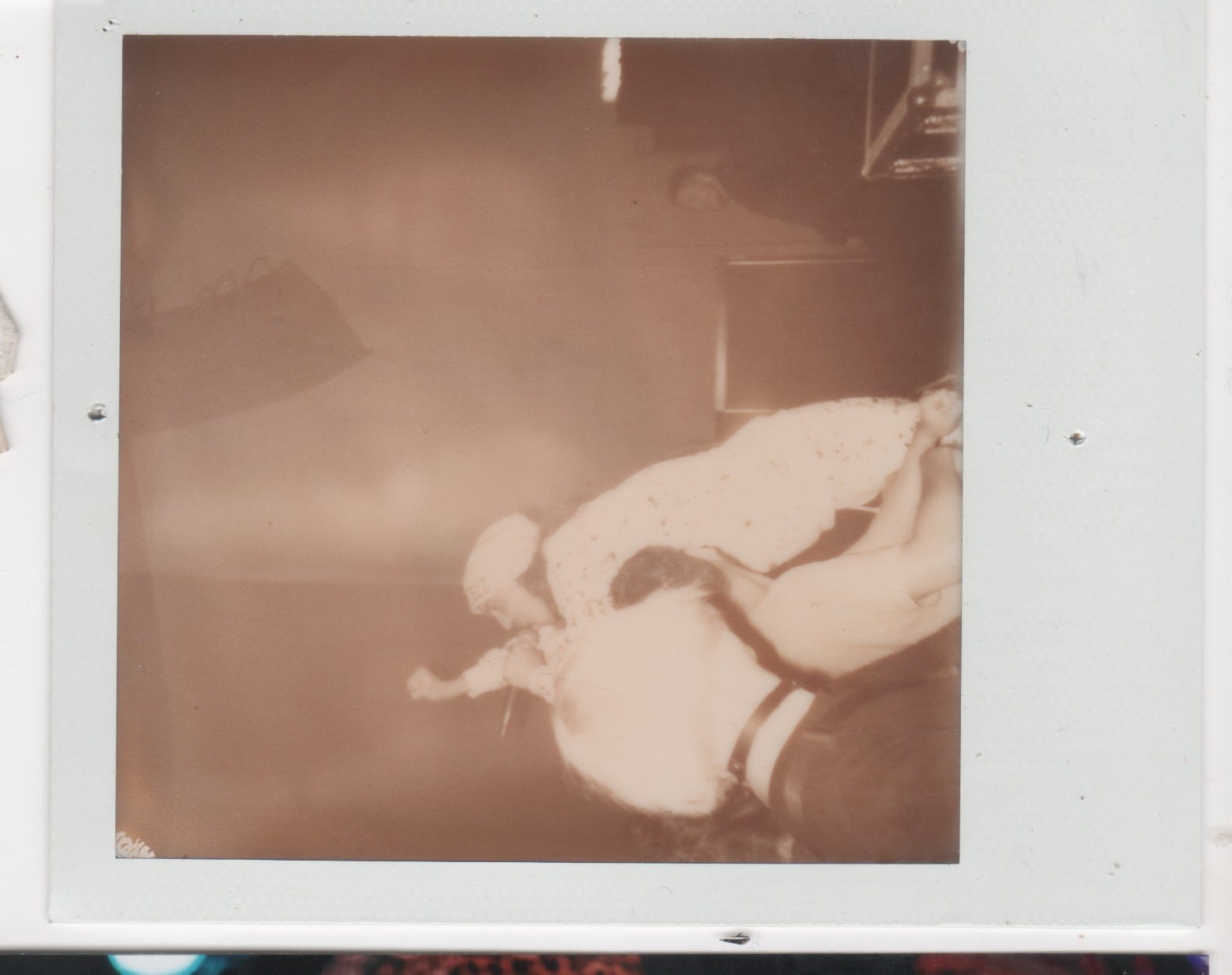
We jumped on beds. We exploded a confetti cannon. We led dance circles, but the band wasn’t without its darkness: Stefan’s sickness,John’s mental issues, Mike’s screaming normalcy. Michael Kraft joined us on some tours—a welcome respite from the rising tensions between Stefan and John. We spent many a pause reading Berenstain Bears books in bookstore aisles. On the Peachcake tours, I had need to find moments of solace, moments of allowing myself to stew in emotions and not be“on” for the Peachcake reality. When searching for diary entries from this time, I had to find the book I was reading: 12 Days on the Road. The antics of Peachcake paled in comparison to the those of Sid Vicious; John would never knowingly spread crabs to the band.
But against the backdrop of mainstage music festivals and bills, Peachcake was lost. Their pop sound and dance aesthetic was more suited to an erudite punk crowd—more for Talking Heads fans than Skrillex and the throngs of Bamboozle Left. It was painful watching them slip through the fingers of the scene. A sign that the attention span for punk—as a philosophy, as an artform—was waning. Talking Heads would play at a punk club—nowadays they’d be shunned for not being hard enough.
Two memories shine brightest for me of my time with Peachcake—aside from the fitting detail that Stefan was from a town called Carefree, AZ. An apt place of residence for a creature of his habits.
One was the moment we stopped in Gig Harbor, WA to visit my mother. Somewhere on tour betwixt one concert and the next. Not only did my mother offer us potatoes and then refer to us as “potato people”—a joke that joined the vernacular of the van for at least a touring cycle, but also because of the blood Stefan left behind on the curtains. The sun streamed through their white fabric in the sunshine, ethereally highlighting the permanent mark that Stefan was leaving behind. He could never fully contain himself in any capacity. Even his body rebelled against the notion.
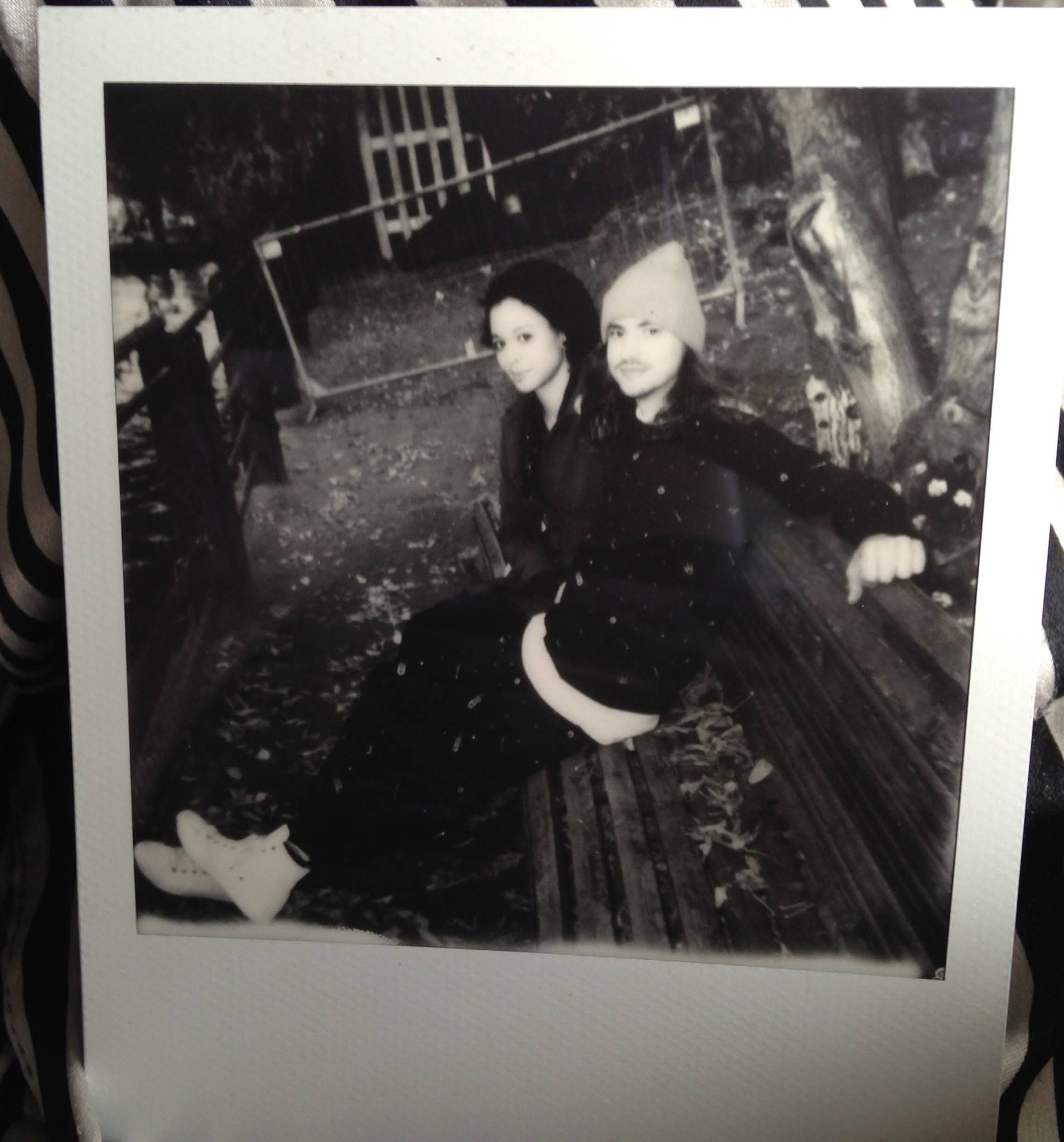
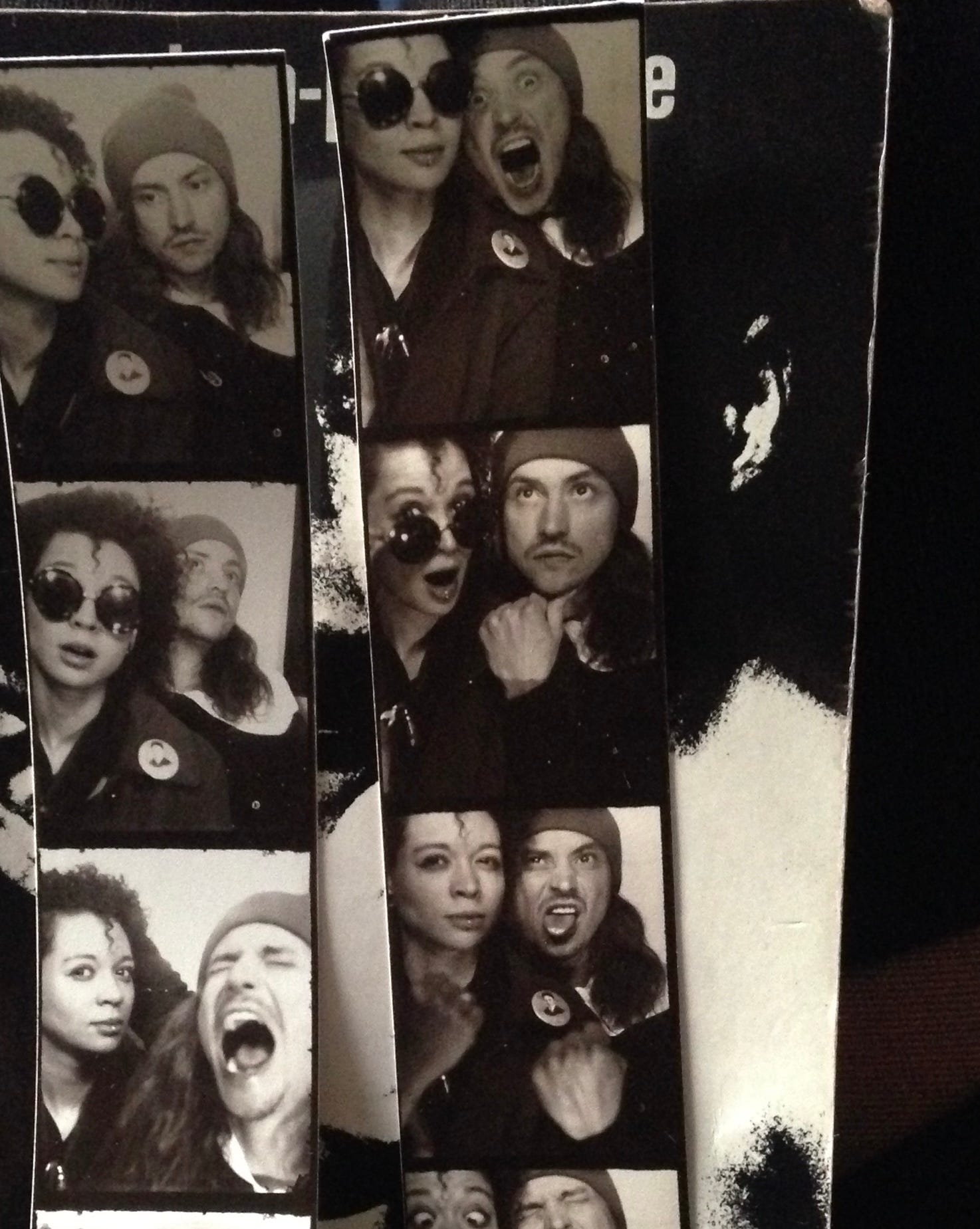
I saw Stefan one last time in Berlin, a bunny hat still upon his head. The staff at YAAM took a polaroid picture of us. That visit showed my friend in a different light. He was touring as The Guidance. He was drinking. He had label money behind him. The music was noticeably more palatable, but he seemed so alone. Alcohol tempering his outbursts and his “yeah” tic: muting him, making him suitable for his more mainstream audience. He still dove into the sold-out crowd that night. Arms were poised to catch him instead of barely enough tickets sold to keep the tour rolling.
Punk ethos doesn’t sell, but a catchy melody does. Stefan’s unfiltered self didn’t earn him his name in lights—even if his name and unbridled philosophy was a beacon.