

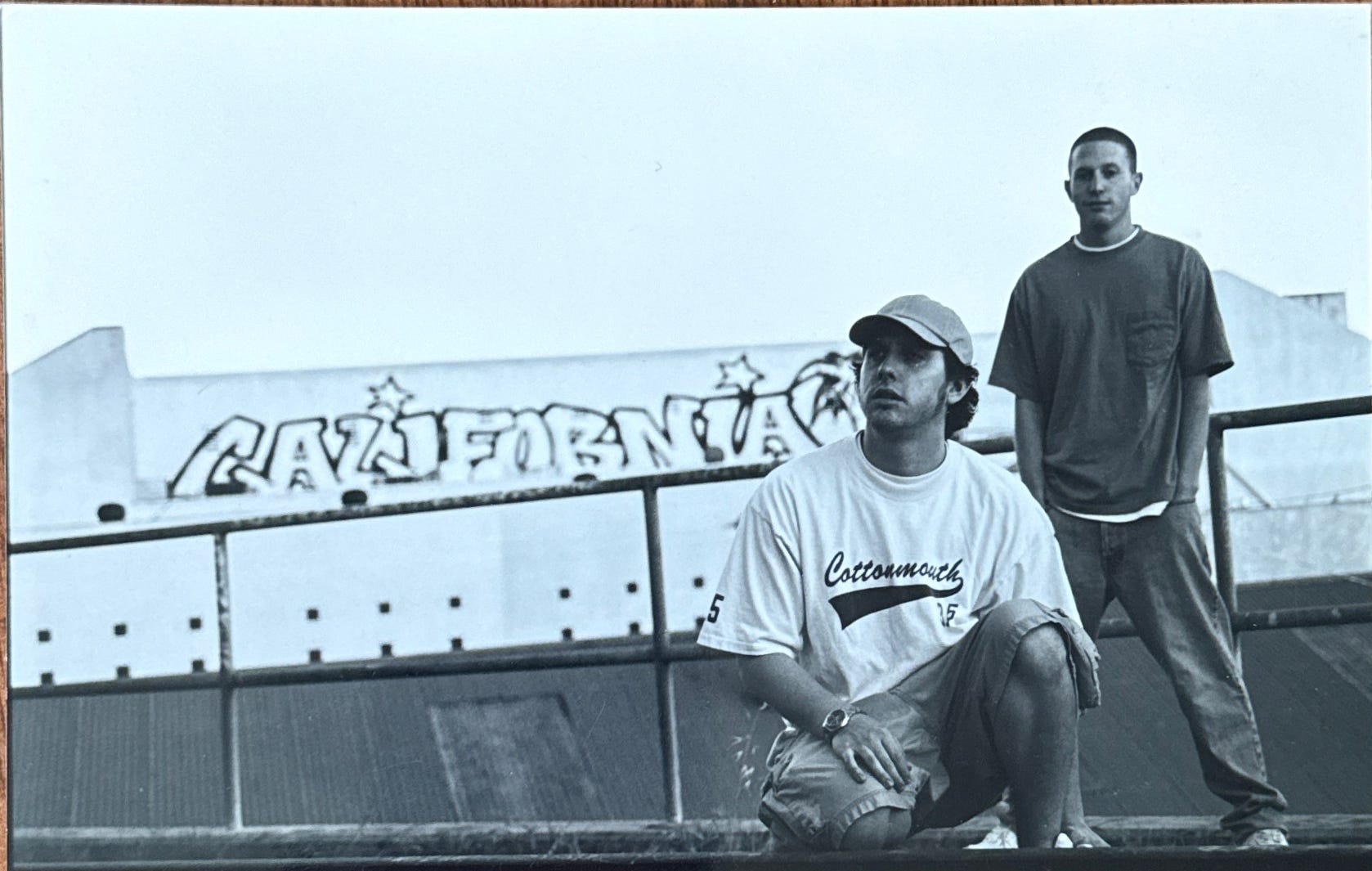
Nothing of consequence should be boiled down to an elevator pitch. Certainly not in 1990s rap, when butter-flyboy weirdness, desert-eagle gangsterism, and the red-clay or “wobble-dee, wobble-dee” music coming out of the South were accelerating the culture in numerous, often disparate directions, far beyond what the gods of the old school had envisioned. Still, it didn’t stop brothers Gideon “Big Oak” and Nicholas “Nick Fury” Black from establishing their group Lexicon with an idea that was sincere as it was simple: make music that melded elements of the Beastie Boys and A Tribe Called Quest—but for the West Coast.
It was in the pursuit of these classicist proclivities that the Los Angeles-based Lexicon came to epitomize a philosophy valued by a certain strand of hip-hop heads: underground over everything. They saw themselves in an alliance with the off-mainstream ingenuity of Rawkus, Fondle ‘Em, Definitive Jux, and, closer to home, Stones Throw. Boom-bap was the scripture, crackle and hiss was the writ. For Lexicon, no stage was too small or recording space too cramped; this was backpack rap at a time when you literally sold tapes out of a backpack. While those at the top of genre’s increasingly powerful, aggressively capitalist hierarchy rapped about brands that were unattainable to 98 percent of their audience, Lexicon recorded “Nikehead,” an ode to their $70 kicks collections.
They kept the project on the road for over 15 years—a hell of a run for an underground act in any era, but an eternity when you’re overlapping in time with crunk, Hip-Hop is Dead, blog rap, MySpace, and various other signposts in rap history. But the transient nature of being subterranean, as well as the general disarray of adjusting to new internet platforms, meant their body of work has felt scattered and difficult to grasp. Released earlier this year, Greatest Hits and Unreleased Bits is a revelatory document—12 of their best cuts plus 21 rarities spanning 1999 to 2015. It chronicles the duo’s faith in timeless fundamentals, as well as the daring heresy of their later genre-splicing rap-rock experiments.
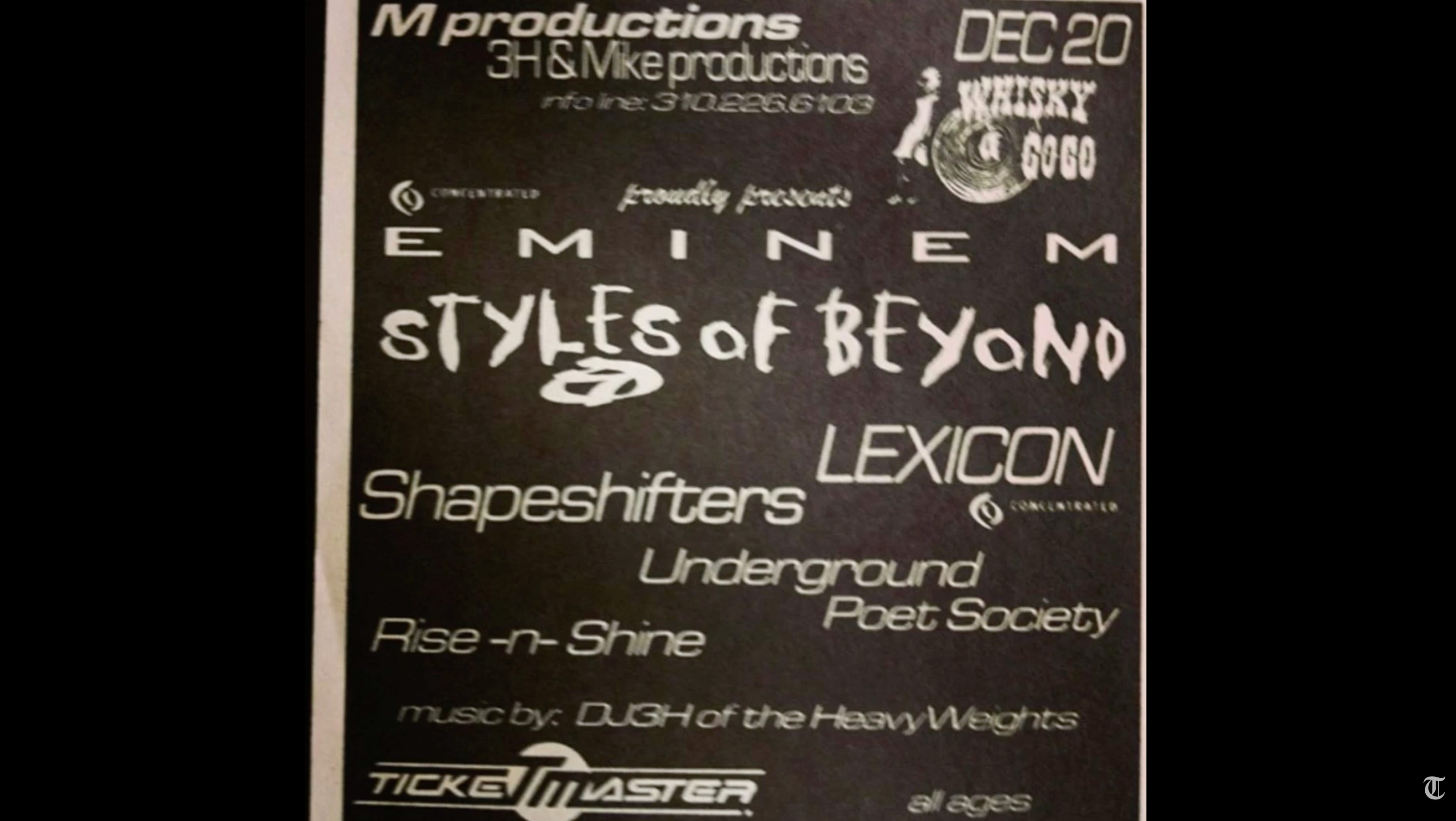
Though Lexicon would never find their way to rap’s head table, they did occasionally spot a superstar in the wild. You could easily make the argument that Big Oak and Nick Fury were on the bill at the birth of Slim Shady. It was December 20, 1998, and before Dre sent him to tick the world off, Eminem would have to conquer the Whisky a Go Go. Knowledgeable locals packed into the small, iconic venue in West Hollywood to see the Detroit transplant that the typically L.A.-centric Good Doctor had selected as his latest protégé. But all judgement would have to be delayed. As Lexicon, among several artists to perform that night, remember it, the headliner showed up four hours late.
When Eminem finally did materialize, the crowd was in disbelief. This was not the slightly pudgy, buzz-cut-sporting, Motor City trailer park artist they were expecting. Em had, quite literally, stepped off the set of his soon-to-be star-launching “My Name Is” video earlier that day, and so showed up at the Whisky as the bleach-blond hell-child in the plain white tee that less than two years later would storm the MTV Video Music Awards with an army of lookalikes. Forget the pre-Aftermath Slim Shady EP, this was the vision of the persona that the world would captivate and repulse the planet in equal measure.
“It was weird,” recalls Nick Fury, “because it wasn’t very hip-hop and he’s working with Dre now. It was like, ‘Okay, this is a new pop artist’.”
Any fears that Eminem was some rapping pop-tart were duly banished as he smashed out the show in furious fashion. But what Em might not have known is that trouble was brewing. While awaiting the tardy star, a local rapper named Aristotle had taken to the stage. A talented freestyler, Aristotle’s performance included the bar, “I’m a white guy who’s doper than Defari,” referencing the respected L.A. rapper who himself would feature on a Dre track a year later. To be associated with such a barb while a guest in the city was a potentially uncomfortable situation for Eminem to be in.
“Defari was down with The Alkaholiks, Dilated Peoples, and KutMasta Kurt—he bled into the entire scene,” says Big Oak. “Eminem had to go on The Wake Up Show, which was massive—that was with Sway and Tech, the biggest syndicated hip-hop radio show in the country. He went on for an interview to say that he had never met Aristotle, he didn’t know who he was, and completely dissolve any relationship he had with him… I think it was to [pour water on] any flames in the underground as he was about to come out as this West Coast version of Eminem with Dr. Dre behind him.”
Em was almost certainly being disingenuous. Aristotle appeared on a skit on The Slim Shady LP playing the character of crazed fan Ken Kaniff. There have been many rumors in the years since about why the pair’s relationship disintegrated. Whatever the truth of the matter, that night in the Whisky, Aristotle was just another obscure artist who, like Lexicon, was trying to make the most of his precious mid-card slot. Inevitably, they all partied together.
“He was at our house that night after the show,” laughs Fury.
Unlike the hell-raising Aristotle, Lexicon were not Los Angeles natives. The brothers originally hail from Colorado, moving to San Diego when Gideon was approximately 14 years old and Nick was about 10. But as the children of old New York hippies, Christmases and summers were spent with family on the East Coast. Their father had what you might call canonical white dad taste in music—The Rolling Stones, Steely Dan, stuff like that. Yet it was the Native Tongues who became Gideon and Nick’s obsession.
“Mid-‘90s golden-era stuff was everything to us,” says Nick. “And even when we moved out to California, we were all about New York hip-hop.”
In L.A., their circle of friends was made up of young bohemian creators: DJs, punk musicians, and other assorted outsiders. But rap was the only vocation that appealed to Nick. Gideon, meanwhile, enrolled at the University of Santa Barbara, where he took an interest in the institution’s radio station, drawing him into the local hip-hop scene. The final pieces fell into place in the summer of 1995, when Nick moved to the area with their mom. From there, Gideon’s “Big Oak” and Nick’s “Fury” personas began to take shape. (They, of course, pinched the latter name from Marvel, but this was pre-the Ultimate Avengers, Samuel L. Jackson-inspired imagining of the character). Today, the pair describe Nick as being Lexicon’s driving force, the one with the autonomy to kick his brother “out of the group when I was mad at him,” but Gideon as the dynamo making crucial connections.
