


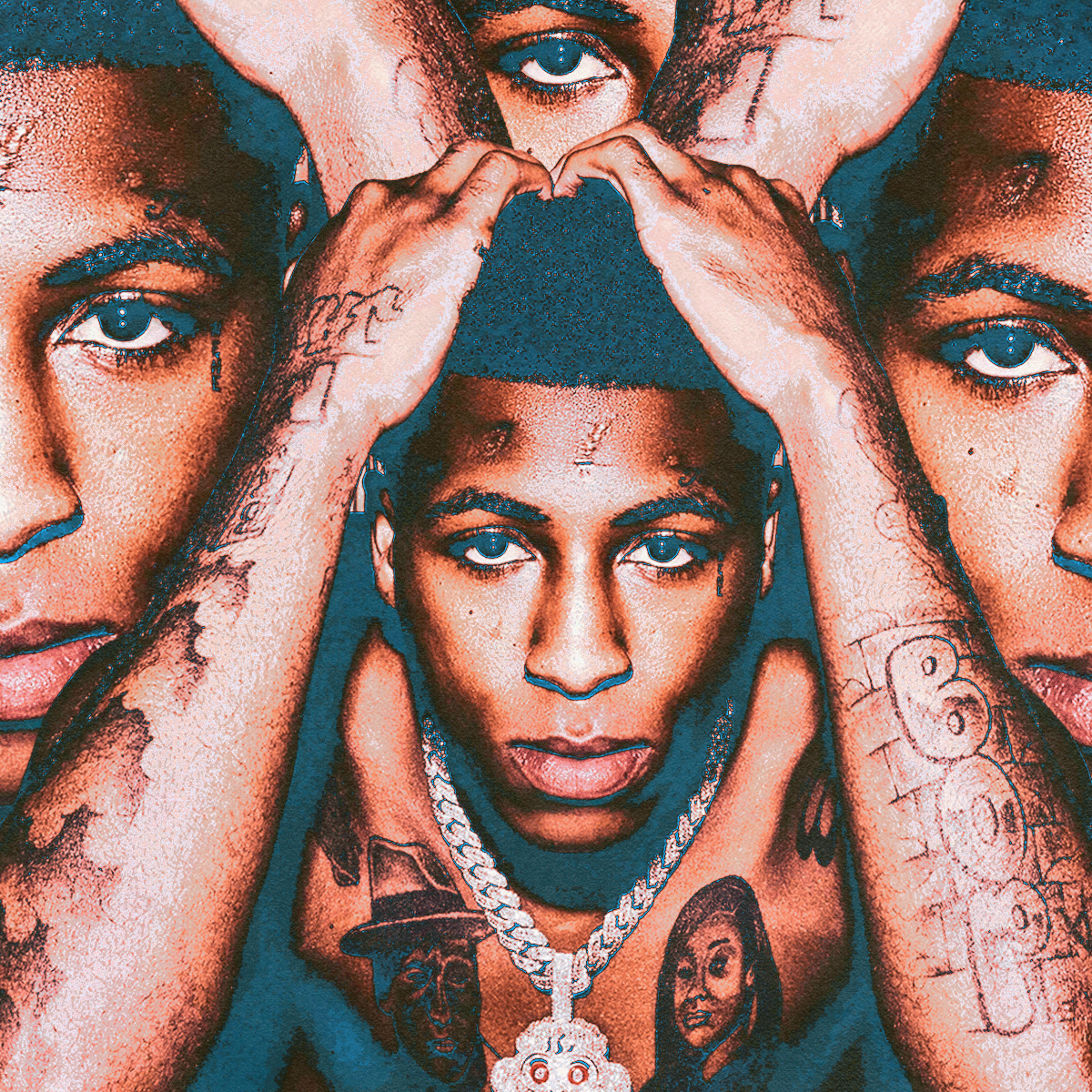
In 2016, I returned to Baton Rouge for the first time since Boosie was acquitted of murder charges four years earlier. His homecoming concert was the nominal purpose for my visit, but by then, Bad Azz’s popularity had somewhat dimmed. Kevin Gates was the reigning king of the city, and the next generation of stars were already bubbling up from the north and Southside. The most promising was NBA YoungBoy, a 16-year-old, whose lone hit,“38 Baby,” referenced both the revolver and the street on which he was raised.
About a week before I arrived, YoungBoy had signed with Atlantic, but the news wasn’t public yet. One afternoon, I wound up spending a few hours with him. He was precocious, volatile, and heavily armed. To my knowledge, it was his first real interview.
About two weeks after I left the Louisiana capitol, YoungBoy allegedly fired a gun several times during a drive-by shooting. In late November of that same year, U.S. marshals arrested him before a concert in Austin. Facing two counts of attempted first-degree murder, he eventually pled guilty to a reduced charge of aggravated assault with a firearm. He spent the next six months in parish prison, and for fairly obvious reasons, I opted not to publish the story.
In early 2018, a major music magazine sent me back to Baton Rouge to profile YoungBoy again. The idea was that I’d combine my previous reporting from 2016 with individual portraits of the contemporary heroes of Baton Rouge. The goal was to capture what made this small, otherwise unremarkable city one of the capitals of modern American rap. YoungBoy—who was already one of the most popular artists on YouTube—was meant to be the centerpiece.
A week after I left Baton Rouge, YoungBoy was detained once more. This time, there was a Georgia warrant seeking Kentrell Gaulden on charges of assault, weapons violations, and kidnapping. In the intervening years, there have been about a half-a-dozen additional arrests, significant jail time, and a presidential pardon. But the emotional rawness, pain, and plutonium energy of his rusted scalpel wail deservedly made him one of the most significant voices of his generation.
As for the story, when I turned in my draft several months later, it was about twice as long as anything the magazine had ever published. Understandably, there were differing visions about the best way to present it. Refusing to compromise the final product, I opted to let the feature languish in my hard drive for seven years.
With the relaunch of POW, it seemed only right to set it off with the YoungBoy portion of the feature—with subsequent chapters to follow. After all, most songs and stories should be uncensored. - Jeff Weiss
February 4, 2018
The squirrel monkey’s name is Fed. Stuck to the sharp tip of a carving knife is a fresh slice of mango, which NBA YoungBoy dangles to his little friend with paternalistic concern. The imported Central American primate accepts the offer, snatching the tropical fruit with tiny paws. He devours it. It’s a Monday afternoon in Baton Rouge.
The 20-foot by 20-foot back room used to belong to two tigers, except for the stint they did on tour with their 18-year-old owner. This did not endear Louisiana’s most infamous young rap phenomenon to hotel room maids, nor to exotic animal rescue authorities who seized one allegedly malnourished cub in early December, transporting him to a small town in the Cuyamaca Mountains of San Diego County. As for the other tiger, who was fond of impromptu backyard swims, he was given away to Meek Mill, who authorities assumed would be able to provide him with a better future. Meek Mill was incarcerated almost immediately upon becoming his guardian; the tiger is now deceased.
In a more stable timeline, Kentrell Gaulden would be starting his final semester of high school. Instead, NBA YoungBoy is auditing upper-level courses in zoology and gemology. The latter pursuit reveals itself through the latest lavish acquisition dangling around his neck—a blinding, $150,000 gamma ray of precision-cut diamonds and gold, depicting a blunt-smoking Young Thug. I ask what inspired him to drop the median Bayou home price on a chain.
“Because,” he replies in his brackish BR drawl. “I’m a young thug.”
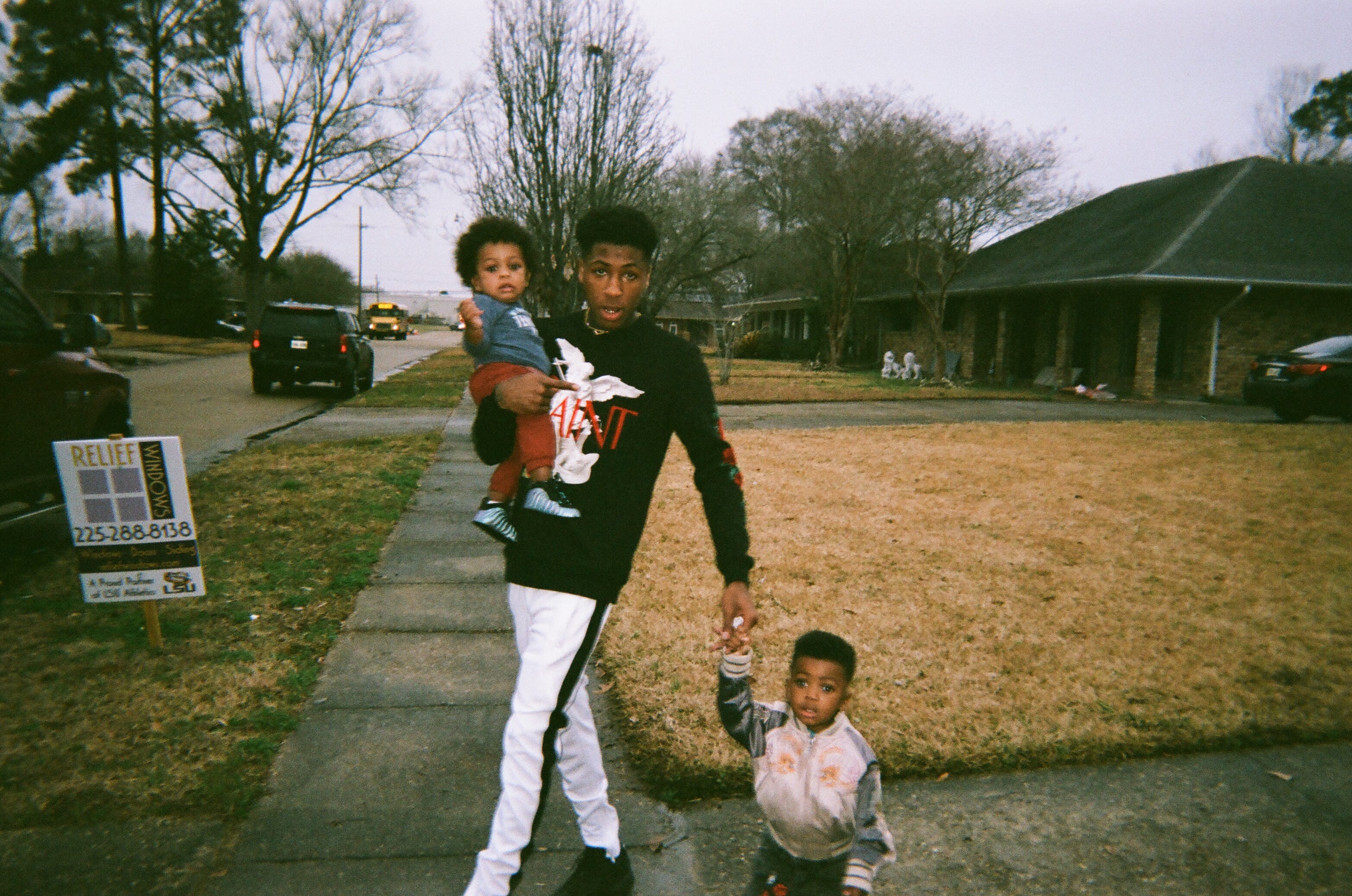
It’s a brittle and cold afternoon. The sky is dishwater grey, the trampled lawns of this Villa Del Rey subdivision dead and brown. A dozen or so managers, friends, hangers-on, publicists, and family members are in constant orbit around YoungBoy, who is otherwise dressed plainly in a white tee and blue Adidas track pants. His hair is trimmed into a neat, slightly levitating fade, but his face is largely framed by three deeply set forehead scars, inflicted by the halo brace that YoungBoy wore for six months after breaking his neck wrestling at age four. At the time, his schoolmates taunted him. Now, the accident’s final remnants cast an eerily sinister cant like the homemade slashes of a switchblade.
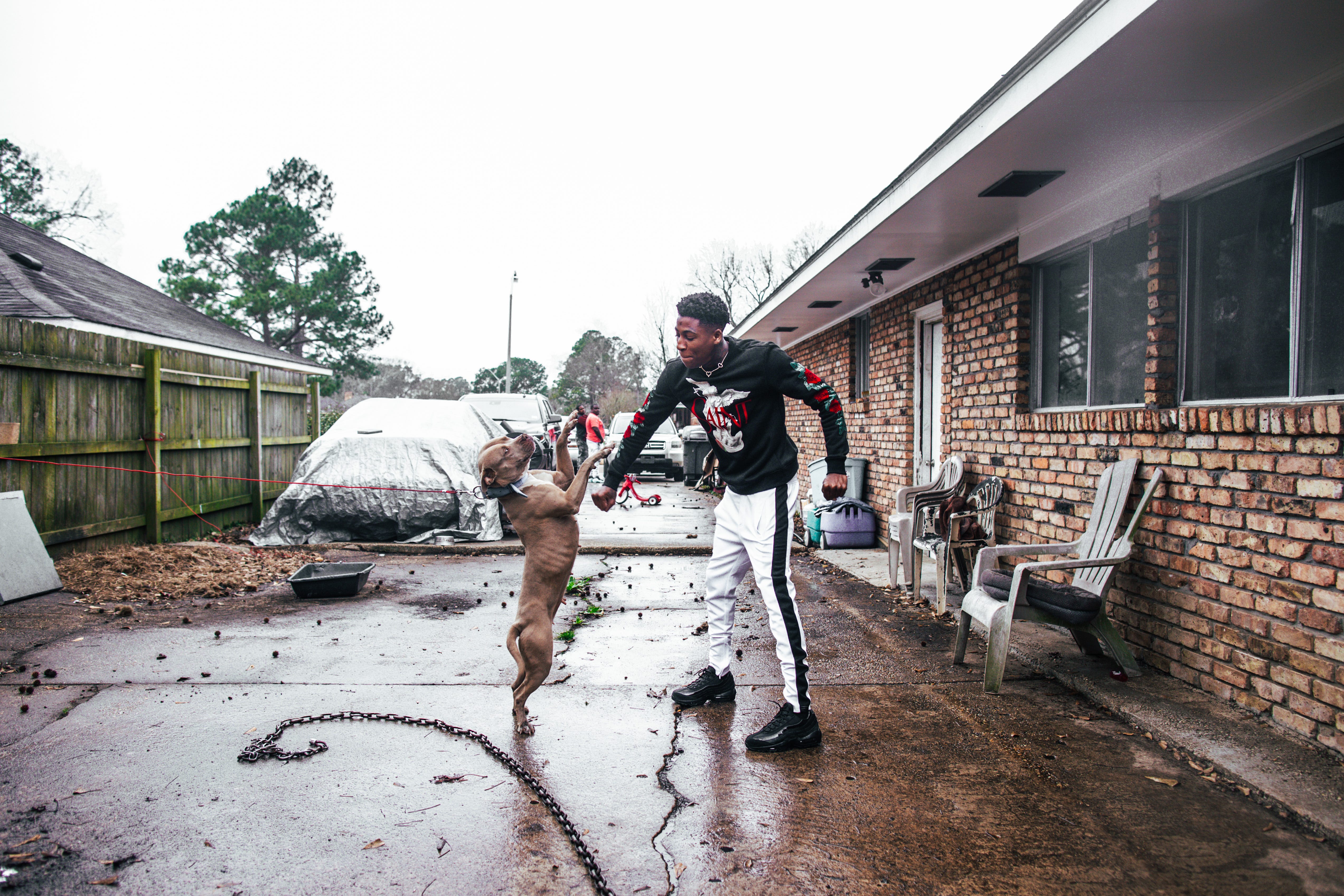
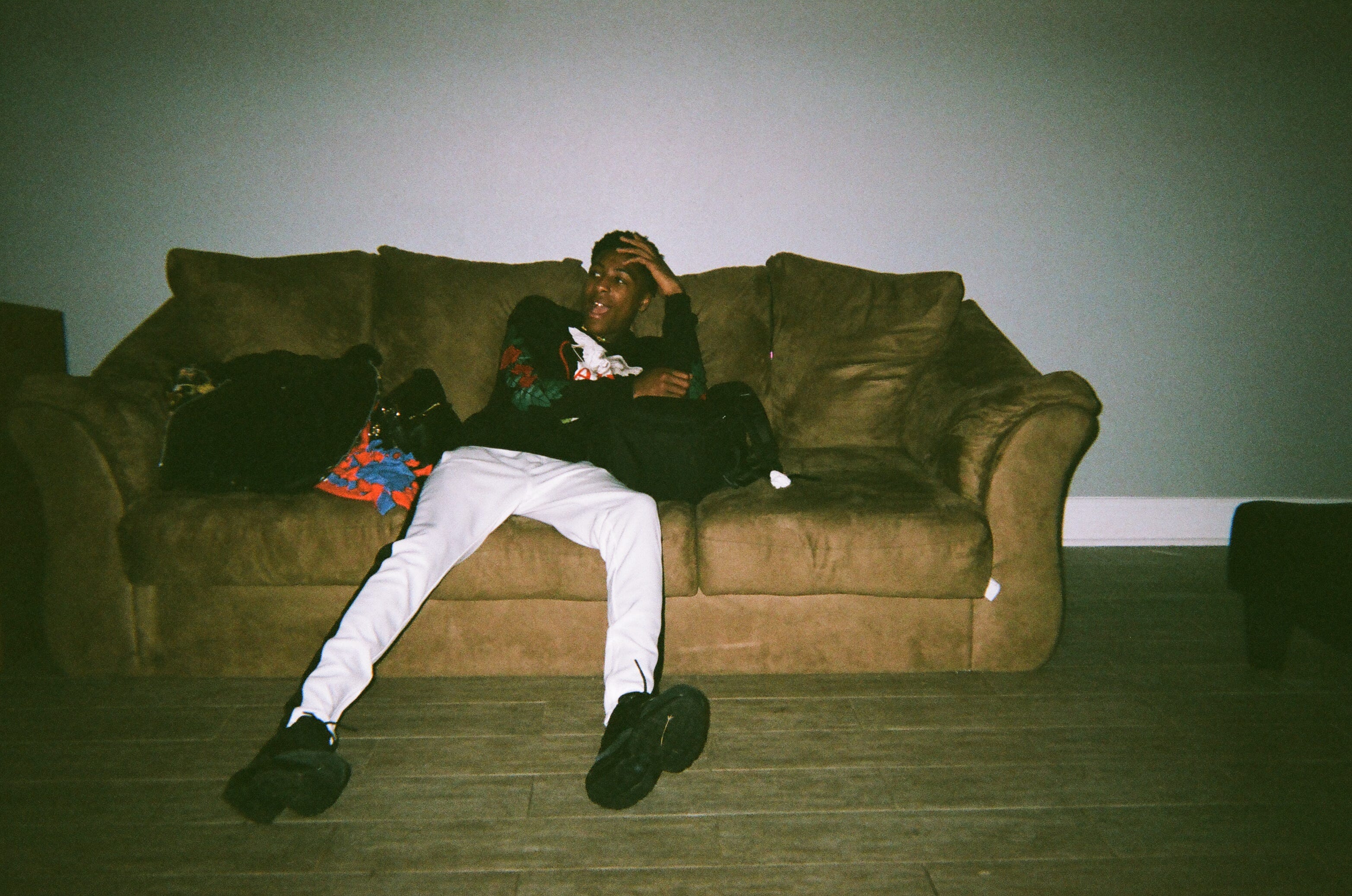
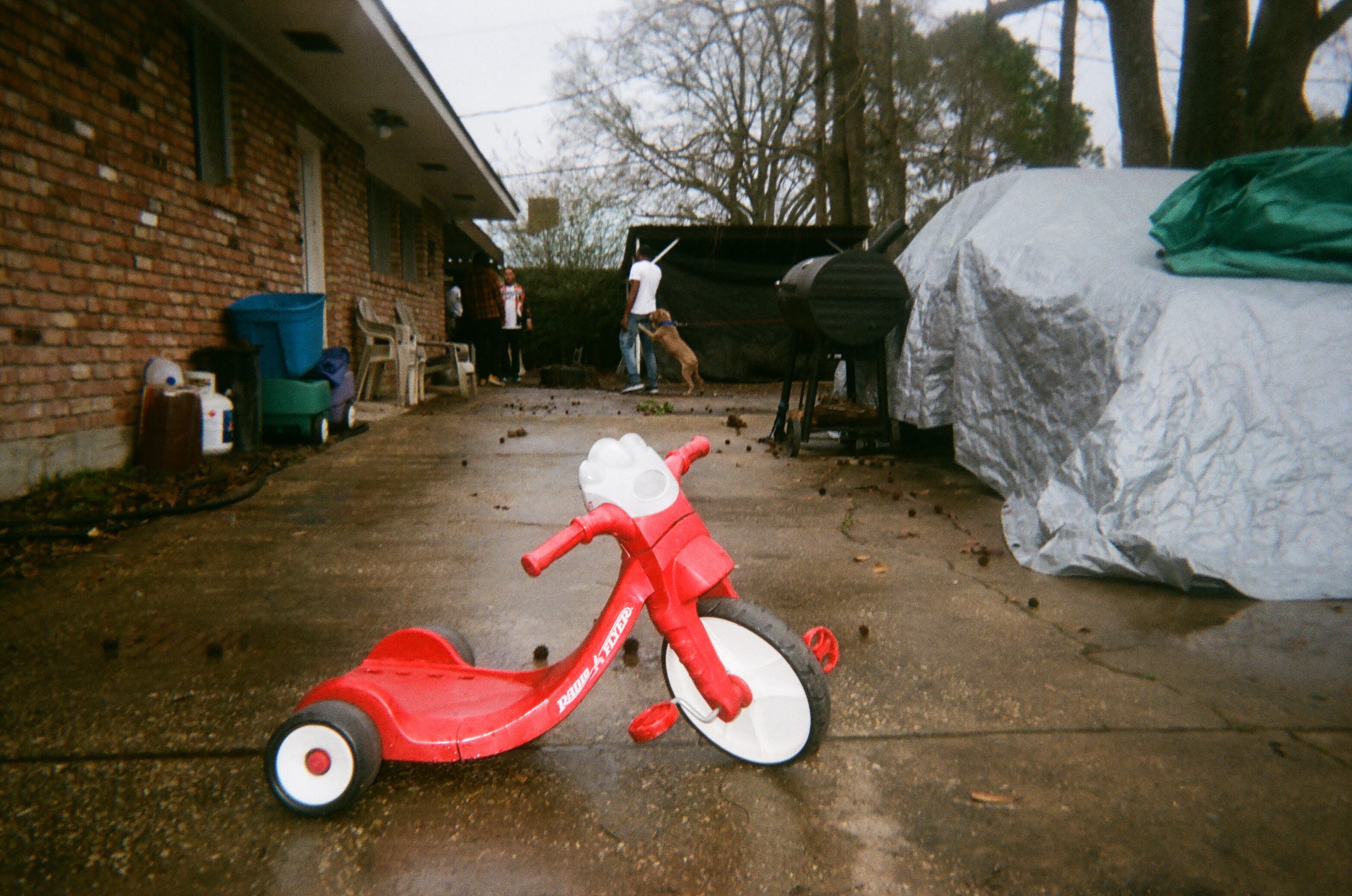
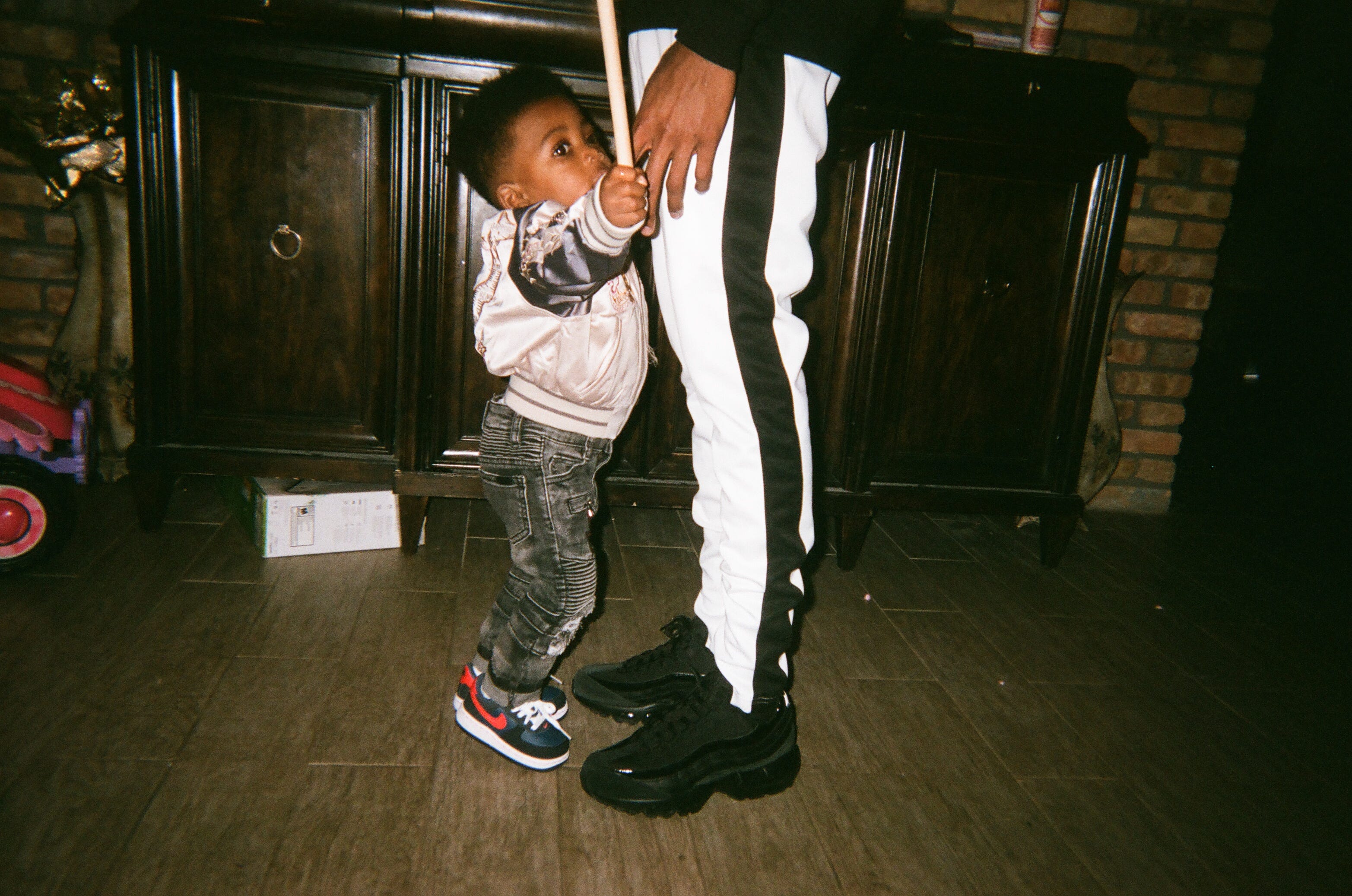
All photos courtesy of Patrick Melon
Someone in his crew surreptitiously films our exchange. In three hours, it winds up on DJ Akademiks, who dubs his voice over my own. YoungBoy’s alluvial croak remains undoctored—for obvious reasons. It’s a battering ram, a blues howl, a hum with a Hades drip. It makes you want to check his birth certificate to prove that he’s not a 180-year-old undead invention of Anne Rice. Picture Son House heavily armed and raised on Trill Entertainment and GTA. Somewhere between Kevin Gates and the gates of hell.
Match that voice with an intuitive gift for conjuring sulfurous, crossroads trap melodies and you get one of the biggest stars in the modern south, one who exists almost entirely outside the mainstream. No TV appearances or festival headlining spots. He’s too hard for the radio too—landing only a single song in the Billboard Top 40 (“Outside Today”). Nonetheless, the Atlantic-signed rapper’s videos regularly exceed 100 million views apiece. During this calendar year, 10 different YoungBoy projects cracked the Billboard Top 200 (more than any other artist). Each month, 6.5 million listen to him on Spotify alone. He gets 50 racks a show, count ‘em up.
The music seems part and parcel of a state that has topped America’s homicide rankings for almost 30 years. As YoungBoy describes himself on his Future collaboration, “Right or Wrong,” there’s “so much pain in my body…I’ve been like this too long.”
A decade ago, YoungBoy’s father was sentenced to 55 years for a botched robbery. In the summer of 2016, the son narrowly avoided a similar fate when he struck a deal to plead guilty for aggravated assault with a firearm, in exchange for a ten-year suspended sentence and three years of active probation. The case involved a drive-by shooting where witnesses claimed that YoungBoy was one of two gunmen spraying rounds on the Southside of Baton Rouge—allegedly in retaliation for the murder of his cousin, NBA Boosie, mere hours before. During the shootout, a bullet nicked the neck of one of YoungBoy’s friends. He survived.
On record, YoungBoy’s anguish is nuclear, a source of startling power and incredible toxicity. About a week after I leave Louisiana, sheriff’s deputies in Florida apprehend and transport him to the Ware County Jail in Waycross, Ga., a hamlet on the fringes of the Okefenokee Swamp. He’s held without bail for weeks on a brutal list of charges: assault, weapons violations, and kidnapping. A grainy hotel surveillance tape of the crime circulates on TMZ and most hip-hop blogs. A man who appears to be YoungBoy violently body slams a young woman—his sometime-girlfriend Jania Jackson—leaving her motionless. When she opens her eyes, he drags her body like a ragdoll into their hotel room. Shortly thereafter, Jackson releases a video claiming they were “just playing around.” Police allegedly find blood in the room.
After three weeks behind bars, YoungBoy’s lawyers procure him a $75,000 bailout. Shortly thereafter, he writes a string of tweets: “Just need to hurry up in die so his shit can be over; What does life has to offer?; Ion want to hurt nobody in no type of way please leave me alone.” YoungBoy and his team decline to do a follow-up interview with me or to even issue a prepared statement addressing the accusations.
Two of rap’s biggest victims of the American’s criminal justice system, Boosie Badazz and Meek Mill, have repeatedly urged YoungBoy to permanently leave his hometown, but his judge insists that he remain in the boot per the terms of his probation. At his sentencing, she acknowledged his right to creative license but pronounced that “your genre has a lot to do with the mindset people have…Your genre has normalized violence.”
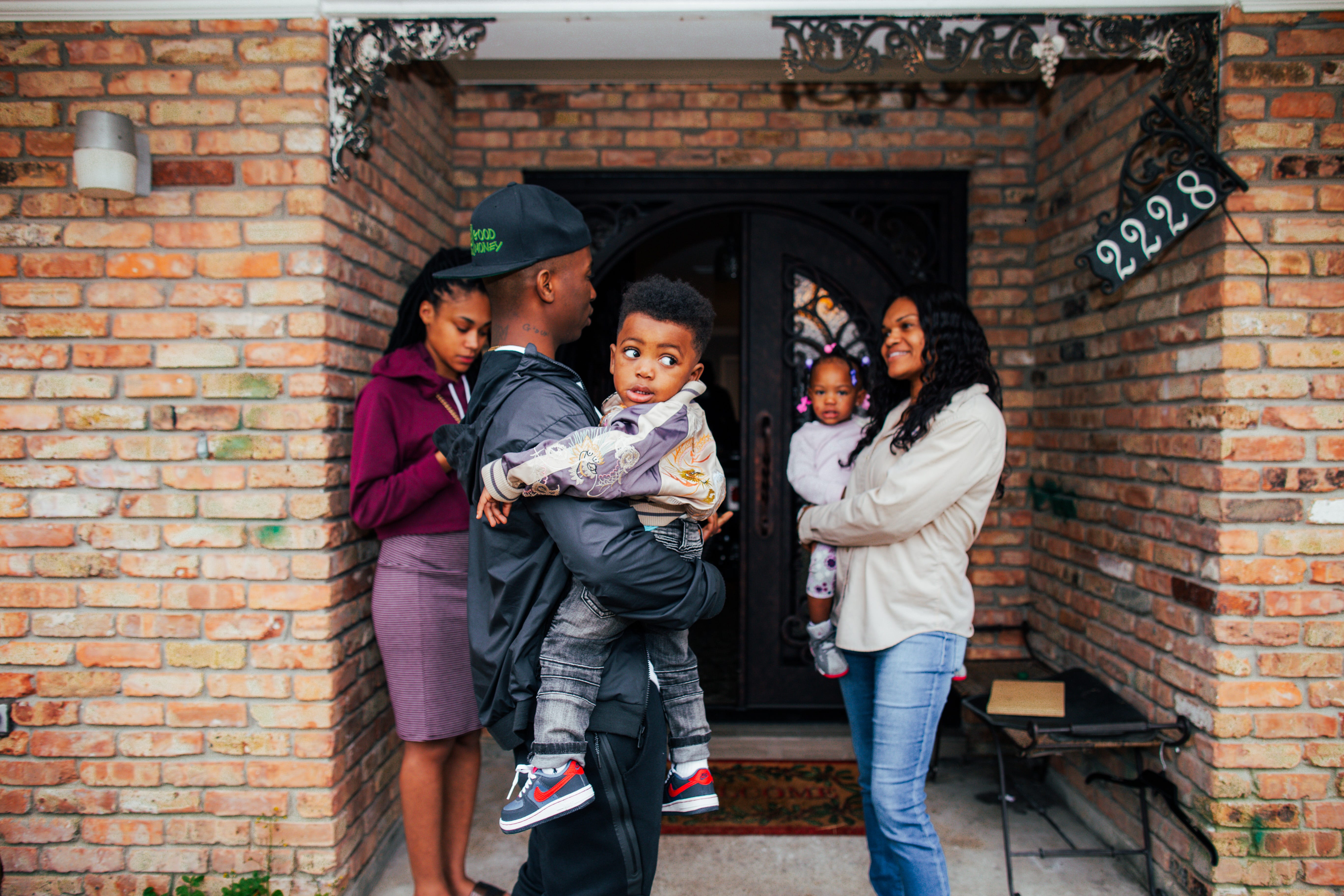
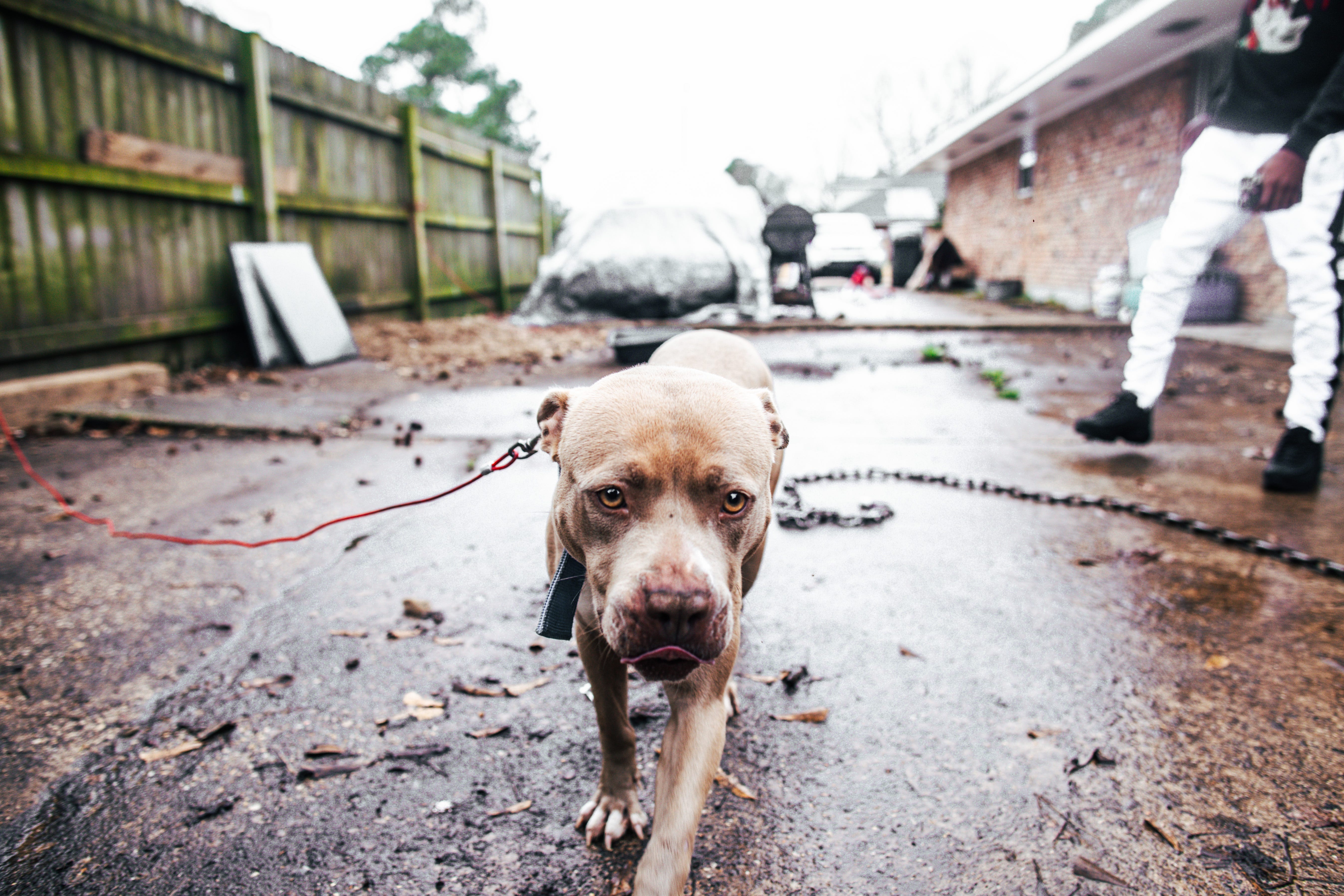
This one-story brick house belongs to his surrogate mom, Monique, the biological parent of NBA3Three, YoungBoy’s longtime best friend. It’s a typical Southern home: children’s tricycles and sedentary rusting cars and someone shelling crawfish in the driveway. He moved in around age 10, after his grandmother succumbed to heart failure and his birth mother temporarily left town. Underneath this sloped roof, YoungBoy recorded his first song, as a pre-teen, on a cheap microphone that Monique purchased from Wal-Mart. It’s where, today, he’s surrounded by two of his toddlers, his younger brother, his French bulldog, a whimpering pitbull manacled in chains in the backyard, and of course, his faithful squirrel monkey.
Little holds his interest for very long. At one minute, he’s wailing Kodak Black verses to himself, in the next, he’s playfully nut-punching his friends. He wants a snowball, a Baton Rouge shaved ice iteration, but someone tells him that the stands are only open in the summer.
“Damn!” he moans. “They could make beaucoup bucks if they were open right now.”
He wants a haircut. He wants to go shopping, but it’s a somber Monday and he settles for feeding and tenderly petting his monkey.
What’s clear is that he doesn’t want to talk. There’s the matter of an album to promote, Till Death Call My Name, which will debut at #7 on the Billboard charts upon its release in late April 2018. But this is February, and we’re sitting at the kitchen table, littered in McDonalds wrappers and Doritos bags, futilely trying to have a conversation, which has taken innumerable back-and-forth emails and intermediaries to make happen.
“How’s your life right now?”
“It’s straight. I’m trying to get it together.”
“In what way?”
“I’m trying to get my life together.”
“But what does that mean exactly?”
“I gotta start living like a star.”
“How is living like a star different than how you’re living now?”
“Well, y’know, I still be thugging…like in real life. Do you know what that means?”
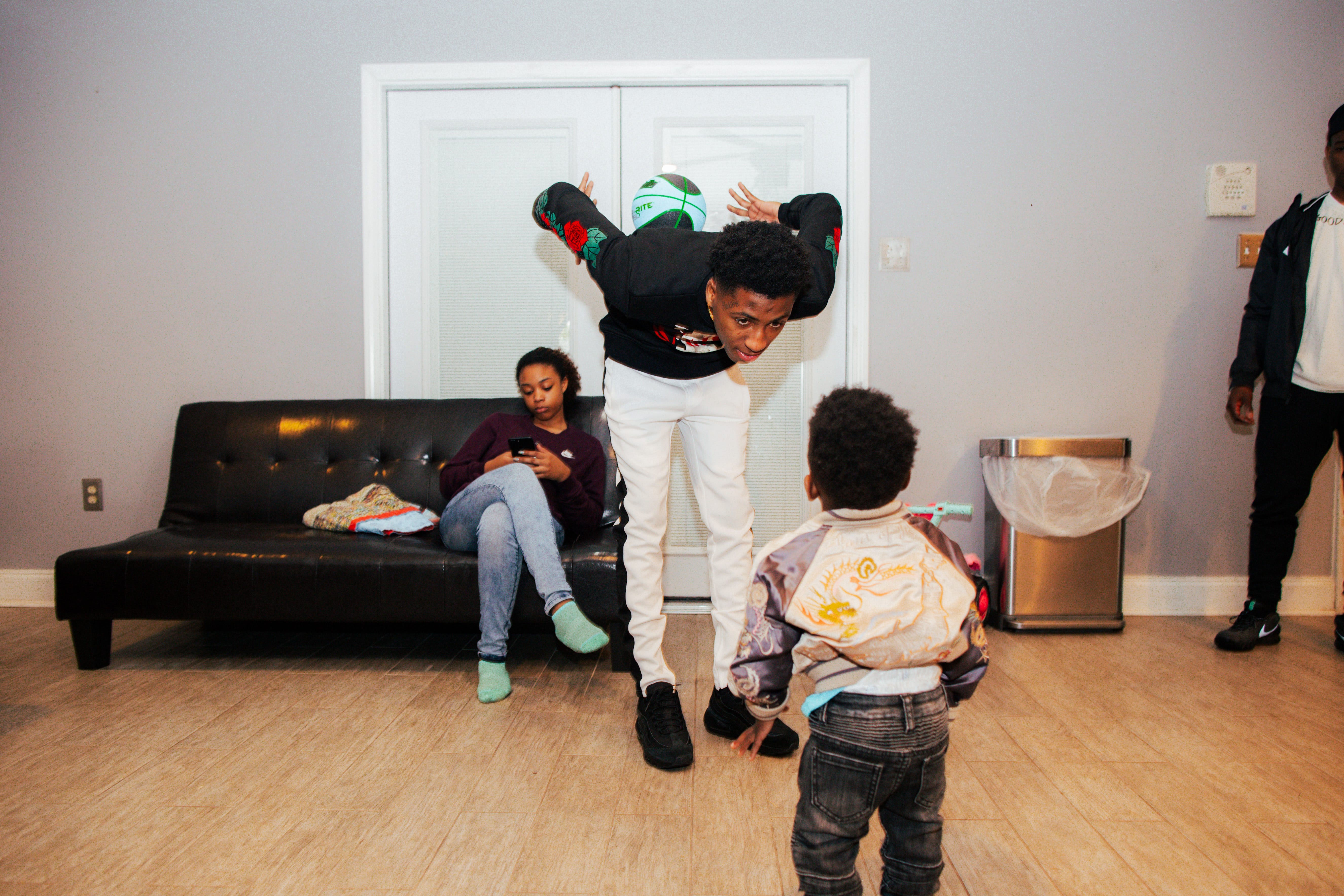
Letting the words trail off, he abruptly stands up, raises his eyebrows, and walks into the bedroom. After a few minutes, it becomes evident that he’s not returning. I’m urged to follow him in and continue, but he’s already under the covers of his child’s bed, Facetiming a girl. When he sees me, he shows me a YouTube video about an invisibility cloak. For the next three minutes, he facilitates a conversation between me and the Facetime recipient. The only time he gets excited is when he tells her that they need to have a baby.
“Make sure you put that in the article!” he cackles.
Our conversation yields the taciturn one-sentence responses that you usually only see in police interrogations or vice principal offices. I ask about dropping out in the 8th grade and he fittingly interrupts to say “Fuck school. I hate school.” He shows off his Young Thug chain again and tells me that he always loved music. It’s all he ever wanted to do and now he’s doing it. I ask about his time in jail and he lashes back, “Man, I don’t want to talk about no jail. Fuck jail!”
YoungBoy is slightly unsettling. The explosive anger of his music is never far away. It’s like a game of “Operation:” if you don’t navigate carefully, you can easily be shocked by his fiery rage. Several people around him describe it as bipolarity, but there’s no evidence that the diagnosis came from a medical professional. His brown eyes constantly scan for threats, shifting instantly from sensitive to sinister to absent-minded. A psyche mired in civil war with no ceasefire in sight.
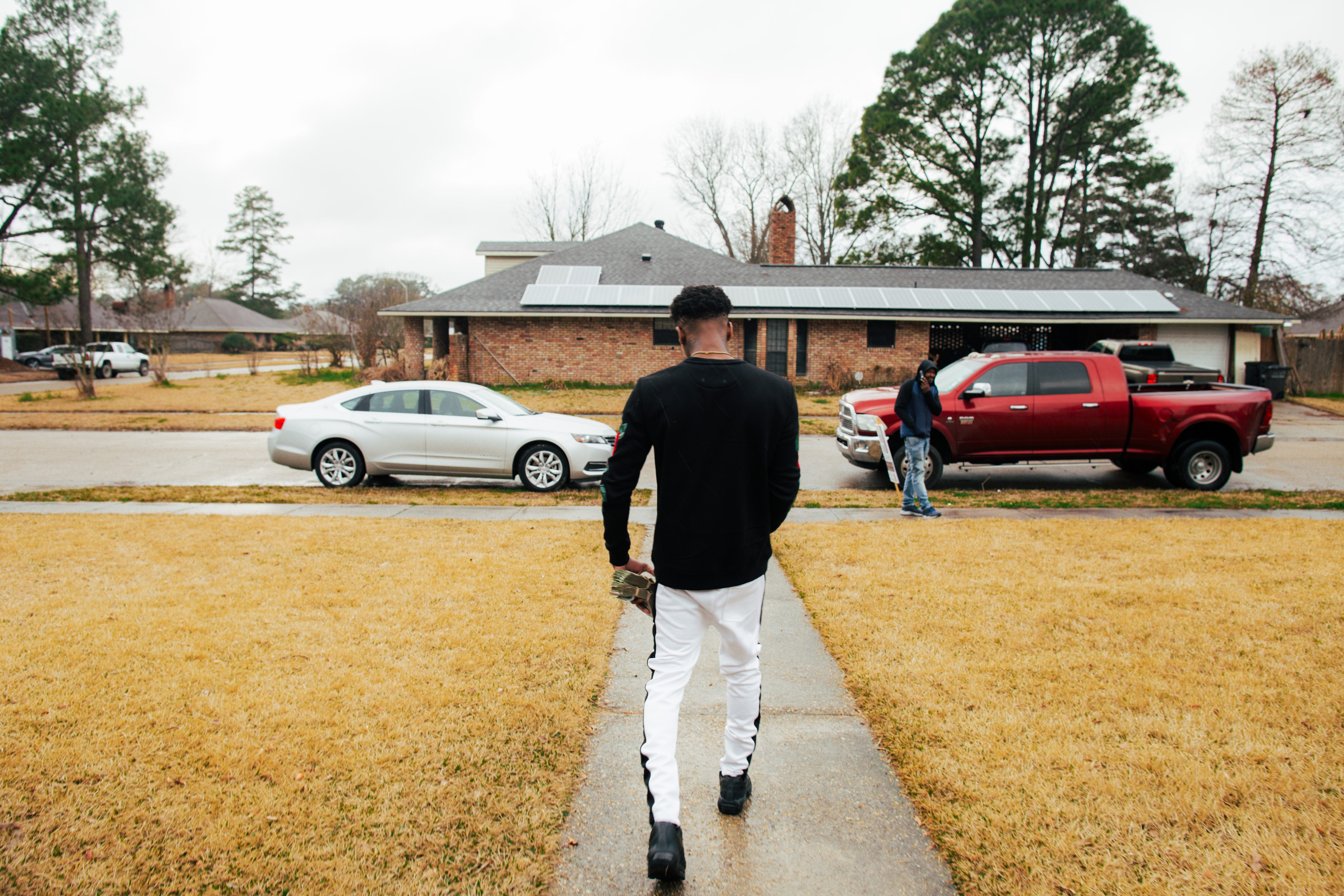
We talk about the terms of his probation. “The judge wants me to stay out of trouble,” he explains, “and that’s what I’m doing.” I ask if he thinks it’s harder to do that in Baton Rouge.
“It’s hard anywhere,” he says.
A follow-up question about post-traumatic stress disorder falls flat. Too late. He’s already asleep, or at least he’s good at pretending.
October 13, 2016
A .33 is shoved under my nostrils.
“We’re gonna go on a real robbery,” says the voice behind the pistol. “You ever been in a shoot out?”
I shake my head.
“You wanna go on a shoot out?”
Amused, the pistol-holder waves it like a cell phone.
“As long as I don’t get shot,” I mutter.
A little laughter cuts the tension. The weapon gets tucked into the waistline of its owner, who vaguely resembles a 16-year-old Tracy Morgan, and shall remain nameless because there are surely police officers collecting overtime to read this sentence.
This went down the first time I met YoungBoy in the ragged Louisiana fall of 2016. You could still feel the tremors that trailed the cold-blooded murder of Alton Sterling, the subsequent street protests, and the militarized police blitzkrieg. I asked several people around town, Black and white, what they thought about the terror of that scalding week in July. Each offered a version of the same response, calmly delivered in matter-of-fact monotone: Oh, we thought the race war was finally about to happen.
Tensions simmered for a month until floods obliterated much of the parish that August. Swamps of waist-high water wrecked 146,000 homes, including YoungBoy’s sometime residence—that modest brick edifice in Villa Del Rey, where the tigers would later roam. When I arrived that October, the deluge had long receded, but its ravages were inescapable. No hotel vacancies from there to Lafayette, 60 miles west on Interstate 10, with all available space used by FEMA to house refugees from the storm.
Despite its name, Baton Rouge is the land the Spanish and French abdicated from the start, leaving it in the dull talons of the English. That name means “Red Stick” in French, christened after a Gallic explorer who spotted a blood covered pole delineating the hunting grounds between two Native American tribes.
In response to the nationwide plague of school shootings, legislators in the Baton Rouge state house recently voted nearly two to one to allow visitors with concealed weapons permits to carry semi-automatic rifles at K-12 schools and on university campuses. Louisiana does not require permits, background checks, or registration to purchase the most powerful killing machines available. The wrath of the second Amendment is so deeply ingrained that YoungBoy nicknamed one of his four sons Draco. It’s not a Harry Potter reference.
I had nominally traveled to Baton Rouge to watch that preeminent hero, Boosie, play one of his first local concerts since beating first-degree murder charges and exiting the barbed wire fortress of Angola. But my auxiliary mission was to interview the rappers circling the throne, YoungBoy, Scotty Cain (incarcerated in 2018, but now free), Gee Money (now dead), and 22 Savage —who briefly enjoyed a run of viral fame amidst the short-lived Savage Wars of 2016 and graduated to become a cast member on Wild N’ Out. (In 2026: he’s best known as the famous Twitch streamer, “Funny Mike”)
There is a royal genealogy to Baton Rouge rap. When Boosie went to Angola, the throne fell to his thematic and stylistic heir, the depressive gangster lothario, Kevin Gates, who in turn became a national star, lost significant time to incarceration, and passed the red scepter to YoungBoy.
In the weeks preceding my 2016 visit, YoungBoy’s “38 Baby” video broke through to become a minor hit among street rap fans who visit WorldStarHipHop at least 2.2 times a day. Even though it hasn’t been announced, it’s common knowledge that he recently signed to Atlantic. But the industry machine has yet to whirl into action. There is no publicist. No visible parental guardians of any sort. Only a manager, Fee Banks, a genial Louisiana hip-hop rainmaker who helped Lil Wayne start Young Money and managed Gates until he, too, signed with Atlantic. It’s Banks who brokers a meeting between me and YoungBoy, texting me the pin location where I’m supposed to arrive for an interview. The pin turns out to be an abandoned trap house.
It’s a week before YoungBoy’s 17th birthday. He pops upon the trunk of a beat-up sedan to reveal cases of unopened strawberry and grape Fanta, a pack of new white tees, and a chopper. He grabs it and declares that he’s about to drop a new song on WorldStar in 50 minutes.
“If not, there’s gonna be a big problem,” he laughs, grabbing his gun. Back then, his jewelry was comparatively modest—just a simple, gold NBA chain. He’s wearing Abercrombie jeans without a belt and sits down on the closed trunk to stare at his phone.
The keeper of the .33 points the gun off in the distance, then back at me, then back in the distance. Then he takes a towel and starts cleaning it.
“I gotta wipe my fingerprints off,” he smirks. “This gun got bodies.”
The shootout is presumably postponed, so we instead regroup at a nearby barber shop for YoungBoy to get a lineup. By now, David G, the state’s most in-demand music video director and YoungBoy’s personal videographer, has pulled up. Over the last four years, few if any local rappers have blown up without getting a three-minute movie from this otherwise unassuming and affable bearded white Baton Rouge native, whose YouTube page boasts 435,000 subscribers. Banks has arrived, too, waiting outside in a black sprinter van, while YoungBoy sits quietly getting his hair cut amidst the autographed LSU football helmets, scented candles, and ESPN playing on mute.
It’s his first real interview and he’s noticeably uncomfortable with the psychological probing that usually has to happen to produce anything remotely interesting. So we talk about superficial things that you ask someone when they don’t know what else to say. His favorite NBA player (Kobe), favorite wrestler (John Cena), favorite rapper (Young Thug), his birthday (October 20, 1999), his tattoos (a microphone, money bags, his sister’s name, his grandmother’s name, the title of an early mixtape, Mind of a Menace), and vampires (he likes them, but he’s also afraid of them).
“Music is art but reality makes the music,” YoungBoy says. “It’ll show through if you’re lying. You have to be whoever you claim to be. If you’re not, you’ll expose yourself.”
This is the eternal dilemma damning Baton Rouge rap, which has long eclipsed New Orleans as Louisiana’s creative hotbed. Other than Atlanta, no other Southern city has recently wielded as much influence as this out-of-the-way vortex of just 230,000. It’s a college town (LSU, Southern), a hub of state government, intensely segregated, a tragic case study of the school-to-prison pipeline. The lesions of slavery and Jim Crow run so deep that they’re almost taken for granted. When I ask YoungBoy about Alton Sterling, he shrugs. “This shit been always happening,” he says. “Ain’t nothing new.”
In Boosie’s murder trial, his alleged hitman, a teenager named Marlo Mike, was forced to testify in thick iron chains that you could hear them rattling even before he entered the courtroom. He’s now sentenced to life in Angola for crimes he committed at 16.
In BR, gangsta rap has supplied the fastest route to fame since “Angola Bound” from the early 90s regional pioneers, the Bottom Posse.” In the YouTube age, nothing helps aid escape velocity faster than a viral diss song. Any minor verbal misunderstanding can lean to carnage. And social media accelerates all conflicts.
The trail of the dead is haunting. In Baton Rouge alone, Lil Snupe, Lil Phat, Gee Money, Nu$$ie, Racked Up Ready and Zoe Really constitute a short list of the slain. These names may mean nothing to you, but in the marshly lowlands bordering this stretch of Interstate 10, they are fallen soldiers racking up YouTube views well into seven fingers.
Both Boosie and Gates have been locked up for large swaths of their primes. Same with C-Loc, the godfather of Baton Rouge hip-hop, who discovered Boosie and promptly lost him due to his own inability to run Concentration Camp Records from prison. Boosie subsequently signed to Trill Entertainment, whose own CEOs Turk and Mel, spent fortunes battling and beating charges of attempted murder. This is the spiritual cradle of ratchet, the apocalyptic and bell-ringing bounce that formed in conversation with nearby Shreveport. More traditionally “conscious” hip-hop does exist but has historically never gained a massive foothold in a climate that craves grimmer versions of reality.
Besides, it’s unclear what else YoungBoy would rap about. He was born into generational poverty: a mom who occasionally rapped and did stand-up comedy, but mostly toiled at a dead-end job as a cashier at ExxonMobil. A dad locked up for 55 years for armed robbery. His grandmother was his principal caretaker, a school crossing guard whose death sent YoungBoy tumbling lawlessly into the streets. He was stealing cars and 18-wheelers, bringing heisted gear to the pawn shop to try to get money any way possible.
Once the historic epicenter of the city’s BbBlack population, the Southside produced Lil Boosie and Baton Rouge’s first national rap star, the Master P-affiliated Young Bleed. But as generations of sprawl and segregation left their mark, the indigent Northside has altered the balance of power. The North is where Webbie came up a few years after Boosie. Most emergent young rappers hail from the area, including YoungBoy, who grew up on Chippewa and 38th Street, one of the section’s central arteries. The middle child of three, YoungBoy briefly attended Tara High, an almost entirely Black institution named after the plantation in Gone With the Wind. Less than half its students graduate. For all intents and purposes, he stopped going to school in the eighth grade.
In an attempt to steer him toward the right path, his mom sent him to Ogden, Utah to live with his godparents, but they got divorced shortly after he arrived. The arrangement didn’t exactly take anyway. At 14, a robbery arrest sent him to juvenile hall and then a group home (“It was like boot camp on some bullshit, it only makes kids worse”). Deprived of his freedom for the first time, he wrote 25 songs without beats. Upon his return, Monique paid for the studio time that yielded his debut mixtape, Life Before Fame. Within 24 months, at an age when most kids were getting their driver’s license, he already had a $2 million dollar, five-album deal, and too many jealous rivals to name – most of whom would never be known west of Beaumont, Texas.
Consider these circumstances and contemplate what you were doing at 16, and imagine how surreal it must have been. He’s Charlie with the Chocolate Factory Golden Ticket and a chopper. The quarter-million-dollar McLaren will come soon enough.
When his haircut is finished, he exits the barbershop and inhales the swollen Louisiana air, and immediately starts screaming.
“AHHHHHH FUCK EVERYBODY BITCH, I JUST GOT MY BLUE CHECK ON INSTAGRAM. CALL MY MY MOMMA!!!!!!”
With soul-expanding teenaged joy, he starts sprinting around like he just hit the game-winning shot in a championship. Except this isn’t sports and he’s hoisting his semi-automatic high to the heavens. Then with a slightly mad smile, he lets off several rounds into the sky, roaring with happiness.
“YOU TOLD ME I HAD TO DELETE THE CHOPPERS FROM MY PAGE TO GET THE BLUE CHECK BUT I STILL GOT IT!!!!!!!!!!!”
YoungBoy shouts jubilantly at Banks, and fires off another shot or two for good measure.
“Yeah, we got to go,” Banks sighs, flashing me a kids-will-be-kids glance. “The police are going to be coming soon. And they got guns.”
February 5, 2018
YoungBoy has vanished. His phone is off, the car has disappeared, and neither his manager nor publicist have any clue as to his whereabouts. It’s now my second day in Baton Rouge, another slumped-out, saliva-colored February afternoon, and it’s becoming abundantly clear that our interview isn’t going to happen. I have flown 2,000 miles for two minutes of conversation scattered across 48 hours, spending most of my remaining time drinking highballs at the city’s closest thing to a hipster bar, the Brickyard South, a tavern replete with Bob Dylan and Prince portraits, located under a freeway underpass. On the way there, my Uber driver, a Black woman in her early 40s studying law at Southern University, tells me that she wishes her children wouldn’t listen to YoungBoy because “he seems ignorant.”
We were supposed to meet at the crack of noon at the Mall of Louisiana, the more upscale of the two malls in the city, which doesn’t mean much other than that it has a Williams Sonoma and a Red Lobster. It’s where Kevin Gates once materialized three hours late to meet me for lunch at a Cheesecake Factory knock-off called “The Cheesecake Bistro.” It was early 2012 and Gates, fresh out of jail, regaled me with dubious conspiracy theories about how Hitler really invented astral projection. But at least he showed up.
Eventually, YoungBoy’s manager gets a hold of him. I’m told to call myself another car. YoungBoy doesn’t want to shop anymore. So I go to join them all once again at the house on Villa Del Rey, which literally translates to “house of the king.” When I arrive, YoungBoy is surrounded by a dozen-person retinue catering to his every whim. This must have been what it was like to spend a day at the court of Tutankhamun, except with more gold.
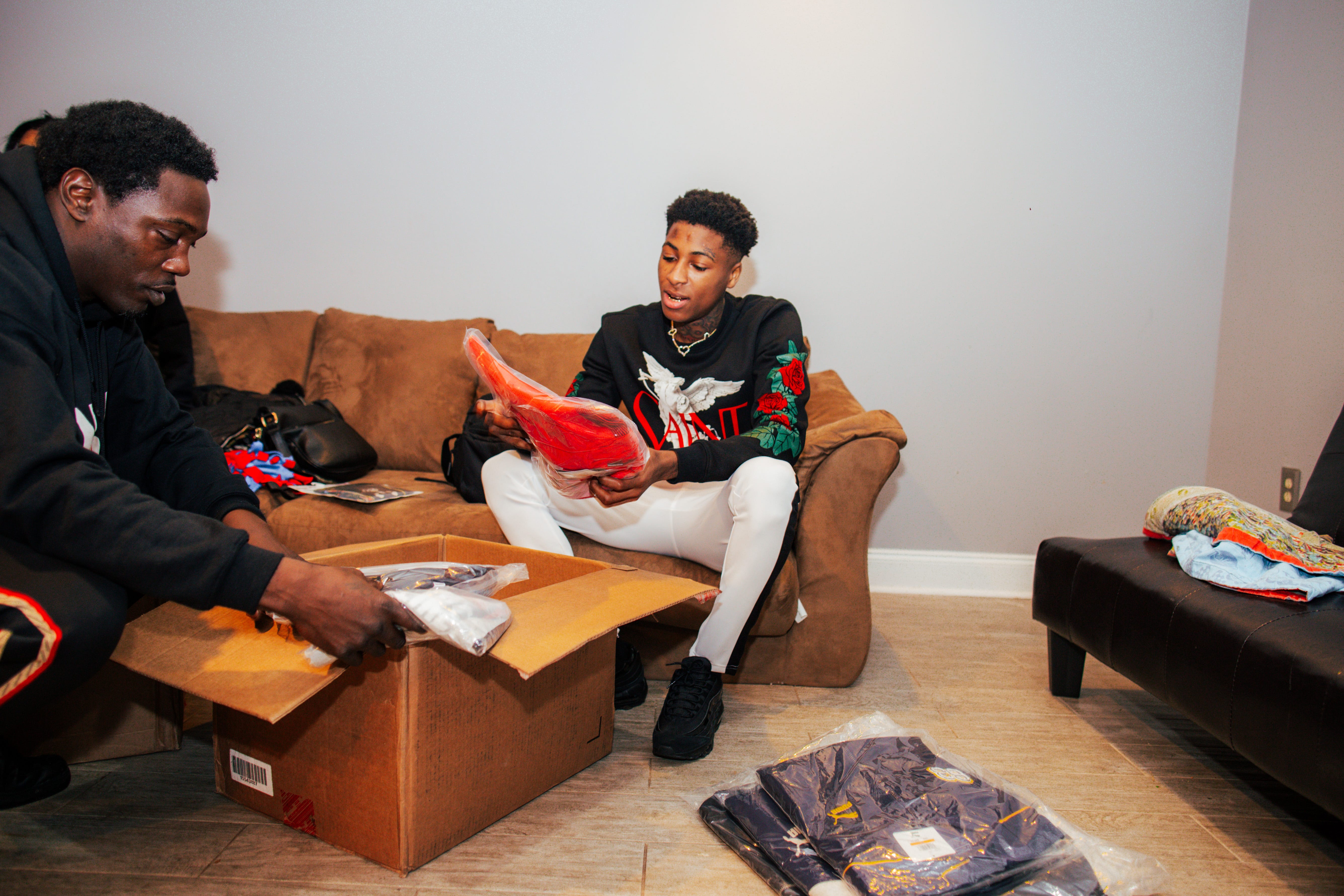
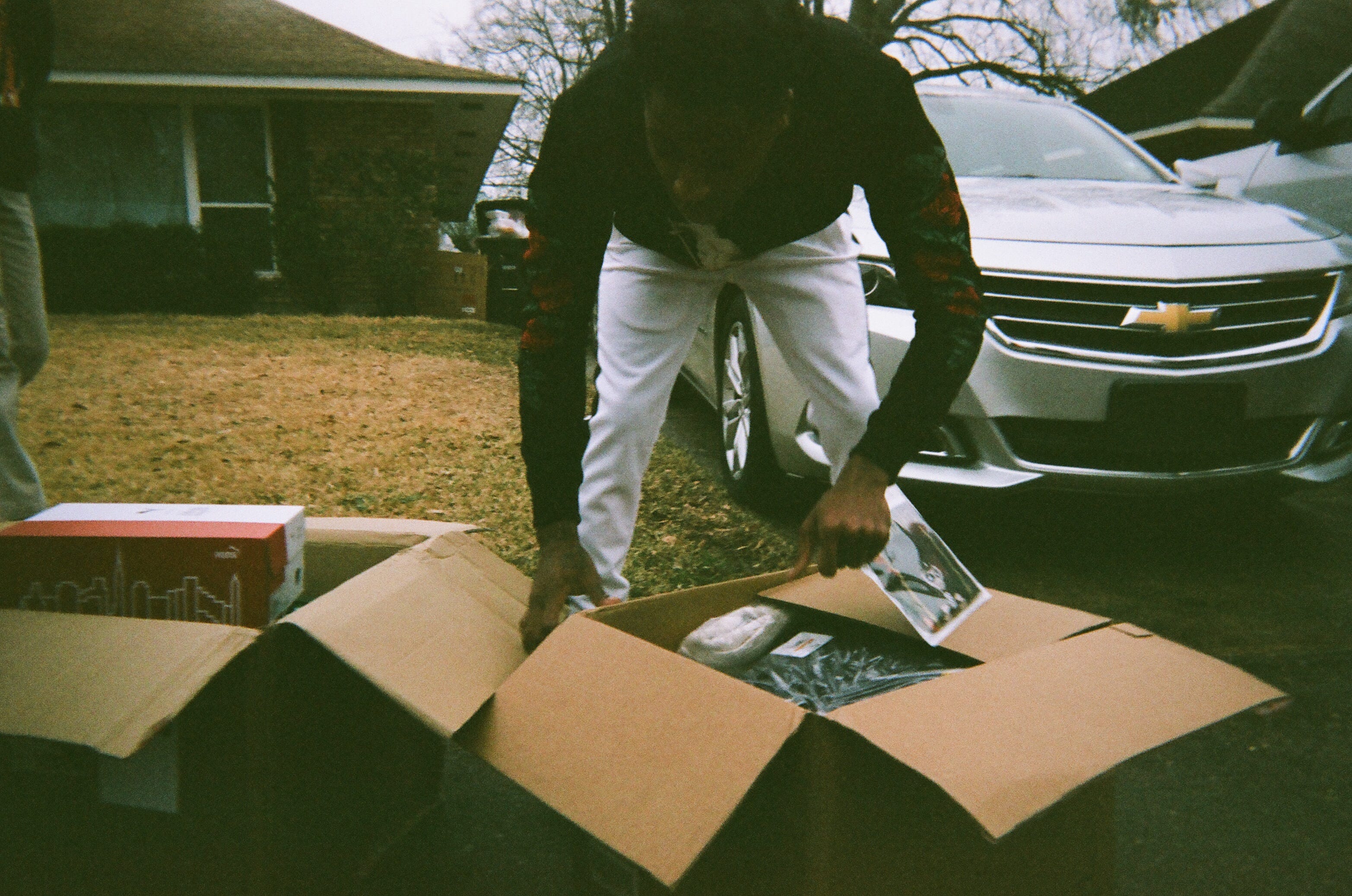
The boy pharaoh is bestowed with presents. A framed plaque from YouTube honoring him for eclipsing a million subscribers. (Just eight months later, he’s at 3.5 million) He unboxes a gifted swag bag amounting to a couple thousand dollars of Puma gear. Some of the shoes are slightly small. A reminder that he’s still so young that his foot size increased from 7.5 to 8 since the last shipment of free kicks.
Then he’s gone, again. There was talk of him going to the studio, but no studio, at least not a safe one, can be found on such short notice. Most of the crew remains at the house, and since the story is gradually shaping up to be “NBA YoungBoy has a Cold,” I start talking to Montana, his original manager and financier.
“If he hadn’t met me, he probably would’ve shot a whole bunch of motherfuckers,” Montana gives a gallows laugh. He’s wearing a racecar jacket and has the sly watchful intelligence of all successful hustlers. Raised across the Mississippi in West Baton Rouge Parish, Montana first met YoungBoy when he was still in school. That didn’t last long.
“I’m selling drugs all day, money coming in, money coming out, all day: Boom, boom boom.” Montana waves his arms to mimic the operational flow. “I’m smoking big weed and when he came around, it was with all these guns. I was like, ‘y’all wanna make money? I like your rapping, let’s get it.”
Scratch the surface of nearly any successful independent rap label and you’ll find the financial underpinnings of a narcotics empire. Ruthless, Death Row, Roc-A-Fella, Cash Money, No Limit. Those are merely the marquee names. Index funds and state pensions invest in the businesses that capitalize on (and sometimes exploit) the art that comes from these communities, but for that art to emerge in the first place, you need money for videos, studio time, basic survival. That’s provided by guys like Montana, who came from nothing and are old and wise enough to know that the odds keep stacking against them each year that they remain in the trap. And say what you want, their money is often less dirty than what winds up in campaign coffers, contributed by the “philanthropists” of polite society.
Outside, by the chained pitbull, I ask Montana about the innate menace of Baton Rouge and he opines, “this bitch just too small.” Then he starts riffing on the water lodged in his ear that won’t get out. Like an old Statler and Waldorf Muppets routine, Montana and a friend start cracking jokes about how they’re all getting old. When it dies down, I ask what most people don’t know about YoungBoy. They cackle uproariously.
“That n---- is fucking crazy,” Montana’s friend says. “Ima tell you the only reason why he keep the same people around! It’s that we’re the only…PEOPLE THAT PUT UP WITH HIS SHIT!!!!”
Montana goes on.
“You couldn’t even come around and want to hang out with him because you ain’t going to want to put up with his shit,” the friend says. “You’d be like, what…he’s fucked up!”
“I’ve met beaucoup motherfuckers,” Montana says. “I’m 31.”
“I’m 34,” his friend says.
“I ain’t never met a n---- like him in my entire life. That n---- is…”
“Lucifer himself!!!!!” He interrupts Montana and they laugh so hard that it induces genuine tears.
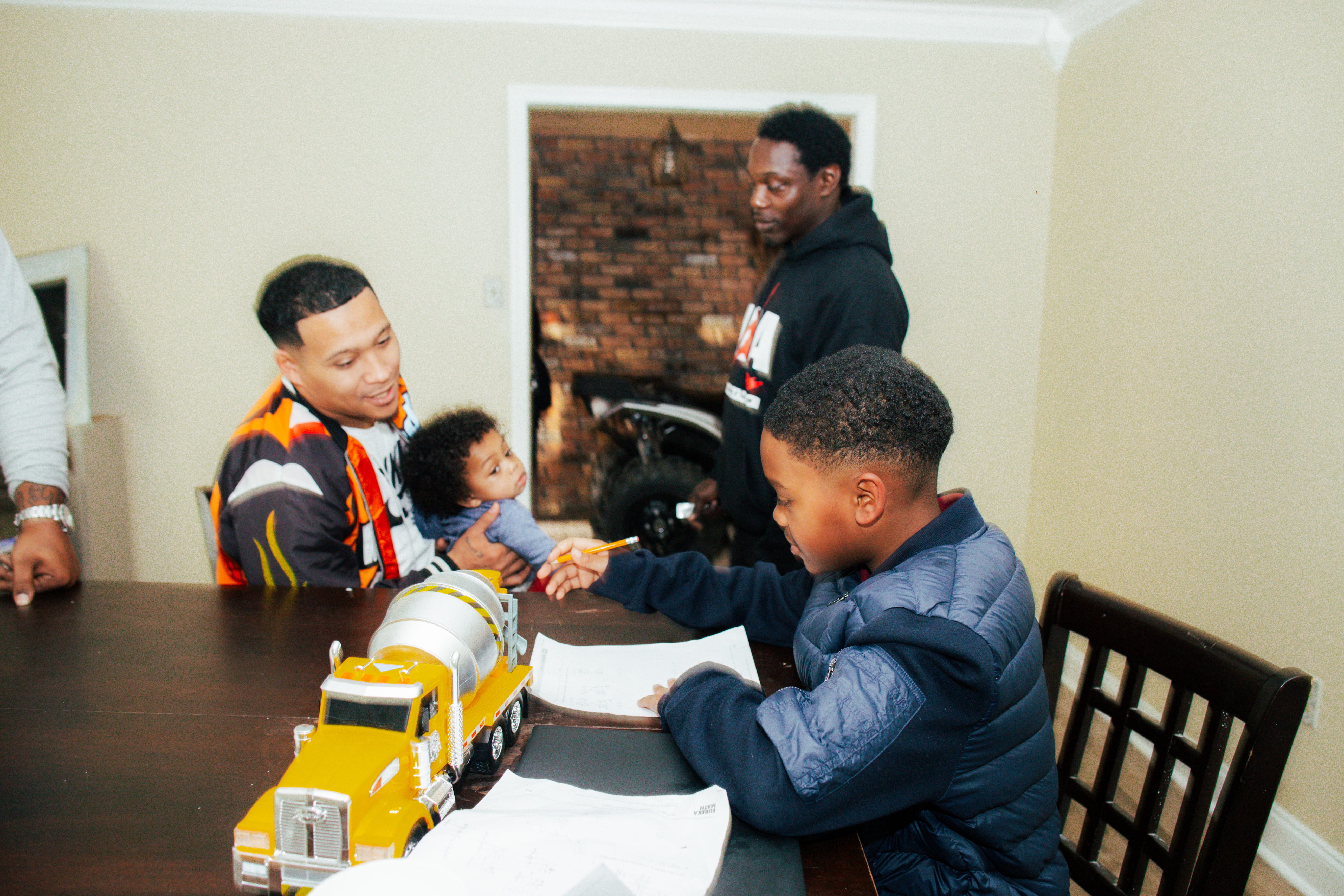
Inside the house, Monique sits at the kitchen table, hands folded, ecumenically patient, helping her daughter with her homework and keeping an eye on the other children rattling around the house. She’s a mother of six (not counting YoungBoy), with a seventh on the way. Before YoungBoy’s grandmother died, Monique swore a vow that she’d always take care of him, whether that meant appearing before the court in his defense, helping to bond him out, sending him on the Greyhound out of town when it got too hot, or just keeping her phone under her pillow in case trouble broke out late at night. The proverbial cool mom, whose day job involves working at a homeless shelter helping veterans and children. A young Angela Bassett would play her in the movie.
She was the first to sense that YoungBoy had a gift, telling his biological mother that her son was going to be a famous rap star—and getting cursed out in the process. “Imma call the police on you,” Monique laughs, recalling the confrontation. She compares YoungBoy to a lion, the chosen one who you don’t want to make mad.
“He’s dealt with and continues to deal with a lot of pain with himself and his family,” Monique says softly. She’s the only one to call him by his birth name. To everyone else, he’s “YB.” “He’s seen things growing up that he still probably hasn’t gotten over.”
There’s a verse from “How I Live,” off his breakthrough tape, 38 Baby that offers the cliff notes. Sixteen years old.
I’m from Baton Rouge where they wildin’ off the pills
You ain’t from where I’m from
You don’t feel how I feel
Everyday strapped up
You don’t live how I live
Police killing us and the police getting killed
I got so many n----s waiting on an appeal
Most of my n----s dead and we still shedding tears
Watch ya homeboy he fake, he ain’t really real
Shit I ain’t trippin’ I’m just focused on my career.
The page dilutes the intensity—this is the blues, after all.
“The media tries to portray him like he’s bad or he’s violent,” Monique says. “But you don’t have no clue what he faces every day. You don’t know, so you can’t really speak on him. Like, me personally, I know.They don’t see the caring side, the good side. He has a genuine heart and he loves kids.”
I ask his brother, Ken, the same question: What is the part of him that people don’t see?
“That he’s actually nice,” says the 14-year-old with a gentle smothered voice, still in his school uniform. “He gives me money, clothes, a big ol’ house, and a four wheeler.”
The massive dirt bike is parked in the front of the house. Ken tells me that everyone at school loves his brother’s music because he talks about “real life stuff.” I ask another question, but it’s at that point that the squirrel monkey breaks free from the backroom, scampering across the kitchen floor. The children in the house scream, then trail at a safe distance. YoungBoy is still nowhere to be found, so Monique bolts upright and rushes over to capture the monkey, ensuring that he doesn’t suffer the same fate as the tigers.
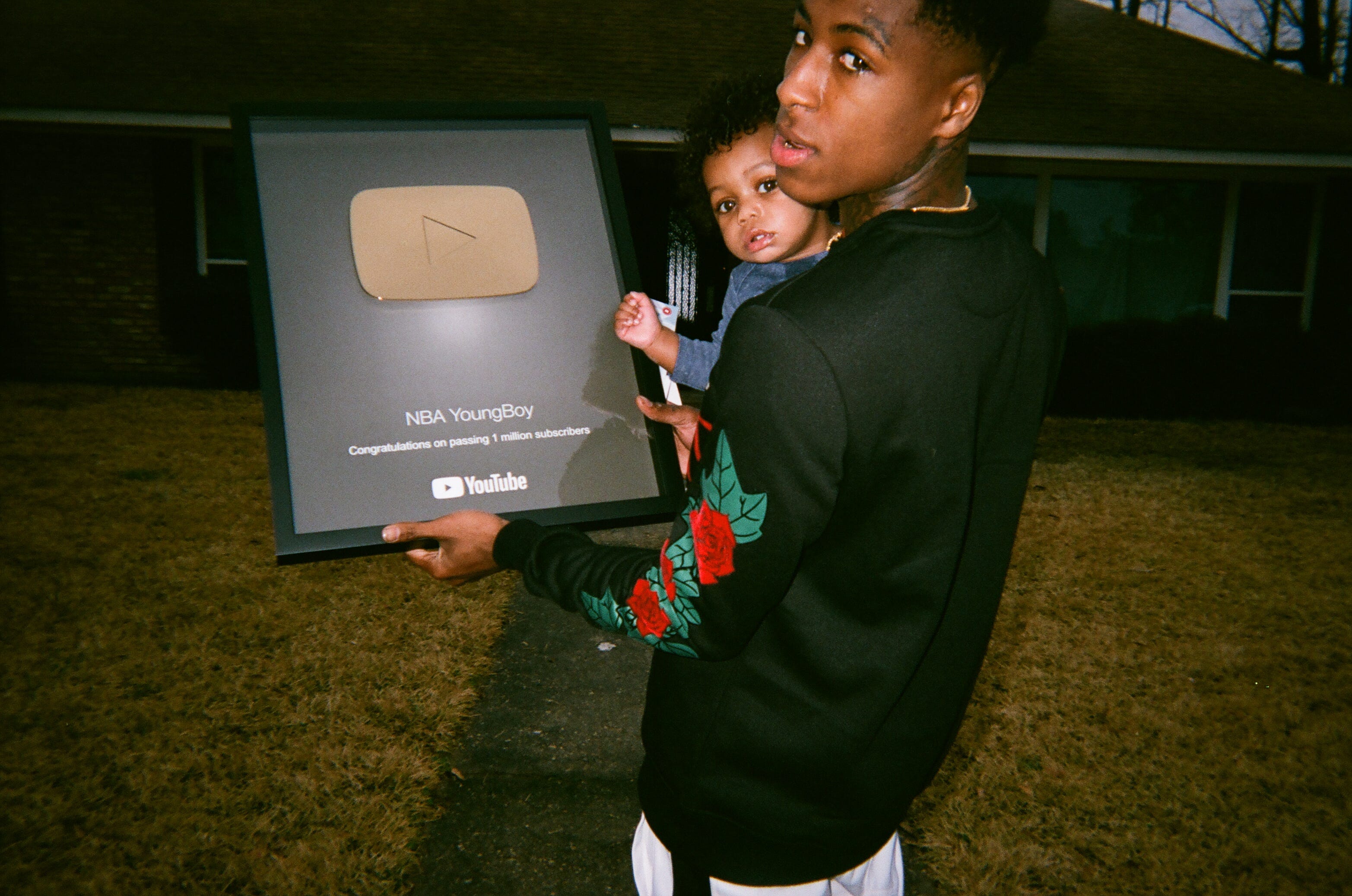
The club promoters said: “Keep the money and stay home.” It wasn’t safe in Shreveport. A councilman was determined to bar YoungBoy from playing within the city limits and the police department had been alerted. Should he inasmuch as enter the confines of Club Kokopellis (tagline: “Da hypest night club on the planet, home of A Bay Bay,”) the cops would commence a raid and start making arrests. That was the best-case scenario.
It was June 12th of 2017, YoungBoy’s first show since languishing six months in jail, and no obscure Southern bureaucrat could stop him. So he strapped on a bulletproof vest, hopped into a stranger’s car and commanded him to drive to the club. The bouncer shook his head, denying entry, pointing out the police gargoyled on the corner.
“Fuck that,” YoungBoy pushes past security, aided by a tidal wave of bodies swarming. The DJ spots him busting in and immediately “38 Baby” cracks from the loud speakers. The place is too packed to even make it on-stage so YoungBoy leaps panther-like onto the bar and starts rapping along:
Everybody under disguise man they scheming
These hoes will set you up
Tell you they love you they don’t mean it
Full of syrup, bitch I’m leaning
Smoking dope with the demon
It’s pandemonium. Sweating liquored up bodies slammed up against each, the sinister undercurrent of violence scarcely concealed. Then the police light the match. Boom! Marauding through the doors in riot gear, they taze anyone caught in the maelstrom. The crowd screams and runs, parting so that the blue goons can rush at YoungBoy. Someone shrieks: “DO WHAT THEY SAY!”
Instinctively, YoungBoy hops off the bar and sprints outside, police in huffing pursuit. As soon as he stops, the cuffs are slapped on. All this for the official charge of being underage in a nightclub.
“I told them that we had legal contracts allowing him to perform and they maced me,” says Fee Banks, who retells the story in February as we keep theoretically waiting for YoungBoy to return.
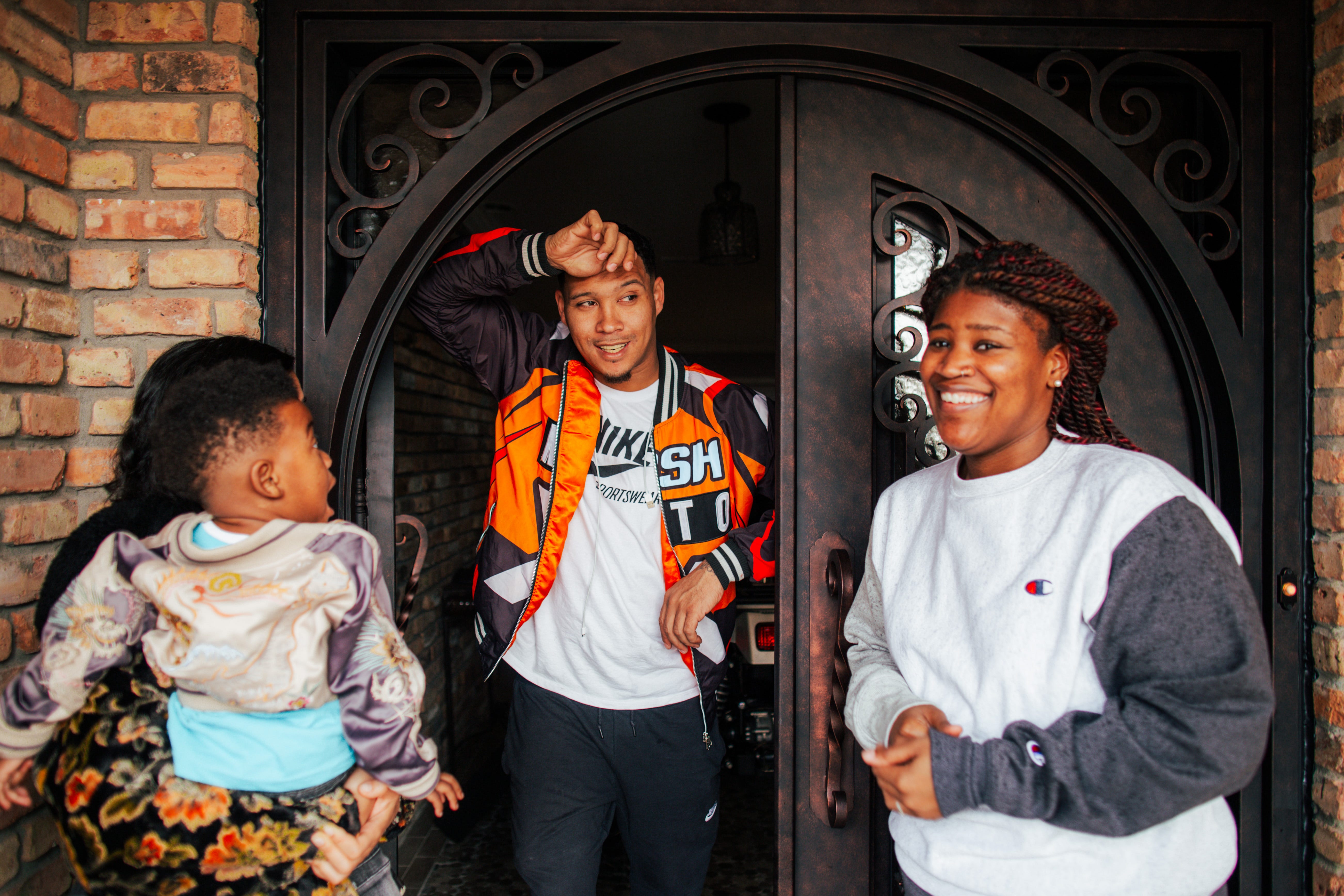
It’s night now, which in Baton Rouge approaches like a hissing threat. Every car that slowly cruises past seems like it’s doing surveillance. The city always feels tense and on edge – as if a violent storm or stickup could happen at any moment. We’re eating chicken fingers from Raising Cane’s inside the big black SUV owned by Banks, a slim, thoughtful, and staggeringly patient Louisianan. He’s approaching 40 but has an unlined baby face that belies the Atlas stresses that come from working in this business.
“After they maced me, they put YoungBoy on the curb and arrested him,” Banks continues. “They even took [videographer] David G to jail for assaulting an officer. Just some made up shit.”
“Maybe this is an obvious question, but how much of that is racism?”
“The councilman banning him was Black. It was an attack on our community, hip-hop, know what I’m saying? The same thing was going to happen in Lafayette the next week. We had to cancel that, too.”
Blazed by bluesmen into the late 20th century, the trails of the “chitlin circuit” remain well-trodden. The younger generations abandoned juke joints with whiskey in paper cups and knives in case of war, in favor of small clubs where regional Louisiana stars shuffle around every weekend, where everyone is strapped up and sipping Ciroc. I initially met Banks in 2012 at a Gates show in Thibodaux, a country town of 14,500, where somehow 1,000 crammed into a tinderbox venue, and Gates narrowly escaped a potentially fatal argument outside. At the time, no one knew him outside of Louisiana, but the crowd roared every word.
Subtract the famous rappers and violence remains omnipresent. I’ll never forget a Monday night at a Baton Rouge club called Dreams, where a DJ spun three hours of obscure regional rap, jig, and bounce songs that never made it past the state line. On my way out, I noticed an ominous police presence guarding the perimeter of the club, and commented how unnecessary it seemed.
“Do you know how many people have been killed in that parking lot?” replied my friend, then the biggest hip-hop DJ in Baton Rouge, and the only reason why I was given safe passage into the club. “They need those police there. Trust me.”
In a subsequent interview with the Baton Rouge district attorney, I off-hand mentioned that I’d been to Dreams. In a distressed, fatherly tone, he cautioned, “Son—don’t ever go there again.”
This is a city where you can easily lose sight of who’s to blame, the capital of a state afflicted by cruel hexes and black magic. Fee plays me an advance of Till Death Call My Name, YoungBoy’s official debut, the culmination of nearly a dozen mixtapes that made him a crown prince of the mud.
It opens with a spoken-word intro in which he denies that he’s a killer or a gangster, just a penitent kid attempting to recover from penitentiary mistakes. Within seconds, he’s reminiscing on jail, the debilitating poverty of his childhood, and shootouts in broad daylight. He shouts out a list of the entombed and incarcerated, Fredo Santana, C-Murder, Soulja Slim. These aren’t close friends but icons ensnared by the same struggle. For as hermetically sealed as Baton Rouge can be, YoungBoy is clearly invested in the art form as a fan and student. This is the tradition he has adeptly, eagerly inherited. Tremendous vectors of pain booming out of the speakers, the shaky calculus of the condemned attempting to escape their inherited fate.
The highlight of the album is “Diamond Teeth Samurai,” which interpolates Lil Wayne’s debut single, “Tha Block is Hot.” Banks notes that the latter dropped on Oct. 23, 1999, three days after YoungBoy was born, just 60 miles west of Hollygrove. YoungBoy might lack the song-for-every-occasion versatility of Boosie or the romantic poetic eccentricity of Kevin Gates, but he’s as raw as anyone to ever survive these streets. His flow is both acrobatic and low to the ground, his voice a black-lunged, woe-to-your enemies marvel. An electric response to the stale encroaching mist of death, a lethal mutation.
“Everybody hurting, everybody fucked up,” Banks summarizes the situation surrounding us. A childhood friend of Wayne and an original member of the Sqad Up Crew, Banks was raised in New Orleans, which along with Shreveport and Baton Rouge boasts three of America’s Top 25 highest murder rates.
“Nobody got no money, everybody trying to get over on the next person. No one wants to work for what they want, they want to take it, they want it instantly. If you got it, I want it and I’m gonna scheme and plot for it—to try and get that shit up out you some type of way.”
I ask if it’s gotten worse. He shakes his head. It’s been this way as long as he can remember. An endless string of politicians and reformers promising change, but only yielding khaki banality and corruption.
“I don’t really see any hope for it. This shit has been going on for a long time. If you want better you gotta go somewhere else, because this is what it is down here.”
Someone taps on his tinted window, slightly unnerving me. Banks keeps calm. It’s a member of the greater entourage, smoking on a Newport, casually informing us that YoungBoy is finally home. As soon as we stop out of the car, YoungBoy hollers “FUCK YOU FEE” and stomps into the house like he’s just been grounded.
He’s become convinced that Banks called the executives at Atlantic to force him into doing the interview that he’s ducked for two days. He didn’t. Nonetheless, YoungBoy doesn’t believe him and furiously storms into the backroom of Monique’s house to be with Fed, the squirrel monkey.
“Come in, slime,” he waves at me.
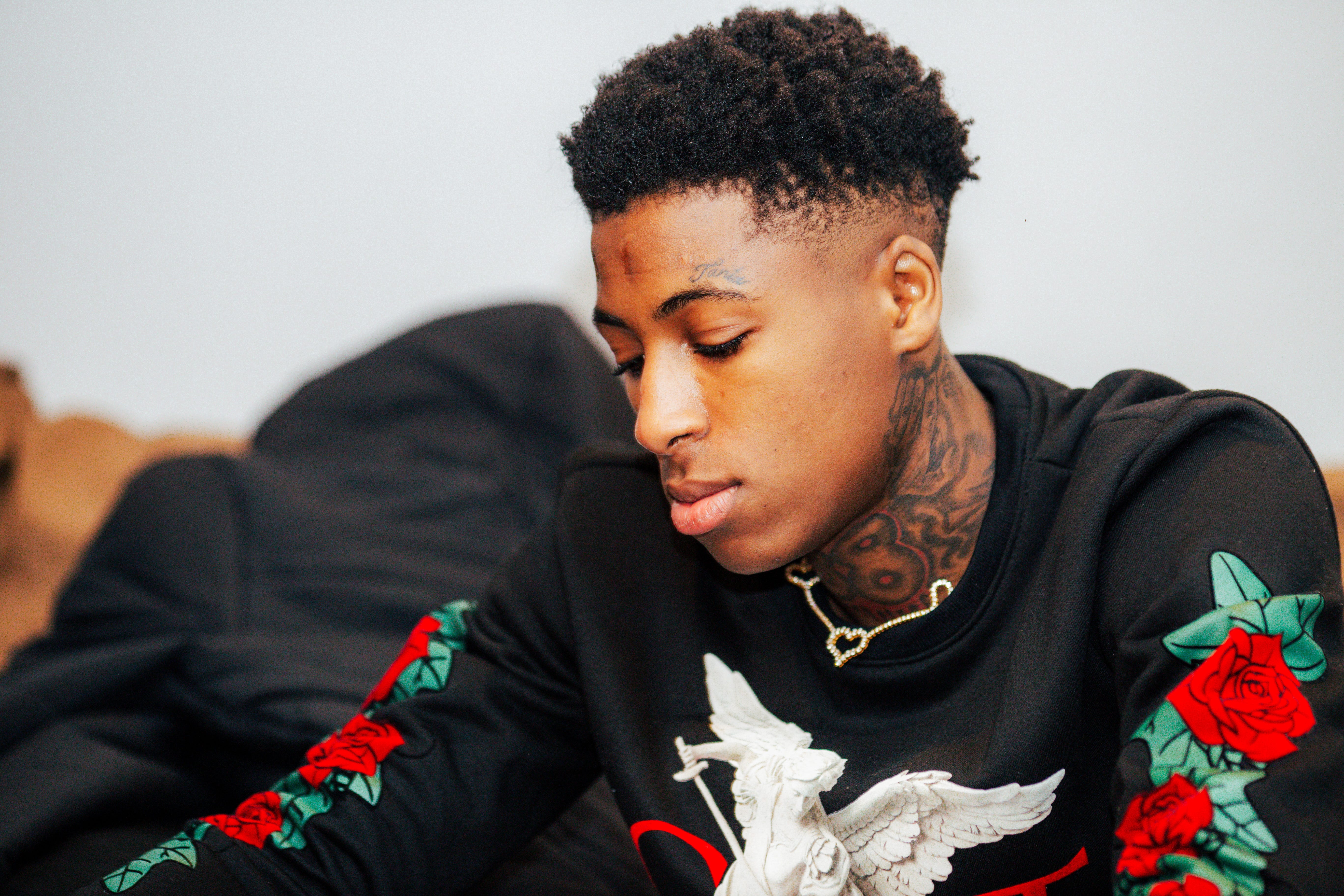
YoungBoy sports black and white jogger pants and a Saint Laurent shirt adorned with roses. His 2-year-old rides a Minnie Mouse tricycle around the room wearing an outfit that costs more than most pre-school tuitions: diamond NBA chain, gilded Asian-style smoking jacket, and designer jeans. The monkey goes commando.
There is this notion that to be an exceptional artist, you need to be able to properly articulate the process. But that’s only intermittently true. Forget YoungBoy, even Nabokov once described himself as “thinking like a genius, writing like a distinguished author, and speaking like a child.” This splintered possession of self seems particularly acute in someone like YoungBoy, barely out of childhood, whose songs operate as both a confessional and a quest to find clarity. The drugs, the pain, the fear, the anger--they’re embedded into nearly every stanza, but that seems to be the only time he’ll allow himself to be vulnerable. The shadows he’ll readily reveal to the world are concealed to strangers in private, the vestiges of growing up in a city where weakness is abhorred and preyed upon.
“You can never figure me out. Ever,” he says—not to me, but an unseen universal second person. “Don’t ever try to harm me and I’ll never harm you. I’ll never neglect you or talk down on you. But you’ll never understand me, that’s a good thing. Fuck that shit.”
He’s obsessed with the fakeness around him, the artificial smiles and the perfunctory rigors required to survive this most insincere industry. Future told him “don’t scare off the bag,” another way of saying that until he accepts a certain responsibility, there will be no festival appearances or Taylor Swift collaborations. But it goes deeper than just long-term financial viability; if YoungBoy doesn’t seriously alter his behavior, there’s a very real possibility that he’ll end up a statistic. Even if his music continues to evolve, his image will rightfully be forever tarnished by that grotesque hotel tape.
In retrospect, it’s unsurprising that I ask him about his first memory and he replies “my stepdad beating my momma.” It occurred when he was roughly the same age that his son, Draco, is now, and his ardor for his kids seems an unconscious attempt to redress the wrongs that he suffered. His superpower is in his ability to transmute this pain, but it’s also his kryptonite.
“I’ve never felt loved again since my grandma died. I don’t feel love,” he says. “I feel like there ain’t nobody in the world that I can count on. I’m prepared for the worst.”
We talk for a while about the grind and the need to “go get it,” which he claims is the best advice he’s ever received. If you simply mention jail or his legal woes, his mood clots and the subject needs to be immediately switched. He tells me about his desire to humble himself and be patient, to adapt to living that “low-life, high class” existence. Every minute or two, he’ll get distracted by the monkey or his son. He’ll talk about murder and reincarnation while lovingly peeling and hand-feeding tangerines to Fed.
When I ask what he hates most, his voice growls with blood-curdling rage. “When people think I’m fucking dumb but I’m really smart,” he says. “Don’t try to fucking play me like I’m dumb, you just don’t know, I’mma top her out and shit, I just won’t say nothing. Bitch, who wanna think they smarter than me, that shit make me wanna kill you.”
Within two minutes, he’ll pucker up and beg his son for a hug and kiss. In a matter of a sentence, he’ll proclaim his fearlessness then admits that living recklessly keeps him up at night.
For a minute, he starts to get close to figuring himself out. He attributes all this success and madness to the divine, the unseen watchmaker genius of god and the guardian spirit of his grandma. Whether evil or good, he moves fundamentally and resolutely off instinct.
“I’m not thinking really. You probably don’t understand,” he says. “I’ll be talking to you and you’ll be like ‘what am I thinking?’ I’m thinking nothing. I’m going with the flow. I’m just living.”
The monkey tries to sneak out the door again, but YoungBoy freezes him in his tracks with a stern look and an, “Aye, Bitch, I know what you up to, you better stay back!”
Everyone in the room laughs.
“It’s weird. I’m from Baton Rouge, right? I don’t have to be the gangster anymore. I feel like I have the life to to be weird and different,” YoungBoy continues. “So I don’t care…fuck that shit. But we still thugging forever though. Shit’s never gonna change.”
By now, the room has slowly started to fill back up again. His A&R calls to check in on a video shoot in New Orleans tomorrow. There’s a community service appointment in New York on Friday. The A&R is adamant that YoungBoy takes the early flight out. I sense that it’s my cue to go, so I say my goodbyes and slip out of the house.
Before I turn my keys into the ignition, I reflexively open Instagram. The first thing that pops up is a (since-deleted) picture that YoungBoy posted just two hours before, which explains his disappearance. There he is in that same Saint Laurent roses shirt, crouched fetally in front of his grandmother’s gravestone, his eyes lowered, his head bowed as though it carried the weight of the world. He brought her a bright pink bouquet of carnations and placed them delicately above her epitaph, which reads: “May the work I’ve done speak for me.”
Youngboy has a cold!