

This conversation must begin with Nots.
Arguably the greatest art-punk band the 2010s had produced, the trio-to-quartet-to-trio formed at a pivotal time in the Memphis punk scene’s existence—where its denizens had largely moved away from the messy, BBQ slathered, blown-out rhythm & blues it had been renowned for since the heyday of the Oblivians, the Reatards, and the mantle Goner Records had taken from venerated garage punk label Estrus.
Formed in 2011 by Natalie Hoffmann (guitar, synthesizer, vocals) Charlotte Watson (bass), and Laurel Ferndon (drums)—and with a few lineup changes with Watson moving to drums, Meredith Lones on bass, and Alexandra Eastburn on synth for a few years—Nots released a handful of killer seven-inches and three LPs prior to their 2019 hiatus. Their full-length catalog was bookended by two great efforts (debut We Are Nots and final album 3), and in the middle was nothing short of one of the decade’s best punk records (2015’s Cosmetic).
Glints of several musical styles can be detected in Nots’ singular brand of punk music; bits of hardcore and “post-punk” more than a dollop of no wave, a profound psychedelic aftertaste, all mixed with stained glass shards in an industrial strength blender.
Hoffmann had never played in just one band for too long since she moved to Memphis for art school; when Nots first formed, she was also in the killer garage punk band Ex-Cult, and by Nots’ quiet indefinite hiatus in 2019, she had started a synth-driven project called Optic Sink. Chem trails from 3 lingered in the sound of Hoffmann’s new outfit, but it all felt intentional.
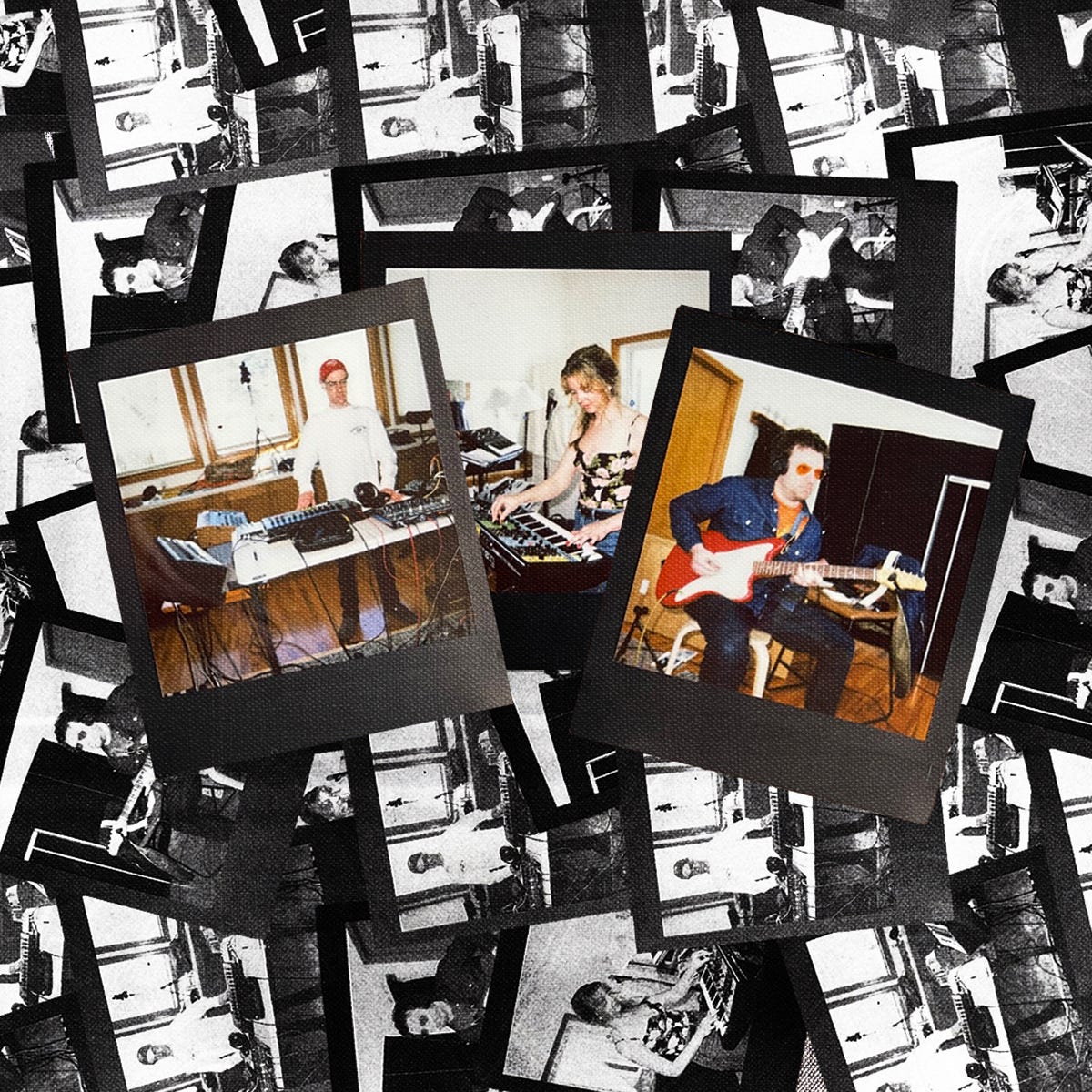
While playing synthesizer for Nots, Hoffmann landed on a handful of songs that revealed themselves to be worthy of their own project. She contacted Ben Bauermeister—formerly of Memphis garage poppers Magic Kids—who played percussion on drum machines for this new group. Together, they recorded Optic Sink’s self-titled debut and released it in early October 2020—about six months into pandemic lockdown, an unexpectedly ideal timeframe for such a thrillingly claustrophobic LP.
More or less since time immemorial it has been a staple of underground music, but particularly in the last two or three years, “lo-fi” has become a trendy aesthetic signifier again. Since Optic Sink predates this recent spate of Tascam reels and cassette recordings, it’s safe to assume its borderline uncomfortable intimacy was conjured out of necessity—but seems no less a very considered production strategy. The low-end-heavy ambient hum of opener “Drone” makes way for the nervous “Personified,” which feels a lot like a room bottoming out and everything in it collapsing into a smaller, darker room.
Or, given its intense pace, falling through every floor of a skyscraper from the penthouse.
With its blend of analog warmth and the icy distance of electronic instruments, a retrofuturist pallor defines the eight tracks on Optic Sink. Its influences host a range of nonmusical references—a hallmark of artistic depth for any musician, in my humble opinion—from films like Metropolis and Alien to art movements like Dada and Bauhaus. Toss in a little Simone de Beauvoir and Maya Deren (more on the latter in a bit) and you have the cocktail from which Hoffmann sips here.
Dystopianism defined the era in which Goner Records released Optic Sink’s debut. Between the aforementioned pandemic lockdown and the widespread panic from the unpredictability of the current POTUS’s first term in the Oval Office, there was, quite literally, nowhere to run. Conceptually, lyrically, and vocally, Hoffmann rose to the occasion on Optic Sink.
Leadoff track and first single “Personified” frenetically digs deep into Trump 1.0 unease and the warped-timeline feeling of living in (or through) it. Hate generating hate, people getting crushed by the heavy wheels of white capitalist ideology. Hoffman sings intentionally robotically, but not without feeling. Sequencer-generated melodies merge with largely improvised accompaniment—before Optic Sink, Hoffmann considered herself solely a guitarist—while Bauermeister plays drum pads as if “Personified” is punk rock in Blade Runner wardrobe, which is exactly what the song is.
Back to my point about Hoffmann singing with emotion: “Exhibitionist” deftly adds a layer of bawdiness to her voice, alluding to sexuality many layers underneath her satirical commentary on how social media is a pharmaceutical narcissism booster when she sings, “You can watch yourself / Under glass.” Hoffmann’s vocals still retain a mechanized feel, making the song feel almost like a disconcerting AI sexbot come-on. A brilliant and rather disturbing track in this light.
On the next song, “Vanishing Point,” Hoffmann nearly slurs, “Gathering dust / Gathering dust / Gathering speed, speed and lust.”
“Girls in Grey” is a sparse rebuke of “Gaslight, Gatekeep, Girlboss” culture. The skittish arpeggios on “Soft Quiet Life” undercuts its lyrical theme—the “tradwife,” years before that lifestyle had a name. “Dumb Luck” is a woozy, minimal, psych-electronic-disco jam perfect for any darkwave dance night you may attend.
The album’s closer, “Set Roulette,” explores the feeling of stagnation—there’s a hopeful tone which augments the frustration of being trapped in a harmful or hurtful cycle. In Nots, Hoffmann had been showcasing her skills as a formidable songwriter; on Optic Sink, she proved she could shift the context of her music and her artistry would still land immaculately.
If Optic Sink was the bedroom synth-punk masterpiece reverberating across the underground during the heaviest days of COVID lockdown, 2023’s Glass Blocks found the band expanding their sound once people finally started making their way outside.
This panoramic version of Optic Sink can be credited in part to its addition of Keith Cooper (late of Memphis garage punks the Sheiks) and its production, courtesy of Caufield Schnug, founding member and guitarist of Sweeping Promises. Optic Sink made the trek to record for 10 days at Sweeping Promises’ home studio in Lawrence, Kansas—a trip dozens of bands have made at this point. The addition of Cooper is notable because it freed Hoffmann from having to program sequencers and gave her synths a little extra room to breathe.
Hoffmann also plays guitar on Glass Blocks, but it’s more for color than foundation.
Even though the band recruited a new member in Cooper, Glass Blocks oscillates in a much more open, starker space than Optic Sink. If you’ve been into punk and punk-leaning music for as long as I have, you’re already aware that bands can become a little self-conscious about expanding their sound as their catalog grows. There are no such hangups with Optic Sink, who, with the help of Schnug, simultaneously become more minimal and more musical on their second full-length.
Opener “Modelesque” kicks Glass Blocks off by showcasing the band’s cleverness in arrangement with its synth and guitar parts slinking in and out of each other’s path over the song’s solid keyboard bassline. Hoffmann’s lyrics evoke a sense of glamour over the darkwave instrumental, setting a scene of shimmering club lights cascading over bodies in its packed vicinity. “Live Illusion” follows the glam with a punk-indebted punk; scratchy guitars and blue skies somehow being a cue for impending anxiety. Gone is the robotic diction of Optic Sink’s debut—Hoffman sings and intones lyrics in equal measure; the latter lightly gesturing the commanding and ominous presence she cast over Nots’ discography.
LiLiPUT’s 1983 single “A Silver Key Can Open an Iron Lock, Somewhere” was originally recorded as a gentle, dub-influenced track, a lilting addendum to the band formerly known as Kleenex’s storied run as punk pioneers. Optic Sink reimagines the song as a midnight romp through the streets. It’s somewhat faithful to the original, in a way that doesn’t sacrifice the musical identity of Optic Sink themselves; doing exactly what a cover should do.
Optic Sink render their musical world as a city much bigger than Memphis, where it’s always 2:15am. “Summertime Rain” is more like a balmy, weird night on the strip, grinding teeth chattering about the afters, than some idyllic, romantic moment in a California sunshower. Armed with laser synths and a funky bassline that used to be a defining characteristic of the now-meaningless term “post-punk,” the album’s title track foretold Optic Sink’s ability to capture such danceworthy excellence that they could credibly back Memphis rap stalwart Tommy Wright III at Gonerfest 22 last year.
Glass Blocks is not necessarily an improvement on Optic Sink. I rarely feel that bands this talented should improve. “Getting better” is an artistic cliché, more associated with an outdated notion that the line on the graph should always be on the incline. I think expansion, or blazing new trails, are much more worthy goals, which Optic Sink achieve tremendously on their second album.
The most immediate realization I came to when listening to Lucky Number for the first time late last year was how immense it sounded. Optic Sink didn’t expand their lineup for their third album, and the LP was once again recorded and produced by Caufield Schnug in Kansas. But compared to the stark and spacious Glass Blocks—and surely its thrillingly boxed-in predecessor—Lucky Number feels ready-made for the big room or the outdoor stage.
Rife with layered, sophisticated, and frankly irresistible tunes, Lucky Number has earned frequent comparisons to New Order since its Halloween 2025 release. (Shout out to Cooper, who gets his Peter Hook on by using as much of the fretboard as possible.) Leadoff track “Laughing Backwards” is empirical proof that Optic Sink knows how to kick off an album, with its urgent synth line and Hoffmann barking in all caps, “ARE YOU LIVING / ARE YOU LIVING / IN A FANTASY.”
Its song structure is stacked as immaculately as a perfect game of Tetris, and the rhythm section constructs a beat that keeps the insistent pace of a marching band on a Friday night. As a matter of fact, some intrepid marching band should just learn this song. It would bang at a high school football game.
Part of the structural perfection of all the songs on Lucky Number could be attributed in part to Greg Cartwright—onetime member of the mighty Oblivians and the great Compulsive Gamblers, as well as on a very short list of the greatest songwriters to ever come from Memphis; right alongside B.B. King and Alex Chilton.
Cartwright was originally scheduled to drive with the band to Lawrence and produce Lucky Number, but a family health situation prevented him from doing so. But he did sit in on a couple Optic Sink rehearsals—”He sat at the drum kit” and listened, Hoffmann told Tim Abbondelo for see/saw—and offered suggestions on how to tweak the song ever so slightly. In whatever way Cartwright’s touch helped those songs, the songs themselves make up an exceptional collection for Optic Sink to have their label (the great Feel It Records) press up on vinyl. The seven-minute banger “Construction” is exactly what I think of when those New Order namedrops come up in conversation.
The album ends Side 1 with single “Don’t Look Down,” where, like many of the songs on Lucky Number, examine Hoffmann’s interiors (whether fictionalized or very personal) on the brink of existential collapse. There is a little bit of that in a lot of us these days. Musically, it’s foreboding but not quite ominous—more like seductive danger. “Golden Hour” is so climactic—in its pacing, rhythm, and Hoffmann’s guitar and vocals—I’ve found myself forgetting that it’s not the album’s final track.
The last two songs, which make up the final eleven minutes of the LP, find Optic Sink branching out into new territory as a band once again. “Kinetic World” is alluring psychedelic new wave—if new wave was actually cool and not an industry push to make a commercial alternative to punk music. This is the alternate universe electronic new wave, the shit that would be played at gallery parties with very good drugs. Closer “Luxury of Honesty” is a dismissal of, well, any number of insanely powerful men leading the destruction of our society as we know it, over a shuffling, trippy backdrop. An extended jam on the back end sends the album off into the twilight of dawn.
Maya Deren was an artist of many disciplines, but she was best known and most celebrated as a filmmaker. She brought an enormously bold and experimental approach to her work, utilizing artistic tools such as jump cuts and multiple exposures back when French New Wave was a twinkle in Truffaut’s eye after getting expelled from his umpteenth school. Hoffmann has long cited Deren as an influence on her own multidisciplinary practice—in addition to being a musician, she is a phenomenal graphic designer—and Optic Sink’s first show after Cooper joined the band in 2022 was the first of many where they live scored Deren films.
The band’s musical interpretation of Deren’s debut film, “Meshes of the Afternoon,” is a drone piece set to the backdrop of a dark scene unfolding in the California sun. A key, a knife, and a flower figure prominently into the film’s rolling imagery. Without giving too much away—because you definitely should watch the film with Optic Sink’s score providing its soundtrack—the music perfectly encapsulates the beauty, violence, and death the film spends most of its 14 minutes building toward.
After a spate of improvisational live scores and the great VHS recording of a Memphis performance (provided by the great Zach Mitchell at Machine Duplication Recordings), Relentless Metamorphosis: An Original Score for the Films of Maya Deren was recently released on DIG! Records. The onetime Guggenheim fellow and Cannes winner having her work reinterpreted, musically, by what is essentially a punk band would be the sort of cultural subversion I’m certain she’d be proud of.
The album opens with “The Very Eye of Night,” building around a minimalist, almost metronomic beat and a synth loop cycling for over 15 minutes, with Hoffmann, Bauermeister, and Cooper improvising movements and motifs which by its completion feel astral, but almost like a spaceship that has run out of gas. “A Study for Choreography” is short and appropriately danceable and not-period-specific in a pretty thrilling way; its ‘80s exercise video aesthetic turns the original material on its head.
Divorced from its context, Relentless Metamorphosis serves as an outlier in Optic Sink’s growing catalog of jams. But the LP also captures the band at their most adventurous, emphasizing each member’s ability to listen to and improvise with the others, as well as interact with these film experiments that were light years ahead of their time. By the moment “Meditation on Violence” calmly enters and exits the aural space—along with its chaotic middle section—these compositions feel transformative, like a meditation only these musicians could have guided you through.
Optic Sink as a band seem emboldened by the ways in which they can challenge themselves and the existing status quo. Their proper songs contain sharp critiques of modern society at large, and then they turn around and interpret the work of a dynamic artist who did the same thing in very different ways. Memphis has inherently been known as a musical city for over a century at this point, and whenever the music from there is threatened to be pigeonholed, a new sound emerges; whether it’s Issac Hayes, Three 6 Mafia, or a darkwave band led by an art school graduate, determined to render the ill-at-ease feeling in the air of modern America into something that turns our encroaching dread into sweat on the dancefloor. Or tears on the arthouse theater seats.