

I have a spreadsheet where I’ve logged every artist I’ve seen perform live. It has over 1,500 entries to date, and within each cell is a story. Most are resonant for a readership of one: when I saw Paul McCartney with my dad in 2016, when I promoted early-career shows for Alex G, Mitski, and Phoebe Bridgers in college. A few recall my personal brushes with history: Frank Ocean’s hallowed FYF 2017 performance to his cursed Coachella 2022 appearance, or when I attended the final Crosby, Stills, Nash & Young show.
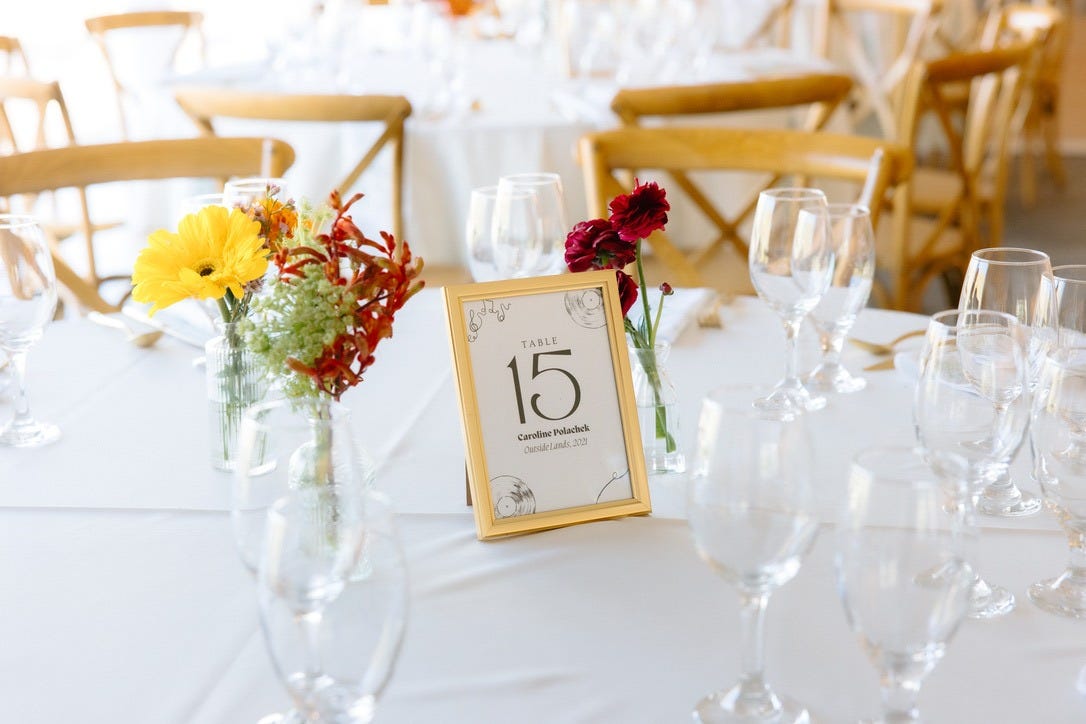
I’ve kept this record since my first ever concert (Blink-182’s reunion tour with Weezer and Taking Back Sunday, a pop-punk christening courtesy of my elder sister’s influence), and have appreciated the milestones I’ve recorded since—including celebrating my 1,000th show (Bad Bunny at Coachella, for which my friends caught side eye by popping sparklers when the set began). At our wedding, and my wife and I labeling the tables after shows we’ve attended together.
I’m not alone in this urge to atomize life into individual data points. In the early 2000s, last.fm accrued a dedicated user base who wanted to “scrobble” every song they listened to into an archive. The motivation to imbue what we consume with a documented significance has since extended to books (Goodreads), movies (Letterboxd), and even fitness (Strava). Cataloguing is a self-reinforcing practice, in which you generate for yourself an extra dopamine hit not just from experiencing the media, but adding it to your collection. The larger your backlog, the more you want to keep accumulating.
A full 11.5 percent of the performances I’ve seen live have come from Outside Lands, my hometown music festival that I’ve nearly attended every year since 2013. It’s become an annual anchor which helps me orient the progression of time, a tradition during which I see both many of my favorite people and several artists. I’m also eager to include in my accounting. For this year’s iteration, I had been looking forward to re-upping a few names on the existing list (Clipse, Geese, Tinashe) and including a few first-timers (Momma, Dijon, JADE). I made playlists studying for the lineup, swapped recommendations with friends, and done all the things I’d long built a culture around the festival throughout my 20s.
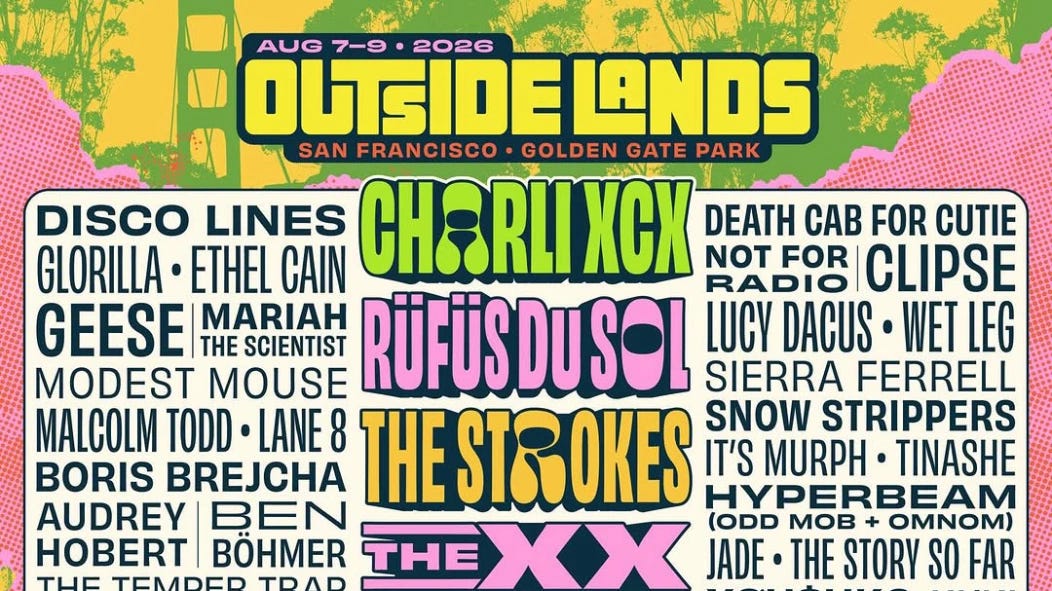
As it happens, life pumped the brakes. I suddenly needed to cancel for the rest of the month attending a good friend’s wedding in Virginia, a group trip to Philadelphia, and most of Outside Lands, save for Saturday.
Although a disappointment, I took it as an opportunity to conduct a natural experiment. I used the limitations placed upon me to experience my perennial music festival in a new light, one increasingly engaged with by audiences tapped into the world of popular music. On Friday afternoon, during the time I should have been scanning my wristband and walking onto Polo Field, I instead found myself logging onto the Amazon Music platform for the first time. I was going to see Outside Lands from the vantage that many others around the country do: the livestream.
Prior to the 1990s, you almost always had to actually be in the room to experience live music. The exceptions were usually grand spectacles, like Elvis’s groundbreaking satellite-broadcast “Aloha from Hawaii” in ‘73 or the marathon length Live Aid broadcast in ‘85. The appetite for at-home concert viewing was subsequently commercialized by pay-per-view stadium shows from mega acts like the Rolling Stones and Backstreet Boys. The accessibility of these experiences broadened for both audiences and artists with the emergence of live internet video in the new millennium, which was primarily used for broadcasting global news events but was simultaneously experimented with by the OG jam band platform nugs and the emerging festival behemoth Coachella.
The game changed in 2011, when Coachella partnered with YouTube to stream the weekend across three channels—creating for the first time two prominent but distinct audiences, one in the desert and one at home. It also democratized the medium, giving professional video direction to not just the headliners, but the underground upstarts further down the lineup. The livestream would become increasingly popular over the years, reaching over 200 counties and 40 million views by 2018. In 2023, all six of the festival’s primary stages became available to stream on YouTube, alongside other artist-curated content between sets. New to this year, you could now multiview several stages at once, most in 4k, all for free. Following Coachella’s lead and success, most major festivals have invested in livestream infrastructure and partnerships of their own: Bonnaroo and Lollapalooza on Hulu, Rolling Loud on Twitch, Head in the Clouds on TikTok Live.
I’d tapped into a few such streams over the years, primarily Coachella’s, initially to stay up to see the Outkast reunion from my freshman dorm room while my roommates avoided my screen light from their bunk beds. For fans around the world who don’t live in a priority stop for their favorite artist’s touring routes or lack the means for tickets and travel to attend a destination festival, this format has become key to their relationship with live music. Yet as the livestream has grown more ubiquitous, my interest in them has dwindled proportionally; the last thing I need is another reason to have reality mediated by a screen.
The distance between “live” music and the subsequent short-form clips uploaded to Instagram has shrunk so far to be negligible. When every experience is so instantaneously available, what’s the rush to see anything in real time? Yet people from around the world tap into these streams each year; even friends whom I attend Weekend One of Coachella with watch the subsequent weekend from their living room. A fear of missing out surely drives plenty of that viewing activity, whether a longing to stand in the present audience’s shoes, or to simply be part of the online chatter.
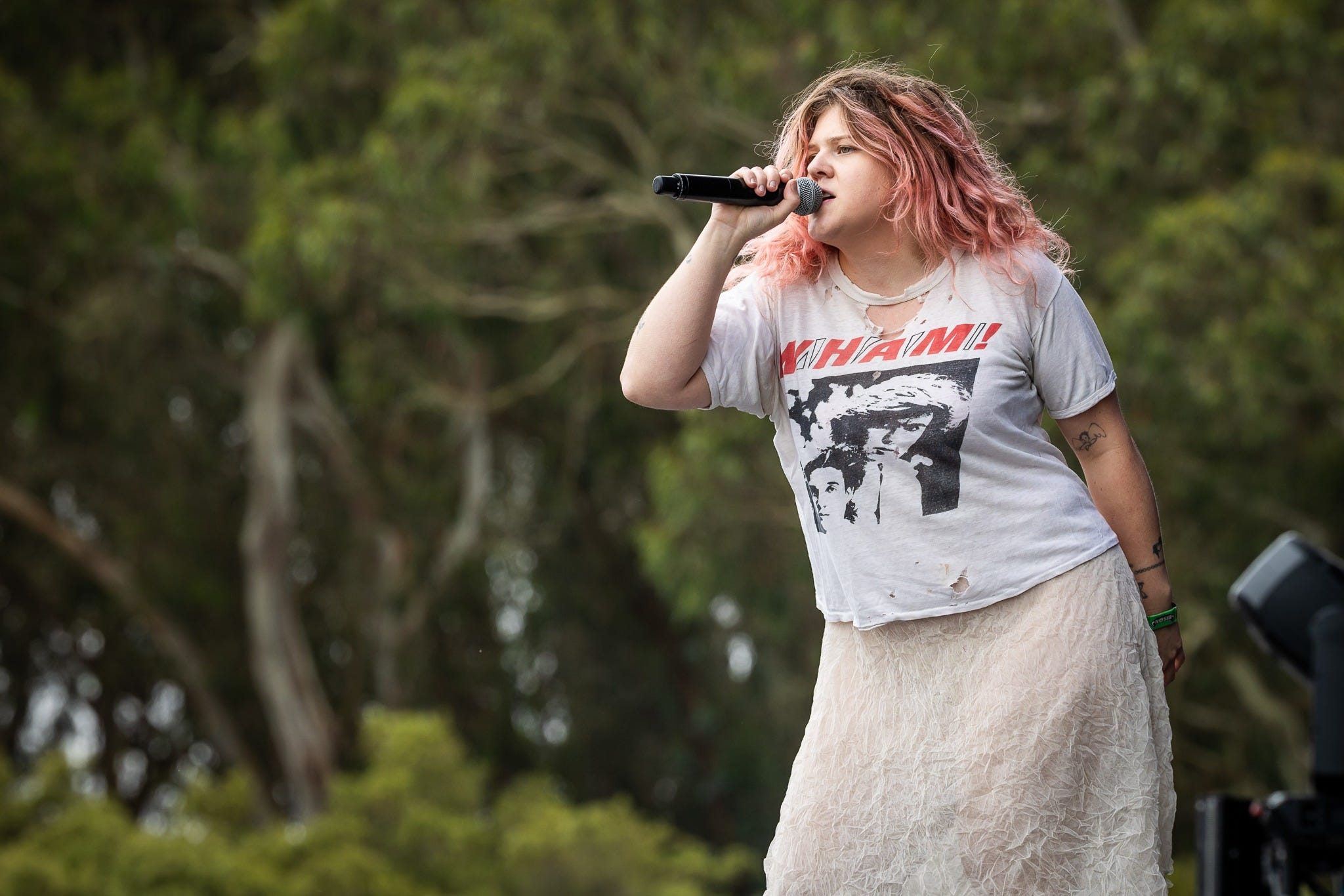
I maintained my initial skepticism on Friday, beginning my virtual festival journey at the main stage Lands End for rising indie pop star and soon-to-be Olivia Rodrigo opener Grace Ives’s set. The crowd looked thin, a classic result for the first performance of any festival, in which a newer artist is given simultaneously a career-making opportunity and is trotted out as a sacrificial lamb. I leaned into my laptop, wanting to be on grass, dancing harder than the only lightly curious puffer jacket adorned populace giving little energy back to songs as anthemic as “Avalanche” and “Trouble.” I recognized that emotion as a narcissism of the digital age, that the only thing that would enhance the reality I was tuning into was my own involvement.
The immediate benefit I had to concede to the livestream was the far better sound mixing, more balanced and clean than the boominess of early day festival sets. I noticed that I felt like an auditor, nodding when things seemed to be going right and armchair coaching anytime I noticed limitations, a dispossessed engagement that differed from how I would have responded in person. That instinct was less intense watching Die Spitz, another Olivia Rodrigo opener (hats off to these savvy small font bookings by the promoters), throughout which I texted adulatory observations to my friend there on the ground. The Austin punks devoured the Sutro stage, and I felt a cautious pride seeing them break into the mainstream the way they have, including now with the promotional reach of big tech.
Another clear plus for virtual attendance was the instantaneous speed of travel, allowing me to flip around between acts on different stages without having to spend an anxious ten minutes in transit, as the enjoyment of one set fades and the enjoyment for another has yet to begin. On the other hand, I never had to fully commit to what I was watching either. Rather than engage with each performance on its own terms, I could just switch to the other channel, or frankly any other entertainment option within arms reach (my current watch of Season 4 of The Wire, continuing to stack hours on Persona 3 on my Nintendo Switch, the dark temptation of the algorithmic scroll).
When I was able to stay locked into just the livestream instead of any of my other browser windows, shuffling between cameras capturing the real life happening not far from my doorstep felt like a reverse panopticon, in which I was a prisoner with 360 degree coverage of the freedom held by others around me. That feeling was compounded by my Instagram and Reddit feeds pushing festival content that I had previously appreciated but now enviously tried to flick past. I rubbernecked on folks griping about intense security, massive lines for the Soma dance stage, and the horde of teens that seemed to have invaded this year.
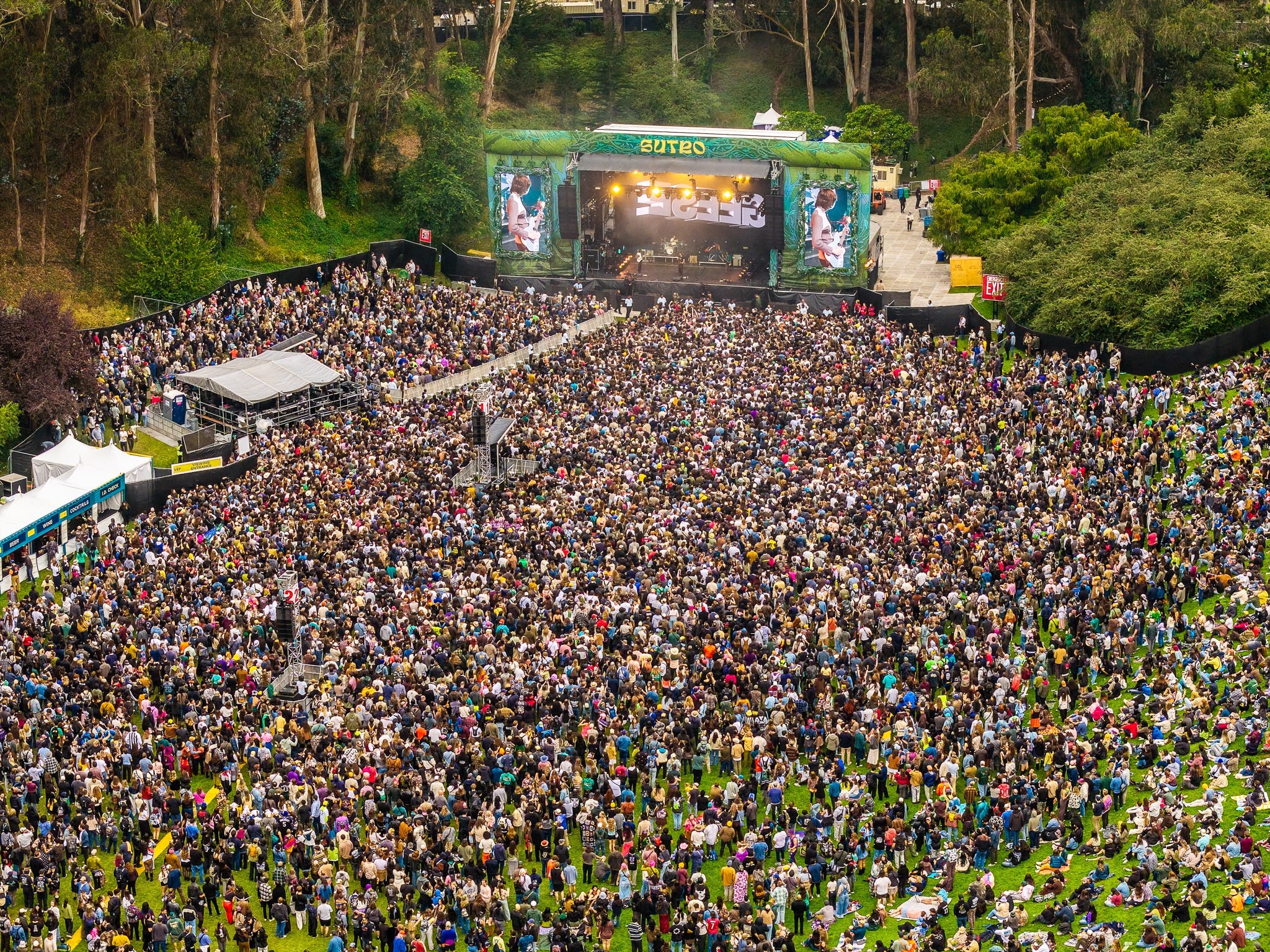
Even those complaints induced more FOMO than having the live window into the festival solved, and checking notifications about the fest was a constant temptation I had to fight throughout the day. I felt a similar tension on the stream as I generally do living through this age, in which turning to my screen to stave my anxiety of being left behind made me more unmoored. All the while, I remained at a distance from the sets playing on my TV, and couldn’t help but find my attention stray. For several chunks of every performance I passively watched while doing dishes and folding laundry.
I was most locked in on Friday during the headlining set for Charli xcx’s, fresh off another milestone album astutely capturing the meta-commentary of our attention economy, as well as a headline-generating Lollapalooza show the week prior. Yet the stream’s shaky cam strobe lights made me slightly nauseous, and while I could appreciate the achievement of her elevated stage show, it felt odd taking it in with so much sustained focus rather than ephemerally via the drops hitting my body and the crowd screaming the lyrics alongside me. Things I loved in past Charli shows I attended frustrated me more virtually, from when I caught the backing track doing the heavy lifting to her letting guest verses run without engagement. I was pushed to form immediate takes about the show that I would never so rashly declare in-person, the internet doing what the internet has long proven itself made for.
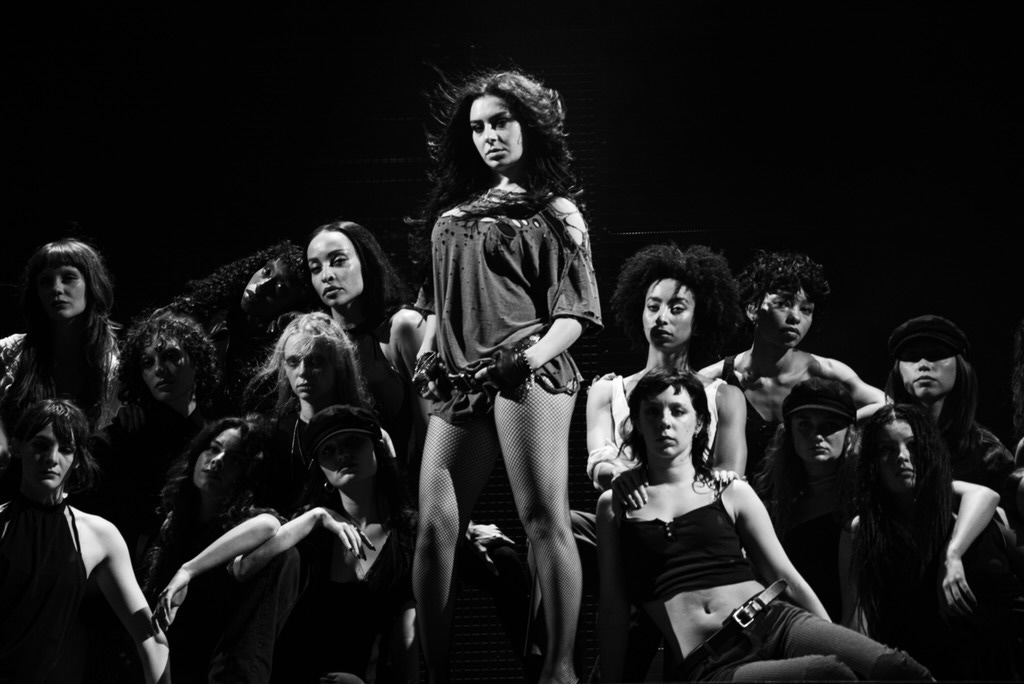
Yet the moments of brilliance shone through the screen, such as “Pink Diamond” from How I’m Feeling Now finally getting the on-stage shine it long deserved, or the cold stare Charli held on the camera as the David Cronenberg monologue from the album hypnotized the crowd. Following a medley from Brat retreading the highlights from those shows, she fronted a band complete with a scene-appropriate tattered shirt, and ran through a deliriously messy barrage of hyperpop-ified new wave. Her renditions of “2007” and “Camera” was the most jealous I’d been of the audience all day, watching our most compelling pop star stick the landing of a bold rebrand.
Witnessing but not being present for that performance made me itch to get into the crowds that the camera operators kept cutting away to, putting some extra oomph in my step in my walk through Golden Gate Park on my way to the festival entrance Saturday afternoon. As I arrived to the sounds of Audrey Humbert (aka Gracie Abrams’ MVP songwriter) singing beyond the gates, it felt oddly similar to the experience of watching the livestream yesterday—being on the outside listening in.
I walked past the South GA entrance, absolutely slammed with people. It was interesting to corroborate the online reactions with the in person experience: security was indeed intense! There were way too many teens this year!! But there’s no livestream equivalent to the feeling of entering the grounds for the first time, the endorphin rush of possibility opening up ahead of your day. Logging on doesn’t have quite the same effect.
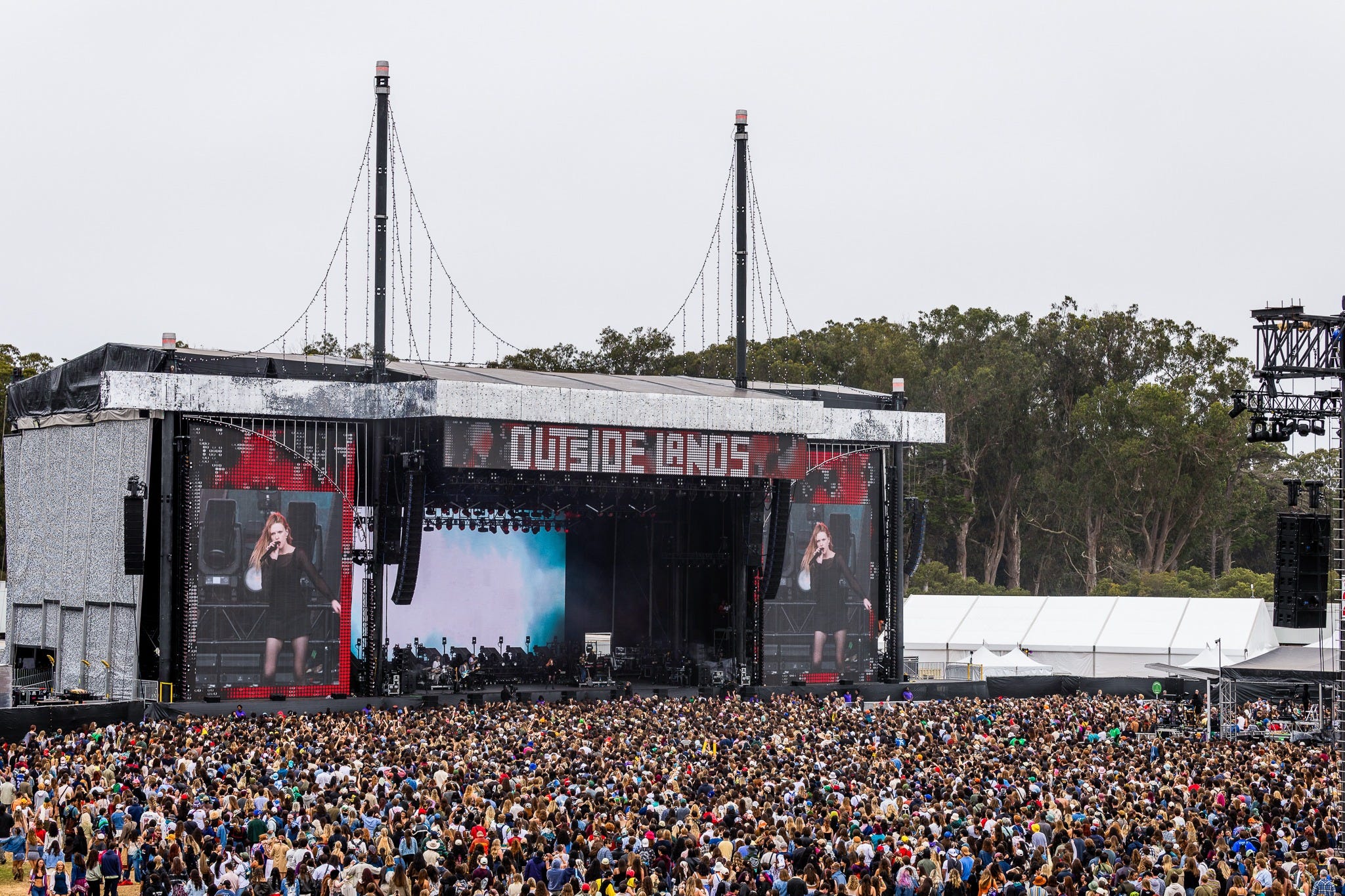
The increased visual sharing of festival performances has meant an adaptation of the stage show for the social media era. From set designs to choreography, pop stars in particular have bowed to the demands of the content machine, reaping from the Faustian bargain a double-edged level of devotion from fans. My wife has been engrossed by videos from Lollapalooza of Zara Larson, our moment’s underdog starlet having burst out of the “Khia Asylum,” from her newly trademarked viral dance breaks to her Y2K couture. Many touring acts structure their shows to include repeated bits that go viral on social media and can be recycled into new content at each stop—think Sabrina Carpenter local variations on her “Nonsense” outro or her arresting a famous audience member each night.
At this year’s Coachella, Carpenter’s expensive production, which featured cinematic celebrity cameos and award show-esque stage pieces, was catered more to the millions watching passively at home eager to share and comment than the thousands in person who actually paid to see her. The massive LED video walls that fans in the desert stared at, manned by teams in master control rooms to optimize the edits, were testament the importance of the almighty stream, and gave a better vantage and value than looking at the singer directly. Once you recognize how live shows have been reimagined for these times, it’s hard to see past the Matrix.
There is a reasonable economic argument to the reorienting of these stage shows for our second screens, particularly given the going rate of concert tickets. And in a moment in which most artists interact with fans primarily through digital marketing content, it’s nice that this pivot to video is actually focused on the music. Yet something you can’t get from a livestream are the spontaneous moments in between sets—what sits off the broadcast schedule, such as the people watching, the collective participation, or seeing anyone performing at the smaller stages like Soma or Duboce Triangle where some of the best sets take place.
You also don’t enjoy the within-set moments that happen off-stage that really define going to a festival, like when the XX played “Loud Places” to a sea of bubbles launched from the front rows as the stage lights hit Golden Gate Park’s eucalyptus and pine trees in a cascading golden hue. Or when the Strokes played their unexpected Gen Z anthem “The Adults are Talking” and I watched as everyone in the back of the crowd began hopping around like fools, including the staff at the food tents and the volunteers by the waste bins.
Yet by Sunday I was almost relieved to be returning to my couch, the reality of my life catching back up to me. While there is no substitute for the immersive escape of a three day music festival, I appreciated that I could still participate however much at a distance in a weekend I would have had to otherwise miss. On its own terms, I recognized the value the livestream provided in offering me a taste of artists I wouldn’t have otherwise dedicated corporeal time to. Baby Keem delivered a more engaging closing set than I thought he had in him, and I expect I’ll be checking out more of North Carolina rapper sosocamo in the future. I also confirmed some artists I assumed were bullshit were indeed so (Empire of the Sun is goofy empty calories, Not for Radio is not for me).
That’s the thing about a multigenre music festival, the juxtaposition of various offerings reduces your choice anxiety for picking and choosing amongst local shows for bands on the road, efficiently knocking several out all at once. The tradeoff, however, is that the choice you make to attend a show is what imbues it with meaning—that you and everyone else have to dedicate your time, money, and body to be part of a shared moment. The internet has made it possible to see everything everywhere all at once, which makes being anywhere at all less significant.
Ultimately, I realized the biggest drawback to my livestream participation was that I approached it alone. For any festival, what matters more than any individual name on the lineup is the world you build around the music. Whether at Coachella or “Couchella,” whoever’s scheduled next onstage matters less than the people I get to enjoy the performance alongside.
As Sunday wrapped up, I settled in with my wife to our usual positions at home to watch a band we both bonded over at the start of our relationship perform one of their beloved old albums in full. I cracked open a sparkling water, put my hand in hers, and laughed as we joked about a 50-year-old man reliving the devastating emotions he immortalized as pop music during his 20s. I wouldn’t be able to count this moment on my spreadsheet, but it’s a memory I’ll hold onto all the same.
This made me miss Outside Lands so much— that pine-dust smell is locked in my memory.