

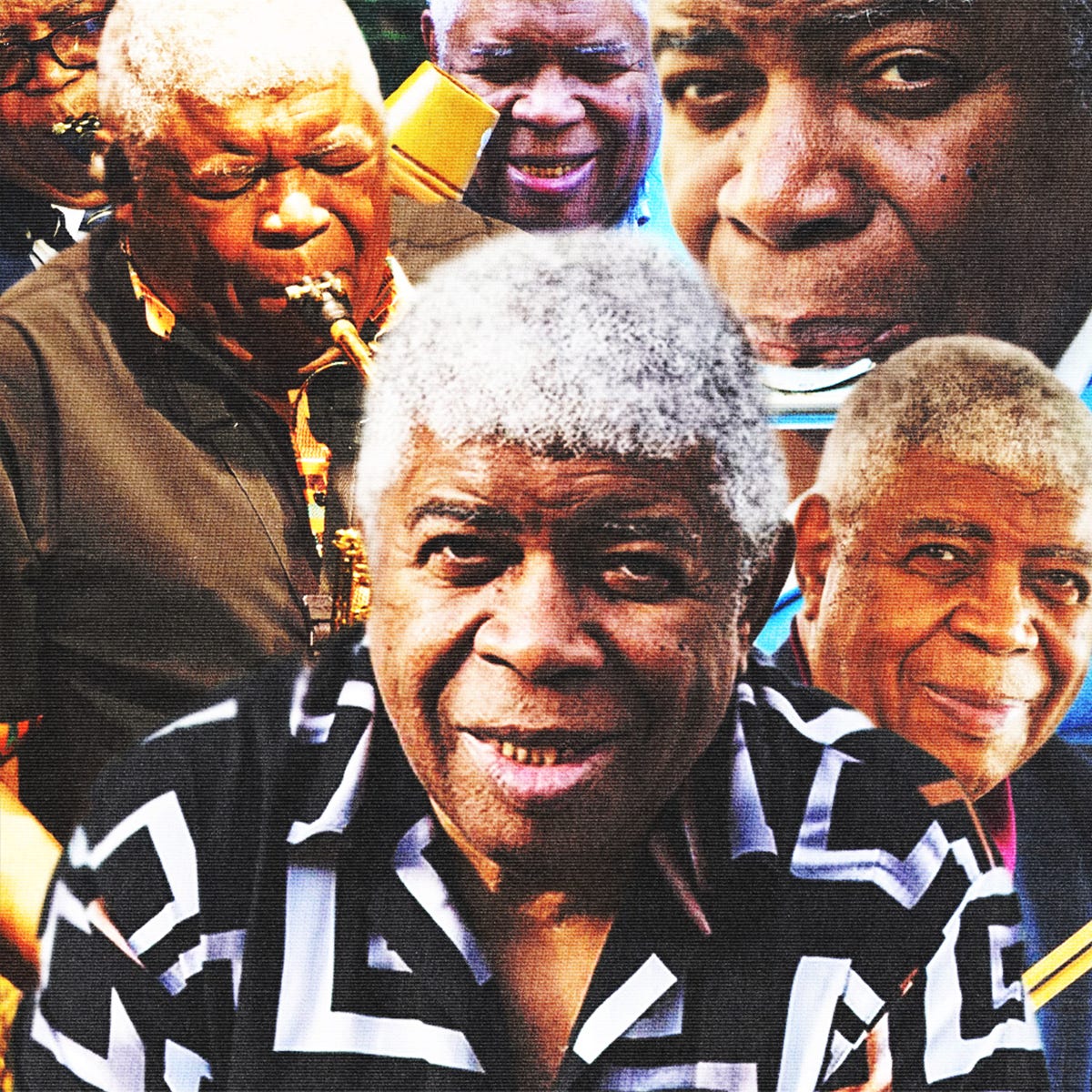
Jazz heads may not know the name Roger Glenn, but they have almost certainly heard his work. His flute playing is one of the backbones of Donald Byrd’s all-time 1973 classic album Black Byrd. He’s appeared on albums by Mary Lou Williams, Mongo Santamaria, Cal Tjader, and Taj Mahal, among many others, and has toured with the likes of Dizzy Gillespie and the Count Basie Orchestra. A long-time resident of the San Francisco Bay Area, Glenn is primarily known for his flute and vibraphone playing, but his arsenal includes most of the woodwinds and rhythm section instruments.
To say that music is in Glenn’s blood is an understatement. Although his father Tyree—who played trombone and vibraphone in the bands of Cab Calloway, Duke Ellington, Louis Armstrong, and others—didn’t pressure his son to play music, Roger’s natural musical gifts, work ethic, and growing up around many of the greatest musicians of the time certainly tilted the odds of a storied musical career in his favor. He went to high school with the legendary producers Fonce and Larry Mizell, while his Army bandmates at Fort Dix in New Jersey included Grover Washington Jr. and Billy Cobham. Before turning 30, Glenn’s resume was more diverse and impressive than many musicians’ entire careers.
After moving to the West Coast, Glenn hooked up with the hot young talent there, with whom he would record his debut album Reachin’ in 1976. A searing mix of funk, Latin rhythms, jazz fusion, and disco, Reachin’ features the guitar wizard Ray Obiedo, percussionist Bill Summers and bassist Paul Jackson, both of whom would join the Headhunters, and future Sonny Rollins pianist Mark Soskin. Reachin’ was also a high school reunion of sorts, as the Mizell Brothers produced the album. Fifty years later, Craft Records has just reissued Reachin’ as part of its Jazz Dispensary Top Shelf Series.
The album’s songs are full of earworms: Gaylord Birch’s nasty drum breaks, soaring synth leads from Soskin and Larry Mizell, and bedrock solid bass lines from Jackson. Glenn says that after 50 years he still hasn’t found a bassist besides Jackson who can play the “E.B.F.S” bass line right. The expanded percussion section on the galloping samba “Rio” adds an authentic Brazilian flavor while the vocals and percussion on the closing track “Rezo Chango” channel Glenn’s interest in Afro-Cuban music. Listening closely to Glenn’s flute and vibes solos, one hears his ear for melody and lyricism along with his serious command of bebop’s harmonic and rhythmic language.
Reachin’ compliments Glenn’s recently released album My Latin Heart, which fits more squarely in the acoustic Latin jazz vein. Coming five decades after Reachin’, the album continues Glenn’s lifetime embrace of Latin music and the pursuit of musical alchemy. As he describes, “I’ve always been interested in the music of the Americas and the music of the world and how these cultures come together to create different music.” With the release of My Latin Heart and the long-overdue reissue of Reachin’, audiences can hear the music and know the name of the man who helped make some of the most memorable jazz of the past 60 years.
I caught up with Glenn over Zoom where he talked about growing up among jazz royalty and later gigging alongside them as a professional, his love of Latin music, the making of Reachin’, and what its reissue means to him 50 years later.
This interview has been condensed and lightly edited for clarity.
With your father being in Duke Ellington’s band and Cab Calloway’s band, was it a given that you were going to be a musician just living in that environment?
I grew up around music but my father didn’t push music. My brother, Tyree Glenn Jr., is also a musician, but he is more into R&B and rock. Music was always around the house. My father didn’t say “you will learn music.” It is just a gift that I discovered. My grandmother on my mother’s side was a violinist, but she passed away when I was around three. But the musical roots on both sides of the family were there. My father used to put the vibes next to the crib, but he encouraged me to do whatever I felt like doing.
So vibes was your first instrument?
I guess you could say it was my first official instrument. When I was in fourth grade, they had an exposure night of instruments, and they asked me “what instrument would you like to play?” I said “I’d like to play flute.” And the guy leaned down to me and said, “We have enough flute players, go over there by the clarinet section.”
Oh, no!
So my first formal instrument learning was the clarinet. My father later gave me a flute for Christmas. I had a little band, and the first song I learned to play was “Comin’ Home Baby,” which was Herbie Mann’s big hit. Little did I realize that later in life that I’d be playing vibes with Herbie. I played flute with Cal Tjader.
The flute and vibes together is such a great sound, but I’d never heard one player who did both. So from the vibes, clarinet, and flute, did you go to the saxophone and other reeds?
Exactly. I play all the saxes, soprano, alto, tenor, baritone, sax, piccolo, C flute, alto flute, clarinet, bass clarinet, a little oboe. But I also play some bass, some keyboard, piano. Latin percussion. It goes on and on.
Out of all of those instruments, is there one that is closest to what your musical voice is?
Hopefully it’s the one that I’m playing at that time!
How did you get into Latin and Cuban music?
I remember coming home from elementary school one day and I found this album lying in the gutter with the label removed. When I got home I played it and I was like, “wow, this is great.” My mother liked a lot of Latin music and that influenced me. I had a little band and we started playing some of the tunes from it. If anybody knows anything about Cuban music and they heard that record, they would know that it was descargas from Cachao [Lopez], a very famous Cuban bass player. Later, I was fortunate enough when I was working with Mongo Santamaria that we did one album with Cachao playing bass. I got a chance to play with Mongo and learning those songs, and playing Cal Tjader’s “Wachi Wara,” and stuff like that. My father and Dizzy Gillespie were in Cab Calloway’s band. Mario Bauzá was in that band with his brother-in-law, Machito. That environment exposed Dizzy to Latin music. I mean, it’s all within that realm of exposure. And growing up in New York, you’re exposed to a lot of different cultural inputs.
A lot of people ask me about the Great Day in Harlem picture: “is that you?” My father asked me, “do you want to go?” I said, “no, those are your friends. I got my friends. We’re going to hang out.” I had no idea that later on in life I’d be playing with some of these people like Dizzy. The first recording I ever did with anyone was Mary Lou Williams. I was in a band with my father with Joe Jones on drums, Wynton Kelly on piano, and different bassists from Slam Stewart to Milt Hinton. I mean, just that experience playing and traveling with them—I call that getting my PhD in music because of the songs we were playing, the people who were working with us. My father always used to say, “Always play with somebody who’s better than you, because if it ain’t happening, it’s you.”
That’s a good way to think about it. When you list off all these people you’ve played with—I mean, your first recording was with Mary Lou Williams—I think a lot of people would be like, “if that was my whole career, I’d be happy with that.” And you were pretty young. Did you have any sense at the time that it was a big deal?
Well, the way that happened, my mother and father were at a party, and Mary Lou was there also. Mary Lou, who knew my father and mother very well, said “I’m making this recording and I’m looking for a flute player.” My mother said. “Oh, have I got news for you?” And so she called me and we recorded the mass that she wrote. She got very religious later on in life. Her mass was choreographed by Alvin Ailey and the Alvin Ailey dancers, and we played it in New York, and at the UN and a few other churches and stuff like that. That was a great experience. Then I did some playing with Mary Lou at the Monterey Jazz Festival.
So how did working with the Mizell brothers and Reachin’ come together?
Fonce and Larry Mizell, we all grew up together. We’re all from Englewood, New Jersey. Another guy who lived right down the block from us was Freddie Perren, who wrote “I Will Survive.” He was the disco king of producing. Fonce and Freddie were at a party and they ran into Diana Ross, who had these kids who she had in mind that she would like to help produce. One of the songs that they produced was “ABC”—the Jackson 5. So they wrote all these initial hits for the Jackson 5. Larry had an opportunity to produce some music. Donald Byrd, who was with Blue Note Records, asked Larry to produce an album for him and write some music for it. Larry suggested that I play flute with Donald. So we did this album called Black Byrd, that is to this day, the highest-selling instrumental album for Blue Note. As a result of the success of Black Byrd, Fantasy Records asked Larry if there were any artists that he would like to produce. So Larry called me and said, “Hey man, I have a deal with Fantasy Records to produce some artists. Would you like to do it?” I said, “Yeah, I’d love to.” And so we made Reachin’ and the rest is history. And now, 50 years later, it’s being reissued.
How did the band for the album come together. Did Larry know the people, or was it people you suggested, or…?
The band was people who I worked with. Ray Obiedo, the guitarist, and I worked with the singer Pete Escovedo. And Pete worked with me. I had a band and Ray was in it, and Pete was in it. Or Ray and I were in Pete’s band. We had Mark Soskin on piano. Gaylord Birch on drums, who was also working with The Pointer Sisters. Bassist Paul Jackson, so we were all around each other, playing together, and so we put this record together. Reachin’ was the first recording that Ray and Mark ever did. They had original songs, so they got their publishing started through the album. So it’s a landmark in terms of other people’s careers as well.
That’s really cool to hear, because based on the songwriter credits, it looked like there was a lot of collaboration.
Yeah, Pete, Bill Summers, Ray and Mark and myself and Paul Jackson. We had been playing together a lot, so it just made sense.
I noticed that on the song “Kick”—and really throughout the album—there’s a lot of these little tricky transition sections that are so tight. Did that hookup come from being familiar with each other or did you have to rehearse?
Yeah, we were familiar, but when we were making the album we had an opportunity to rehearse a lot over at Fantasy before we even went and started recording. Paul Jackson’s song “E.B.F.S.”—I haven’t found a bass player yet who can play that line that Paul played. I mean, it is very unique.
And the drum break on that is super funky.
Well Gaylord was right on.
What’s great is the Latin element that runs through the album. On “Rio,” the percussion sounds like a real Brazilian samba school. It wasn’t watered down.
Yeah, we wanted to create that excitement of Carnival. I had the opportunity later on to go down to Brazil with Dizzy. We played in December and then I just stayed after we did a tour there—we’re in Rio, we’re in São Paulo, Porto Alegre, all around. I love Brazilian music as well. And so when the tour ended, I stayed there for a month just to enjoy.
What role did the Mizell brothers take during the recording process? I know Larry played keys on it.
It was like a collaboration. We all asked each other, “what are your ideas?” We weren’t gonna make a reproduction of Black Byrd. That was great, but, this came more from my experiences working with Mongo and stuff like that. Getting that Latin side into it as well as the funk side.
I really like that mixture and the balance between the funk and the Latin side—neither dominates the other. The last track, “Rezo Chango,” with just the voices and percussion, it’s so different than the rest of the album, but it still is another form of the Latin side.
The African, the Afro-Cuban side of the music. With Pete singing.
So with the call and response, Pete was singing, and were you doing the response?
Exactly. The concept, you know, like you talk about call and response, that’s an African tradition. In Cuban music the chorus sings, and there’s a soloist who’s singing extemporaneously. It’s like you when you listen to Celia Cruz. That’s the Cuban version. The American version is:
[soloist call] “Jesus on the main line.”
[chorus response] “Tell him what you got.”
[call] “Well, I was walking down the street last night.”
[response] “Tell him what you got.”
This concept is an African concept that was brought here by the slaves, but also the fact that we’re also dealing with European chordal progressions. So it shows like when I talk about music of the Americas, it shows those two cultures coming together. American music is a combination there.
After you made Reachin’, was there an immediate impact on you and the guys in the band?
Well, initially, when it came out, we didn’t really tour. To tour you need a lot of support—the label helping out with publicity and air play, with airfare and hotels, things of that nature. I mean there’s a lot involved. We didn’t really have that. Fantasy really wasn’t that much into tour support even though the album was getting airplay. I am so happy that Craft has reissued this album. It shows the diversity in me and what I do. And like my father always said, “did they spell your name right?” I say, “yes!” It’s like getting your name more out there, so people will be interested and say, “What’s up with Roger Glenn?”
I know a lot of people who are really into this era and style of music. I’m going to tell them that they gotta check out this record. One is a drummer and another likes to sample and make beats.
Maybe it will be just like when I did Black Byrd. There were over 30 rap albums that sampled from that. So I hope with the Reachin’ album a lot of young people will be sampling stuff that we did. That’s this day and age of music, of how we look at things today. It’s the next generation. Just don’t forget us when you want to see it live! And the timing couldn’t be any better, since I also have my new My Latin Heart album out.
Yes, they’ll both drive each other.
Exactly.
Looking back at Reachin’ and your whole career, where would you kind of put it as far as a highlight? Or do you enjoy performing and touring more?
Oh, I always love playing with people and playing in front of people. I’ve worked with Taj Mahal on a totally different album. The La Onda Va Bien album I did with Cal Tjader, that won a Grammy. Totally different genres of music, but I’ve loved it all.
How are you able to switch between all of these different genres and bands and instruments—like “Okay, I’m gonna play with Taj Mahal, then I’m going to record with Cal Tjader, and then I’m going to open for Steely Dan.” How are you able to keep all that straight?
Music. Like Ray Charles said, “there’s only two kinds of music, good and bad.” And it’s who you’re working with. It’s part of our thing. The music of the Americas, our music is about being in the moment. It could be country western, it could be jazz, it could be pop, it could be rock, it could be gospel, blues, whatever, they all exhibit the same type of roots that enables us to play. But the basic thing is like being in the moment. If you look at how La Onda Va Bien came about. I knew Cal for many years but we had only played together once before that. We did a Monterey Jazz Festival with Dizzy. He was playing here in San Francisco at a club and I dropped by to see them and I had my flute with me and I sat in on the last set and he says, “Man, this sounds great. We’re going into the studio tomorrow. Would you like to join us?” And I said, “Yeah.” No prep or anything like that. But in the studio we just called songs, put them together, and three days later we felt really good about it. It was like magic and it won a Grammy, but it wasn’t something that we planned ahead for months and months.
So it’s like, just being ready for whatever.
Being in the moment. My wife Beth always says what amazes her is that I’ll be on stage with people, and they’re all reading their music, and me, it’s like it’s all in my head. I played with a band for many years in San Francisco and I was the only one who didn’t have any music; I just fit in with the band. Playing flute and vibes, creating what I’m supposed to play, playing the lines that they were playing. I was able to pick it up. It would always amaze me, I would ask the guys in the band: “You know, we’ve been playing together all these years. Why do you have to take a moment to get the music out so we can play the songs that we’ve been playing for years?” It’s like this should be a no-brainer. It doesn’t make any difference what key it is. It’s muscle memory, where it goes when you’re playing it. I mean, you could start playing a tune and I’ll pick up my flute or whatever instrument, and I’m right in there with you.
What are your plans for the future?
What I’m looking for right now is to be able to perform around the world. My Latin Heart album is getting airplay. The reissue of Reachin’ is a real shot in the arm in terms of being able to open up other areas and travel. With the following that the label has, I hope that people will say, “we’re hearing about this guy, we need to see him live.” That’s what I feel music is. Ultimately, the albums are like calling cards, and I really feel where people really start to get new things is the live performance. Let the music play for itself. That’s what it’s about. Let’s have the music continue on.