

If the first few months of 2026 are any indication, this is going to be an exceptionally strong year for jazz, improvised, and related music. As soon as the calendar flipped over, the music came as if in a flood, with almost too many excellent albums to acknowledge, let alone write about. This is particularly needed now, when so many people are in so many difficult and untenable situations. Given music’s power to act as a salve and to offer a source of inspiration and political resistance, the timing is a blessing. Here are five new albums, one reissue, and three historical live albums that bring a welcome infusion of positive energy.
First, the new records:
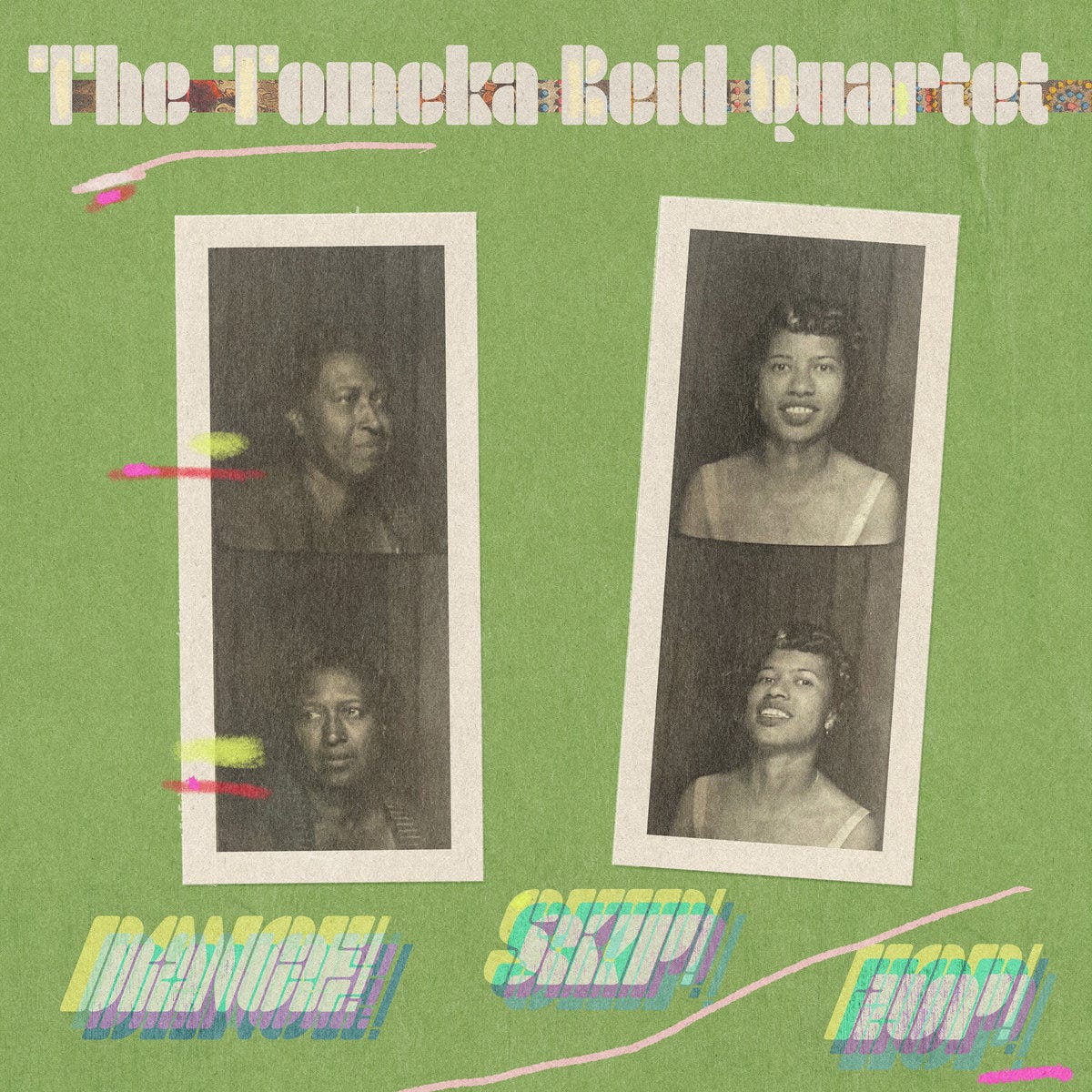
Tomeka Reid, dance! skip! hop! [Out of Your Head Records]
When the press review copies for cellist Tomeka Reid’s latest hit my email late last year, I had a feeling it would be big. As word spread, it blew up the jazz corner of my Bluesky feed. dance! skip! hop! is the perfect name for an album that xudes playfulness and adventure. Along with bassist Jason Roebke, guitarist Mary Halvorson, and drummer Tomas Fujiwara, Reid takes listeners on a five-song journey that goes by so fast it needs to be experienced again and again. On the infectious title track, Reid’s light touch and higher range of the cello along with Fujiwara’s crisp and restrained drumming gives the music a loftiness and airiness. The musicians never press, and even the composed sections feel loose and spontaneous. “Oo Long!” shows off Reid’s snarling side as she plays heavy strummed chords that bite. Halvorson picks up on Reid’s mood and rips some fuzzed out distortion.
“Under the Aurora Sky” features Reid’s beautiful work with the bow even as the track ends in a distressed wash of reverb and delay laden sound. By the time the wistful “Silver Spring Fig Tree” closes the album, the listener has traveled from a childlike sense of wonderment during the album’s opening moments to an adult world of more serious demands. Accessible and moving, dance! skip! hop! pulls off a mix of joy and seriousness, ease and rigor. Hopefully its early 2026 release date won’t mean it gets forgotten about when everybody creates their year-end lists. But I’m sure people have already marked it down as a strong contender for their favorite album.
Recommended If You Like: jumping in mud puddles; being ok with letting some things just be
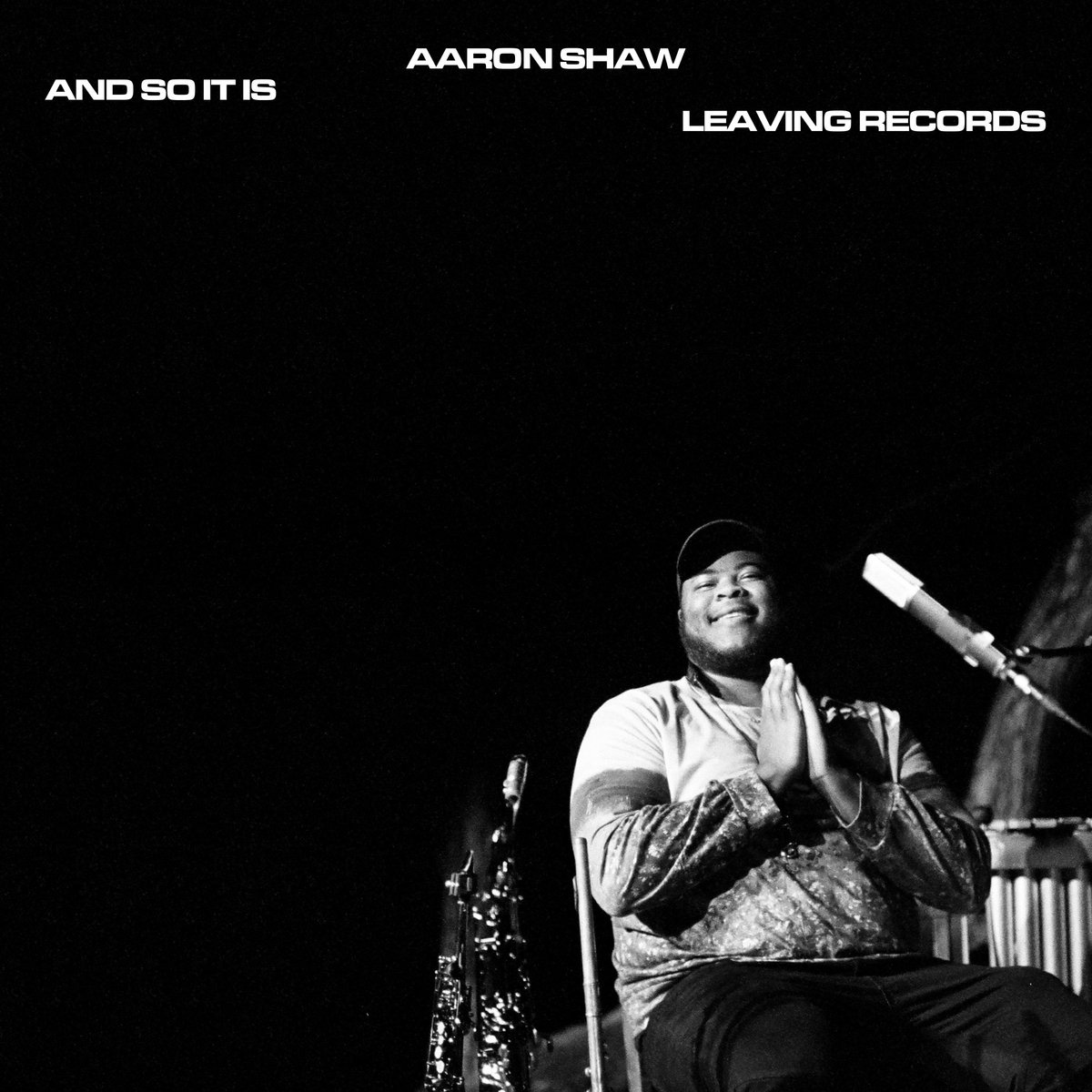
Aaron Shaw, And So It Is [Leaving Records]
Although I recognized Los Angeles-based saxophonist and flutist Aaron Shaw’s name on a few tracks from various Carlos Niño and Friends albums, I was largely unaware of his other music. Based on his long resume, which includes work with Anderson .Paak, Herbie Hancock, Mary J. Blige, and others, I am late to the party. And So It Is could not be a better belated introduction. That this album exists at all is no small feat, as Shaw was diagnosed with bone marrow failure in 2023, which not only damaged his health, but threatened his musical career. After experimenting with equipment and rebuilding his approach to playing music, Shaw linked up with Niño to construct a deeply affecting album. “Soul Journey” opens with overdubbed saxophones and reeds atop a lush background of harp, piano, and cello. His playing here and throughout most of the album takes on a contemplative and meditative mood. On “Heart of a Phoenix,” his plaintive alto saxophone floats over shakers, harp glissandos, deep drums, and wordless vocals before meeting an overdubbed flute countermelody.
At other times Shaw channels alto players like Gary Bartz and others who came in the wake of John Coltrane. Overdubbed flutes are a strong presence—a choir of them close “Heart of a Phoenix”; pillows of them match Niño’s percussion on “The Path to Clarity”; and in a moment reminiscent of André 3000 and Shabaka, Shaw uses them to set up and build the buoyant polyphony of “Jubilant Voyage.” Chick Corea’s composition “Windows to the Soul” is a lovely, slightly lilting waltz duo between Shaw and pianist Sam Reid. Even in moments of complexity, when the overdubbed saxophones, flutes, and range of strings, percussion, and effects create a large ensemble, there is still delicacy and a poignancy to the music. It has strength and immediacy—an intimacy demonstrating Shaw’s willingness, or even need, to share his journey. Music as a healing force, for musician and listener both. Tracing its lineage from Alice Coltrane and Lonnie “Liston” Smith to Shaw’s contemporaries Kamasi Washington and Shabaka, And So It Is is spiritual jazz for the twenty-first century. Exquisite.
RIYL: getting the perfect surprise gift when you really need it
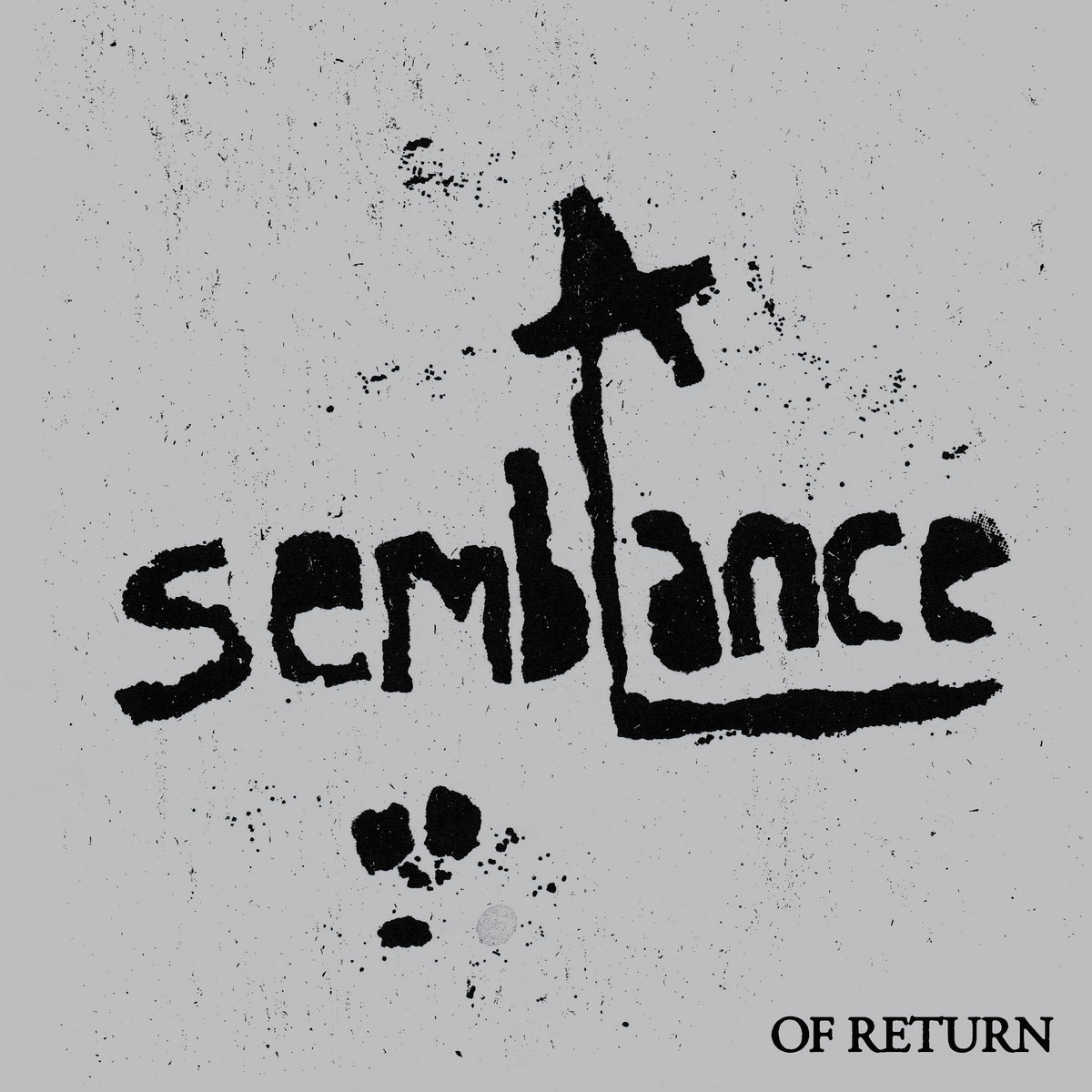
Asher Gamedze, A Semblance: Of Return [Northern Spy]
South African drummer Asher Gamedze follows his previous two albums, Constitution and Turbulence and Pulse, by further exploring the political and philosophical power of art. Recorded in Cape Town, A Semblance: Of Return features a South African quintet that laces its music with contemporary grooves that one might hear on a Makaya McCraven album or indeed, on any stylistically related record made across the Black diaspora. While there are solo voices, particularly trumpeter Keegan Steenkamp and Nobuhle Ashanti on keys and synths, A Semblance (Of Return) is often focused on the group sound: conversational and call and response between keys, trumpet, and Zwide Ndwandwe on bass while Gamedze and percussionist Ru Slayen interweave percussion breaks and fills.
Several cuts feature vocals, all of which focus on the Pan-African freedom struggle. On the opening track “Stranger No Death,” the band echoes African American spirituals, singing “I’m on my way, to the mountain. And there’s no stopping me.” The funky “Of the Fire” calls on listeners to “assemble the forces of victory,” noting that “the oppressed are on the right side of history.” The backbeat heavy “State (Of the Internation)” is a rapped/spoken word critique of capitalism, state violence, and other agents of death and exploitation. Near the end a background voice intones “I just want to see a revolution.” As previous artists like Fela Kuti demonstrated, channeling political critique into music with a collective spirit and shared purpose opens the potential for propelling those on the right side of history to victory.
RIYL: Pan-African liberation; celebrating community through music; imagining a better future
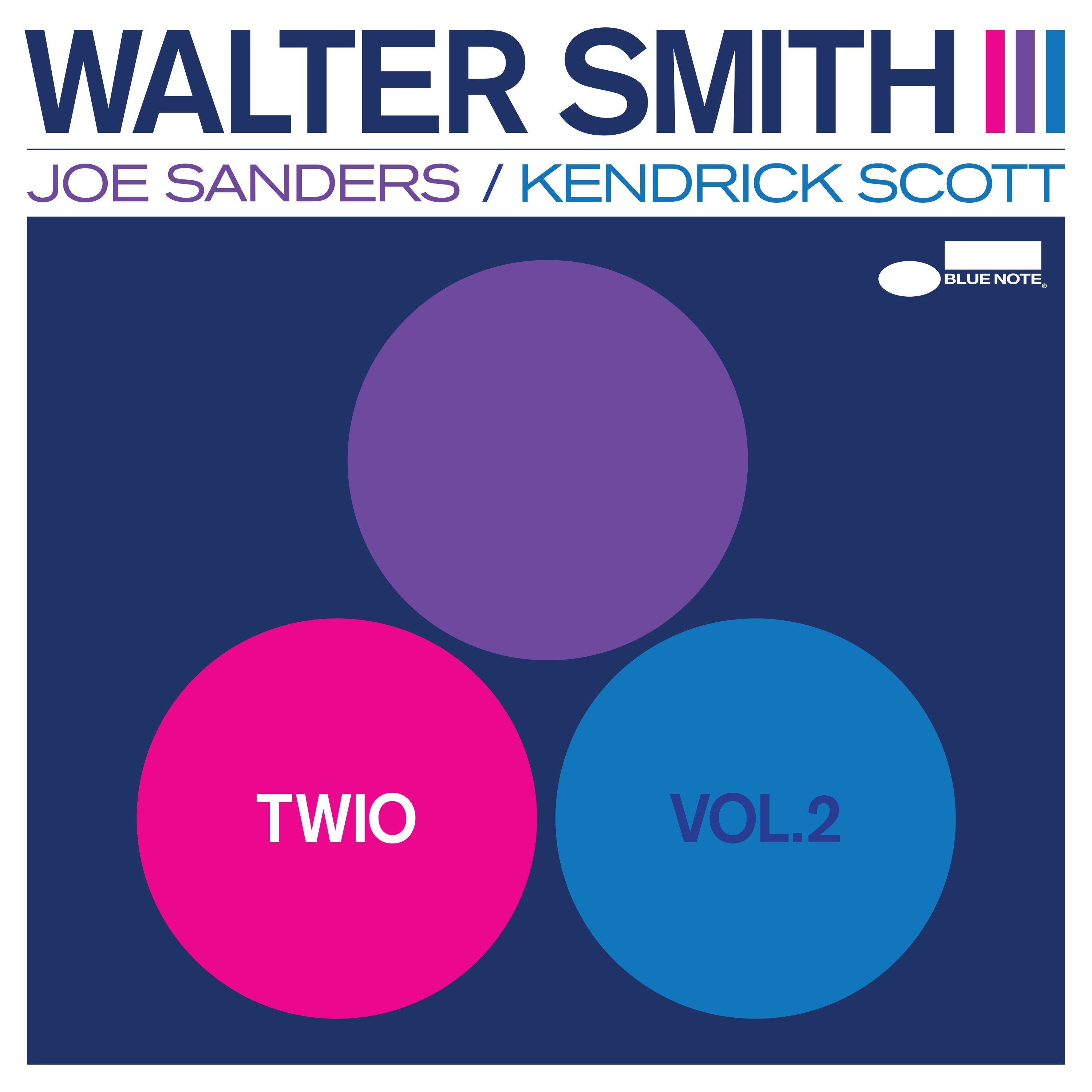
Walter Smith III, Twio Vol. 2 [Blue Note]
I’m a sucker for tenor sax/bass/drums trios. Without a piano or other chorded instrument there’s nowhere for the saxophonist to hide and plenty of space for them to show off their invention. The format also highlights the interaction between the bassist and drummer, which can get obscured in a thicker ensemble sound. In a concise, yet meaty set of jazz standards and lesser-played compositions by Thelonious Monk, Carla Bley, and Wayne Shorter, tenor saxophonist Walter Smith III’s trio of bassist Joe Sanders and drummer Kendrick Scott offer a choice example of the format’s possibilities. Tenor titan Branford Marsalis joins Smith for friendly sparring sessions on two tunes. If Branford’s presence wasn’t enough of a boost, bass legend Ron Carter replaces Sanders on five tracks, including a poignant duet with Smith on Duke Ellington and Billy Strayhorn’s “Isfahan.” Full of tasty swinging, spirited romps, and straight to the point playing, Twio Vol. 2 is easily one of Smith’s best albums as a leader to date.
RIYL: a pot of coffee—black, no sugar, no cream, very hot
Harriet Tubman & Georgia Anne Muldrow, Electrical Field of Love [Pi Recordings]
Harriet Tubman (guitarist Brandon Ross, electric bassist Melvin Gibbs, drummer JT Lewis) is a power trio that has been transcending the genre boundaries imposed on Black music since 1998. Their list of collaborators ranges from avatars of the avant-garde such as trumpeter Wadada Leo Smith to turntablist DJ Logic. On their first album for Pi Recordings—which specializes in its own method of boundary blurring—they team up with vocalist and multi-instrumentalist Georgia Anne Muldrow. Think Funkadelic meets mid-70s-era Miles Davis meets June Tyson singing with the Sun Ra Arkestra, all refracted through a twenty-first-century prism. Like Miles’s electric era, this album was constructed from selecting and editing the best parts from a single long improvised recording session. The mostly slow grooves are as wide and deep as the Grand Canyon, and Gibbs and Lewis hold them down with the gravitational power of a black hole. Ross is less about shredding than he is about letting the sound of his guitar fill and color the air. Muldrow picks her spots, singing of dreams, the body, and of the metaphysical. The result is a cosmic funk/rock/jazz/dub album that pulses with life, creative energy, and the expansiveness of great Black music, ancient to the future.
RIYL: clearing space out so you can space out
Also of note:
John Irabagon, Focus Out
Irreversible Entanglements, Future Present Past
The Messthetics and James Brandon Lewis, Deface the Currency
Carlos Niño and Friends, Bubble Bath for Giants
Adam O’Farrill, Elephant
Shabaka, Of the Earth
And now the reissues, the latter three of which are Record Store Day releases. A disclaimer: I have a lot of conflicted feelings about Record Store Day, and I haven’t lined up to celebrate it in years. However, each year finds an ever-increasing number of archival and historical jazz releases. While we may have already reached peak Bill Evans Trio saturation, there are a number of other releases this year that should pique jazz fans’ interest regardless of personal taste. For those who don’t want to wait in line and aren’t particular about getting the LP version, many of them are also available on CD and streaming.
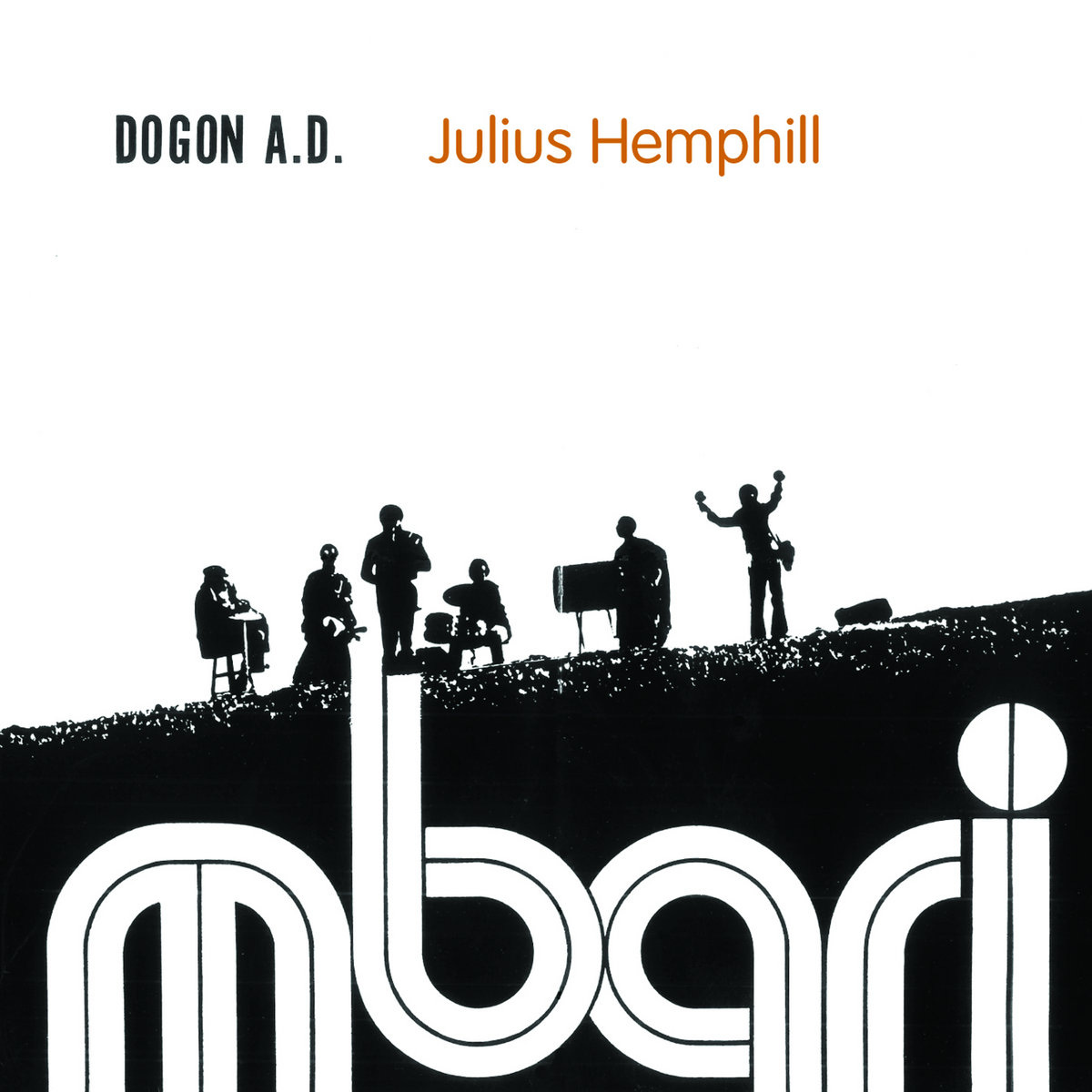
Julius Hemphill, Dogon A.D. [CD edition: New World Records; LP edition: Superior Viaduct]
Saxophonist Julis Hemphill’s 1972 avant-garde masterpiece has long been out of print, so its reappearance on both CD and LP versions is worth celebrating. Along with trumpeter Baikida Carroll, cellist Abdul Wadud, and percussionist Phillip Wilson, Hemphill recorded one of the touchstone albums of the era that influenced generations of players. While vinyl freaks will gravitate to the LP edition, I’d suggest going with the CD version, which comes with an extra twenty-minute track absent on the LP along with a meaty booklet containing an essay and photographs.
RIYL: not having to spend a stupid amount of money on an OG copy if you don’t have to
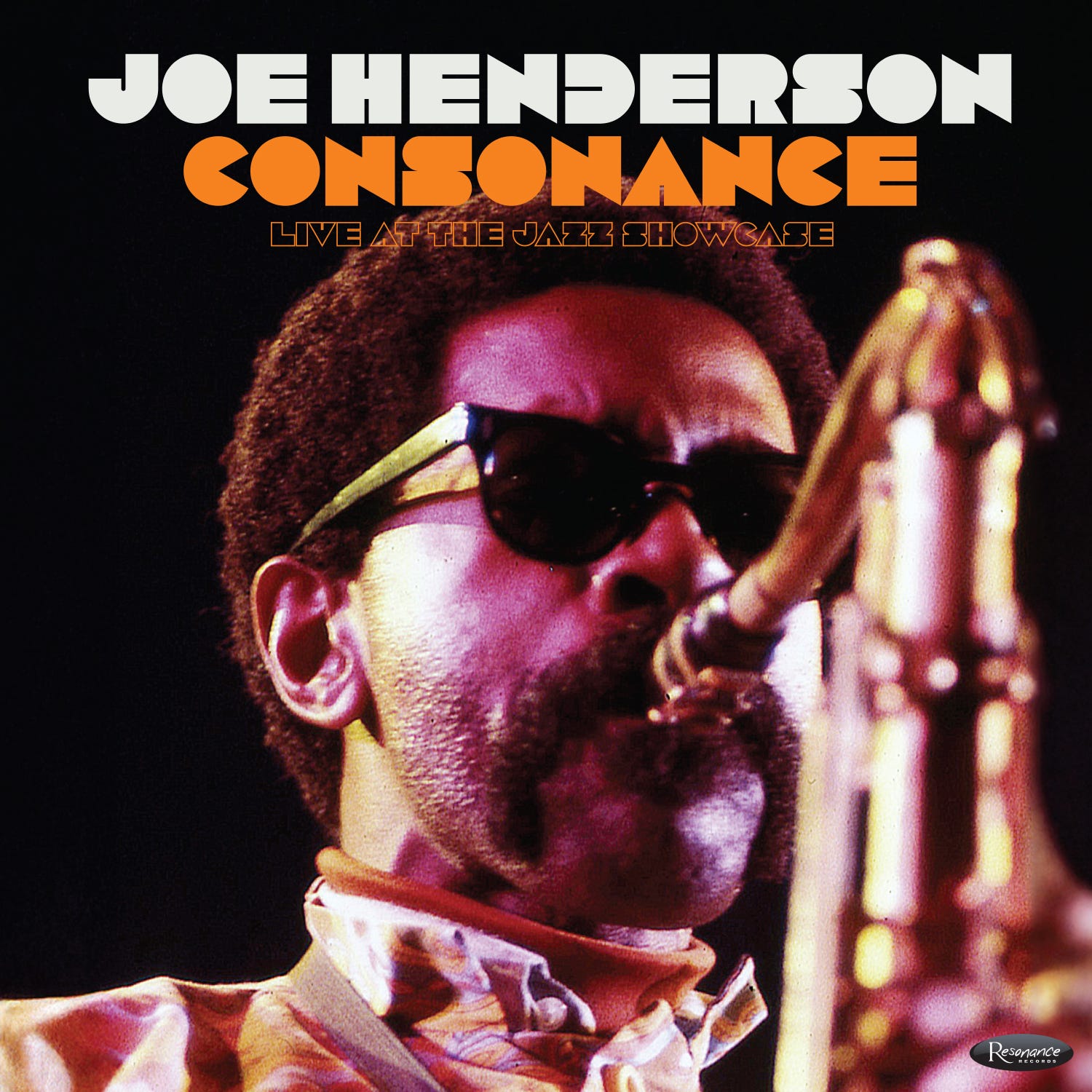
Joe Henderon, Consonance: Live at the Jazz Showcase [Resonance Records]
For a few nights at the Jazz Showcase in Chicago in February of 1978, tenor saxophone titan Joe Henderson along with pianist Joanne Brackeen, bassist Steve Brodby, and drummer Danny Spencer achieved levitation. Hard to believe, but the proof is in this 3LP/2CD set. From the epic opener, John Coltrane’s composition “Mr. P.C.,” through standards such as “Good Morning Heartache” and Thelonious Monk’s “Round Midnight” to Henderson’s own “Isotope,” which closes the collection, the Henderson quartet performs an acrobatic highwire act. With agility, inventiveness, and an uncanny hookup between all the musicians, the band pushes the limits of what should be achievable. Lightning tempos, an endless churning out of complicated melodies, marathon stamina, and players stretching out on long solos to see how far they can go before the wheels come off—it is impressive that the quartet could sustain these feats night after night. There are certain moments when a musical performance reaches an ecstatic level where the only possible responses are disbelief, laughter, shouting, or some combination of all three. On several occasions it was all I could do but make every cliched response possible. It’s easy to forget about or ignore somewhat stylistically down-the-middle hard bop jazz in the 1970s, as acoustic jazz fell out of favor, but Consonance is a reminder that the Blue Note heroes of the 50s and 60s and their disciples could still—and would continue to—tear live venues to pieces.
RIYL: suspending disbelief; making your best stinky “oh” face
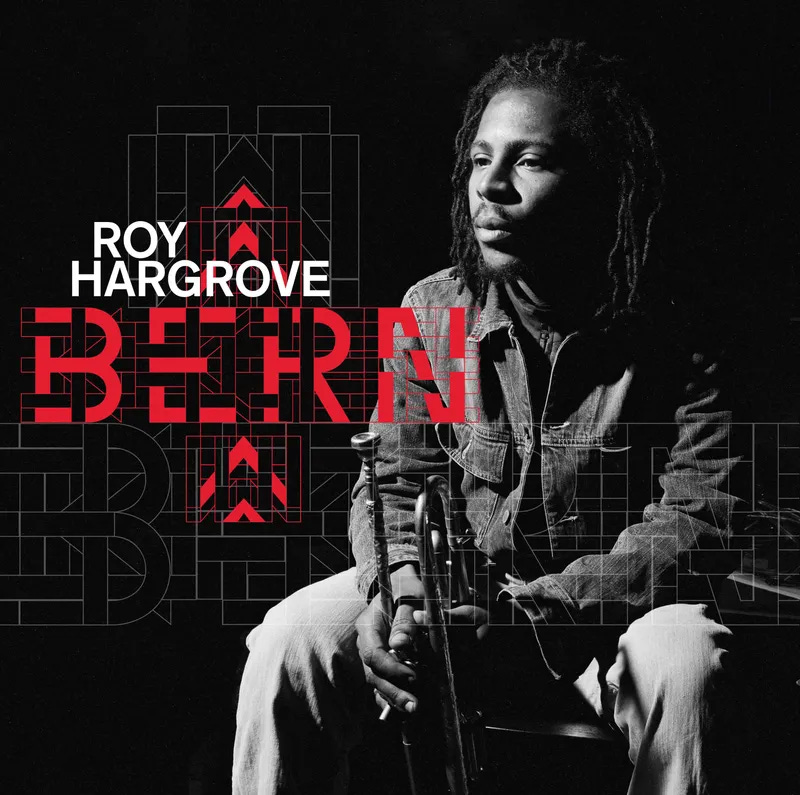
Roy Hargrove, Bern [Time Traveler Recordings]
My first real jazz concert was seeing trumpeter Roy Hargrove’s quintet about the same time it played this live set in Bern, Switzerland, in 2000. I saw him several more times in the next few years, so this recording scratches a nostalgic itch for me. Hargrove, who sadly passed away at the age of 49 in 2018, emerged out of the shadow of Wynton Marsalis and other neo-conservatives to create his own brand of hard bop, fusion, and Latin jazz. His versatility led to collaborations with Erykah Badu and appearing on D’Angelo’s Voodoo. In Bern, Hargrove and alto saxophonist Sherman Irby, pianist Larry Willis, bassist Gerald Cannon, and drummer Willie Jones III threw down a scintillating set that foregrounded Hargrove’s potency as a trumpeter and the horsepower that a band peaking together can generate. The recording might be twenty-six years old, but contemporary straight-ahead jazz doesn’t get much better than this sizzling performance.
RIYL: feeling like a kid again; the reinvigoration of tradition
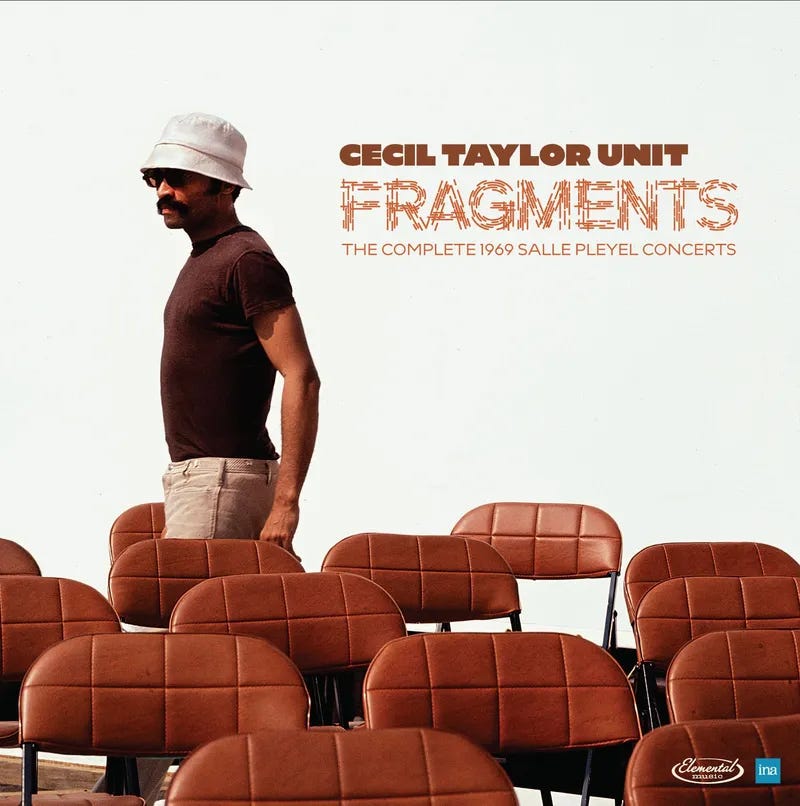
Cecil Taylor, Fragments, The Complete 1969 Salle Pleyel Concerts [Elemental Music]
There are few performers, whether playing solo or with a band, who brought as much intensity and fire to their music as pianist Cecil Taylor. This is especially so with his trio with drummer Andrew Cyrille and alto saxophonist Jimmy Lyons. On November 3, 1969, the trio met tenor saxophonist and flutist Sam Rivers at the Paris Jazz Festival. The performances have been available to watch on YouTube, but this is their first official release as an audio recording. The quartet’s music is thick, loud, ever-changing, and dense. It can be episodic, with long stretches of all four musicians playing furiously before moving into a section of solo piano or a sidebar into extended duels between Cyrille and Taylor or the saxophonists. As difficult as the music can be, each musician is straight from the jazz tradition. Lyons is if Charlie Parker turned Cubist. Rivers follows Coltrane, Pharoah Sanders, and other wailing and screaming avant-garde tenor players. Taylor comes from Duke Ellington and ragtime, and Cyrille’s drumming is an extension of the innovations of bebop drummers like Max Roach. The performances are long, and the music can be overwhelming. The listener’s best approach, especially if they are new to Taylor’s music, is to let the entire tapestry of sound wash over them or to focus on the different episodes and sections, as each tells its own story and helps manage the music’s sonic and emotional immensity. These concerts were magisterial. The meek need not apply.
RIYL: the deep end; embracing sensory overload
This is a welcome batch of jazz to "listen to more jazz" to...thanks for blessing us...the Aaron Shaw record alone is worth the price of admission. Hope these continue seasonally.