


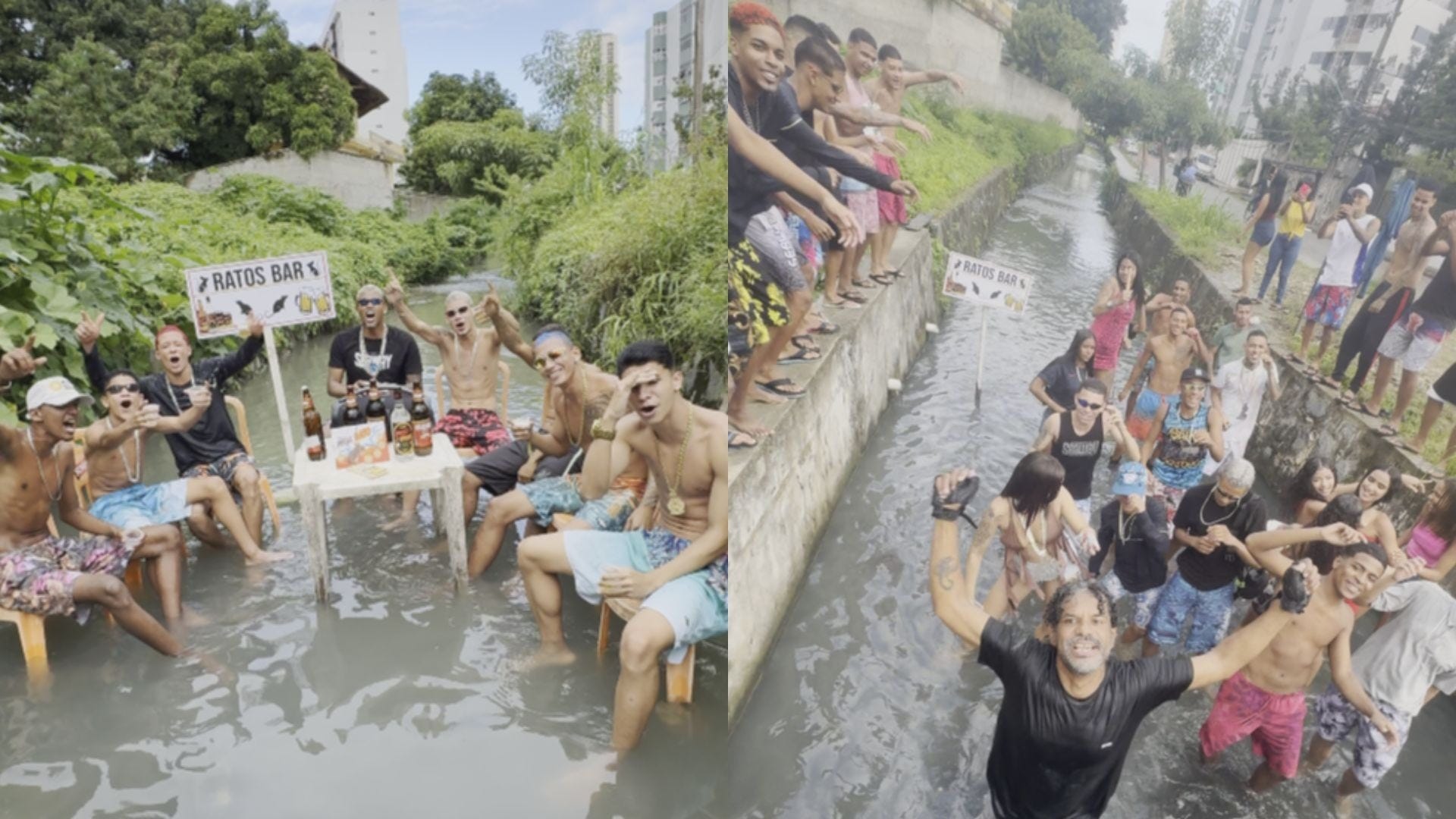
For the past few years, the current, incessant proliferation of rodents in major cities has led the BBC to claim that we’re living under an impending Ratmageddon. Today, according to data gathered by pest control companies, over 3 million rats now scurry through New York City. Maybe the island of Manhattan will be the first metropolis to fall to the great rodent army. But down in Brazil, a new spin on this idea has emerged—that maybe the difference between mice and men is essentially a matter of perspective. It’s been brewing specifically in Recife, where the youth call themselves ratos. These kids sport stylized hair with tails on the sides, popular Brazilian streetwear brands with a surf-inspired vibe, and big chains with reflective Oakley glasses. The emergent culture has been defined by three things: a deeply flawed city; the Bregafunk that’s blasted through soundsystems (referred to in Brazil as paredões) throughout it; and crabs—yes, the crustaceans. We’ll get there. It’s an environment ripe for daring propositions; the ratos choose, fittingly, the many open sewers of the city’s metropolitan area as a place to congregate.
The Brega
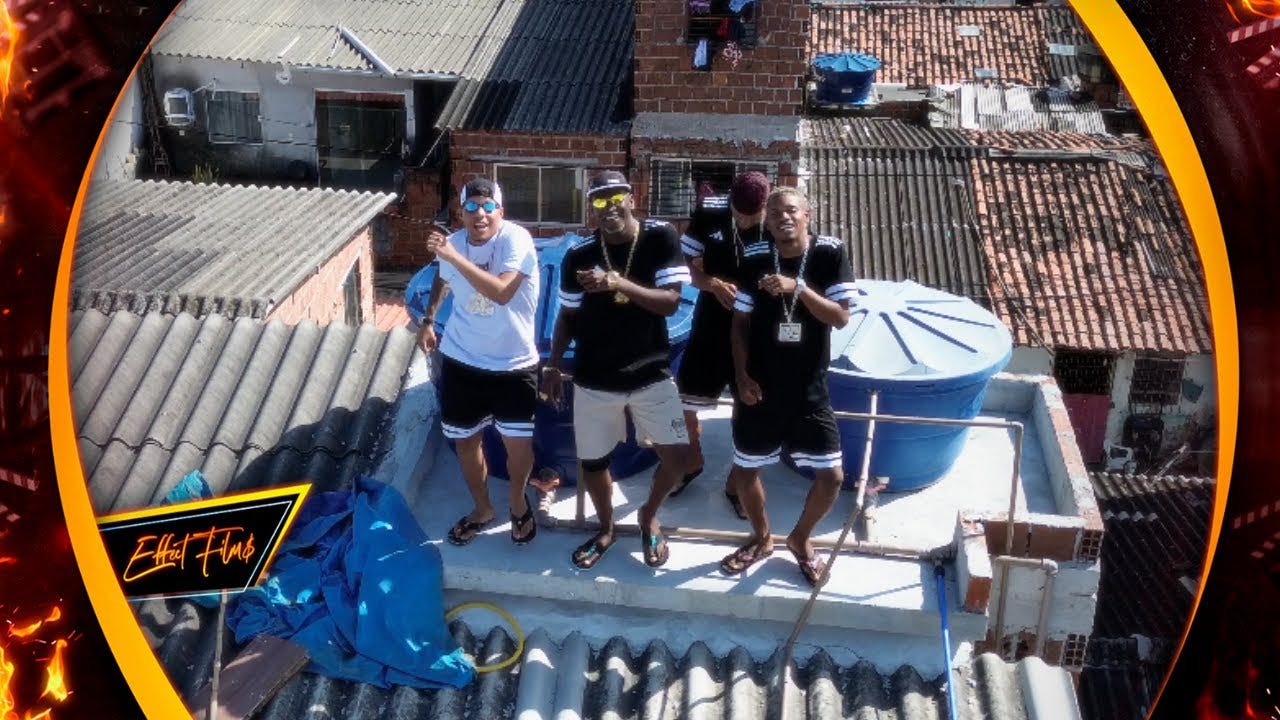
The Passinho do Jamal dance exploded on social media, becoming a trend not only in Brazil, but also around the globe, catapulting the Recife genre to international prominence, with FIFA World Cup 2026 star Lamine Yamal, j-hope from BTS and iShowSpeed all getting into the fad. A simple and infectious concoction—a combination of the traditional Brega music of Northeastern Brazil plus elements from Rio de Janeiro’s funk, Angolan Kizomba, and Caribbean Zouk—Bregafunk began taking shape in 2008, and first got notoriety outside of Recife in early 2018, through the breakout single “Envolvimento” from MC Loma and Gêmeas Lacração, which captured a grassroots movement and irreverent spirit of Brazil that resonated with much of the country’s youth.
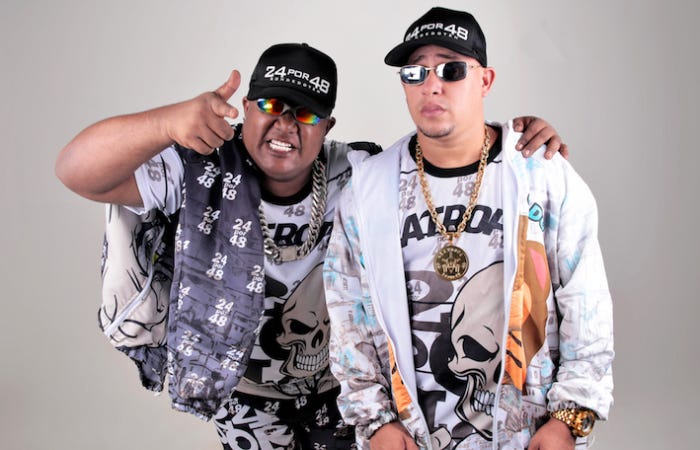
Shevchenko & Elloco, an act crucial to Bregafunk’s development, would start their tour de force that year too. On hits like “Gera Bactéria,” producer GS O Rei do Beat would start incorporating more elements from São Paulo funk, especially the robotic sound commonly associated with the Southeastern state, which would invert the tracks’ internal logic, putting rhythm and dance as the focus. This worked in symbiosis with the Passinho crews of that era.
From them, Pedro “Eo Chapa” Henrique and Romero “Jamal” Júnior would birth the now internationally famous Passinho do Jamal, which would be recycled and become viral in late 2025. Following Bregafunk’s recipe, a simple instigating move was the only requirement; the more people watched, trained, and posted their attempts at the passinho, the wider the genre writ large spread. All combined, it made the algorithm churn out more Recife-related content at the exact moment an influencer in that Northeastern metropolis was gathering a staggering amount of impressions by jumping into open sewers.

The influencer responsible for starting this is Danilo Silva, who now has over 350,000 followers combined across Instagram and TikTok. He explains the motivation behind the idea, now commonly referred as Rato’s Bar: “Firstly there wasn’t even a Rato’s Bar,” he says in an interview for Terra Brasil, a Brazilian news agency. “It was a favela that was settled close to the sewer, and when there was flooding, water reached around our chests. Since we were children we were used to that, and with Bregafunk on the rise, we wanted an opportunity to pop on the internet, to draw attention somehow. So, me and seven friends, we had the idea to grab a romantic tune, enter the sewer channel, put a table, some chairs, sing and record. We were already sure it would become viral, the first video popped!”
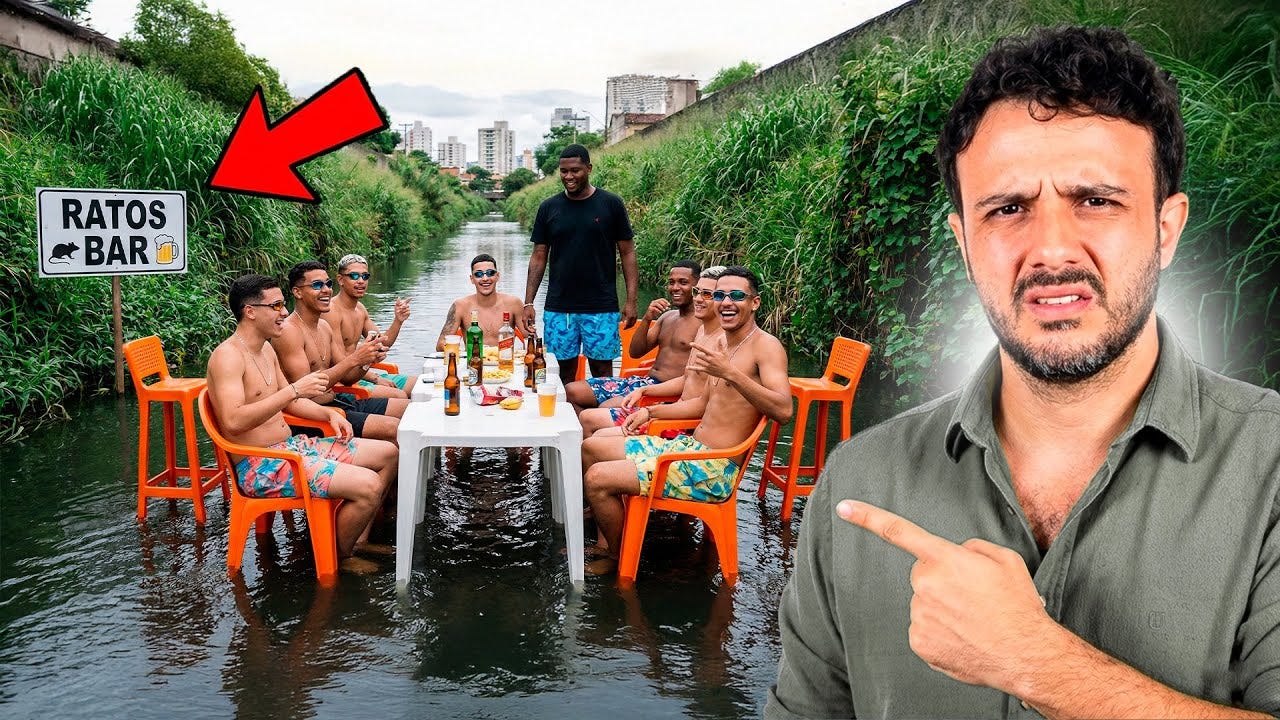
The setting is shocking at first glance—which is at least part of the point. Whether connecting with the ghetto or appalling others, it incites a reaction. It’s a collision between the abhorrent and the utterly common. The former is obvious. But the latter comes from the ubiquitous social gatherings mediated by Bregafunk. What the videos show is common throughout the underprivileged areas of the city: the paredões blasting the tracks guiding the passinhos. A carefree blip amidst a crushing economical and social reality.
Recife and its “Crab Mentality”
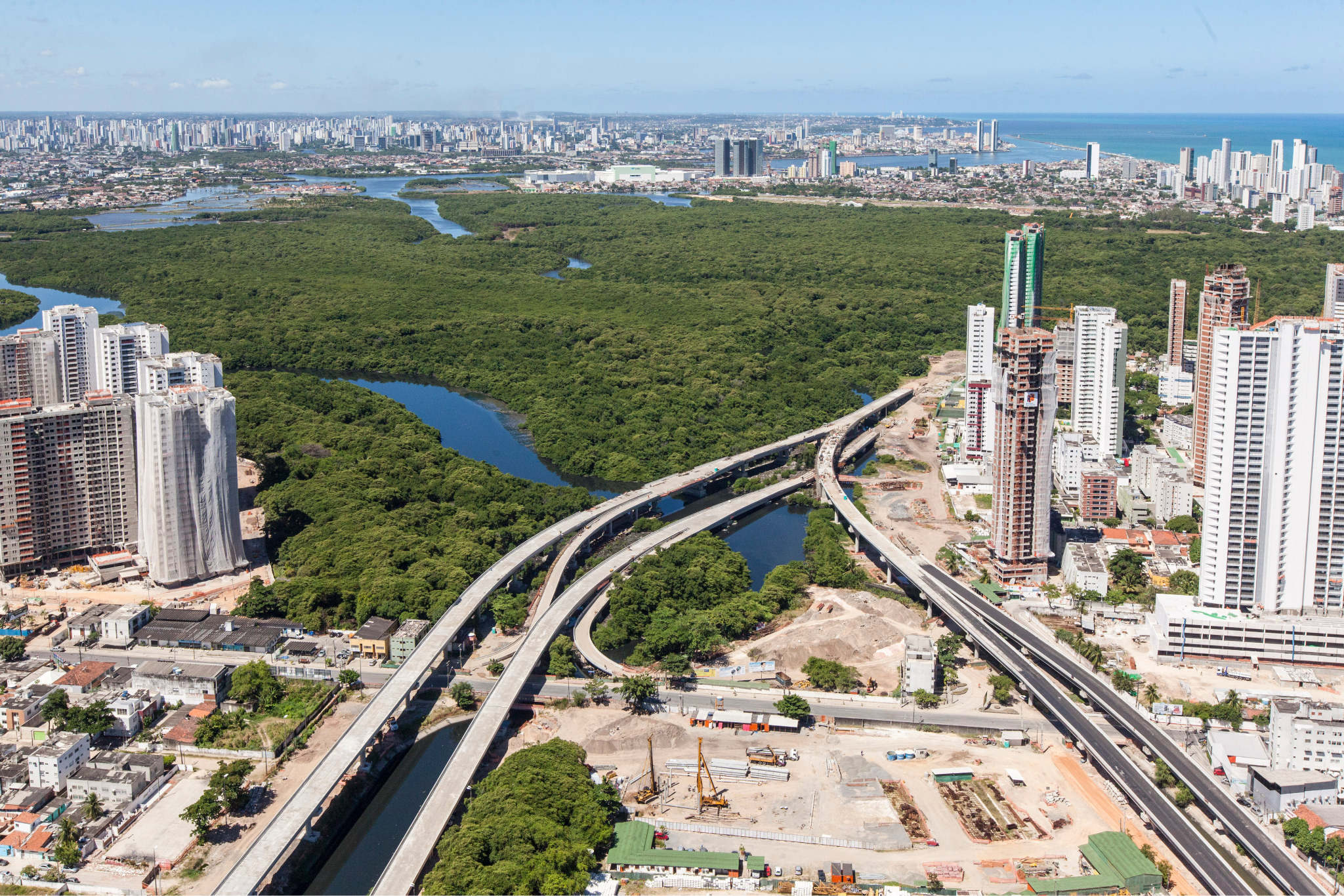
A crucial component of this phenomenon is Recife’s unique geography. Composed of a set of swamp mangrove islands which are cut through by rivers and channels, the city’s dysfunctional development that necessitated sewer lines in such abundance that it birthed another animalistic moniker, beyond the ratos. “This imagery of animals, connected to the mud and the mangroves, gained a lot of prominence from Chico Science and his idea around crabs, a metaphor he used a lot,” GG Albuquerque, a journalist and music researcher, says, citing the transgressive figure of Brazilian music in the 1990s. Chico Science was largely responsible for the ascension of the Manguebeat movement, its sound characterized by heavy drums from the Maracatu, one of the most ancient Afrobrazilian rhythms, and chords straight out of UK’s post-punk scene, reminiscent of acts like The Smiths and The Cure. The barrage of sound also folded in repetitive progressions influenced by the ritual aspect of the Maracatu and 1980s electronic acts, like Kraftwerk and Depeche Mode. It, in turn, birthed the Carnavalistic sound that defined Recife toward the end of the 20th century.
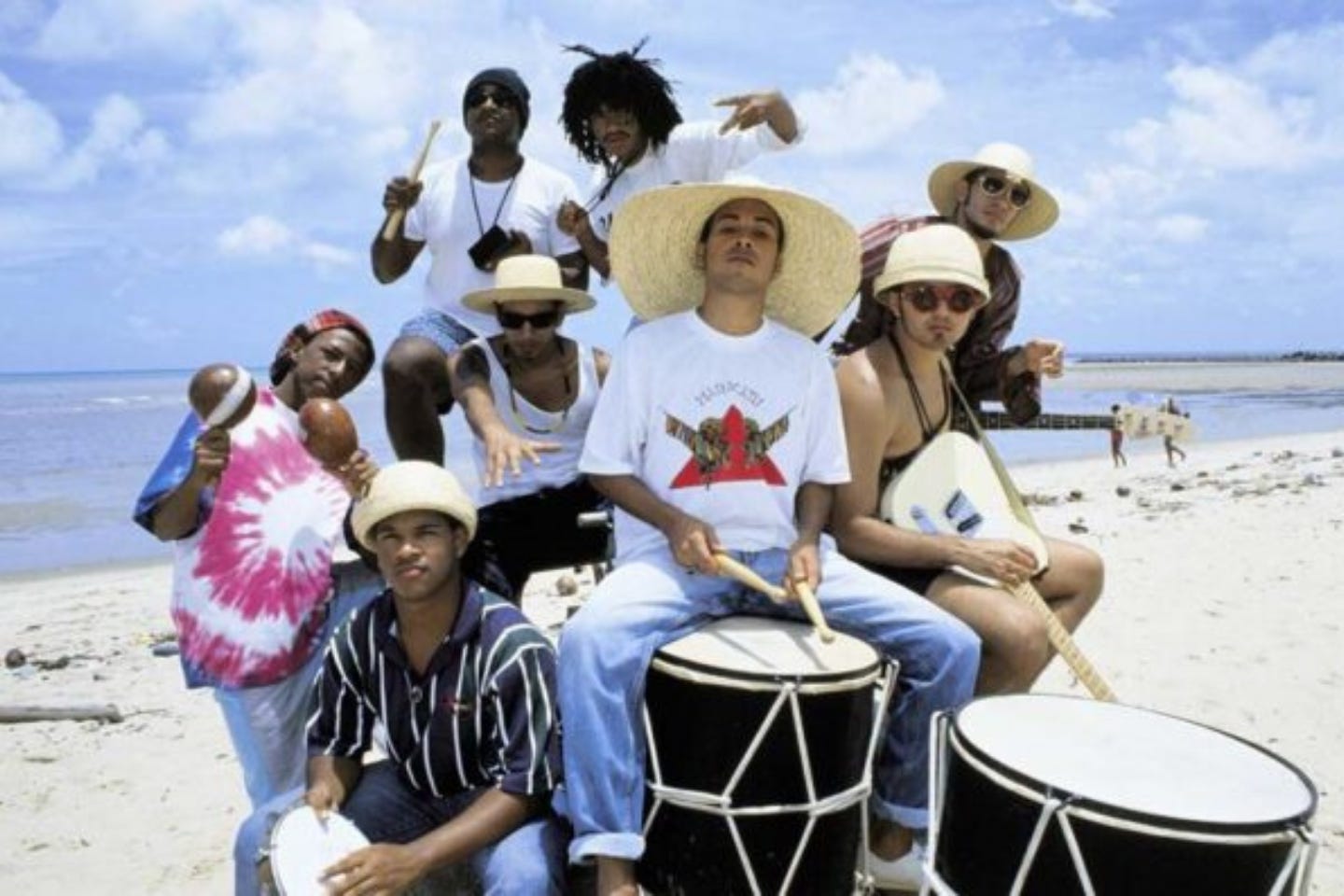
They were heavily influenced by the literary work of Josué de Castro, and integrated into their mythos some of his ideas, like the portrayal of Recife’s underprivileged inhabitants as mirrors to the crabs who lived on the mangroves, hungry and covered by mud. Music was the medium through which the crab metaphor was chiefly popularized; Nação Zumbi even sang “Tomar banho de canal quando a maré encher” (Take a bath in the channel when the tide comes in), documenting a commonplace practice nowadays closely connected to the ratos.
The Ratos
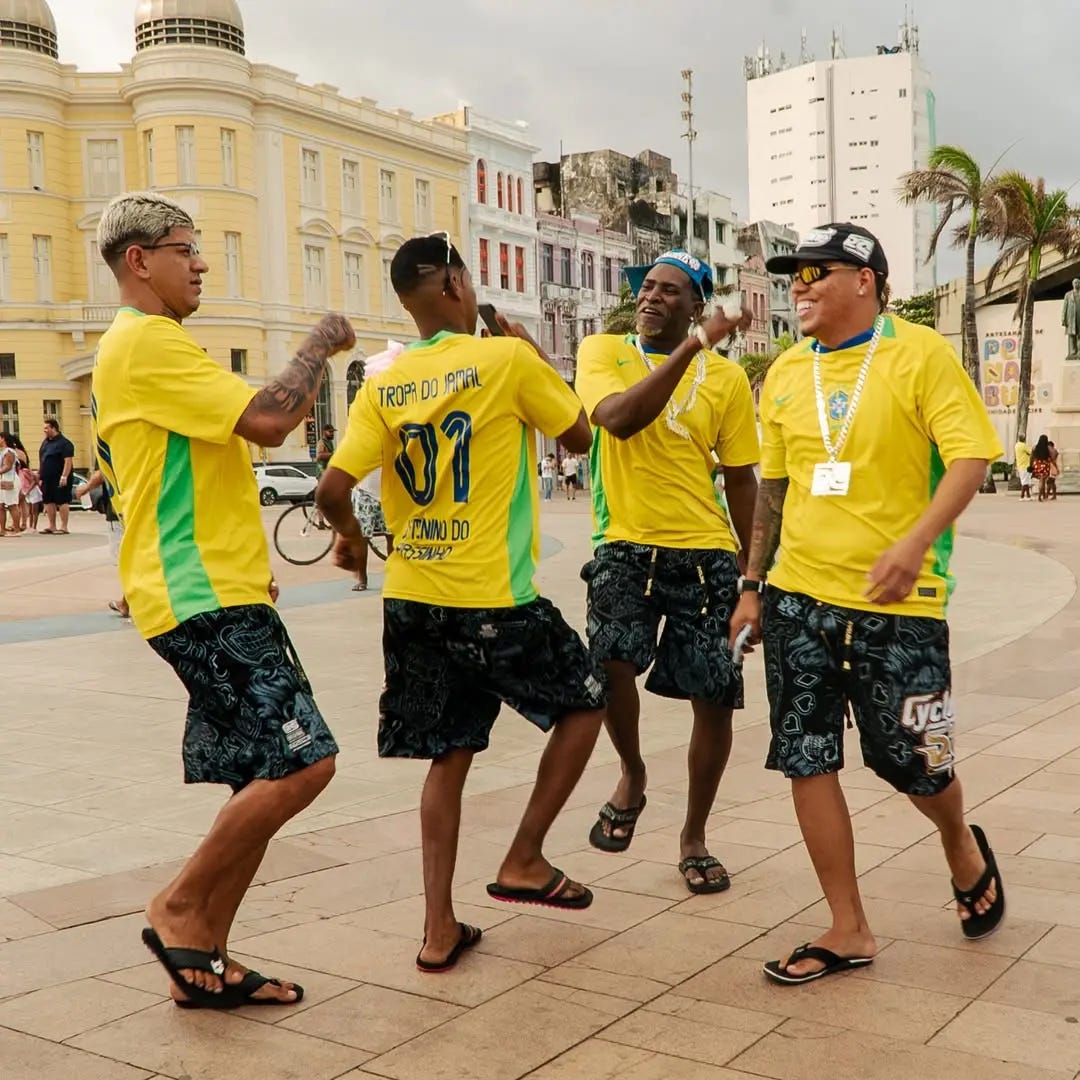
The ratos share some aesthetic sensibilities with other Brazilian subcultures, but there are nuances that set them apart. There are the never-changing ‘“👉” or bang-shaped hands, while the most unique tic, by far, is the qui qui qui qui. Spoken in quick succession, the syllables aim to mimic the rat cry that can be heard when the animal expresses distress, and is often heard before the culprit of the cry is spotted. It recalls de Castro’s idea of mimicry, and connects decades of Recife sociocultural development.
Other crucial symbols of the ratos come through fashion, with two brands being most commonly associated with the group: Seaway and Cyclone. Both were, at their parallel 1984 foundings, surfwear brands, the first one is local to Recife, the latter from Rio. Today they are far more recognizable as symbols of Brazilian favela fashion. Ratos rock the long shorts and combine them with regattas and soccer jerseys; they also never go without chains, and the thicker those get, the more cred that comes with them, a similarity with (or homage to) American hip-hop culture.

And then: the hair. By far the most distinct facet of the ratos’ fashion, it is literally derived from the moniker, made to represent the tails of the rats. The longer and crazier the tail is, the more attention it will attract at functions.
This is familiar across cultures and continents: people taking the conditions meant to shunt them out of society and flipping into ingenious music, fashion, and culture. Danilo Silva, the man who recorded himself plunging toward the Earth’s core, carves a new path of ascension from a brutal economic reality. And the youth takes these images as they’re intended to be received: shot through with irreverence and sly humor. In this age, attention is the only near-democratic currency; the ratos have made people look back at the mangrove metropolis with not just horror, but awe. Maybe what Philip the Prudent told the architect of the Escorial encapsulates it best: “Let’s do anything that’ll make the world call us crazy!”

This was great irmão - obrigado from Japan 🤙