

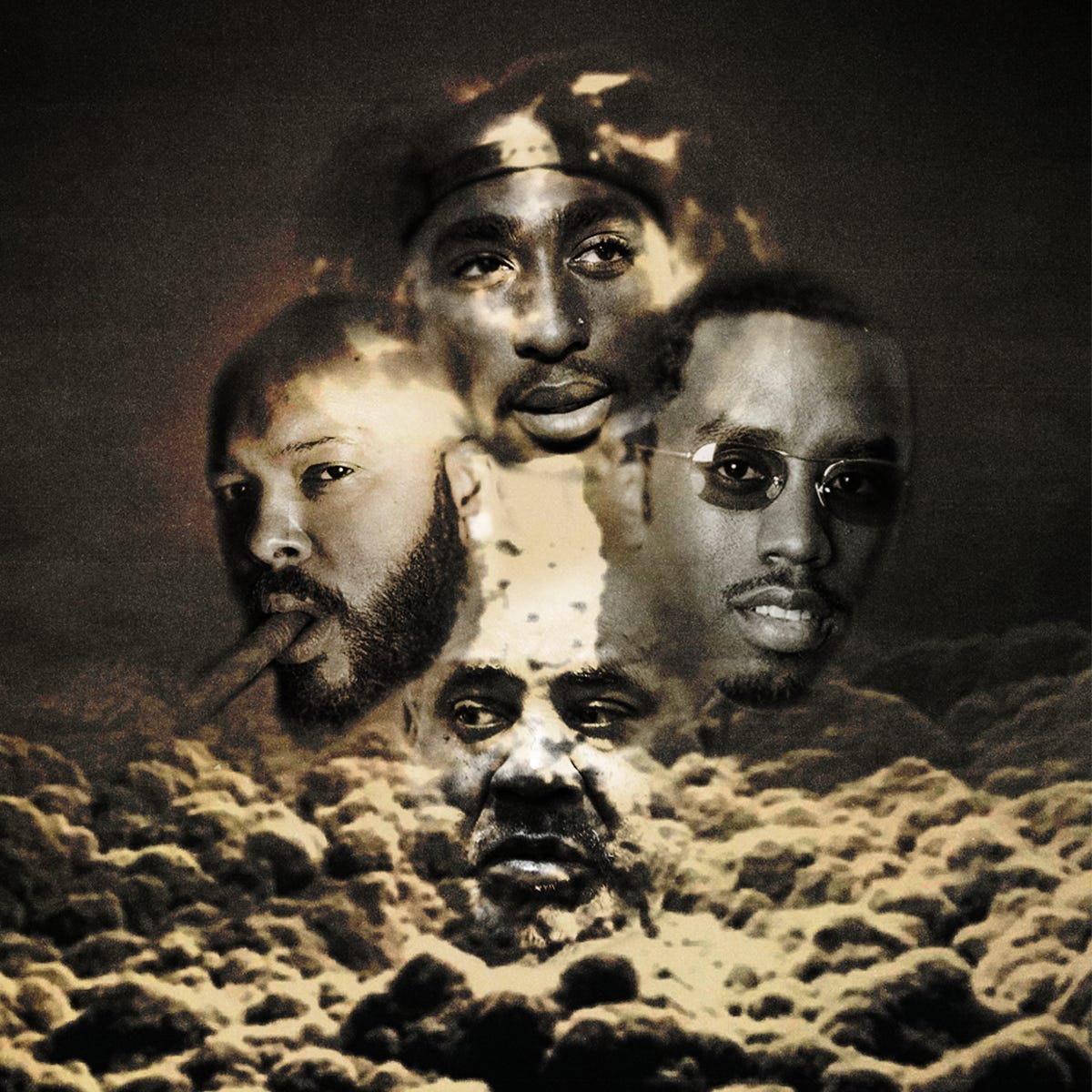
“The Atomic bomb! No one asked us what we thought about it. Everyone is in an uproar, for none of our officials know anything about this. All the gambling people are furious, for, naturally, they fear that people will no longer come here…The first atomic bomb was exploded on January 27 at 5 in the morning…[There was no warning!] However, we all felt it. It shook us awake with the most terrific blast.” Georgia Lewis in Las Vegas…The Way It Was: Diary of a Pioneer Las Vegas Woman
The federal government favored Las Vegas for the same reason as the mob: It was a place where one could get away with anything. Maybe the molten heat of the Mojave lends a touch of absolution. More than three decades before Bugsy Siegel imported his first pink flamingo, Nevada became the last Western state to ban gambling—only to reinstitute it 21 years later during the economic hardships of the Great Depression.
A professional poker player told me that one of the reasons he liked living here was that the natural chaos offered a perverse comfort. “The thing about Vegas is that no matter what you do here, there’s always someone doing something far more depraved,” he said. “Everything is relative.”
About 75 years and 65 miles northwest of here, the Atomic Energy Commission established the Nevada Proving Ground, where a cluster of scientists, Air Force pilots, and small-time bureaucrats once detonated some of the most powerful bombs known to man. The United States found itself locked in an Eastern Slavic squat dance with the Soviet Union, which required brinksmanship. It meant upping the annihilation ante. Initially, the government decided to test its nuclear royal flush in the turquoise blue waters of obscure Micronesian atolls, but soon added a more convenient and cost-effective option. As Harry S. Truman said: “Vegas, baby!”
Anger directed at Washington D.C. quickly subsided. It was true that during the Eisenhower years shifting winds occasionally carried the radioactive clouds outside the test site, scattering nuclear fallout across Mormon towns, Native reservations, and rural villages. But it was a small price to pay for entertainment. The tests soon became the only thing that could compete with I Love Lucy. Tourists headed east from Los Angeles on the old Highway 91 to see what guide books described as “dazzling fireballs—brighter than the sun!”
The heaviest thermonuclear experiments remained in the Central Pacific, where 7,000 square miles of oceanic contamination were merely the cost of doing business. Nevada was for the domesticated bombs, a matinee apocalypse to be ritualistically timed and ticketed. The chamber of commerce even issued a dedicated tourist calendar. And so between the legalized gambling and the tens of millions that the Pentagon poured into the test site and test site-related mischief, Vegas became a boom town. Mushroom clouds popped up on gift shop souvenirs at McCarran Field. The atomic cocktail became a regional delight.
On one of my weekends in Vegas, in between the courtroom drama of the 2Pac murder trial, I nursed a tequila sunrise at Atomic Liquors, ruminating on how the last 30 years of legal inertia led to urban legend and apocrypha. At the oldest freestanding bar in town, the walls are adorned with pictures of hellish aerial fireballs. Its roof once offered a panoramic view of the blasts at dawn. Maybe it’s a peculiar thing to turn the looming threat of nuclear holocaust into kitsch, but that’s the story of the city itself.
In a show full of them, Las Vegas was the most (un)natural setting in David Lynch’s Twin Peaks: The Return. What other rightful shadow realm was there for an artist fascinated with Manichean duality, indigenous portals to the spirit world, and wicked interdimensional entities subsuming physical forms. Agent Cooper’s lobotomized tulpa needed a nice little suburban tract home located just outside of a deathless neon strip lined with plaster simulacrums of the Egyptian pyramids, the Eiffel Tower, and ancient Rome. And so competitively priced!
The city’s fundamental business plan was to construct vortexes where time and space were stripped of meaning. A matrix constructed atop the same Precambrian sands that still contain ghost towns and the numinous vibrations of Jack Parsons and L. Ron Hubbard’s failed experiments to summon the Whore of Babylon, and where atomic physicists ripped asunder the very molecules at the essence of life itself.
In The Return’s eighth episode, Lynch resituates Pandora’s Box—the source of all the evil and turpitude from the last seven decades of American life—at the Trinity Test that once inflamed the skies across New Mexico’s Jornada del Muerto. The moment when human civilization realized once and for all that the devil was real. It was a modern destruction myth, an Aristotelian peripeteia: The weapon built to end the war was the thing that made total obliteration possible. And as eerie as the vision was, something in it made you nod your head.
The central fear of Lynch’s mid-century childhood may have been nuclear incineration, but the constant threat has been absorbed into our amygdala. The most recent Iran War began with stealth bombers and drones pummeling Iranian military targets. The government explained it as a necessity to ward off nuclear armageddon, but predictably turned it into a shipping war about oil.
One of this month’s top news stories was about an ex-Anthropic whistleblower alerting the world to the possibility that self-improving superintelligence could cause total societal ruin. Elon Musk immediately called it a psyop, but himself has long fretted about our extinction from rogue AI agents “launching a nuke.” Anthropic’s alignment science lead claimed that there’s a greater than ten percent chance of us going bust in the next decade, which is perhaps the best advertisement for recklessly attacking the craps table. How much of this you believe is up to you, but it’s inarguable that The Bomb was an eschatological turning point in human history—the first time we created something with the power to end it all.
These doomsday fears were the original stocking stuffer for big pharma; they now seem quaint in a digital world suffused with ambient dread. As information overload and the brain rot bot singularity beckons, the more we turn to myths and sibilant conspiracies to futilely re-order the world. Over the last 30 years, the moments that hastened our collective freefall are rarely disputed: the media deregulation and monopolies that followed the telecommunications act; 9/11; the Iraq War; the federal government’s failures during Hurricane Katrina; Citizens United; social media becoming algorithmically gamed; and our vertical video descent into an Amusing Ourselves to Death celebritocracy. Each generation has their own moment to map the misfires that led us into this psychological cul-de-sac.
The first time that I personally understood that we had crossed the Styx was when Britney Spears, the American dream incarnate, shaved her head in a nervous breakdown partially incited by our ravenous appetite to watch the strip tease unravel. But when I reminisce on that event, it was a symptom of a deeper psychic dislocation. Sitting in trial for most of the last month, it became clear that we have been bodysurfing the abyss since 2Pac died 30 years ago.
When Pac was killed in September ’96, Vegas was undergoing a secular baptism. The original gilded palaces of sin had either become rubble or were becoming passé. This was now the city lamented in the epilogue of Casino, which had only come out ten months earlier—the Disneyland where the kids play cardboard pirates and their parents lose their mortgage payments and college savings on the poker slots. The film was an arrivederci to the old Vegas, which I never witnessed. Vegas was the place my family frugally vacationed. No need to fly, and it was free to watch the Mirage volcano erupt, and the buccaneers attempting to sink a British frigate in the tepid bay in front of Treasure Island. We dined at the all-you-can-eat buffet in the same imitation Arthurian castle where Orlando Anderson slept the night that he allegedly killed Pac—after first being jumped inside a fake Emerald City filled with animatronic Munchkins.
Shortly after Pac’s death, the Vegas oligarchs decided that a high-profile, months-long spectacle revolving around a gang-related homicide would not be ideal PR for a place attempting the Big Rebrand. The pirates had to be cardboard, not actual Pirus in Pirates hats. And during the actual trial itself, three decades later, the indefensible delays in solving the murder were blamed on the apathetic Vegas cops, politicians, and prosecutors who did their best Lance Burton and made the investigation go poof.
Every few years, some journalist wrote an article reminding the world about the unsolved crime, but it quickly blew over or became invalidated by factual inaccuracies. The government officials blamed the inaction on cross-jurisdictional misdirection between the Los Angeles law enforcement and Las Vegas Metro. That or the omerta that often accompanies gang violence. Either way, no significant headway occurred until the feds took an interest in the case around 2008—and only then after a wrongful death lawsuit from Biggie’s mom threatened to bankrupt the city of Los Angeles, and forced them to investigate the connections between the two crimes.
The 30 years between murder and verdict allowed for the seeds of our self-delusion to germinate. It’s probably a total coincidence that Alex Jones launched his Austin radio show The Final Edition in 1996, but hardly surprising. One of the most prominent early guests on Jones’s cabal-a-thons was William Cooper, author of Behold a Pale Horse, which became a bible for Illuminati believers after being circulated through the New York prison system. And you can’t entirely discount Cooper—if nothing else for inspiring Prodigy’s wildest third-eye visions, Goodie Mob’s “Cell Therapy,” and the entire Killarmy corpus. He also predicted the rise of school shootings. Conversely, he swore that JFK was killed by the powers that be because he was about to inform the world that extraterrestrials were about to take over Earth. And besides, everyone knows that the mob and the CIA did that shit.
The last sentence may be a joke. It might not be. And this is how the conspiracy theorists get you. Genuine revelations often alternate with patent insanity. It’s much easier to become a true believer or a disaffected skeptic than to have to wade into the Sargasso Sea of exaggeration, hyperbole, and deranged wisdom. I have been to the Texas School Book Depository and stood beside the sixth-floor corner window where Oswald fired the bullet that allegedly killed Kennedy. And it was startlingly obvious that unless good ol’ Lee Harvey was the greatest marksman this side of that Turkish Olympic sharpshooter, there had to be a second killer. But when Oliver Stone released JFK in 1991, the grassy knoll became synonymous with tin foil paranoiacs. The film forced Congress into declassifying thousands of documents, but simultaneously ingrained the second gunman as the stuff of Seinfeld parody.
2Pac’s became the first unsolved celebrity murder at the dawn of the internet. Never before had humanity experienced such hospitable terrain for the dissemination of lies, half-truths, and innuendo. The technological impact dislodged something primitive and fixed in the human mind. Rapid scientific discovery and an interconnected world should have led to a lucid rationalism, but it had a paradoxical effect. Spurred by this supreme agent of chaos and propaganda, we gradually turned to the extraordinary and irrational to explain what was obvious before our very eyes. But that was the thing—what we witnessed was mediated through an easily manipulated filter. We learned to be skeptical of the mainstream web but astonishingly credulous towards esoteric knowledge available on Angelfire pages—which midwifed YouTube “documentarians”—and TikTok edutainers.
If an arrest had been made in those first few months, or even years, the speculation would have been largely snuffed out. But when authorities didn’t indict anyone connected to the MGM melee, it only fueled the rumors—especially for those not from Southern California and/or terminally online. Whodunit theories proliferated. Suge had set it all up. It was the FBI. The CIA. Crooked LAPD cops. That is, if 2Pac hadn’t faked the whole thing.
The symbolism and numerology from The Don Killuminati: The 7 Day Theory convinced a generation that Pac was toying with us all. But in one of his last interviews, the late Makaveli mocked the notion of the “secret society trying to keep their eye on me.” He dismissed the New World Order as a plot to lower Black people’s self-esteem, and distract them from the very real systemic oppression cementing racial inequality.
Maybe Pac was still furious about “Drop a Gem On ‘Em,” but he was more likely too aware of the ramifications of the federally funded plots to surveil, infiltrate, and disrupt the lives of the Black Panthers who raised him. The artist who once said that Black Power was a childhood lullaby was born one month after his 24-year-old mother successfully defended herself in the Panther 21 trial, the then-longest and costliest in New York state history. Afeni Shakur faced 300 years on charges of conspiracy to bomb everything from police precincts to subway stations to Abercrombie & Fitch. After the trial, one of the jurors, a 53-year-old insurance clerk, declared that she had previously been “a little afraid of the Panthers and not as afraid of the police. Now I’m a little more afraid of the police than I am of the Panthers.”
