


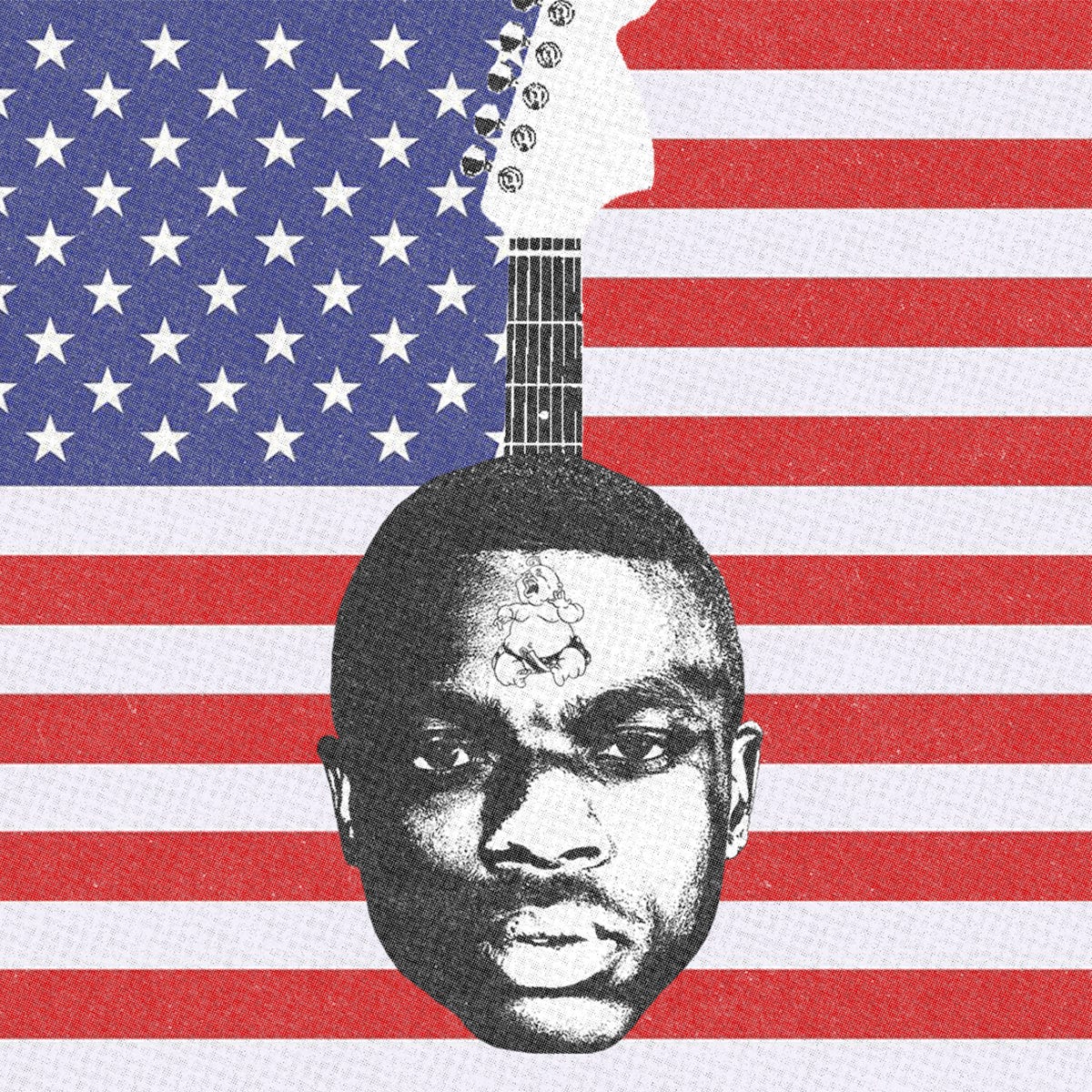
In the early 2010s, the north side of Long Beach, California became a place synonymous with hell. You understood cops were out surveilling as early as 6 a.m.; you lived and died by the gun in spite of it. Grandma’s prayers were of no use. There was no time to atone for your sins, weigh what’s right and wrong. There was only the shit you do—robbing, stealing, killing as not to be killed—and the shit you don’t. And it was here, in the world of the 20-year-old Vince Staples where a growing sub-culture of chronically online, blog-era rap fans would find him. Sending prolific, unsparing dispatches from his daily hell that in just 12 years would morph into an eerie glimpse into the nation’s future.
In the family of his early-career records lives the forgotten stepchild of Vince Staples’s discography, Shyne Coldchain Vol. II. Named after Belizean Bad Boy rapper Shyne and Clipse affiliate Rosco P. Coldchain, it’s the sequel to Staples’s first-ever mixtape, from 2011. It may ring a bell for even the most casual Staples listeners due to its acclaimed single “Nate,” a disarming reflection on the role his absent father played in his life. But while preparing a meal in the kitchen in my box of an apartment in Brooklyn and listening to Staples’s Ramona Radio show through my headphones, it wasn’t a throwback to “Nate” that stopped me in my tracks, but rather a drop into the distorted, alternate universe of Shyne Coldchain Vol. II’s fifth track, “Oh You Scared.”
Its low-pitched, warped synths evoke a fever dream or bad acid trip; Jhene Aiko’s airy harmonizing and a jazz-piano melody combine to lull you into a trance. Right before the spell has become totalizing, it’s pierced with drums thunderous enough to snap you into hypervigilance. And that’s exactly where Staples wants you. His opening lines—“N----, what’s the deal? Pay attention/Most the time that I’ve been living, we been public housing tenants/Never had no pot to piss so bitch excuse me if I brag a lot”—ask you to behold every opinion of the world he’s been tossing back and forth in his mind since becoming the artist in the booth before you.
After the muted receptions of his first two mixtapes, Staples had mostly given up on making music. He was reinvigorated when his close friend Earl Sweatshirt returned from a notorious stint at Samoa’s Coral Reef Academy and brought him around Mac Miller. Vince describes his time with Mac as one that changed his life, the late rapper teaching Staples extensively about the technical parts of the craft: staying on beat, projecting his voice, ad-libbing. The attention from Stolen Youth, his full-length collaboration with Miller, and his striking breakout verse on Earl’s “Hive” put the battery pack in his back to refocus on making music of his own.
The same choppy cadence and poignant frankness that characterizes Staples’s verse on “Hive” is what cements “Oh You Scared” as indispensable in both content and delivery. “If Illuminati buying souls/and only fear was dying broke/and God who made my life this hard/So hell where we decide to go,” he opens its second verse, an immediate pull into both the song’s thesis: a critique of the use of religion to pacify Black communities living in poverty. It’s a topic that Vince had spent a great deal of time talking about both in his songs and interviews in the time between Stolen Youth and Vol. II’s release.
As a child, Vince’s family went through a great deal of turmoil in a short period of time. His father went to jail and his older sister’s father passed away, leaving his mother, Eloise, to take care of the family by herself. She, in turn, became hyper religious, spending a great deal of time in church with Vince in tow, and even enrolling him in Long Beach’s Optimal Christian Academy, where he attended school until eighth grade. Like many church-raised kids, Staples took a more cynical, counter view of religion as reprieve from his everyday struggles. In “Oh You Scared,” heaven is as much of a place that he aspires to go to as hell is a place he fears.
“My friends have been getting killed since I was 14 or 15 and there ain’t no prayers or nothing that can help,” Staples said in a 2013 interview with Complex. “If a n---- gets shot and stays in a coma for two days, he’s probably gonna die. All the prayers in the world can’t prevent that.” On the song, brings this idea back just before before Jhene sings the final chorus: “Friends that’s killing n----s is the only ones you praying for/But words, they never stopped no bullet/Oh, you scared, n----?”
As the synths warp back and forth between your ears and Jhene’s melody fades out, you can’t help but to wonder if its Vince’s obsession with disproving Christianity’s moral compass that protected him through all his years of gangbanging in LB, a slew of life-or-death choices being the very thing that carried him into his current role as a political rapper-turned-rock frontman in his newest album, Cry Baby.
A couple months ago, in the midst of my spring semester, I shuffled my body weight in an uncomfortable blue plastic chair among a large circle of my classmates, all of our attention aimed towards our special guest, novelist and essayist Alexander Chee. He was visiting our campus as a part of a regular lecture series of distinguished writers. One of my classmates asked Chee how he continues to show up to the page in the midst of the grotesque social climate we’re currently living in. He shared a story in response, of a time where he was asked a similar question while on a panel with other authors, and a colleague of his aptly answered: “I am protected by my obsessions.” He writes about the things he loves and can’t shake from his psyche; goes down research rabbit holes that keep him up through the night and away from the sore thumbs of a doomscrolling binge. Chee’s answer brought me back to a time in my life last year, early 2025, when in the short time since he had been sworn into office that January, our current president was committed to wreaking as much havoc on the American people as quickly as he possibly could.
Day after day my feeds were filled with news of repealed bills, funding cuts to research grants and social services, and the newfound presence of ICE agents across the country. My first lifeline in the midst of this was to keep my mind occupied with as much music as I could possibly listen to. And somewhere on this journey I arrived at those archived episodes of Ramona Radio.
Roughly a year after being transported back to Staples’s 2014 universe through these archives, it dawns on me how even at 20 years old, Vince’s hyperspecific tales of his adolescence in Long Beach were a warning signal of the disarray that we deal with today. There’s a saying that whatever is happening to the world’s most marginalized groups will someday happen to you. In the 12 years since Shyne Coldchain Vol II.’s release, we’ve watched an insurgence of Christian nationalism throughout the country; we’ve seen innumerable attempts, some in good faith but most not, to put band-aids to the bullet wounds of our nation. You combine that being ushered into an era of resource scarcity, from petty war-driven oil shortages to clean water-guzzling AI data centers sprouting across the country like weeds, and you’re bound to create not just “rough areas” or cities where crime is especially bad, but a version of America reminiscent of the one depicted in Octavia Butler’s The Parable of The Sower. One where we all have to ask ourselves not what’s wrong or right, but just what exactly we’re willing to do to survive, and if whatever faith we’ve been previously indoctrinated with will hold up in the fire.
