


The best music history is being written under YouTube videos. Not too long ago, I came across a comment from an old New Yorker about how the mixing of many early rap records was optimized for Ed Koch topography: boomboxes turned up to their limits, the sound ricocheting off buildings and down alleys and skyward from basketball courts. “Audophilia” has always been a scam; yes, you can perfect a mix in hermetic studios on astronomically expensive speakers, but that’s not how anyone else is going to hear the song. The sounds waves will inevitably be scrambled and reconstituted through phone speakers, by DJs, bent onto radio and compressed a half-dozen times. And still, the truly immortal beats are the ones you can recognize three blocks over.
Earlier this year, our own Matthew Ritchie wrote about the struggle, during his college baseball career, to land on the perfect walkup song. His early attempts came out muddled or grey on the tinny speakers of Division 3 stadiums. But then: Tay Keith. The Memphis producer’s track for Key Glock’s “Russian Cream” was not only instantly recognizable, but instantly immersive, even when reduced to its core elements. There are the drums; there is the sense you’re in one of those Pokemon towns where you try to catch ghosts. That’s it. Put another way: there’s no mistaking it for anything, or anyone else.
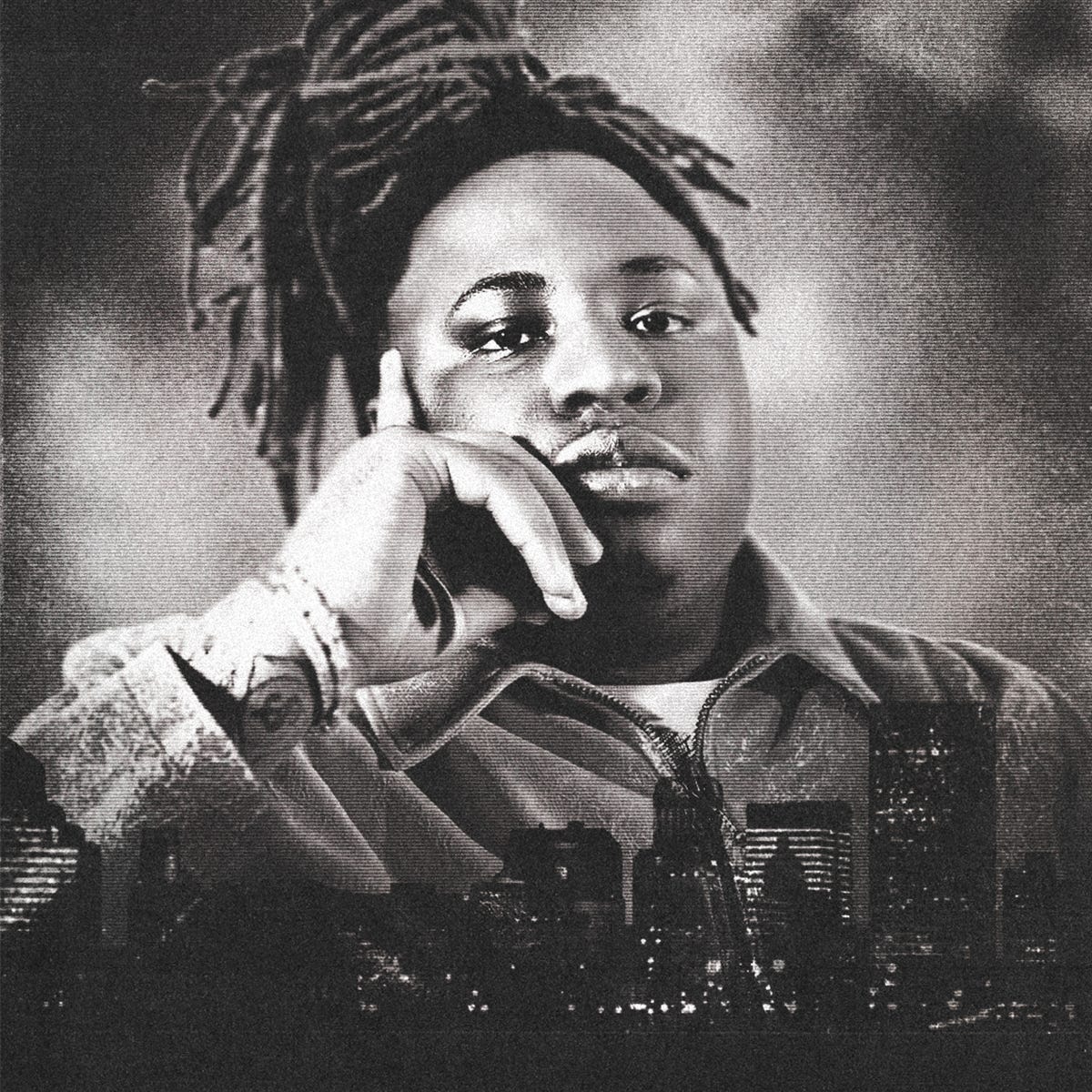
Yesterday, Tay Keith was found dead in his Nashville apartment by police conducting a welfare check. He was 29 years old. Born Brytavious Lakeith Chambers in Memphis, he carried that city’s hip-hop lineage—rooted in club culture, thunderous yet playful—to its delirious endpoint. The year he turned 22, he became one of the biggest and most imitated producers of his generation. He was already among its most innovative.
A Tay Keith beat could be as spare as a few piano notes. His work with BlocBoy JB is designed to be felt not just in your head and your shoulders but your feet; it’s dance music. Sometimes he flipped slasher movie scores into ass-shaking anthems, other times he mutated turn-of-the-century soul sampling into something more fucked up and more harrowing. Just look at how MCs can’t help but shuffle and hop around in the videos for his tracks.
In that breakout year of 2018, Keith produced the third and final movement of Travis Scott’s “Sicko Mode,” one of the canonical rap songs of the 2010s. At the time, Travis and Drake, who contributes two guest verses, were two of the three or four biggest rappers alive, Drake being perhaps the most famous artist on the planet. And still, when Keith’s production comes in, it recalibrates the entire record. It helps that it’s announced by his producer tag (“Tay Keith, fuck these n----s up!”), so profane that it couldn’t be played in full on the radio. It didn’t matter—you knew.
Keith, who graduated from Middle Tennessee State and partnered with non-profits to outfit schools with instruments and software, often spoke about his desire to become a college professor. He will not get that chance. But his work will live on and, surely, be studied by generations of producers to come. And when someone puts on one of his beats, you’ll know it’s him.