


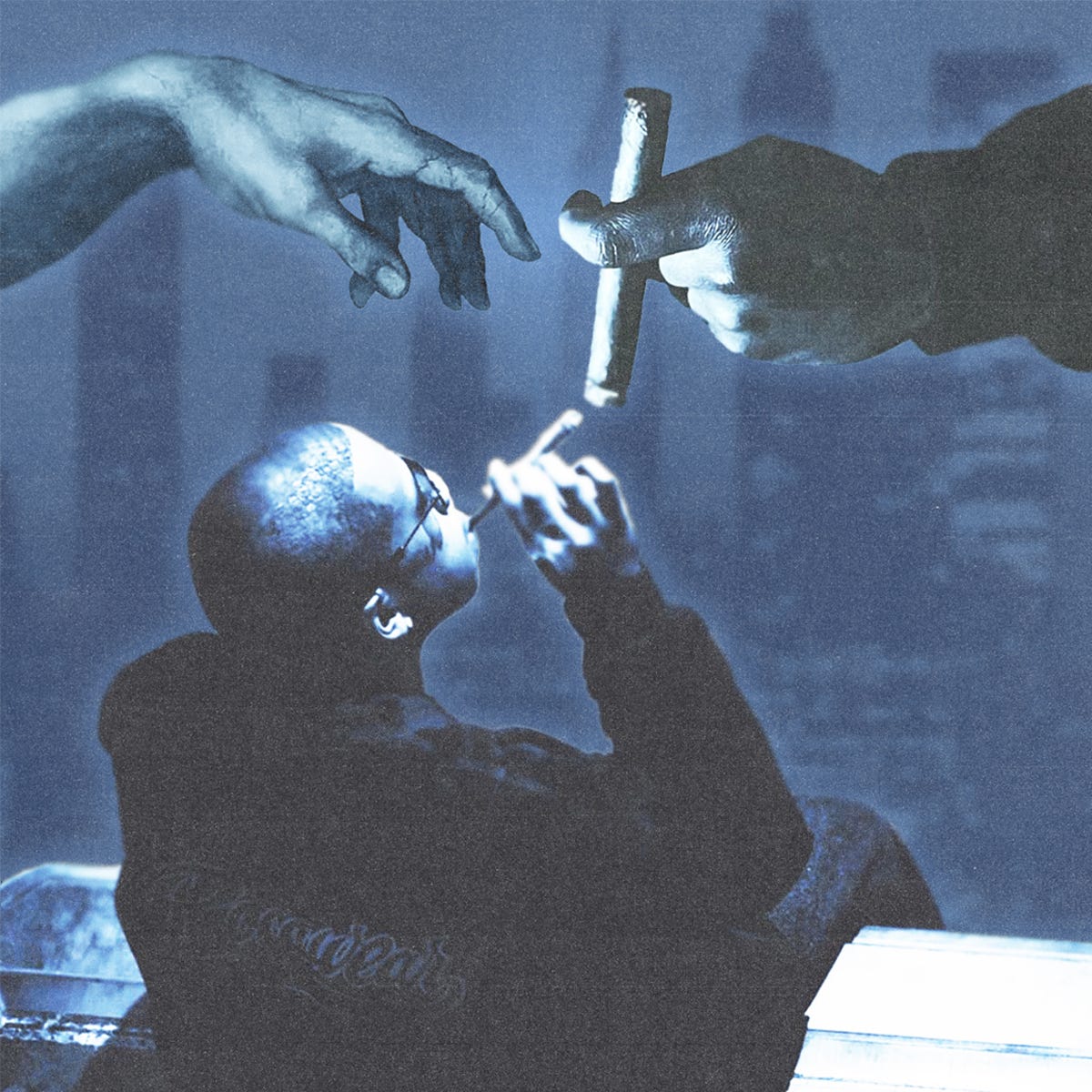
Editor’s note: Over the course of this year, we’re publishing a series of essays about the rap albums that defined 2001, both creatively and industrially, and whether they predicted or were abandoned during the quarter-century to follow. See also: Tech N9ne’s Anghellic and Cannibal Ox’s The Cold Vein.
You’re supposed to imagine a mid- to upper-tier flatscreen television that would have been available to purchase in 2001. On it: R. Kelly, sometimes wearing a white cowboy hat, otherwise in a murdered-out White Sox outfit. Cigars, bucket hats, the little buggies you drive on tropical vacations because there are no traffic laws, at least not that you’ll be asked to observe. Palm fronds and women who are nearly naked. Diamonds.
When people say an album was recorded quickly, they usually mean that its songs were finished over the course of days or weeks. And in the summer of 2001, that’s how Jay-Z made The Blueprint, his blockbuster, legacy-burnishing sixth LP that couldn’t even be stopped by bin Laden. But it was quick in the micro as well. “We’re sitting in the studio, and just by coincidence the ‘Fiesta’ video starts,” Young Guru, Jay’s longtime engineer, told XXL in 2011. “Jay taps me, like, ‘I’m ready.’ He walks out the door of the A room, walks down the hallway into another door, gets in the booth [and] spits all three verses” of “Heart of the City (Ain’t No Love)” in a single take. When Jay got back to the couch, the “Fiesta” video was still on.
For an album that not only became so momentous, but was designed and presented that way, The Blueprint’s process suggests something slick, even surreptitious. While Jay was at the time one of the most famous rappers in the world, shockingly few of its beats were originally meant for him. Kanye West had made “Heart of the City” with DMX in mind, given “Never Change” to a local rapper from Chicago, and had Cam’ron considering the Jackson 5-sampling “Izzo (H.O.V.A.)” for the album that would become Come Home With Me; Just Blaze wanted to send “Girls, Girls, Girls” to Ghostface; the Trackmasters wanted N.O.R.E. on “Jigga That N----”; Bink’s “The Ruler’s Back” was passed on by Loon and Black Rob, and “All I Need” belonged to a group from Philadelphia but was relinquished when one of its members passed away. The album’s lone feature, “Renegade,” was originally a collaboration between Eminem and fellow Detroit MC Royce da 5’9”.
