

In 1906, San Francisco was hit by the deadliest earthquake in American history, which destroyed more than 80 percent of the city. Having prior to the disaster established itself as the “gateway to the Pacific,” the commercial capital of the West Coast then ceded its growth to Los Angeles. But it was eager to recover and rebuild. By 1909, San Francisco needed to make an announcement for its comeback—that the city was open for visitors to experience everything it still had to offer. This led to the first Portola Festival, a five-day celebration named after the Spanish explorer who discovered (for Europeans) the region in the 1700s. Through a series of parades and local celebrations likened to Mardi Gras, the city touted its rebirth to the world.
A century later, San Francisco was once again on its back foot. The Covid pandemic, which sank economies around the globe, had smeared my city in particular with a “doom loop” narrative of being abandoned and full of despair. Despite the abundance of local evidence to the contrary, it was the perfect time for a new Portola Festival to emerge and remind the world of San Francisco’s deep cultural footprint. This time, instead of military demonstrations and fireworks, we had The Chemical Brothers and Charli XCX.
Every September since 2022, the Portola Music Festival takes over the unassuming shipping yard of Pier 80 in the Dogpatch neighborhood, transforming the site’s warehouses and skyward cranes into a playground of four stages showcasing the best of contemporary electronic(ish) music. This is in addition to a full “Portola Week” of shows leading up to the festival, surfacing in venues across the city the spirit of San Francisco’s underground rave scene. Produced by Goldenvoice, the SoCal promoter behind Coachella, Portola is an annual 45,000-person party that balances its parent company’s pedigree with a distinctly homegrown playfulness.
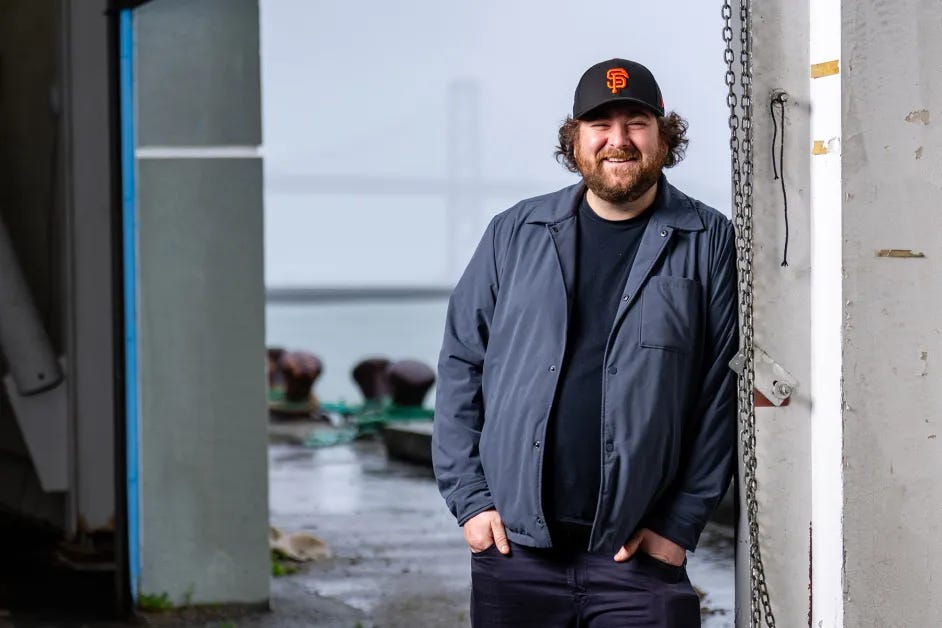
The visionary behind it all is Danny Bell, who has shaped San Francisco’s live music culture over the last decade since Goldenvoice hired him as its head talent buyer in the Bay. He first crossed paths with the company when he went to Coachella to see Rage Against the Machine as a high school senior. He knew from that experience that he wanted to put on events for a living, and went on to work behind the scenes for the folks at HARD Summer. After a couple of years, Goldenvoice hired him to book for local venues like the Regency Ballroom and Great American Music Hall, as well as festivals like Porter Robinson’s Second Sky. Portola, however, is his life’s work, the product of a mid-20s Eurosummer soaking in the continent’s mature dance music culture and dreaming to bring it back to his own city.
In the five years since the inaugural edition, Portola has given San Francisco something more substantial than a momentary resurgence; it’s helped reaffirm the city as one of the world’s great music capitals. For a weekend, the festival harnesses the dizzying assortment of clubs and promoters who bring in innovators in dance music on rotation year round, reflecting it back for a marathon that this year includes both path-breaking newcomers like Ear and MGNA Crrrta and legends like Soulwax, Fatboy Slim, and Skrillex and Boyz Noise’s first performance as Dog Blood since 2019.
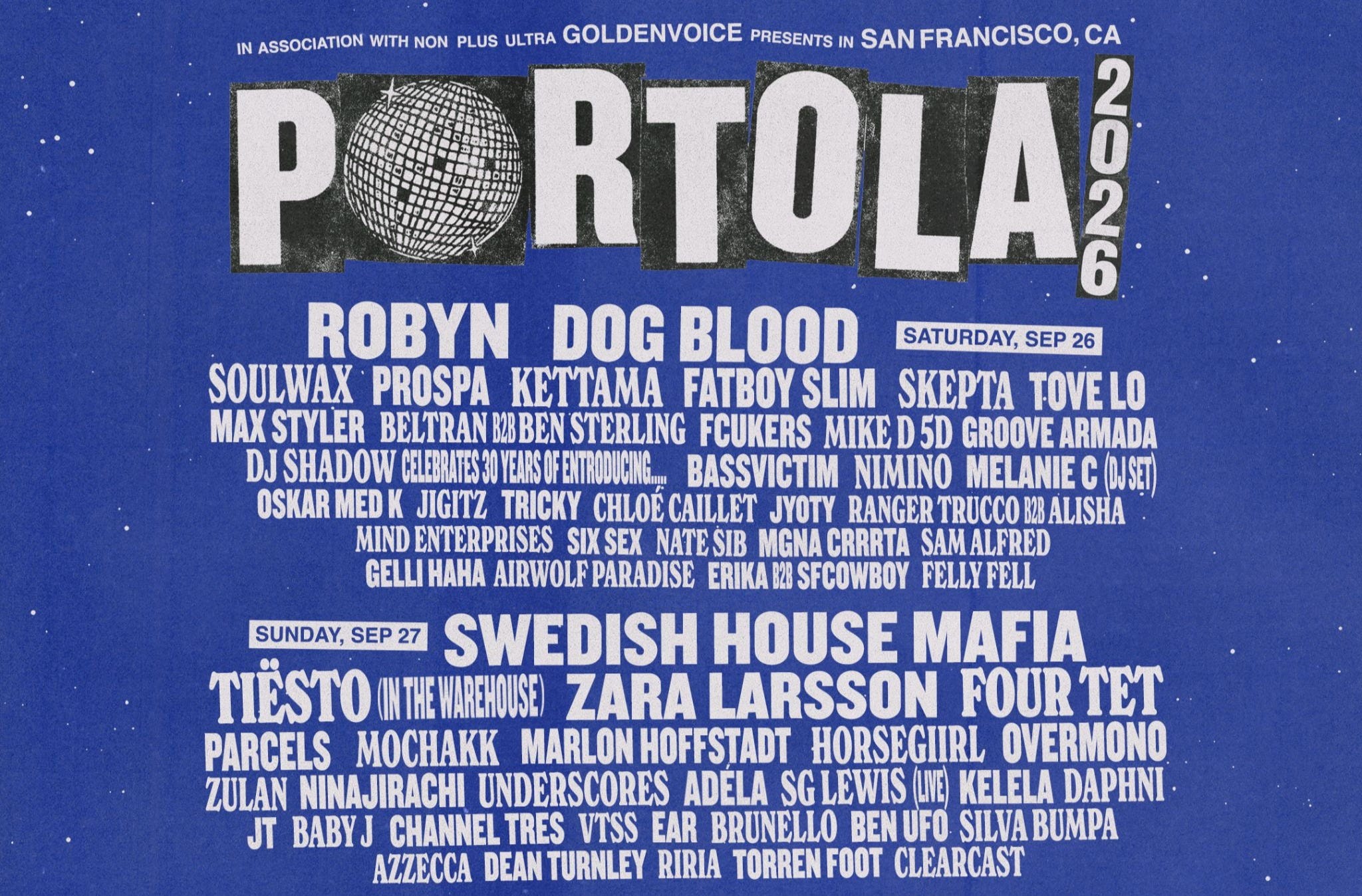
But as with the subsequent weekend’s Hardly Strictly Music Festival, Portola has ambitions beyond its original genre inspirations, and each year finds new ways to widen what fits under its umbrella. From dusty hip-hop originators like 2024’s Deltron 3030 to this year’s DJ Shadow—or hyperpop shooting stars like Ninajirachi and underscores—the festival reflects an unbound adventurousness. Where some festivals open up their bookings to a hodge podge that dilutes their point of view, Portola has only sharpened theirs through a wider inclusion that proves the rigor of their tastes. Name one other festival where you can see a Beastie Boy and a Spice Girl in the same day, let alone the same stage?
Ahead of the festival this weekend, I spoke with Bell about how he’s cultivated such a strong identity for his festival in a world of corporate slop competitors, cultivating a reputation as a place artists’ want to play year after year, and being a good neighbor to the rest of San Francisco.
I always like to ask organizers if they actually get to have fun attending their own festivals, or if the reality of the day-to-day makes the weekend more focused on the logistics and operations.
I’m very lucky in that the team we have in-house at Goldenvoice is amazing. Everyone is way more experienced and better at running their departments than I would be, so all I would do if something comes up is go to one of the experts. I personally have a blast, but it’s a different thing when I’m attending a festival as a guest—and get to have fun, have some drinks, hang with friends, go see some music—than at Portola where I’m hosting. It’s a really big operation, and the artists and the artist camps are friends of mine, so that’s what I get out of it more than anything. I really enjoy working with these artists and giving them a platform to have a big show and a great moment. I try to watch most of the acts of the festival, either walking through or driving around on my golf cart to see snippets of every act throughout the day that I can.
What sets Portola apart for me is its strong sense of world building each year. The booking philosophy feels intentional beyond what is momentarily trendy, and despite only being around five years, you already have acts who have played several times. Tell me more about your relationship as a booker with those folks who keep coming back like Four Tet or Soulwax?
There’s a few artists that I love to have play whenever they’re available. Soulwax, they’re my favorites—they’re the reason why I got into dance music. 2ManyDJs live or DJing, Soulwax live, Despacio: any opportunity I ever have to present them, I will. A lot of it is just out of fandom and how much I love them and want to support them and just how great they are.
Four Tet is such a special artist, and such a great guy. He’s so versatile, and he just approaches things with such care and intention. He played the first year with Floating Points, then the third year we had him back to DJ. His team approached me last year before the festival and said, “Hey, he has this new show. He wants to do it in the warehouse at Portola.” I said, “Absolutely, let’s do it.” That’s honestly one of the more exciting things, to get calls like that and those opportunities. Like Four Tet has played three times, but they’re three completely different shows, between the back to back with Floating Points, the solo DJ set, and now him doing this new light show.
On the production side, you’ve name checked in other interviews the importance of your relationship with Dave Rat of Rat Sound Systems. What are the sound design challenges that you two think through for a venue like Pier 80?
We always just try to do a little better than we did the year before. I’m a stickler with sound, to Dave’s love and dismay. But he’s amazing, and it’s really enjoyable walking around with him and pointing things out. Year one just didn’t have the right rig in the Warehouse. Year two it got better, but there wasn’t enough bass going through the crowds. Then year three we added super subs in a cardioid setup along the side of the warehouse with each delay, which was great but they were ten- to 15-foot dead zones.
What Dave was telling me was the way they were able to set up the rig was based on there being these different “clubs,” and what unfortunately happened was the last ten to 15 feet of each “club”—which in reality is one set of delays to the next delays—wasn’t covered. I said, “Oh, let’s just add another delay and move it up more.” So that’s what we did last year and I think we did a way better job at it. Then this year, we’re just expanding off of that with a few extra subs.
I actually have a really great sound engineer named George Stavro. He’s from Australia, and he’s an unbelievable tuner for dance music in particular. I actually brought him in to collaborate with Dave to work on tuning the rig that they designed together this year. So every year just try to do a little bit better, because sound is everything, especially at a festival like this. That’s the difference between the fans feeling it and connecting and the artist having a good set versus not.
Dave and George are those folks behind the scenes and beyond the poster who touch everything—artists might play a 30 to 90 minute set, but these people are thinking about the music all day and are shaping every sound you hear from every speaker. How do you balance the tension of sound design for a residential area—trying to make this as immersive and loud as possible but being a good neighbor with the city?
Our relationship is amazing with the city. They really could not be more supportive and more excited about the event. But a large part of it is because we take that obligation very seriously. I mean, the PA setup is tricky for outdoor stages. But the amazing thing with modern sound design technology is you can really concentrate the sound – you could literally set up these boxes where there’s no blowback, where you could be right behind the speakers and not hear much.
It’s funny, we talked to Dave and said, “This frequency last year was a problem, it was traveling too far.” He was like, “Let me delay these subs by one millisecond to the other subs, and adjust the position by a few inches,” and all these little things that might feel completely arbitrary. But it’s very important having a guy like him on board who has so much experience and knows all these tricks and the science behind sound design—it’s a constant game of adjusting, and we have all these teams that are monitoring the sound in various locations at all times. It’s a very hard balance, that it needs to be loud and be impactful on site while not upsetting and ruining the days and weekends of all the neighbors around us.
Goldenvoice has invested in several festivals over the last few years with their own distinct programming identities, such as Just Like Heaven and Cruel World. Since Portola began in 2022, has your booking strategy been informed at all by the larger Goldenvoice ecosystem?
I am Goldenvoice San Francisco, so there isn’t a separation. All of our festival properties, we fully develop and book them ourselves internally. We have about five of us festival bookers, but [president and CEO] Paul Tollett is the boss. He’s the founder and owner of Coachella and he makes every decision, and is very much a proponent of the bookers having the vision and being able to produce their festivals their own way as far as talent goes. They’re all completely independent—there is no “you get this, you get that,” because the reality is the way we like to book is truly about curating an experience. Each thing is so separate and individual.
As an example with the Prodigy, for them to play Portola versus Coachell— it’s a completely different stage setup, during completely different time periods, at completely different scales—Portola is one weekend when Coachella is two, so you have two shows to amortize it against. The point is they are just such different conversations that they really are not connected. We all share which artists we’re excited about and which ones we want to book, but it really is up to each festival booker and curator to have their own conversations and do things the way they want to do it.
That’s one of the things I really love about Goldenvoice. It’s a company where we really focus on each individual project as a standalone. We don’t sit there and say “these artists are hot, let’s figure out six, seven different plays for them to box other people out.” It’s always about, “How does this artist fit into our show? Is it the right fit?” Like I said, it really all starts with just the overall concept of the show, and then we’re left on our own to go fill it in. That’s honestly the most fun part of the job for me. I really love curating and listening to new music and finding new bands and helping them grow and also building just a really great 10 hours of program a day.
Beyond the realm of music Portola is known for, you also always throw in some very fun surprises each year. Compared to previous lineups, pop music and particularly Swedish pop music has really taken center stage this time around. I’m curious at what point in the booking process does that thread emerge? Is that something that’s intentional you set out to pursue, or is it a happy accident?
For us it starts with the headliners. I’ve been trying to get Robyn since the first Portola, and I was told this was the year for her and I was like thank God. And then I’ve been trying to get Tove Lo for years, and this is the year she happened to be touring off of a new album, right? The fun thing with Tove and her husband Charlie is that they are friends, and they’ve come to the festival just to party. But for pop music, a lot of it is all about being on cycle and having a new show ready. And this is just how the timing worked out for them.
And then same with Zara Larsson. I got a call from her agents last year saying they wanted me to consider her for the festival. And I’m very glad I did, because she’s on fire right now! It’s unbelievable. But for all of them, it was one of those things where we booked each individually and then I looked at it and I was like, “Oh my god, we have Swedish pop royalty on this show!” Same thing with Swedish House Mafia, where this was just the year where they were looking to play as well. There were all acts I definitely wanted to put together, but once it came together I saw the story.
There are other instances where I intentionally put together stories like that—last year, the story I was putting together was about having five absolute pioneer legends on the festival between Moby and Underworld and the Chemical Brothers and LCD Soundsystem and the Prodigy. I was like, those five in one festival is very cool and it tells a great story about the history of this music.
I spoke to Dave P of Making Time last year, and I heard a really similar ethos, where every name on the bill reflects in some way his individual taste and vision, but he also gets excited about the threads he unlocks as he’s booking the lineup.
I love Dave P, he’s the best. He’s such a character. Me and him, we see eye to eye. He’s a real music head, and that’s what we talk about—what we like, what we don’t like, what we like about the things we like, what we don’t like about the things we don’t like. It’s fun! This is us doing a dream job, getting to curate what we curate.
I know every booker has dreams each year—you said this year’s the year Robyn finally materialized. If you’re willing to talk about it, was there anything that you really shot for this year that didn’t happen?
Of course there’s artists I want that I can’t get, but that’s what’s fun—you got to shoot for the stars, because it’s not going to happen unless you try. But it’s a tricky thing, because these artists are human beings and they have their own plans and identities and their own focuses and desires for what they want to do. So first and foremost, they have to want to play it, right? It’s not necessarily even the festival. It’s like they just want to have to play at all.
A lot of these artists don’t want to once they make it. Touring is brutal. It’s very hard. It’s a tough life. Is it fun? When you’re young, it’s really fun. When you’re older, it’s tough. You’re away from your family. You’re away from your friends. You’re staying in a different hotel every day. You’re on a plane every day or on a bus. It’s not an easy life. And as for these really big pie in the sky artists that I want—it’s really up to them for when they want to perform. I’m going to keep sending offers every year and they’ll keep sitting on it, and hopefully one day I’ll get a call saying, “Okay, they’re ready. This is the year.” But that’s really all we could do because you don’t want to force anyone to play. You want them to be inspired. You want them to bring a show.
Outside of “What’s the biggest paycheck? What logistically works with a tour?” I imagine there are artists who love the festival and are excited to get the chance in their career to perform at it.
Yeah, like Rufus attended the second year and loved it. Then the following year I sent them an offer and they were like, “Let’s do this. This would be a great place to kick off our cycle.” It definitely adds to it when the artists love the festival themselves. And a lot of artists that aren’t even performing that have played before are coming back just to hang.
Compared to any other festival, you all have way more of an abundance of post festival programming, and spend a lot of time really curating a slate of after parties that feels intentional. What distinguishes booking those lineups from what you set out to do with the main fest?
First off, the festival being in San Francisco is great, because you’re in San Francisco and there’s a lot to do. But with this festival and this particular type of music, people come in and they want to party. They want to be out all weekend. So I try to activate the right amount of spaces so there’s enough to do before and after the event. With the afterparties, it’s a good opportunity to come up with unique interesting pairings and just fun evenings—like the Underworld and Brutalism 3000 set last year, what made it special is that they were both in town the same day and they were excited to do it.
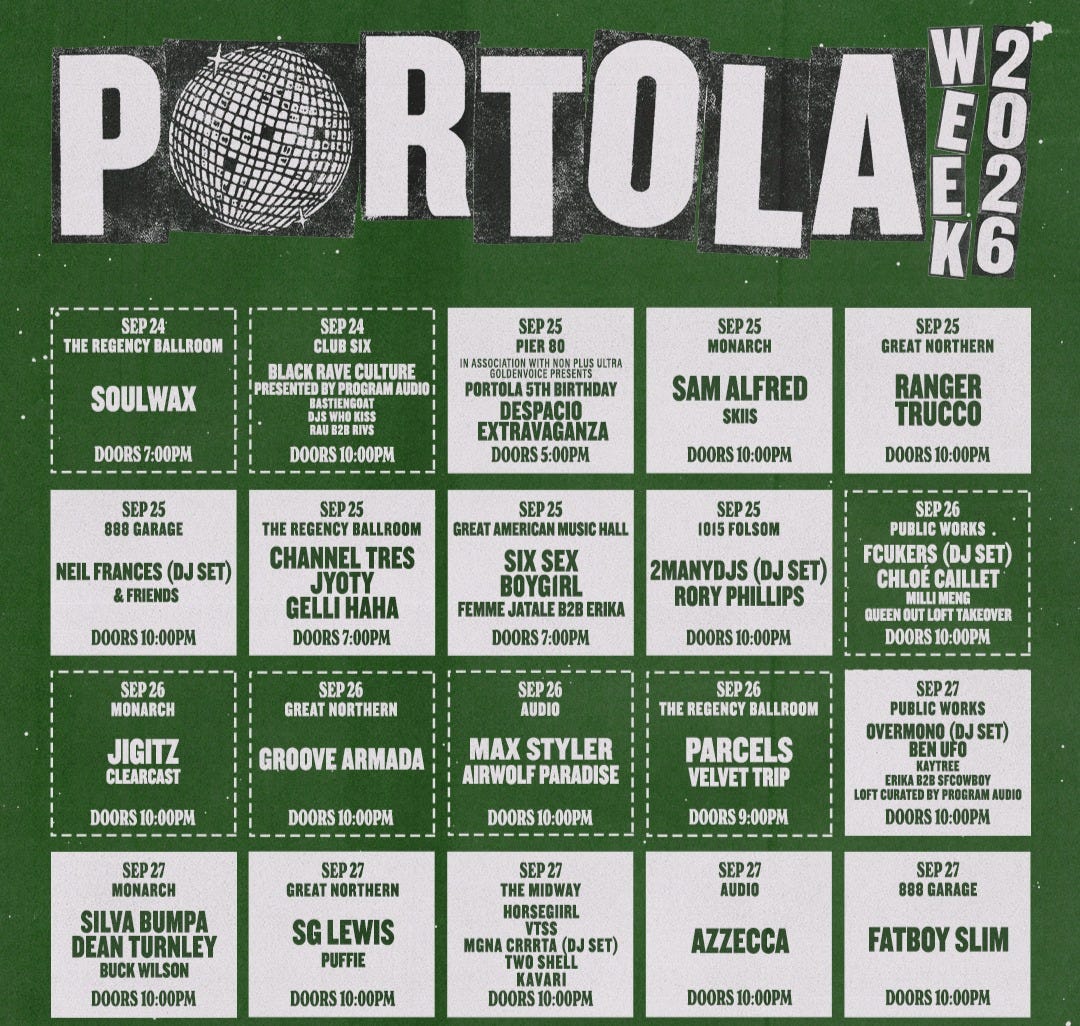
I was a big festival kid when I was younger, and my favorite part was seeing 10 to 20 acts in a day—some in snippets, others as longer sets. But I know not everyone likes to consume music that way at a festival and prefer full sets. And having this “Portola Week” program is also a way to give people two opportunities to see the artist they want to see. If there’s a conflict with one artist they want to see at the festival, they could go see them the night before or after instead and be able to see both. So that’s really where it all stems from, and it’s really just to create a really fun weekend for people to have in the city of San Francisco and trying to make it way more palatable for people to see the artist they want to see.
I also wanted to ask you about marketing, because most music festivals have incredibly boring corporate promo. But you have made an entire brand identity around this satisfyingly brilliant shit posting. How did you land on that as an identity for the festival, and how has that identity evolved in the last 5 years?
I’ve been doing this for 17 years now. I started as a marketer at Hard Summer, and it was three employees. I was 23 years old running the marketing for this company with full autonomy. And I learned so much by doing that. So when it was time to start Portola, I immediately said, “I want this festival to have a personality.” I like to laugh, I like to make jokes and I just want to be funny. I wanted it to be a good follow more than anything.
One of the general philosophies of Portola is that if things can be made more fun, make it more fun. And the two examples I’ll give is, if you have to print something, instead of printing it on a piece of white paper, why not print it on a piece of yellow paper—because it’s more fun? And instead of using the word bathrooms to point to the bathrooms on site, use the words “pee pee poo poo.” If you can make people smile or chuckle for the little things, just do it.
For our socials, it’s a team of five of us and some have been with us since the very beginning. We’ve had a couple new people come in, and actually a dear friend of mine who is a comedy writer for sitcoms and late night shows is part of the team too. It’s the most fun call every week, where we are just laughing the whole time and coming up with crazy ideas. We have a very active group chat.
You’re a 5-year-old festival, which is longer than a lot of festivals make it, but also very young still. What I’ve noticed, as a San Francisco resident especially, is that people have built up these inside jokes and a lore around Portola. And I feel like you all are aware of it and join in on that conversation. Comparing that to a property like Coachella, where there is also plenty of attendee lore, but the main Coachella Instagram page is never going to make allusions to it or get in on the fun. So for a festival that has a sizable financial footprint, it still feels local and approachable, which is a hard thing to achieve on social media where most things make you want to dissociate.
That’s a part of our rule: Would another festival post it? We just want to be different, and we want to have fun with it. We want to have a personality. We want everything to just make you chuckle. In the third year where Natasha Bedingfield was a surprise, a week before we announced her we posted a video of a rat dancing in the rain to “Unwritten.” And the week before that too, we had a slideshow and there was a hot dog with mustard and the mustard read “the future is unwritten”. It was something funny someone sent, like “ how funny would this be if we put “Unwritten” over this video?” That’s literally how we do it. It’s that simple.
Our Nicole Kidman letter came from a friend of mine. She was like, “Hey, wouldn’t this be funny?” And I was like, “Oh my god, this is brilliant. Can I post this?” She said, “Yeah.” I sent it to the group.
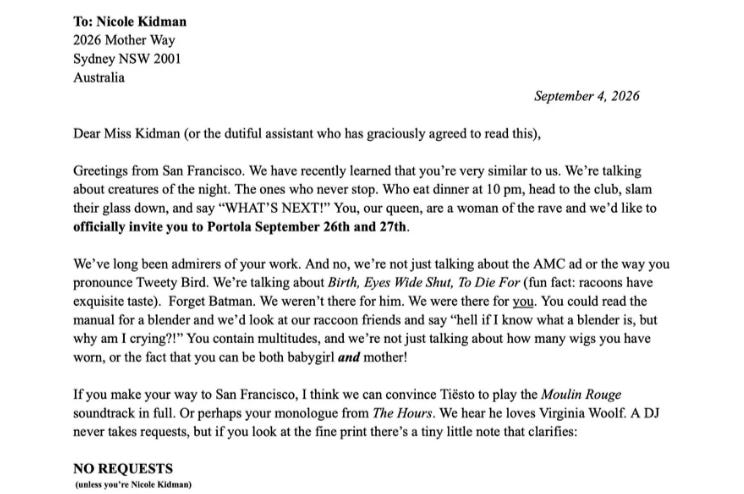
You never know what might happen. I feel like that’s the power and magic of the internet that we no longer romanticize as much, that literally anything could happen. You post something, you slide in someone’s DMs, and all of a sudden this amazing thing materializes!
Who knows? But it’s just more fun either way. Like we’ve been cracking up finding all these great Nicole Kidman tidbits about her raving and partying. And so we just want to have a little fun with it because, based on what we see of her personality, we would assume she would think it’s funny. We’re just trying to make her smile too.