

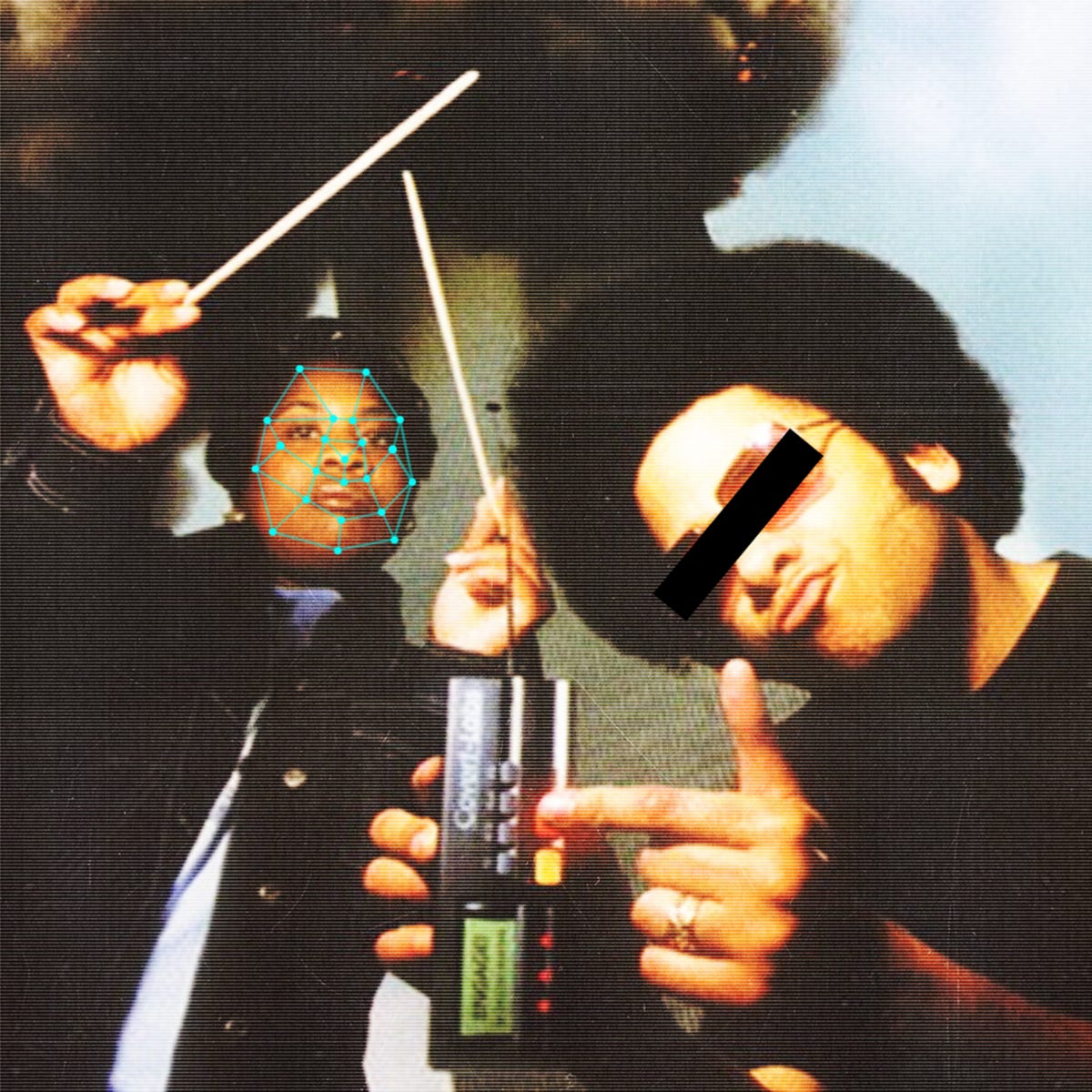
Art by DJ Short
Editor’s note: Over the course of this year, we’re publishing a series of essays about the rap albums that defined 2001, both creatively and industrially, and whether they predicted or were abandoned during the quarter-century to follow. See also: Tech N9ne’s
”Anghellic,” Cannibal Ox’s “The Cold Vein,” and Jay-Z’s “The Blueprint.”
It was the day after Christmas 2001, and conservatives were angry. Not at their reluctant choice of president, who’d leapt to mobilize our troops against the Taliban; not at the usual suspects among the liberal intelligentsia, as they, too, were now given to flag-humping and calls for Ay-rab scalps; not even at the Battle for Seattle veterans, whose movement had been neutered by a patriotic public ready to stick it to the terrorists by hoarding sweatshop-produced sneakers. No—that December the right-wing commentariat was furious, incredulous, incontrovertibly incensed at the Washington Post’s pop critic.
You see, David Segal had just ranked his favorite albums of the year, and at No. 1—above The Shins, The Strokes, and The White Stripes—sat The Coup, a little-known, stridently leftist rapper-and-DJ pair from the Bay Area whose record Party Music, Segal so observed, “makes a Marxist revolution seem like a gas.” The best in pop, rock, indie, electronic, what have you, came courtesy of MC Boots Riley, the son of Californian activist-scholars who’d raised their fists in the ’60s, in partnership with DJ Pam the Funkstress, another Bay Area linchpin who’d rocked the release party for the 2Pac album that earned Dan Quayle’s opprobrium.
In post–Cold War America, to lavish such prestige upon anti-capitalists required plenty of obligatory throat clearing. The group’s “politics and conspiracy theories” were “ridiculous,” the Post’s expert admitted, and Riley’s “anti-capitalist tirades” would “seem loopy if they weren’t so daggone funky.” This mighty newspaper, whose editorial pages were already awash in calls to war, would never seriously commend the ramblings of a self-identified capital-C Communist, but it could enjoy some daggone funky frivolity with the kids. Still, even getting that close was too close for the warmongers. Syndicated columnist Michelle Malkin immediately registered her shock that such a “loathsome record,” led by a single titled “5 Million Ways to Kill a CEO,” could be celebrated by the “elite media.” Christian fundamentalist Texe Marrs mused that the Illuminati was behind the ranking. Even William F. Buckley Jr.’s nephew (who, these days, serves as our ambassador to South Africa) decried Segal’s reluctant affection for the “politically noxious” Coup. The Post then felt obliged to share some of the letters from readers who thought its critic not just a poor judge of taste, but an execrable person: “Why would you have someone on your staff who even endorses something like this?”
Yes, all these folks were mad about that cover, which we’ll get to later. But they might have been more upset that David Segal had accomplished what every great critic hopes to do: convince his audience to sample a work of art for themselves and evaluate it on the substance. Sure, other members of the “elite media” may have also visited some praise upon Party Music, but to have the capital city’s press organ actually persuading Americans to take a minute of their shopping excursions to duck into Borders and pick up a CD? This immoral, hippity-hop garbage? There were so many other things to panic about, like the Muslims.
To the conservatives’ relief, market economics could accomplish the desired sabotage that their printed indignation couldn’t. The Coup released Party Music under 75 Ark, a Bay Area imprint co-founded by Dan the Automator and owned by an Internet Business called NicheMusic.com, whose business took a budgetary wallop after Silicon Valley’s dot-com bubble bust. (The domain, once valued at $5.75 million, today leads nowhere.) Too few discs were made and shipped. Not enough listeners knew about the album to seek it out on Napster (a NicheMusic.com investor). The record only moved 15,000 units, eventually losing the attention it had earned from a true triple-double media hit: praise in the arts section, controversy in the news section, denunciation in the letters section. The new millennium’s most promising bards of anti-capitalism were being done in, naturally, by the system they so vociferously opposed.
