

Case File 005: The Hip Hop Documentary I Built for Someone Else to Sell or Industry Rule Number 4,080
I Had RZA, Rough House, and the Death Row Archive. Then I Found Out Someone Else had Sold it.

This is a POW x ALMOST GREENLIT collab post, written by Adam Bhala Lough and edited by Paul Thompson.
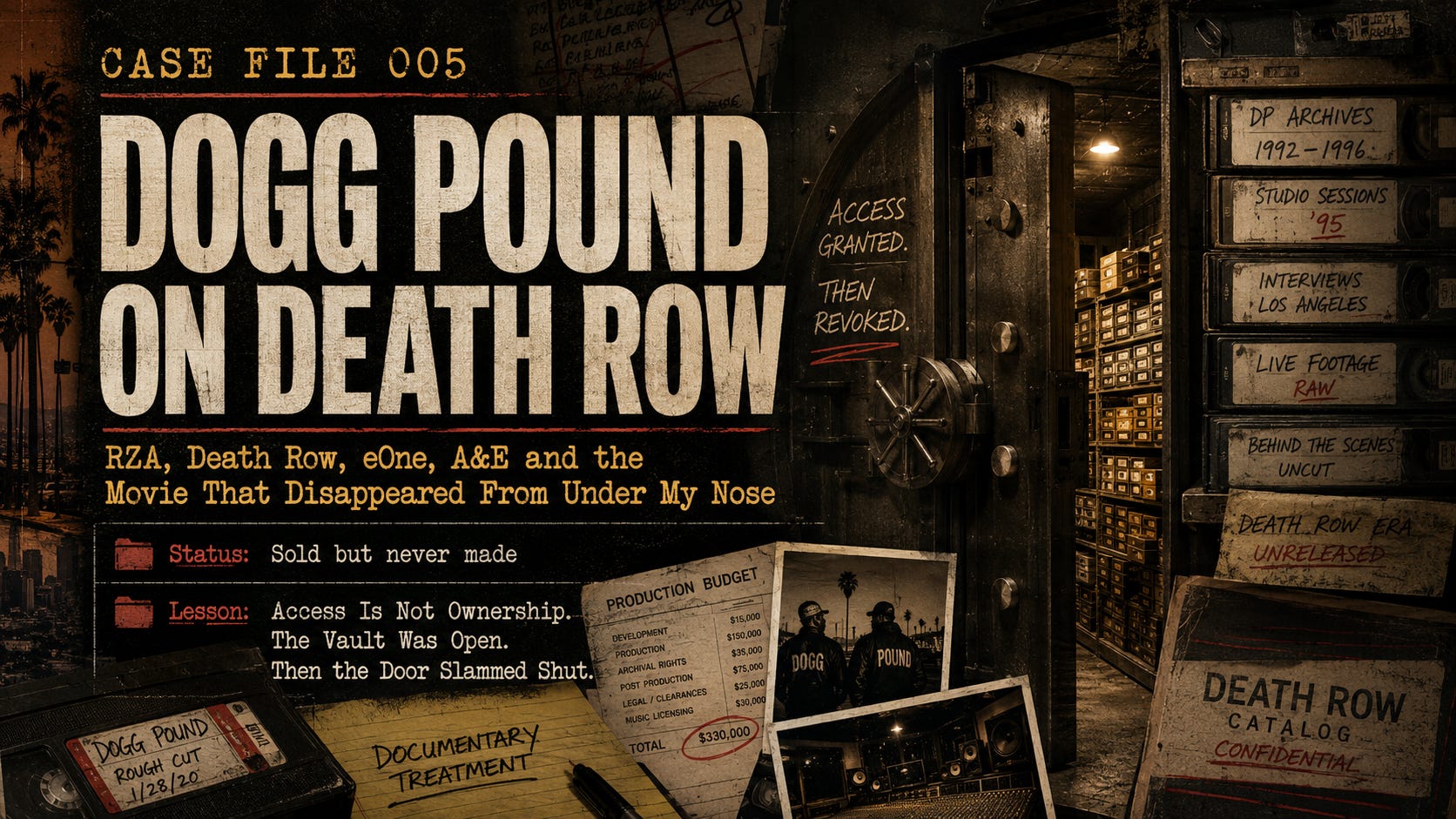
RZA Calls a Meeting
In January 2020, I contacted one of my childhood idols, The RZA of Wu-Tang Clan, to tell him I had started a documentary division at Danny McBride’s Rough House Pictures.
RZA, being a fan of McBride’s work, immediately told me to come meet him at his office in the Valley.
I realize this sounds insane. Like, oh sure, you just call up RZA and he’s like, “Come by the office.” But I actually had history with RZA. Our connection was legendary indie filmmaker Jim Jarmusch.
Jim — or JJ, as everyone calls him — was a longtime friend and mentor who helped me stay afloat when I was first coming up as a filmmaker in New York in the early 2000s. He threw me work making behind-the-scenes documentaries on his films Broken Flowers and Coffee and Cigarettes, which, at that point in my life, might as well have been a fucking MacArthur grant.


JJ and I had met because, in 2003, he saw my first feature Bomb the System and became a big supporter of it. I used to stop by his basement-level office in the East Village, which was full of mice, roaches, and framed international posters for his films: Ghost Dog in Japan, Night on Earth in Finland, Mystery Train in France. The place felt like the secret hideout of the coolest filmmaker who ever lived. And that it was.
We’d walk over to Sweet and Vicious and talk about MF DOOM (JJ was a huge fan) graffiti, music, movies, and whatever else. He’d tell me incredible stories about working with people I worshipped, like Jeffrey Wright, Jack White, and Ol’ Dirty Bastard. I’d put him on to new artists I liked - El-P, Killer Mike, Lil B the Based God (I got Jim to put a Run the Jewels song in his 2016 film Paterson starring Adam Driver). For a young filmmaker trying to figure out how to survive, it was like sitting at the feet of a punk-rock Yoda who wore black, smoked cigs, and somehow knew everyone cool on the planet.
Around 2005, Jim reached out to me about potentially writing the screenplay for a Ghost Dog sequel that RZA would direct.
I was intrigued, to put it mildly.
We set a meeting for when RZA was in New York. I remember we met on the second floor of one of those boring midtown delis where office workers go during lunch and eat sad $18 salads under fluorescent lights. Because it was Jim Jarmusch and RZA, I assumed we were going somewhere cool. Some hidden Chinatown tea house. Some after-hours jazz spot. Some smoky room where the ghost of Jean-Michel Basquiat might be playing chess in the corner.
Nope.
Midtown deli. Second floor. Weekend. Completely empty.
The Ghost Dog sequel never happened, for reasons I still don’t totally know. Like a lot of cool ideas, it floated into the room, sounded amazing for a minute, and then disappeared back into the mist.
But I stayed friendly with RZA over the years. So when I started the company with Rough House, he was one of the first people I reached out to.
And that’s how I ended up in his office in the Valley in January 2020, thinking I was there to talk generally about documentaries, Rough House, and maybe some future collaboration.
Instead, RZA pitched me a movie.
The Pitch Inside the Pitch
I had no idea what RZA was going to pitch me.
I drove up to his office in the Valley, which was in one of those giant office towers full of random businesses: lawyers, accountants, insurance guys, people who look like they spend their whole lives arguing about parking validations.
I walked in and RZA greeted me with a hug.
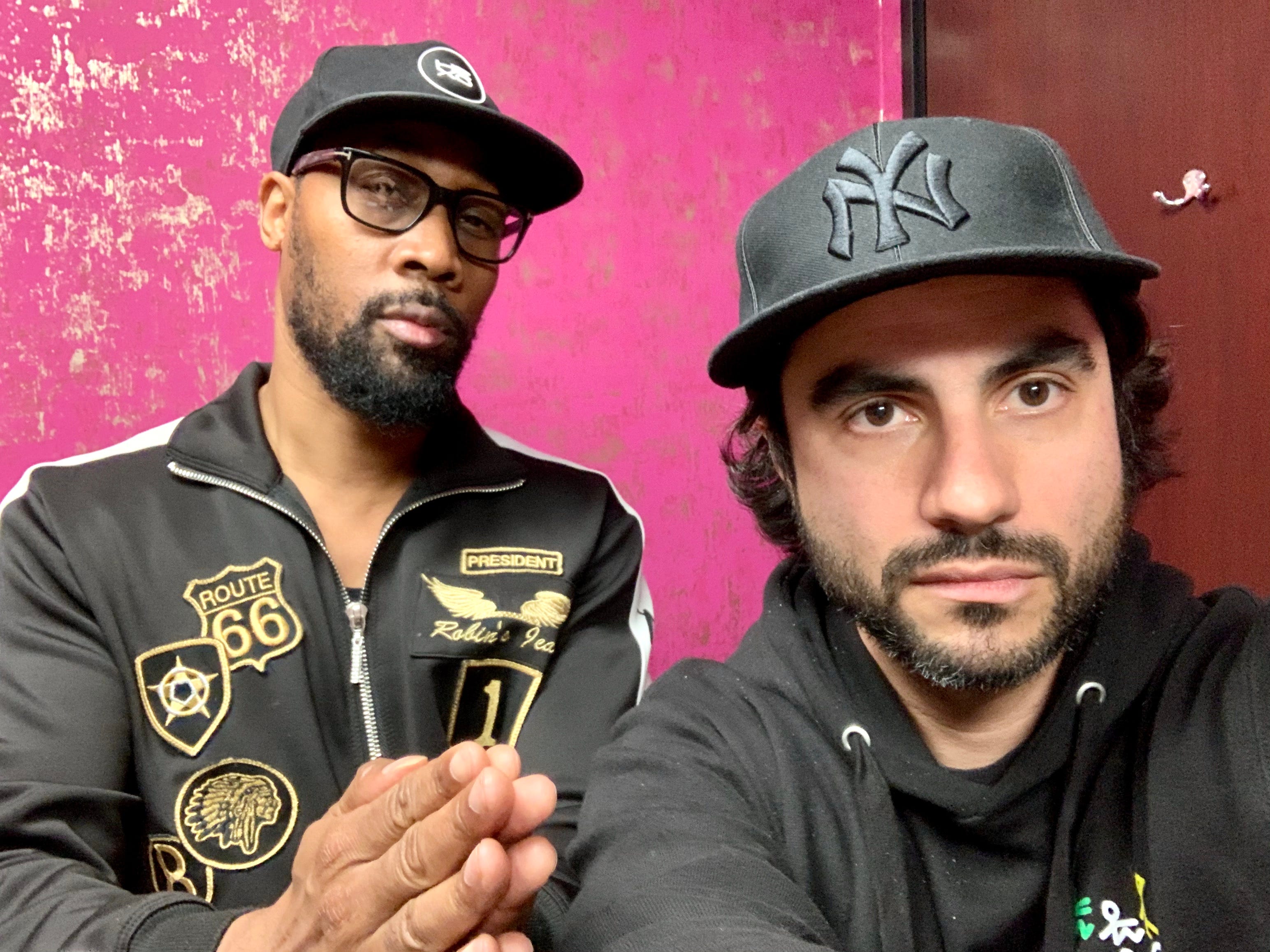
He introduced me to Power, who was working in an office in the corner. Nothing about the place screamed Wu-Tang. There were no swords on the wall. No incense. No kung fu posters (ok maybe there were a few). No turntables in the corner.
RZA talked about his wife. His teenage son. Normal dad stuff. I talked way too much about the Joseph Campbell / Bill Moyers PBS series I had just watched and knew he would love. I promised to mail him the DVDs when I was done.
I did, by the way.
Then he told me why he had asked me to come in.
He wanted to make a documentary about Tha Dogg Pound.
I was in after the first sentence.
I grew up on Dogg Pound. I was a teenager during the Death Row era. I had the cassette tape of Dogg Food and played that thing until the tape warped. Later, I bought Kurupt solo albums, Daz records, anything they produced, anything they touched, usually from the Tower Records on Broadway by NYU, back when Tower Records was basically church for people who loved music.
Plus, I had already made hip-hop documentaries, including the notorious Lil Wayne documentary The Carter. I knew the culture. I understood the mythology. Death Row was not just a record label. Death Row was a whole haunted mansion in American pop culture.
And this wasn’t some generic rap nostalgia doc where three journalists sit in chairs and explain why an album was important.
This had access.
Daz. Kurupt. The music. The Death Row archive. And RZA.
One of my idols was asking me to direct and produce a documentary about one of the most mythic rap groups from one of the most mythic labels in history.
Fuck yeah.
I was stoked.
I did wonder what RZA’s connection to Dogg Pound was. He explained that he knew a guy named Alan Grunblatt, a big fish over at eOne, the company that controlled the Death Row and Dogg Pound catalog at the time. Over brunch in Beverly Hills, Alan had pitched RZA and his producing partner Mustafa Shaikh on doing a documentary for the 25th anniversary of Dogg Food, the platinum-selling debut album from Tha Dogg Pound.
RZA was interested. He brought it to me.
Alan was, allegedly, interested in me directing or maybe he just trusted RZA. Either way, it seemed like the pieces were lining up. The president of eOne had once repped McBride, so there was a friendly connection there too. For about five minutes, Hollywood did that thing where it almost seems to be logical.
But who was Alan Grunblatt?
I did a little research. Alan was a veteran hip-hop executive, had deep roots in independent rap and had overseen urban music for years at Koch. Before that, he came up at Ruthless Records, where he was mentored in the ways of the industry by legendary music executive Jerry Heller.
That detail stuck with me.
A few years later, I would get involved in a totally different Ruthless Records project featuring Heller a project that died its own slow, sad, ridiculous death.
But that’s for another article.
At that moment, all I knew was this: RZA had brought me a Death Row documentary, Rough House was interested, eOne had the catalog, and the door to the archive was about to open.
Which is exactly when I should have asked for paperwork.
The Vault
We had the jewels.
Or at least that’s what it felt like.
We had access to the Death Row archive. I didn’t know exactly what was inside it yet, but I was already imagining the movie. My brain had started doing that dangerous filmmaker thing where it runs ten miles ahead of reality. Structure, tone, scenes, opening images, archival sequences, music cues all of it started assembling itself in my head before there was a signed deal, before there was financing, before there was anything real enough to protect me.
This is one of the great gifts and curses of being a director.
You fall in love early or nothing gets made.
But if you fall in love too early, you can get your heart broken.
Alan Grunblatt put me in touch with Charles Block and John Payne, the guys connected to Death Row who had access to the archive. They gave me the address and we set a time to meet. I asked if I could film. They said no. But they did agree to let me take photos.
That was enough for me.
Stepping into the vault felt like stepping into a time machine.
There were old AMPEX tapes stacked and labeled with handwritten titles from my youth: “MTV News, Snoop and LBC Crew.” “Dogg Pound Gangsta (Master).” “Murder Was the Case (LP Version).”


These weren’t just assets. These were artifacts.
The master copies of songs and videos I had grown up with were sitting right there in front of me, in a warehouse in the Valley, like somebody had boxed up my teenage brain and put it on industrial shelving.
I was overwhelmed.
Like a kid in a candy store, if the candy store had been founded by Suge Knight and possibly contained several federal subpoenas.
Then we got to one section of the vault they would not let me photograph.
The 2Pac section.
They told me I couldn’t take pictures there because it contained unreleased songs they didn’t want people to know about.
That felt a little shady.
It also felt completely believable.
So I put the camera down.
On the way out, Charles gave me a Death Row Records T-shirt. I drove home completely geeked. I had seen the tapes, touched the mythology, taken the photos for the deck.
At that point, I thought the door was opening.
I didn’t realize I was only being allowed to peek inside but never to enter.
Rough House Says Yes
Once I got home I immediately emailed McBride and David Gordon Green about the project and they were down to clown.
“RZA has a project he wants us to do with him and his friend Alan Greenblatt who owns the Death Row catalogue.”
David replied: “Very cool. I just finished the Dr. Dre doc and it’s so good. I’m into this idea.”
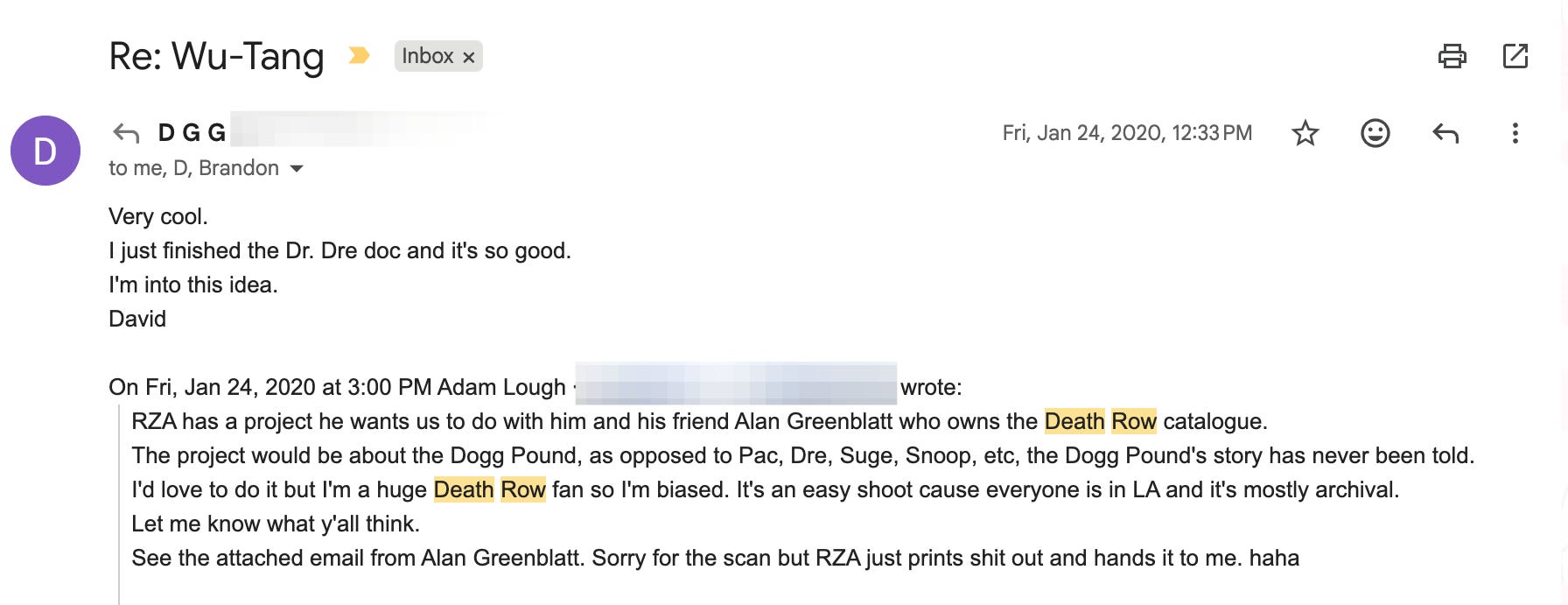
That meant Rough House was on board and I could start spending development budget by hiring graphic designers to put together the deck.
I spent the next few weeks writing the treatment and the copy for the deck.
Writing a pitch deck is a weird little art form. It is part research paper, part sales brochure, part movie trailer, part hallucination. You’re trying to make something feel inevitable before it actually exists. You’re taking a bunch of loose access, half-formed ideas, archival possibilities, and creative instincts and turning them into the version of the movie everyone can suddenly see.
Or at least the version you hope they can see.
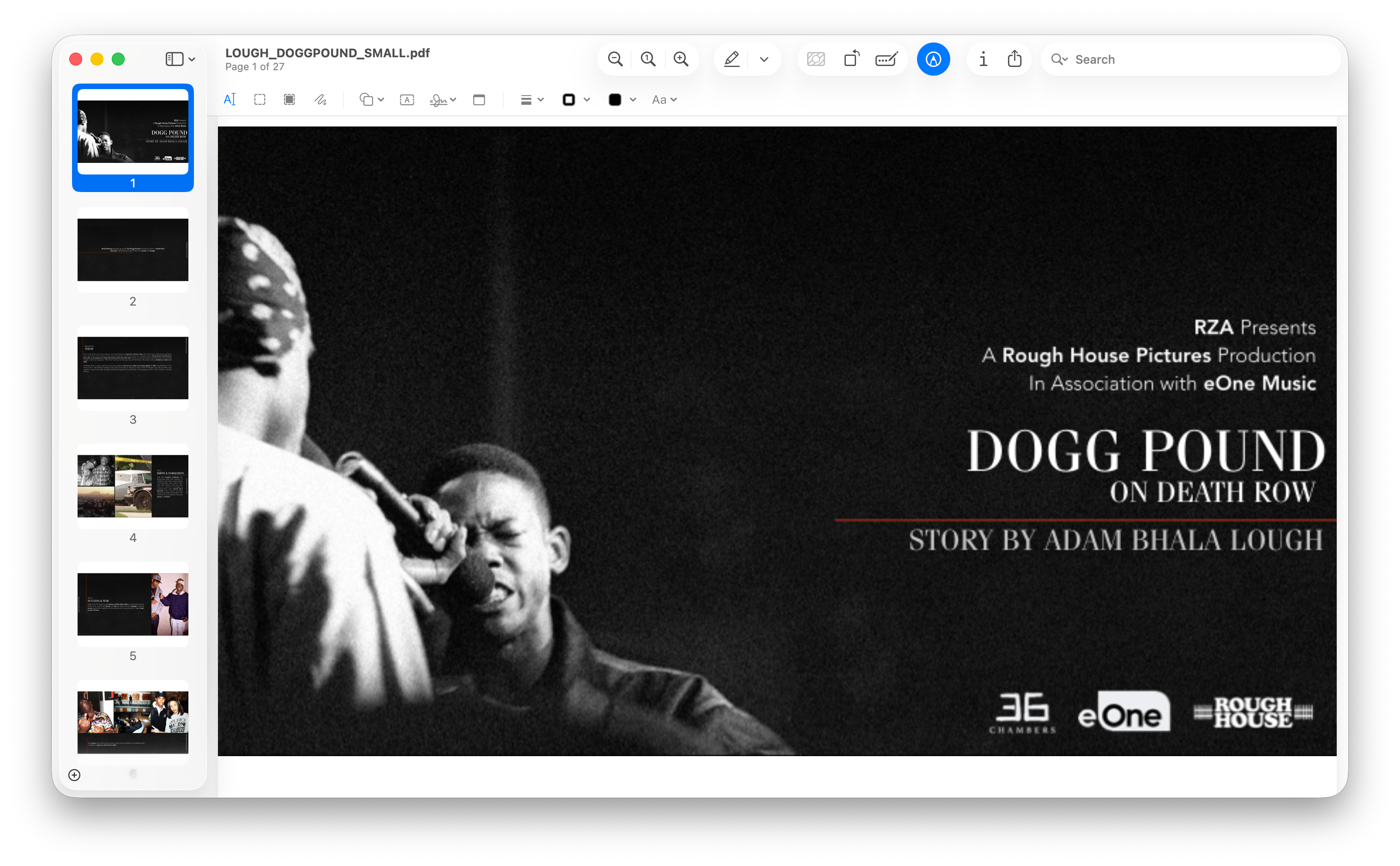
For Dogg Pound on Death Row, my creative idea was to approach the documentary as an American crime, family, and industry saga. I was thinking about Wall Street and The Godfather Part II. Not because I thought Daz and Kurupt were Michael Corleone and Gordon Gekko, but because the story had that kind of architecture: loyalty, money, power, betrayal, family, empire, collapse.
This was not going to be VH1 Behind the Music: Tha Dogg Pound.
No disrespect to Behind the Music. I watched a lot of Behind the Music. But that was not the shit I wanted to make.
I wanted this to feel like a gangster rap epic. A family tragedy. A Shakespearean business story steeped in West Coast mythology. The rise of Death Row and the pressure of being young, talented, famous, and surrounded by chaos. The way artists can become soldiers in wars they didn’t start. The way friendship and business and violence all get braided together until nobody knows where one ends and the other begins.
That was the movie in my head.
A Death Row story where Tha Dogg Pound were not supporting characters in someone else’s legend, but the center of their own.
The Budget
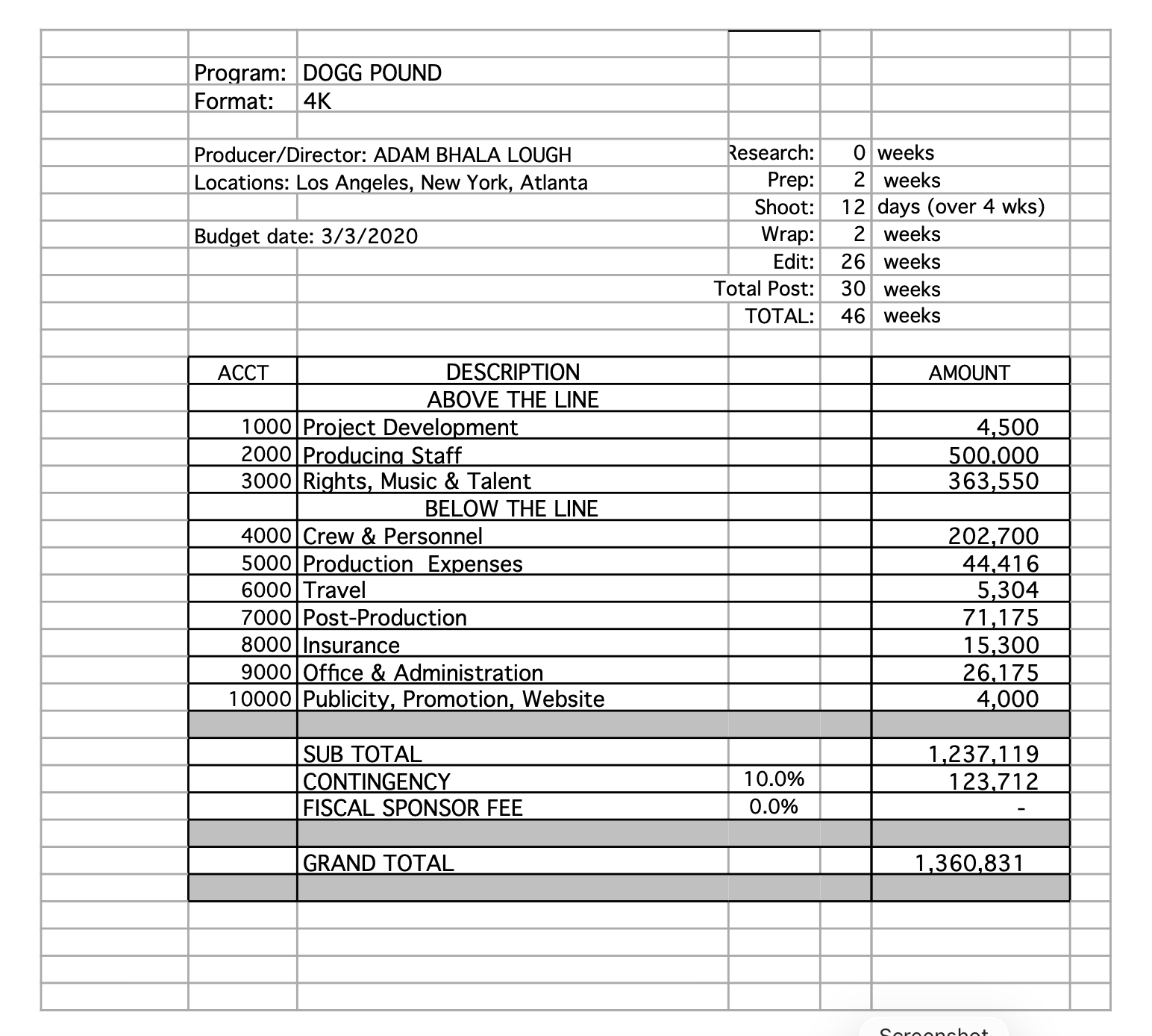
In my mind this was not a ‘let’s see what happens’ idea this was real and we were going to make this thing. So I put together a $1.36 million dollar budget on my own, with a 46 week schedule.
The plan was to shoot in New York, Los Angeles and Atlanta.
I was told to put $50k in there for Suge Knight and $300k to eOne for the music rights.
HBO
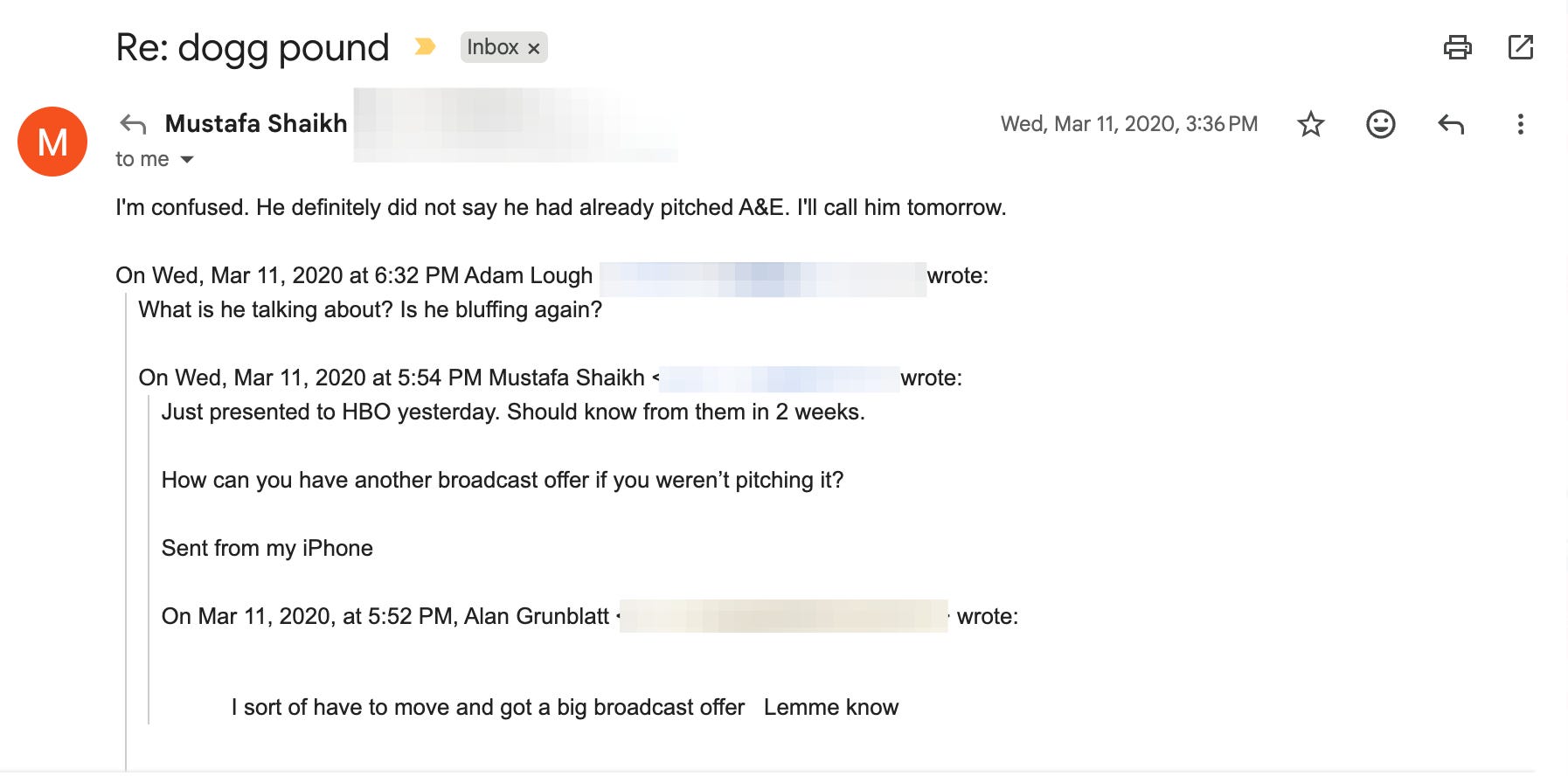
On March 11, 2020, we pitched HBO.
It is hard to explain now what that week felt like.
Everyone knew something was coming, but nobody knew what shape it was going to take. The whole town was still technically working. Still taking calls. Still pretending we could keep pushing projects forward like normal.
But the air had changed.
Two days later, Trump declared a federal national emergency.
Hollywood freaked. Meetings were canceled, or if you were lucky, turned into Zooms. Offices emptied out. People started wiping down groceries and pretending they weren’t scared.
Then, on March 17, HBO passed.
Their note was polite. They liked parts of it. But music docs were crowded at that moment. The audience maybe felt too specific. Too male. Too adult. Whatever the exact reasoning, it was a pass.
Disappointing, yes.
But normal.
This is what happens. You pitch. They pass. You sulk for a minute. You tell yourself they were wrong. Then you dust yourself off and take it somewhere else.
Forty-eight hours later, California became the first state in the country to issue a stay-at-home order.
So for about two days, it felt like the Dogg Pound documentary had died the ordinary Hollywood death.
Bad timing.
Wrong buyer.
Crowded marketplace.
Global pandemic.
Honestly, not even the weirdest way for a project to die.
Then we found out HBO passing wasn’t the only problem.
It wasn’t even the real problem.
The Real Twist
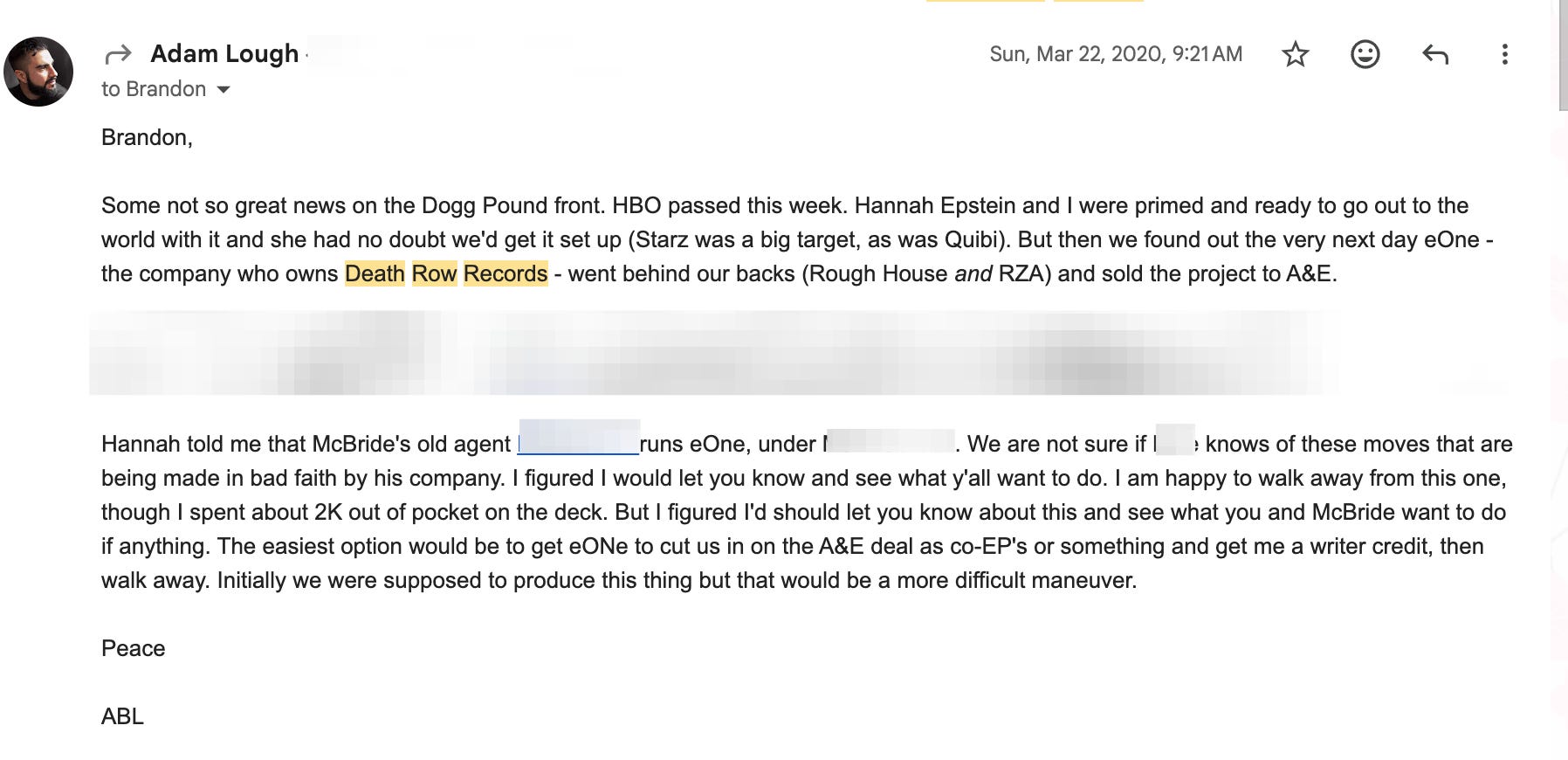
On March 22, we were getting ready to go back out with the Dogg Pound documentary.
HBO had passed, but that was not the end of the road, it was the beginning of the actual sales process.
CAA was ready to take the project into the marketplace. Starz made sense. Showtime made sense. A&E might have made sense too, if we had been the fucking ones taking it there.
Then we found out that, as we understood it, eOne had already set up a version of the project at A&E without us.
That was the gut punch.
Not HBO passing. HBO passing was normal. Painful, go-bruising, sure. But normal.
This was different.
From my perspective, I had spent weeks doing the work that turns an idea into a sellable project. I had gone to the Death Row archive. I had taken the photos. I had written the deck. I had built the budget. I had shaped the pitch into something that could be put in front of buyers.
Had this been a formal WGA-covered treatment assignment, the minimum payment alone would have been in the tens of thousands of dollars.
Instead, I wrote the deck and treatment on spec because I believed we were building the project together.
That is the dangerous word in Hollywood.
Together.
Everybody is together until there is a deal to be made. Then suddenly you find out who was actually in the room, who was just near the room, and who was standing outside holding a folder they made for free like a dumbass.
Maybe eOne had every right to do what they did. They controlled the catalog. They had the relationship. They had the asset. I understood that, even then.
But what stung was the lack of clarity.
If A&E was already in play, that changed everything. If another part of eOne was already moving the project somewhere else, that changed everything. If we were only useful as free development muscle while the real deal was happening in another hallway, that definitely changed everything.
It felt like I had built the house, and someone else had walked away with the keys.
So CAA tried to do what agencies are supposed to do in moments like this.
They tried to get us cut in.
CAA Tries to Fix It
Yeah CAA tried to fix it.
And for about five minutes, it seemed like maybe this would become one of those rare Hollywood situations where adults behaved like adults.
The logic was simple.
eOne had the rights. Yes.
A&E had the deal. Apparently.
Fine.
But we had done real work. RZA and 36 Chambers had brought the project to me. Rough House had gotten involved. I had written the deck and treatment. I had built the budget. We had pitched HBO. CAA had been part of the process. And Alan Grunblatt was aware of all that work happening in real time.
So the ask was not insane.
Cut us in.
Give RZA and Rough House some kind of EP credit. Give me a writer credit. Maybe throw me a little scratch for the work. Acknowledge that we had helped move the ball down the field before someone else picked it up and ran into the end zone.
Nobody needed to go to war over a Dogg Pound documentary in the first month of a global pandemic.
For a second, it sounded possible.
There were calls. There were emails. There was the familiar entertainment-business sound of people saying things like, “Let’s see what we can do,” which is either the beginning of a solution or the end of the conversation.
Then the temperature changed.
The calls slowed down. The updates got vaguer. The whole thing entered that magical Hollywood zone where nobody technically says no, but somehow the answer becomes no anyway.
And eventually… yeah.
They just ghosted.
This is the part every filmmaker recognizes.
The brief moment when it feels like the grown-ups are going to make things right, followed by the longer, quieter moment when you realize there are no grown-ups. There are just calendars, assistants, legal departments, and people waiting for you to get tired.
And eventually, you do get tired.
Because you still have to make a living. You still have other projects in development. And also, this was not exactly a normal moment in human history.
The world was shutting down. Everyone was bleaching their Amazon packages. My kids were in the background going to “virtual school” and taking piano and martial arts lessons over Zoom. Every day felt like a bad sci-fi movie.
So the Dogg Pound doc slowly became one more weird pandemic ghost.
A project that had been alive a week earlier, then suddenly wasn’t.
At least not for us.
And then came the strangest part.
The Project That Stole Itself
After all that bullshit, the A&E documentary never got made.
For years, I had this vague memory that Mustafa told me “Snoop killed it.”
When I asked him about it again on Zoom last week, even he wasn’t totally sure.
“I can’t remember why Snoop killed it,” he told me. “Maybe Snoop didn’t want to be involved or maybe it was at that time when Snoop was starting to try to buy Death Row Records from eOne.”
That made sense to me.
Because by then, the whole Death Row situation had become something much bigger than our little documentary. Snoop was circling the catalog. eOne was trying to figure out how to monetize the brand. Alan Grunblatt, according to Mustafa, had been trying to get Snoop to work with him and become “the face of the label.”
But Snoop wanted something much more real than that.
“To me,” Mustafa said, “it’s like Snoop wanted real equity in the game and Alan wanted him to mainly be compensated as, you know, essentially like a figurehead for the Death Row IP.”
That may be the cleanest explanation I ever got.
And then I Googled it and found the Drink Champs clip, where Snoop basically lays it out in plain English, complete with a verbal middle finger to Alan.
Snoop’s grievances were about control, respect, and masters.
On Drink Champs, Snoop said he had spent roughly “a year and a half… two years” trying to get his masters back from eOne/MNRK. Specifically, he said all he originally wanted was Doggystyle. He complained that eOne “tried to treat me like a hoe” and “wanted me to come work for them,” then called out Alan Grunblatt by name.
The bigger point Snoop made was: once he got Death Row, people criticized him by saying he didn’t actually own the masters. His response was basically: fine, then I’ll go buy those too.
He wanted all of it.
Not just his masters. Not just Doggystyle. The catalog. The publishing. The whole haunted mansion.
He also framed the Death Row acquisition as a way to fix old business. He said he wanted to “get paid all of the people that didn’t get paid,” naming Nate Dogg, Lady of Rage, RBX, and Kurupt. He also said he wanted Harry-O put in a position at the company.
I don’t know exactly what happened behind the scenes at A&E. I don’t know if Snoop killed the documentary with one phone call, a refusal to participate, some rights issue, or just the gravitational force of becoming Snoop Dogg, owner of Death Row.
Maybe he didn’t need to kill it.
Maybe all he had to do was not bless it.
A Death Row documentary without Snoop’s cooperation especially once he became the public face and eventual owner of Death Row may have simply become impossible to make.
What I do know is this: the Dogg Pound documentary never aired. It never had a chance to become the link somebody texted me with, “Yo, son, isn’t this the thing you were working on?”
It became nothing.
And that is the final irony.
The project was taken out of our hands, and then the people who took control of it couldn’t make it either.
Which means the real ending is not simply: we got screwed.
The real ending is stranger than that.
A documentary about Death Row ended up trapped on its own Death Row.
For years, that was the version of the story I carried around.
But six years later, while reporting this piece, I called Mustafa, and Mustafa told me something that made me realize I had been telling myself the cleanest version of the story, not necessarily the truest one.
The Story I Told Myself
For six years, I thought I understood what had happened.
My version was simple: Alan had an A&E offer in his back pocket the whole time. He let us build the deck. He let us take the project to HBO because maybe he thought, let’s see if these guys can get more money than my A&E offer. Then, once HBO passed, eOne sold the project to A&E without us.
I thought the HBO pitch was leverage. A way to firm up the A&E deal. Old-school music business maneuvering.
Industry rule number 4,080.
That was the version that made sense to me emotionally.
And honestly, the lesson seemed pretty obvious.
Access is not ownership.
A deck is not a deal.
A budget is not protection.
A powerful mentor, a legendary archive, a major agency, and a buyer meeting still do not mean the project is yours.
In documentaries, especially music documentaries, you can spend weeks proving the value of an idea to the people who control the rights, only to realize too late that what you built for them can be sold without you.
That was the brutal lesson I carried around.
Before you build the deck, call the buyer, spend your own money, turn someone else’s loose idea into a sellable piece of intellectual property, make sure you button your shit up.
Because if a rights holder has already pitched another buyer and doesn’t tell you, you may not be developing the project.
You may be doing unpaid sales work.
And that was what I thought happened.
But Mustafa corrected the record.
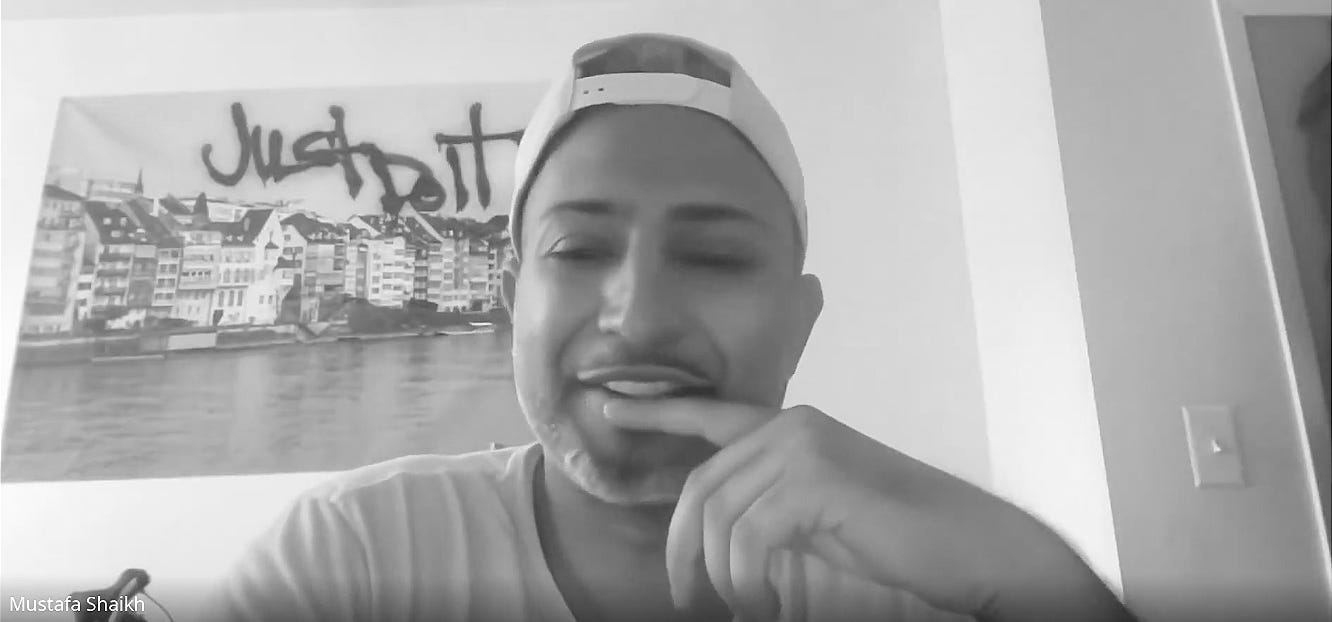
His version was different.
According to Mustafa, this was less a master plan than a corporate car crash.
eOne had acquired Death Row. eOne was trying to create synergy between its music and television divisions. Alan, coming from the music side, saw a Dogg Pound documentary as a way to activate the Death Row catalog and brought RZA into it. RZA brought me in. I brought in McBride and Rough House.
Meanwhile, according to Mustafa, another part of eOne, the TV side, was already working on selling the same project, or some version of it, to A&E.
“Alan wasn’t selling it to A&E,” Mustafa told me. “It was another part of eOne.”
Another division, possibly moving without Alan’s full knowledge.
That did not make the situation less painful.
It just made it less cinematic.
Maybe Alan wasn’t secretly playing four-dimensional chess, there was no brilliant scheme and nobody was in full control of anything, which is its own special kind of horror.
In Mustafa’s words, “It was really like just a corporate bungling.”
And somehow, that almost made it worse. Well, more boring.
Because a mastermind would at least be a story. A villain would give the whole thing shape. Instead, the truth was much more dry and much more common:
A company with two hands doing two different things, an executive trying to make something happen without understanding the full internal landscape, and a dumbass filmmaker doing free work in the middle of it.
So maybe the real lesson is not “don’t trust anyone.”
That’s too easy.
The real lesson is this: until the rights are clear, the roles are papered, and the company is actually aligned internally, you may not be building a movie.
You may be wandering through someone else’s corporate confusion with a flashlight.
But here’s the part that still makes me laugh.
They sold it.
And it still didn’t get made.
Sometimes Hollywood doesn’t just kill your dream.
Sometimes it steals your dream, drags it into another room, gets confused about who owns the room, and kills it there.
P.S.
Before publishing this piece, I reached out to Alan Grunblatt to give him a chance to comment or correct anything in my timeline.
As of publication, he has not responded.
I’m including the email here because I think it matters. This story is based on my memory, the documents I still have, and the people who were willing to talk to me. If Alan ever wants to respond, I’m happy to update the piece with his perspective.
Mon, Jun 8, 1:29 PM
to Alan Grunblatt
Hi Alan,
Hope you’re doing well.
I’m working on an article for my Substack, Almost Greenlit, about the Dogg Pound/Death Row documentary project that RZA, 36 Chambers, Rough House, eOne, and I were discussing back in early 2020.
The Substack is about projects I developed over the last six years that got close to happening but ultimately didn’t. I’m writing these as case studies mainly for educational value, so other filmmakers can learn from the near-misses, mistakes, confusing business turns, and failures that usually never get talked about publicly.
For this piece I’m reconstructing the timeline of the Dogg Pound doc from my emails, deck, budget, and notes, and I wanted to give you a chance to comment or correct anything before I publish.
My understanding is that I was brought in by RZA/36 Chambers to write and direct/produce a documentary about Tha Dogg Pound; that I toured the Death Row archive; that I wrote a deck/treatment and prepared a budget; and that Rough House and I took the project to HBO in March 2020 because of their first-look deal.
I also have emails from around March 11, 2020 where there seemed to be confusion about whether A&E had already been pitched or had made a broadcast offer. Shortly after HBO passed, my understanding was that a version of the project had been set up at A&E without Rough House, 36 Chambers, or me included.
Before I write anything definitive, I wanted to ask:
Was A&E already in discussions on the project before we pitched HBO?
Had that been communicated to RZA/36 Chambers, Rough House? Mustafa says it was not and it was not communicated to me.
What eventually ended up happening to the project after it was set up at A&E? I had heard a rumor that Snoop “killed it” but that was never confirmed.
Is there anything about the timeline or your position that you think I should understand before publishing?
I want the piece to be accurate and fair, and I’m happy to include your perspective if you’d like to comment.
I’m hoping to publish next week, so it would be great to hear from you by June 15th if you want to weigh in.
Best,
Adam
Have a story for Almost Greenlit? Hit me up, I want to hear it!
Read the full deck (paid subscribers only)
Read the actual $1.5 mil budget (paid subscribers only)
View all the photos from the Death Row Archive (paid subscribers only)
Because this series deals with real projects, real people, and real companies, here’s the boring but necessary note:
Almost Greenlit is written from my personal perspective and memory as a filmmaker and producer involved in the development and pitching of these projects. It is not intended to be a definitive account of what any buyer, executive, company, filmmaker, subject, agent, financier, distributor, or other participant thought, intended, or decided at the time.
Where I describe meetings, pitches, passes, development history, business decisions, or creative choices, I am describing my own recollection, interpretation, and opinion unless otherwise stated. Any quoted material is included from my own correspondence, public materials, interviews, or with permission where appropriate.
Materials such as trailers, teasers, pitch decks, posters, stills, artwork, clips, screenshots, and other project-related assets may be included for commentary, criticism, historical context, archival reference, and educational purposes. I do not claim ownership of any third-party copyrighted material included or referenced here. Unless otherwise noted, photographs included in this series are my own or are used with permission.
Nothing in this series is intended to attack, disparage, or misrepresent anyone involved. The goal is to examine how projects are developed, pitched, passed on, revived, abandoned, or made anyway and what other filmmakers can learn from that process.
If anything here is inaccurate, incomplete, or requires correction, I’m happy to correct the record.
If anyone wants their name removed, I’m happy to use an alias. Just hit me up. You know how to get at me.