


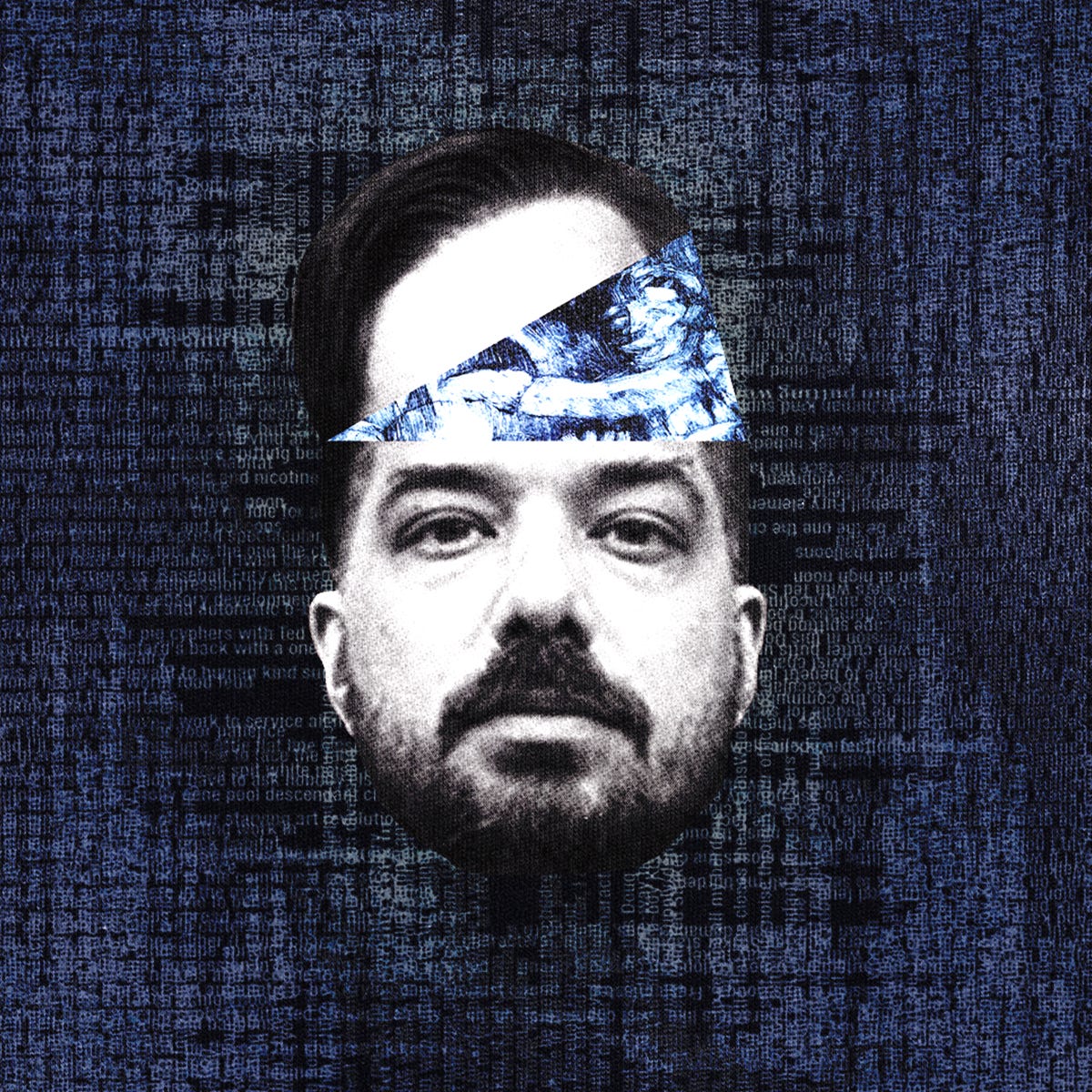
Editor’s note: Over the course of this year, we’re publishing a series of essays about the rap albums that defined 2001, both creatively and industrially, and whether they predicted or were abandoned during the quarter-century to follow. See also: Tech N9ne’s
Anghellic, Cannibal Ox’s The Cold Vein, Jay-Z’s The Blueprint, The Coup’s Party Music, and cLOUDDEAD’s cLOUDDEAD.
Say it’s the winter of 2000-2001. You follow a young man, early to mid-20s, as he trudges from his apartment to the train, the train to his job in a skyscraper at Madison Avenue and 57th Street, a few blocks from the southeast corner of the park. Through the lobby, into the elevator, up to the 14th floor. (There is, in fact, a 13th—superstitions are for children.) The man clocks in, then gets to work liberating expensive photographs from the custom-made, climate-controlled crates they arrived in, prepping some for hanging in the gallery and sorting others for the perpetual archive. He does this shuffle for about nine hours, in both directions—other pieces get cocooned in crates of the young man’s creation—before heading home, sleeping, and replaying the whole cycle tomorrow.
This young man was Ian Bavitz, a recent graduate of Boston University’s visual arts program, where he studied painting. A Long Island native, he’d returned to the city looking for a job where he “could be around art but still dress like a bum in the back room.” The Howard Greenberg Gallery beat the one-hour photo labs he’d worked at, but both ends of the spectrum—watching laypeople’s pictures come into focus, watching alleged masters’ be sold for tens or hundreds of thousands of dollars—were starting to take their toll. It’s a job, after all.
While it wasn’t yet enough to justify hanging up his boxcutter, Bavitz had begun to make a name for himself in the rapidly mutating ecosystem of New York underground rap. His first record as Aesop Rock, Music for Earthworms, was finished while he was still a student. But the next one, Appleseed, was a serious incursion into New York and the nascent rap internet. Appleseed included a guest appearance from doseone, who had a day job as an A&R at Mush Records and helped broker a one-album deal for the next work, Float, which would come out in the fall of 2000.
By this point, Bavitz was already articulating an almost impossibly knotty style: labyrinthine verses marked by hairpin turns and quick stops and starts, hyperverbose but more anchored to the drums than his contemporaries who flirted openly with spoken word. The writing was wry and acidic and rarely as self-impressed as its detractors claimed to find it. You can picture the bulging forehead veins on executives at labels bigger than Mush, but to anyone who was interested in the finer points of avant-garde hip-hop—or of American writing in that moment generally—it was clear: this was a major talent.
But major talents have landlords, too. So it was between gallery shifts that Bavitz began hanging with, and eventually playing music for El-P, the rapper-producer and founder of Def Jux, which had quickly become the clearinghouse for weirdo geniuses who owned drum machines. Float had paired Bavitz with a pre-Lucy Ford Slug and a pre-Cold Vein Vast Aire; while the latter was working, with El and Vordul Mega, on an album that would rewire the circuitry of indie rap, Bavitz was simply hoping to dedicate more of his waking hours to the same pursuit.
